
You shouldn’t rely solely on indicator lights to decide when to replace your filter because these lights may not reflect real-time dirt levels. Factors like household pets, outdoor pollution, and personal inspections matter a lot. Checking the filter visually or considering environmental conditions can help you catch clogs early and maintain system efficiency. Keep in mind that more frequent changes can extend your HVAC’s lifespan and improve air quality—continue to discover how to optimize your filter maintenance.
Listen free for 30 days with Audible
Thousands of audiobooks and originals — cancel anytime.
As an affiliate, we earn on qualifying purchases.
Key Takeaways
- Visual inspection of the filter’s dirt and texture provides a more accurate replacement cue than indicator lights alone.
- Environmental factors like pollution levels and household pets can necessitate more frequent filter changes.
- Using air quality monitors helps determine when filter replacement is truly needed, regardless of indicator lights.
- Manufacturer guidelines are a starting point, but personal observation ensures optimal timing for your specific conditions.
- Filters may need replacing earlier if airflow decreases, system efficiency drops, or indoor air quality worsens.

Your indoor air quality can deteriorate quickly if your filter becomes clogged with dust, pollen, pet dander, or other airborne particles. When that happens, airflow decreases, forcing your HVAC system to work harder to circulate the air. This not only reduces the air quality inside your home but also strains your system, leading to higher energy consumption. When your system has to work harder, it uses more electricity, which results in increased energy bills. Regularly checking your filter’s condition can help determine the optimal time for replacement, especially considering air filtration and other environmental factors. Replacing your filter at the right time keeps the airflow smooth and maintains good air quality, helping you breathe easier and saving you money on energy costs.
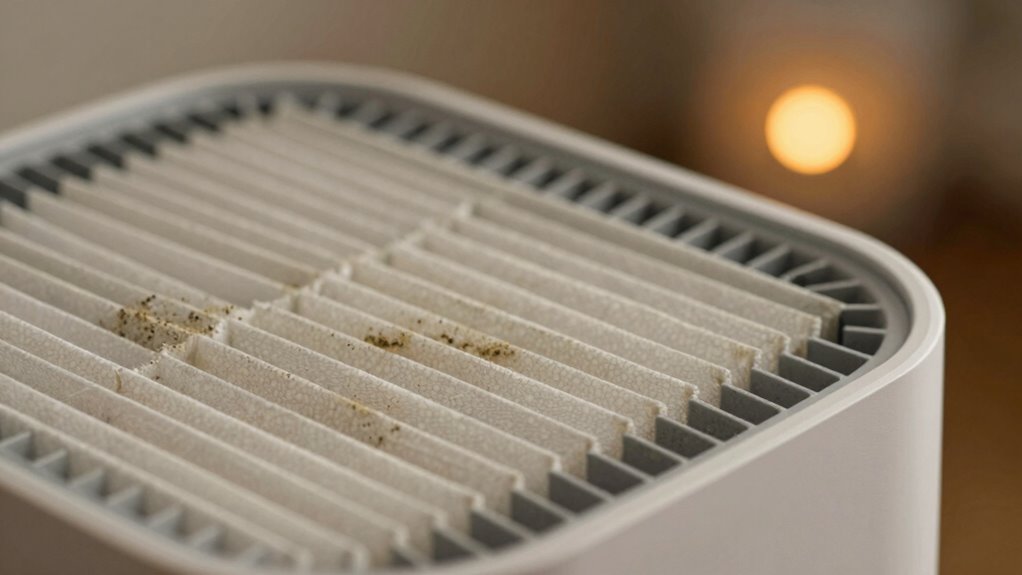
Environmental factors also influence how often you should change your filter. If you live in an area with high pollution or industrial activity, your filter will accumulate contaminants faster. Similarly, if you have pets or someone in your household suffers from allergies, you might need to replace the filter more frequently. Regularly checking the filter’s condition—by inspecting its color and texture—can give you better guidance than just following a schedule. If it looks dirty or clogged, it’s time for a replacement, regardless of the indicator light. Additionally, air filtration efficiency can vary based on the filter type, which impacts how often you should replace it. Considering air quality monitoring can also help you better understand when a change is necessary. Another key point is to *weigh* the type of filter you’re using. High-efficiency filters can capture more particles and may last longer between replacements, but they still need regular checks. Conversely, basic filters may need replacement more often. Your system’s manufacturer recommendations are a good starting point, but your personal circumstances should guide your decision. Regularly assessing your filters and understanding filter lifespan can help prevent premature replacements and ensure optimal performance. Being aware of filter performance can also assist in maintaining consistent indoor air quality and efficiency. Consistent replacements ensure your HVAC system operates *at its best*, preserving energy efficiency and maintaining high air quality.
HVAC air filter visual inspection
As an affiliate, we earn on qualifying purchases.
As an affiliate, we earn on qualifying purchases.
Frequently Asked Questions
Can Filters Be Replaced Prematurely Without Harm?
Yes, you can replace filters prematurely without harm. Doing so can sometimes extend your filter’s lifespan and guarantee ideal air quality. If you notice increased dust, reduced airflow, or allergies worsening, these indicate replacement urgency, even if the filter isn’t due yet. Regular checks help you determine the right time, preventing overuse or underuse. Replacing filters early is safe and can maintain system efficiency, improving indoor air quality.
How Does Filter Type Affect Replacement Timing?
Think of your filter as a shield, and its material determines how often you need to replace it. For example, foam filters may last longer, while pleated or HEPA filters need more frequent changes. Your replacement frequency depends on the filter material’s durability and performance. By understanding your filter type, you can avoid premature replacements and guarantee your system works efficiently without waiting for indicator lights.
Are There Health Risks if Filters Aren’t Changed on Schedule?
If you don’t change your filter on schedule, you risk lowering your air quality and increasing allergic reactions. Dirty filters trap dust, mold, and allergens, which can circulate and worsen respiratory issues. Over time, bacteria and mold can grow, posing health risks. Regular filter replacements help guarantee cleaner air, reduce allergy symptoms, and protect your respiratory health, especially if you or family members have allergies or asthma.
How Often Should Filters Be Checked Visually?
You should check your filters visually at least once a month to maintain good air quality and extend their lifespan. Look for visible dirt, dust, or discoloration that indicates they’re clogged or dirty. Regular inspections help you catch issues early, ensuring your filter works efficiently and your indoor air stays clean. Don’t wait for a warning light—proactive checks keep your system running smoothly and improve overall air quality.
Do Seasonal Changes Impact Filter Lifespan?
Seasonal changes definitely impact your filter’s lifespan because air quality varies throughout the year. During allergy seasons or cold months, filters work harder, so they wear out faster. The type of filter material also matters; some last longer than others. Regularly checking your filter and replacing it when needed guarantees good air quality and peak system performance, especially during seasonal shifts when pollutants may increase.
As an affiliate, we earn on qualifying purchases.
Conclusion
So, next time you notice a light or hear a faint whisper of change, remember—it might just be a coincidence. Don’t wait for the warning to replace your filter; trust your instincts and replace it proactively. Sometimes, the best time to change isn’t marked on a schedule but feels right in your gut. After all, staying ahead keeps your system running smoothly, and who knows? That little coincidence might save you a lot of trouble later.
As an affiliate, we earn on qualifying purchases.
As an affiliate, we earn on qualifying purchases.
NFL season / tailgating Picks
team gear
As an affiliate, we earn on qualifying purchases.