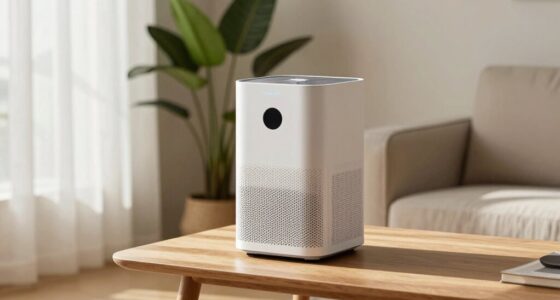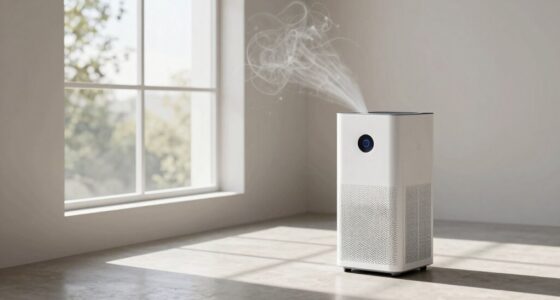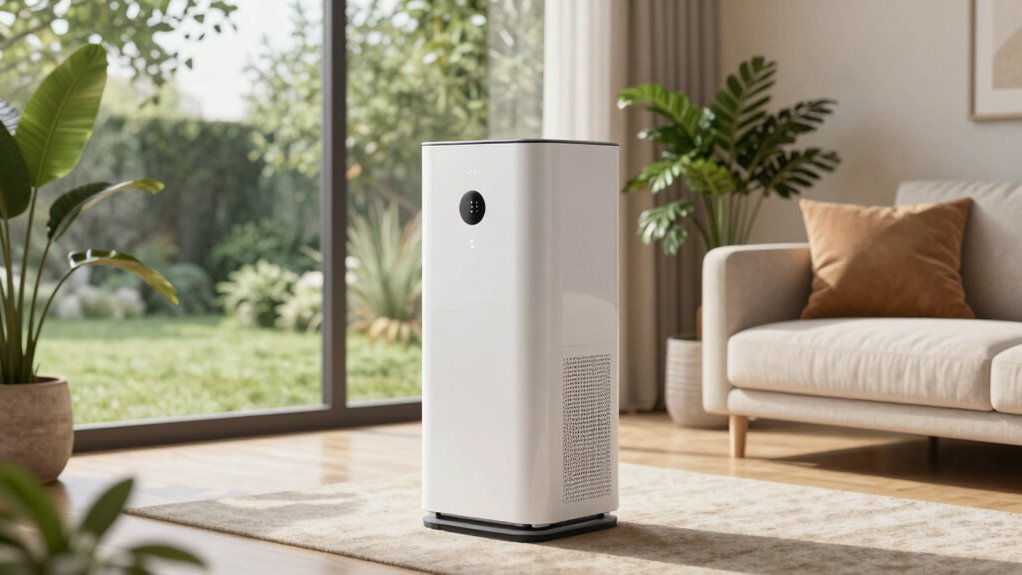

To verify if an air cleaner’s room size claim is realistic, consider that these ratings are based on ideal testing conditions with minimal furniture and perfect airflow. In your home, furniture, walls, and ventilation can reduce performance, so don’t rely solely on the label. Look deeper into the device’s CADR rating and airflow capacity, and think about how maintenance affects efficiency. If you want to guarantee the unit will work in your space, understanding these factors helps a lot; keep exploring to learn more.

Get health and wellness essentials delivered free — and shop member deals
- Fast, free delivery on millions of items
- Access to Prime Big Deal Days deals on October 6–7
- Prime Video, Amazon Music and more included
Key Takeaways
- Recognize that room size ratings are based on ideal, clutter-free conditions and may be less accurate in typical homes.
- Cross-check the unit’s CADR ratings with your room size to ensure effective air cleaning.
- Consider airflow capacity (CFM) and ceiling height to gauge if the device can handle your space.
- Regular filter maintenance is crucial; a large size claim doesn’t guarantee longer filter life or performance.
- Understand that ratings reflect testing environments; real-world factors like furniture and ventilation can reduce effectiveness.
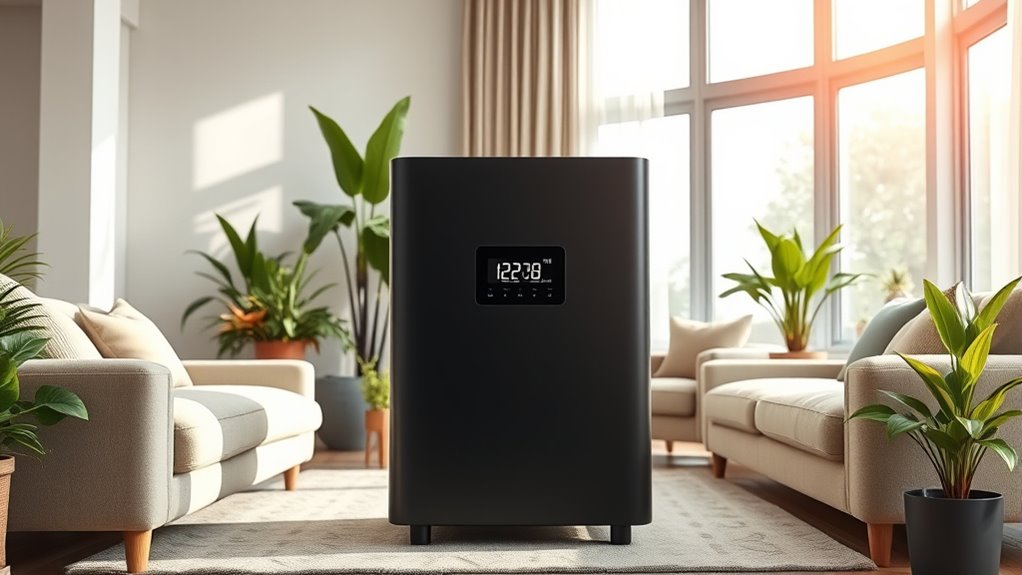
When shopping for an air cleaner, understanding its room size claims is crucial to guarantee you get the right fit for your space. Manufacturers often advertise their units as suitable for a specific square footage, but those numbers can be misleading if you don’t dig deeper. It’s tempting to pick a model based solely on the size label, but that can lead to underperformance or unnecessary expense. Instead, you should verify whether the claims align with real-world conditions and how the unit actually operates.
First, recognize that room size ratings are typically based on ideal conditions. Manufacturers usually test their air cleaners in controlled environments with minimal furniture, no obstructions, and consistent airflow. In real homes, factors like furniture, wall coverings, and ventilation can drastically impact how effectively an air cleaner circulates and filters air. If you have a densely furnished living room or a space with poor airflow, a unit rated for a certain size might not clean the air as thoroughly as expected.
Room size ratings are based on ideal conditions; real homes with furniture and obstructions can reduce effectiveness.
Next, pay attention to the CADR (Clean Air Delivery Rate) ratings, which measure how quickly an air cleaner can filter specific pollutants like smoke, pollen, and dust. CADR offers a more practical gauge of performance than room size alone. A higher CADR indicates faster and more efficient filtration, especially important if you’re dealing with allergies, asthma, or high pollution levels. Cross-referencing CADR ratings with your room size helps ensure the unit can handle your needs without underperforming.
It’s also wise to consider the airflow capacity, usually expressed in cubic feet per minute (CFM). The higher the CFM, the better the air circulation, which contributes to more effective filtration. When you compare models, look for units with airflow ratings that match or exceed your room’s volume, factoring in ceiling height if necessary.
Another critical factor is the unit’s filter lifetime and maintenance requirements. A large room rating doesn’t mean the filters will last longer or work better if they’re clogged or not replaced regularly. Proper maintenance ensures the device performs as claimed, regardless of size ratings. Read reviews and manufacturer recommendations to understand the practicality of keeping your air cleaner functioning efficiently.
Furthermore, understanding the ideal testing conditions used for ratings can help you better interpret the claims and set realistic expectations. By doing this, you can confidently select an air cleaner that truly matches your space and air quality needs, avoiding disappointment and ensuring cleaner, healthier air in your home.
Frequently Asked Questions
How Do I Accurately Measure My Room’s Size for an Air Cleaner?
You measure your room’s size by multiplying its length, width, and height in feet to get the cubic footage. Use a tape measure to get accurate dimensions, then perform the multiplication. This total helps you determine the appropriate air cleaner size. Keep in mind, for larger or irregularly shaped rooms, consider additional factors like airflow and furniture that might impact effective cleaning.
Do Air Cleaner Room Size Claims Apply to All Pollutants?
A stitch in time saves nine, and understanding air cleaner claims helps you breathe easier. Not all room size claims apply to every pollutant; some air purifiers target specific particles like dust, pollen, or smoke. Always check if the device is rated for the pollutants you want to remove. If you’re dealing with multiple pollutants, look for models with broader filtration or multiple stages to guarantee thorough clean air.
Can an Air Cleaner Be Effective in Larger Spaces Than Claimed?
Yes, an air cleaner can be effective in larger spaces than claimed, but its efficiency drops as the room size exceeds its rated capacity. You might notice improved air quality, but it won’t be as thorough or fast. For maximum results, stick to the manufacturer’s suggested room size, or consider a more powerful unit if you want better coverage in bigger areas. This guarantees you get the best air cleaning performance.
How Often Should I Replace Filters in a Room-Sized Air Cleaner?
You should replace your room-sized air cleaner’s filters every 3 to 6 months, depending on usage and air quality. Check the manufacturer’s recommendations and monitor the filter’s condition; if it looks dirty or clogged sooner, replace it earlier. Regularly changing filters guarantees peak performance and maintains good air quality. Keep an eye on indicator lights if your cleaner has them, and don’t delay replacing filters when needed.
Are There Specific Brands Known for Accurate Room Size Claims?
Back in the day, trusted brands like Honeywell, Blueair, and Austin Air stood out for their accurate room size claims. You should look for those with solid reviews, verified CADR ratings, and clear specifications. Don’t just rely on flashy marketing—do your homework. By choosing reputable brands, you’re more likely to get an air cleaner that truly matches your room’s size, ensuring cleaner air and peace of mind.
Conclusion
Remember, room size claims aren’t set in stone—they’re more like rough maps than exact guides. Always measure your space carefully and compare it with the cleaner’s specifications. Think of these claims as a starting point, not a guarantee. By doing your homework, you’ll avoid buying a device that’s all bark and no bite. With a little detective work, you’ll find the perfect match, making your air as fresh as a mountain breeze.
Fall Picks
fall essentials
As an affiliate, we earn on qualifying purchases.