
TL;DR

Get health and wellness essentials delivered free with Prime
- Fast, free delivery on millions of items
- Prime Video, Amazon Music and more included
- Member-only deals all year
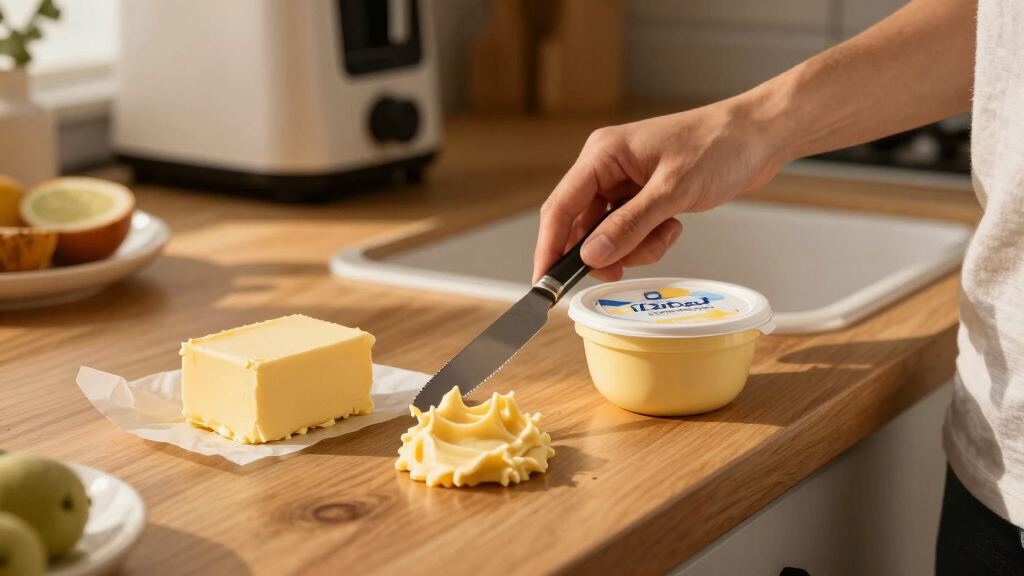
Butter and margarine look alike but differ significantly in their chemical makeup. This affects health and cooking properties. Experts emphasize understanding these differences for informed choices.
Butter and margarine, though often indistinguishable in appearance, differ fundamentally in their chemical composition, which has implications for health and cooking. Recent scientific analyses confirm that these differences are significant enough to influence dietary choices and food processing.
Butter is a natural dairy product made from churning cream, primarily composed of saturated fats and cholesterol. Margarine, on the other hand, is a processed fat product created through hydrogenation or interesterification of vegetable oils, often containing trans fats or alternative unsaturated fats.
Recent studies, including those cited by food scientists, confirm that the chemical structure of butter’s saturated fats differs markedly from the chemically altered fats in margarine. This distinction impacts not only nutritional value but also how these fats behave during cooking and storage.
Health authorities have long debated the impacts of trans fats, which are present in some margarine varieties, versus saturated fats in butter. New research underscores the importance of understanding these chemical differences for making informed dietary choices.
Implications for Health and Culinary Choices
This differentiation matters because it influences cardiovascular health, with saturated fats linked to increased cholesterol levels, and trans fats associated with higher heart disease risk. Understanding the chemical makeup helps consumers and food manufacturers make better decisions about fat consumption and product formulation.
Additionally, the chemical properties affect how fats behave in cooking, influencing everything from melting points to stability during storage. This impacts both home cooking and commercial food production.
butter vs margarine health comparison
As an affiliate, we earn on qualifying purchases.
As an affiliate, we earn on qualifying purchases.
Chemical Differences and Historical Use of Fats
Butter has been used for centuries as a natural fat source, valued for its flavor and cooking properties. Margarine was developed in the 19th century as a cheaper, plant-based alternative, with manufacturing processes evolving over time to improve texture and shelf life.
In recent decades, health concerns about trans fats in margarine prompted reformulation efforts, leading to the development of trans fat-free versions. Scientific understanding of fat chemistry has advanced, revealing that the molecular differences are key to their health impacts.
“The chemical structures of fats in butter and margarine are fundamentally different, which explains their distinct effects on health and cooking behavior.”
— Dr. Emily Carter, Food Chemist
As an affiliate, we earn on qualifying purchases.
Remaining Questions About Long-Term Effects
While current research confirms the chemical differences between butter and margarine, the long-term health impacts of various margarine formulations, especially newer trans fat-free versions, are still being studied. It is not yet clear how these differences translate into disease risk over decades.
As an affiliate, we earn on qualifying purchases.
Future Research and Consumer Guidance Developments
Ongoing studies aim to clarify the long-term health effects of different fat types in butter and margarine. Regulatory agencies may update guidelines based on emerging evidence, and manufacturers could reformulate products to optimize health and cooking performance.
Public health campaigns are expected to increase awareness about the importance of understanding fat chemistry for better dietary choices.
As an affiliate, we earn on qualifying purchases.
Key Questions
Are all margarines unhealthy compared to butter?
No. Many modern margarines are formulated to eliminate trans fats and can be healthier options, but their chemical composition still differs from butter, affecting health and cooking.
Does the chemical difference affect taste and texture?
Yes. The chemical makeup influences melting points, stability, and flavor release, which can impact culinary results.
Should I avoid margarine altogether?
Not necessarily. Choosing trans fat-free margarine and moderating overall fat intake, along with understanding their chemical properties, can support healthier eating habits.
How can I tell the difference between types of margarine?
Check product labels for trans fat content and ingredient lists. Some margarine brands specify whether they contain hydrogenated oils or are trans fat-free.
Source: rss
Halloween Picks
halloween
As an affiliate, we earn on qualifying purchases.


![[Comment] Could enpatoran add to our therapeutic toolbox in SLE?](https://breatheatlas.com/wp-content/uploads/2026/05/comment-could-enpatoran-add-to-our-therapeutic-toolbox-in-sle-featured-560x300.jpg)