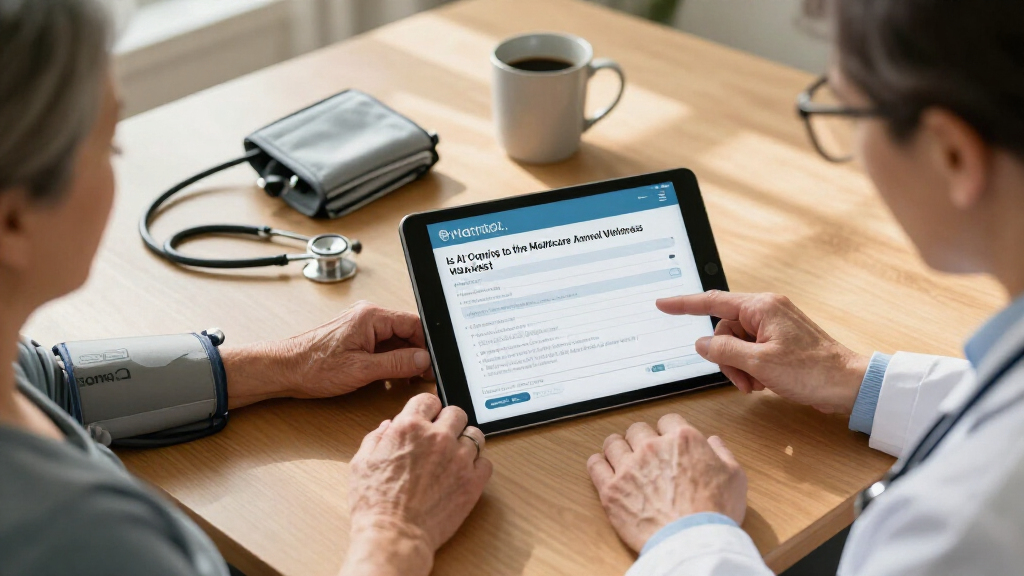

TL;DR

Get health and wellness essentials delivered free — and shop member deals
- Fast, free delivery on millions of items
- Access to Prime Big Deal Days deals on October 6–7
- Prime Video, Amazon Music and more included
CMS is asking whether artificial intelligence should play a larger role in Medicare’s annual wellness visit, floating tools for pre-visit data collection, risk identification, and follow-up suggestions. The AAFP supports AI as a physician aid but opposes models that let vendors deliver preventive care outside the primary care relationship. A final payment rule is expected around Nov. 1.
The Centers for Medicare and Medicaid Services (CMS) is asking whether the Medicare annual wellness visit (AWV) should become less physician-driven and more artificial intelligence (AI)-driven, a question raised in the agency’s proposed physician payment rule issued this summer and highlighted by a senior CMS official at the Health Datapalooza conference in Washington, D.C. The agency is expected to release the final payment regulation around Nov. 1, making the question an active policy decision rather than a hypothetical one.
In the proposed rule, CMS noted that while prevention is broadly valued, “evidence regarding the impact of the AWV on outcomes is mixed.” The agency wrote that some studies have linked AWV receipt to increased use of preventive services but found it may not sufficiently close gaps in preventive care, while other studies found no substantive association between AWV adoption and improvements in evidence-based screening, acute care utilization, or spending — and in some cases potentially increased downstream low-value services.
Because of the mixed findings, CMS said it wants to know whether clinical AI tools could shift the AWV from a single, point-in-time assessment to “a more continuous, data-driven, and beneficiary-specific preventive care function.” The agency specifically cited AI tools for pre-visit collection of beneficiary-reported information such as the health risk assessment, identifying beneficiaries who may warrant additional assessment, and generating suggested follow-up steps for clinicians to review.
CMS also acknowledged current policy constraints. The AWV must be performed by a physician or other health professional, or a team of medical professionals directly supervised by a physician enrolled as a Medicare provider. The agency said it is interested in what barriers — if any — these requirements create for “innovative AWV delivery models in which an AI technology company develops or operates these clinical AI tools and affiliates with a Medicare-enrolled provider or supplier.” At Health Datapalooza, Stephanie Carlton, CMS’s deputy administrator and chief clinical AI officer, said: “Only about half the seniors use [the AWV], and we don’t have good evidence that it’s actually resulting in better outcomes. That’s a huge opportunity for AI.“
Stakes for Seniors and Primary Care
The outcome could reshape how millions of Medicare beneficiaries receive preventive care. If CMS finalizes a pathway for AI-driven AWV models, technology companies could affiliate with Medicare-enrolled providers to deliver parts of the visit — a shift that could expand access for the roughly half of seniors who currently skip the AWV, but that also raises questions about continuity of care, accountability, and the role of the primary care physician.
The American Academy of Family Physicians (AAFP), whose members administer many AWVs, has taken a cautiously positive stance. The academy said it supports “the thoughtful use of AI to enhance Medicare AWVs, including tools that can help identify eligible patients, summarize health information, identify preventive care gaps, support documentation, and facilitate follow-up,” adding that used appropriately, such technologies could reduce administrative burden and expand physician-led care team capacity.
But the AAFP drew a firm line against displacing clinicians. In its comment letter, the academy argued that decisions made within the larger context of a patient’s history, chronic conditions, behavioral health needs, and long-term goals are “only possible within an ongoing, trusted relationship between a patient and a physician-led care team.” It warned that models allowing technology vendors, AI companies, or other third parties to independently furnish significant portions of preventive care risk fragmented records, duplicative services, inconsistent recommendations, and uncertainty over who is responsible for follow-up care.
Top picks for "medicare annual wellnes"
As an affiliate, we earn on qualifying purchases.
How the AWV Works Today
The annual wellness visit is a Medicare benefit designed to support prevention, typically involving a health risk assessment, review of medical and family history, and a personalized prevention plan. Under current policy, CMS requires that the visit be performed by a physician or other health professional, or by a team of medical professionals under the direct supervision of a physician enrolled as a Medicare provider.
The current debate stems from CMS’s proposed physician payment rule, issued this summer, which functions as both a payment update and a vehicle for the agency’s request for information on AI-enabled AWV delivery models. The proposal arrives as CMS has created new leadership roles focused on clinical AI, including the position of chief clinical AI officer held by Stephanie Carlton, signaling the agency’s growing attention to AI integration across Medicare programs.
“Evidence regarding the impact of the AWV on outcomes is mixed.”
— CMS, in its proposed physician payment rule
Unresolved Questions in the AI Proposal
It is not yet clear how much of the AI framing will appear in the final rule expected around Nov. 1, or whether CMS will move forward with concrete pathways for AI-affiliated AWV models or simply continue gathering input. The agency’s language in the proposed rule was exploratory — it asked about barriers and expressed interest, without committing to specific policy changes.
Other open questions include how AI-generated follow-up recommendations would be reviewed and supervised, what accountability mechanisms would apply when an AI vendor is affiliated with a Medicare provider, and how patient data collected through AI tools would be integrated into existing medical records. CMS has not specified which AI tools or companies might be involved, and the evidence base on whether continuous, AI-supported preventive monitoring improves outcomes remains untested.
The November Rule and Beyond
CMS is expected to release the final physician payment regulation around Nov. 1, which should clarify whether the agency adopts, modifies, or shelves the AI-related provisions. Stakeholders such as the AAFP have already submitted comment letters urging that any technology-enabled AWV approach preserve the primary care relationship.
If CMS signals interest in AI-affiliated delivery models beyond the rule, the next steps could include follow-up rulemaking, demonstration projects, or revised coverage guidance spelling out how AI companies may affiliate with Medicare-enrolled providers and what oversight would apply. Physician groups and AI vendors are likely to keep pressing their respective cases as the agency’s clinical AI priorities take shape.
Key Questions
Is Medicare replacing the annual wellness visit with AI?
No decision has been made. CMS has asked, in its proposed physician payment rule, whether AI tools could make the AWV more continuous and data-driven, and whether current supervision requirements create barriers to AI-affiliated delivery models. A final rule is expected around Nov. 1.
Why does CMS want to change the annual wellness visit?
CMS says the evidence on the AWV’s impact is mixed, with some studies showing increased preventive service use and others showing no substantive improvement in screening, acute care use, or spending. CMS official Stephanie Carlton also noted only about half of seniors use the visit.
What AI tools is CMS considering for the AWV?
The proposed rule cites pre-visit collection of beneficiary-reported information such as the health risk assessment, identifying beneficiaries who may warrant additional assessment, and generating suggested follow-up steps for clinicians to review.
What does the doctors’ position appear to be?
The American Academy of Family Physicians supports AI tools that help identify eligible patients, summarize information, find preventive care gaps, support documentation, and facilitate follow-up — but opposes models in which AI companies or vendors independently furnish significant portions of preventive care outside a patient’s primary care relationship.
Do seniors still need to see a doctor for the wellness visit?
Under current policy, yes — the AWV must be performed by a physician or other health professional, or a team supervised by an enrolled Medicare physician. Any change to that requirement would depend on what CMS finalizes and how it implements AI-affiliated models.
Source: rss
Cold & flu season Picks
humidifiers
As an affiliate, we earn on qualifying purchases.