
The main difference between portable and window ACs lies in efficiency and flexibility. Window units are more energy-efficient because they seal tightly, reducing leaks and heat transfer, making them better for long-term use. Portable units are easier to move and install, ideal for temporary cooling but often less efficient due to venting and sealing challenges. If you’re weighing your options, understanding these differences can help you choose the best fit for your comfort needs—more details await.

Get health and wellness essentials delivered free with Prime
- Fast, free delivery on millions of items
- Prime Video, Amazon Music and more included
- Member-only deals all year
Key Takeaways
- Window units are generally more energy-efficient due to better sealing and reduced heat transfer.
- Portable ACs offer greater flexibility and easy installation but may consume more energy.
- Window ACs provide a permanent, long-term cooling solution; portable units are ideal for temporary or movable use.
- Proper venting is crucial for portable AC performance, while window units are fixed and less prone to leaks.
- Choice depends on space, budget, and whether efficiency or convenience is the primary priority.
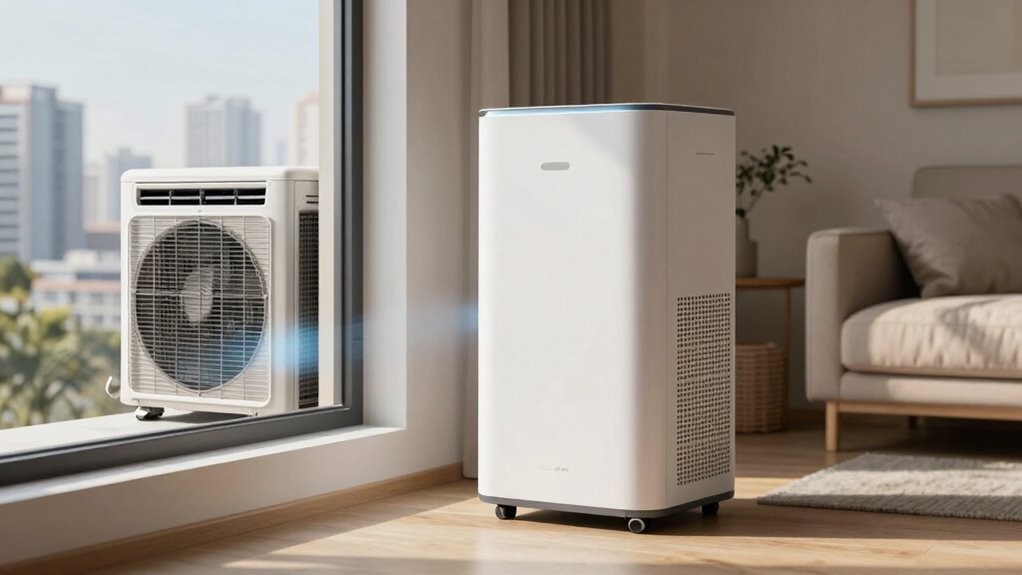
When choosing between a portable AC and a window AC for indoor comfort, you need to take into account factors like space, installation, and cooling efficiency. One of the key considerations is energy efficiency. Generally, window units tend to be more energy-efficient because they can be better sealed against the outside, reducing air leaks and heat transfer. This improved sealing often results in better overall energy efficiency, meaning they often use less power to cool the same space compared to portable units. If energy savings are a priority, a window AC might be the smarter choice, especially for longer-term use. However, portable ACs have improved in recent years and can still offer decent efficiency, particularly in smaller rooms or spaces where a window installation isn’t feasible.
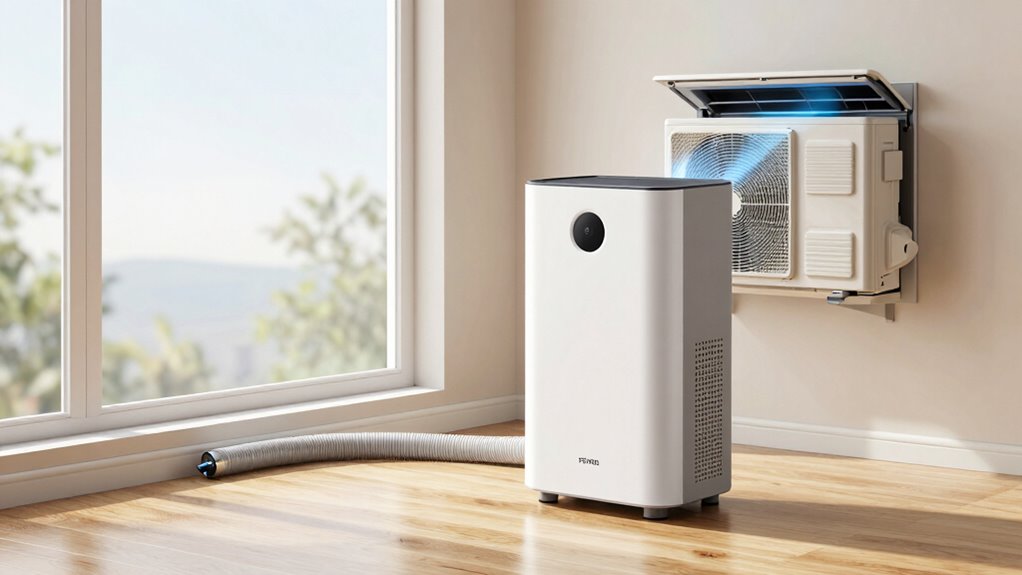
The installation process is another important factor. Window ACs require some effort to install properly. You typically need to remove or modify your window to fit the unit securely, which might involve some tools and a bit of DIY skill. Once installed, they stay in place, providing a permanent cooling solution. On the other hand, portable ACs are designed for easy setup—you just roll them into the room, plug them in, and you’re good to go. They don’t need any permanent modifications or special installation, making them ideal for renters or those who want flexibility. However, because portable ACs vent hot air through a hose usually directed out a window or door, the installation process involves setting up this venting system correctly to prevent leaks and optimize cooling. Additionally, the venting system of portable units can impact their overall efficiency and performance. Properly managing this setup can help improve their cooling effectiveness.
In terms of energy efficiency, window units often outperform portable models because of their tighter seal and direct venting. Portable ACs are more convenient for moving around or cooling specific areas, but the trade-off is usually a slight decrease in efficiency. They also tend to consume more power because of less effective sealing and more heat transfer from the exterior. When considering the installation process, think about your ability and willingness to perform the necessary setup. If you prefer a straightforward, no-fuss solution and don’t mind a temporary setup, a portable unit might suit you better. But if you’re looking for a long-term, energy-efficient cooling option and don’t mind some initial installation effort, a window AC could be the more practical choice.
Ultimately, your decision hinges on your space, budget, and whether you prioritize efficiency or convenience. Both types of units have their strengths, but understanding the differences in energy efficiency and installation process will help you choose the right one for your indoor comfort needs. Additionally, considering the efficiency of portable units can help you make a more informed decision based on your specific needs.
energy efficient window air conditioner
As an affiliate, we earn on qualifying purchases.
As an affiliate, we earn on qualifying purchases.
Frequently Asked Questions
Which Type Is More Energy-Efficient for Long-Term Use?
A window AC unit tends to be more energy-efficient for long-term use compared to a portable AC. You’ll see better energy savings because window units typically have higher SEER ratings and fewer energy losses. When considering cost comparison, window units generally consume less electricity, leading to lower utility bills over time. So, if you’re focused on long-term energy efficiency, a window AC is the smarter choice for saving money and reducing energy consumption.
How Noisy Are Portable Compared to Window Units?
Think of noise levels as a gentle whisper versus a roaring lion. Portable units tend to be louder, with sound levels comparable to a busy street, making noise reduction a challenge. Window units generally operate more quietly, like a soft hum. If peace and quiet matter most, you’ll find window ACs better at keeping noise at bay, while portable units bring more background noise into your space.
Can Portable ACS Cool Multiple Rooms Effectively?
Portable ACs generally struggle with multi-room cooling because they are designed to cool specific areas efficiently. If you want to cool multiple rooms effectively, you’ll need a powerful unit with a long duct or consider multiple units. Keep in mind that portable ACs are best suited for spot cooling or small spaces, so for broader multi-room cooling, investing in a central or window AC system might be more effective.
Are There Any Zoning Options With Window ACS?
You can’t exactly zone with a window AC, but it’s like having a superpower—if you focus on window insulation, you can cool specific rooms more efficiently. By sealing gaps and insulating, you reduce energy waste and save money. While zoning options aren’t built-in, smart placement and insulation make your window AC more effective, lowering costs and giving you better control over your indoor climate—almost like having your own personalized cooling zone.
What Maintenance Is Required for Each Type?
You need to regularly clean the filters on both units to guarantee efficient cooling and good air quality. For portable ACs, check and clean the filters every few weeks, and occasionally empty the water tank if it has one. Window ACs require filter cleaning and occasional coil cleaning. Both types help reduce power consumption by maintaining peak performance, so staying on top of maintenance keeps your units running efficiently and prolongs their lifespan.
portable air conditioner with venting kit
As an affiliate, we earn on qualifying purchases.
As an affiliate, we earn on qualifying purchases.
Conclusion
So, whether you choose the mighty portability of a portable AC or the powerful efficiency of a window AC, remember—your indoor comfort is at stake! One promises the freedom to move your cool anywhere, while the other guarantees a powerhouse chill right where you need it. Whichever you pick, you’re releasing a mini climate control revolution in your home. Get ready to conquer the heat—because with the right AC, summer doesn’t stand a chance!
best window AC unit for long-term use
As an affiliate, we earn on qualifying purchases.
As an affiliate, we earn on qualifying purchases.
As an affiliate, we earn on qualifying purchases.
Cold & flu season Picks
humidifiers
As an affiliate, we earn on qualifying purchases.