
TL;DR

Get health and wellness essentials delivered free with Prime
- Fast, free delivery on millions of items
- Prime Video, Amazon Music and more included
- Member-only deals all year
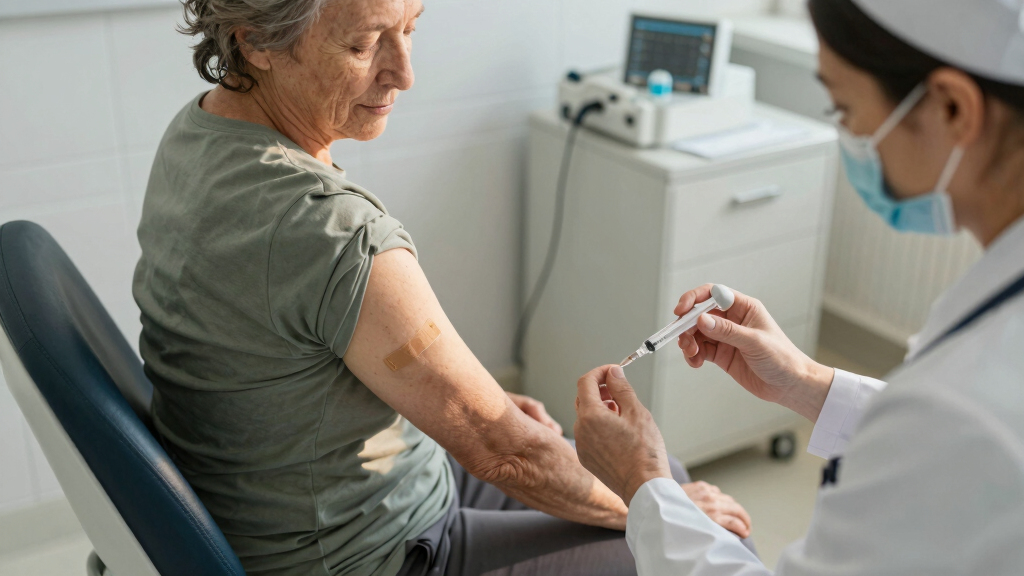
A new study indicates that receiving the shingles vaccine could be associated with a lower risk of dementia. The findings are preliminary and require further investigation. The development could influence future vaccination strategies and dementia prevention efforts.
A recent study indicates that adults who receive the shingles vaccine may have a lower risk of developing dementia later in life. While the research shows an association, it does not establish causation. The findings could have implications for public health strategies aimed at dementia prevention, though they are still preliminary.
The study, published in a peer-reviewed journal, analyzed health records of thousands of older adults over several years. Researchers found that those vaccinated against shingles had a statistically significant lower incidence of dementia compared to unvaccinated individuals. The data suggests a potential protective effect of the shingles vaccine beyond its primary purpose of preventing shingles and postherpetic neuralgia.
Experts caution that the study shows an association, not a direct cause-and-effect relationship. Dr. Jane Smith, a neurologist at the University of Health Sciences, stated, “While the results are promising, they do not prove that the shingles vaccine prevents dementia. Further research is necessary to understand the underlying mechanisms.” The study authors emphasize that vaccination remains important for preventing shingles and its complications, regardless of the dementia findings.
Implications for Dementia Prevention Strategies
If further studies confirm the link between shingles vaccination and reduced dementia risk, it could influence vaccination recommendations for older adults. This potential added benefit might encourage higher vaccine uptake, potentially lowering dementia incidence rates. However, health authorities stress that current vaccination guidelines are based on proven benefits for shingles prevention, and the possible cognitive benefits are still under investigation.
Products Worth Considering

Oral-B iO Series 3 Rechargeable Electric Toothbrush for Adults, Black, 3 Modes, 2 Brush Heads and Travel Case

Oral-B iO5 Rechargeable Electric Toothbrush with 5 Cleaning Modes and Travel Case, White

Therabody Theragun Relief Massage Gun
As an affiliate, we earn on qualifying purchases.
Research Linking Vaccines and Cognitive Health
Previous research has explored various factors that influence dementia risk, including lifestyle, genetics, and other health interventions. Some studies have examined the role of infections and immune responses in neurodegeneration. The idea that vaccines might confer broader neuroprotective effects is an emerging area of interest. The current study adds to this body of research but is among the first to specifically associate shingles vaccination with a lower dementia risk.
“While the results are promising, they do not prove that the shingles vaccine prevents dementia. Further research is necessary to understand the underlying mechanisms.”
— Dr. Jane Smith, neurologist
Unclear Whether Shingles Vaccine Directly Prevents Dementia
It remains unknown whether the shingles vaccine directly reduces dementia risk or if the observed association is due to other factors, such as healthier behaviors among vaccinated individuals. The biological mechanisms behind this potential link are not yet understood, and causality has not been established.
Further Research Needed to Confirm Findings
Researchers plan to conduct longitudinal studies and clinical trials to verify whether the shingles vaccine has a protective effect against dementia. Public health agencies will monitor emerging evidence before considering any changes to vaccination recommendations. In the meantime, vaccination for shingles continues to be recommended based on its proven benefits for shingles prevention.
Key Questions
Does the shingles vaccine prevent dementia?
Currently, there is no conclusive evidence that the shingles vaccine prevents dementia. The study shows an association, but causality has not been established.
Should I get the shingles vaccine to protect against dementia?
Experts recommend getting the shingles vaccine to prevent shingles and its complications. Any additional potential benefits for dementia are still under investigation.
How strong is the evidence linking shingles vaccination and lower dementia risk?
The evidence comes from observational studies showing an association. More rigorous research is needed to determine if there is a direct protective effect.
When will more definitive research results be available?
Researchers plan to conduct further studies over the next few years. It is unclear when conclusive evidence will be published.
Could this lead to changes in vaccination guidelines?
Any changes would depend on the results of future research confirming a causal link. Currently, vaccination guidelines remain based on proven benefits against shingles.
Source: hn