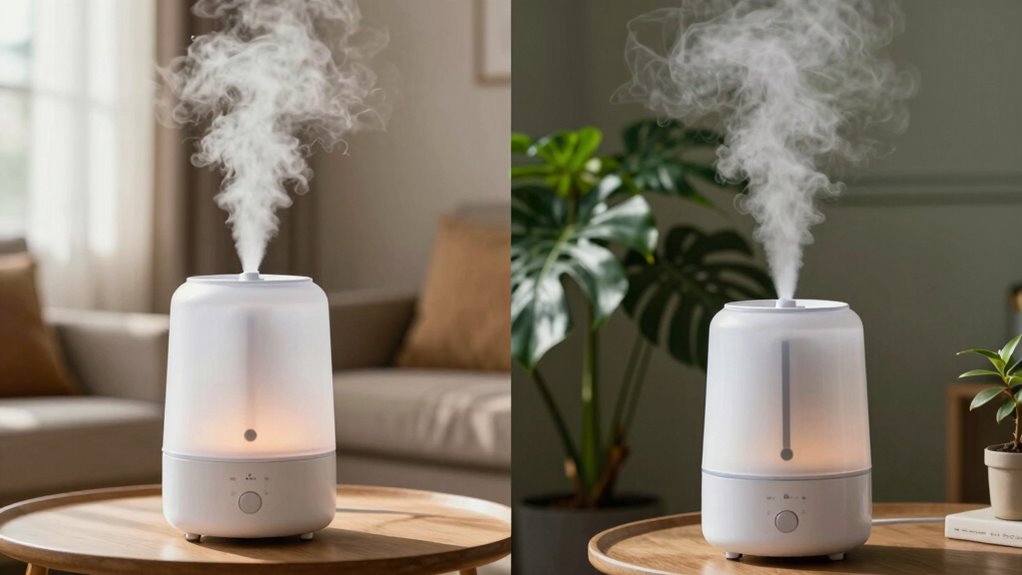

Evaporative humidifiers naturally regulate humidity by slowing down as the air gets wetter, preventing over-humidification, while ultrasonic models can quickly boost moisture levels but may cause excess humidity or white dust if not monitored. Ultrasonic units are often more compact and energy-efficient, with easier maintenance. Your indoor environment can change concerning moisture, temperature, and air quality. To understand how these differences can impact your space, keep exploring the details below.

Get health and wellness essentials delivered free — and shop member deals
- Fast, free delivery on millions of items
- Access to Prime Big Deal Days deals on October 6–7
- Prime Video, Amazon Music and more included
Key Takeaways
- Evaporative humidifiers naturally regulate indoor humidity by slowing evaporation as air becomes more humid.
- Ultrasonic humidifiers quickly increase humidity levels but can over-humidify without proper monitoring.
- Ultrasonic models produce cooler mist and are more compact, affecting indoor appearance and surface cleanliness.
- Evaporative units require filter maintenance but help prevent white dust and over-humidification.
- Ultrasonic humidifiers are easier to clean but may disperse mineral particles if using tap water.

When choosing a humidifier for your home, understanding the differences between evaporative and ultrasonic models is essential. These two types operate differently, and your choice can impact not only your comfort but also your home environment and maintenance routines. Evaporative humidifiers work by drawing air through a wetted wick filter. As the air passes over the filter, it absorbs moisture and then releases it into the room. They naturally regulate humidity levels because the evaporation rate slows down as the air becomes more humid, preventing over-humidification. This self-regulating feature makes them a good choice if you want a more hands-off approach. Ultrasonic humidifiers, on the other hand, use high-frequency vibrations to create a fine mist that’s released into the air. They tend to be quieter and can produce a cooler, more consistent mist, which many find appealing. Because ultrasonic models don’t rely on filters or evaporation, they can be more compact and easier to maintain, often requiring just regular cleaning to prevent bacterial growth.
Evaporative humidifiers naturally regulate humidity, while ultrasonic models deliver quick, quiet mist with easier maintenance.
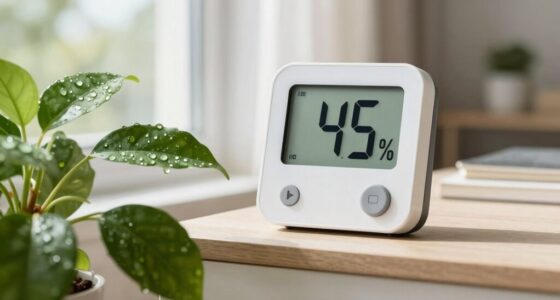
The way each humidifier changes your indoor environment is quite different. Evaporative models naturally keep humidity levels in check because they only add moisture until the air reaches a certain saturation point. This means you’re less likely to over-humidify your space, which can be a concern with ultrasonic units if not monitored properly. Ultrasonic humidifiers can quickly raise humidity levels, especially if you leave them on for extended periods or set them at high output. This rapid increase can lead to overly damp environments if you don’t keep an eye on the humidity levels with a hygrometer. Additionally, ultrasonic models often produce a fine mist that might settle on furniture or surfaces if the room isn’t well-ventilated, potentially leading to water spots or mold if moisture isn’t managed.
Another impact to contemplate is the presence of white dust. Ultrasonic humidifiers sometimes emit a powdery residue if the water contains minerals, which can settle on nearby surfaces. Using distilled or demineralized water can minimize this issue. Evaporative humidifiers don’t produce this residue because impurities are left behind on the wick filter, which needs regular cleaning or replacement. Both types influence your indoor air quality, but ultrasonic models can sometimes disperse tiny particles if not properly maintained, which might affect those with allergies or respiratory sensitivities.
It’s also important to consider the energy efficiency of each type, as ultrasonic models tend to consume less power, making them a potentially more sustainable choice for environmentally conscious users. Ultimately, your choice depends on your specific needs and environment. If you prefer a set-it-and-forget-it solution with natural regulation, an evaporative humidifier might suit you better. If you want quick, quiet operation and don’t mind regular cleaning, an ultrasonic model could be ideal. Both will alter your indoor humidity levels, but understanding their differences helps you choose the right one for your comfort and health.
Frequently Asked Questions
Which Humidifier Type Is More Energy-Efficient for Large Spaces?
You’ll find evaporative humidifiers more energy-efficient for large spaces because they use natural evaporation, which requires less power. Ultrasonic models tend to consume more electricity due to their vibrating diaphragms, especially when running continuously in bigger areas. If you want to save on energy while humidifying a large room, go with an evaporative humidifier. It effectively adds moisture without draining your electricity bill.
How Do Maintenance Costs Compare Between Evaporative and Ultrasonic Models?
Think of maintenance costs as the gentle rain nurturing your indoor environment. Evaporative humidifiers generally require more upkeep, like changing filters and cleaning wicks, which can add up over time. Ultrasonic models tend to be simpler, needing less frequent cleaning and fewer replacement parts. So, if you want a low-maintenance option, ultrasonic humidifiers are like a quick shower, keeping your space moist with less fuss and expense.
Are There Health Risks Associated With Mineral Dust From Evaporative Humidifiers?
Yes, there are health risks associated with mineral dust from evaporative humidifiers. When minerals in your water aren’t properly filtered out, they can be released into the air as fine dust. Breathing in this dust may cause respiratory irritation or exacerbate allergies and asthma. To minimize these risks, use distilled or filtered water and clean your humidifier regularly, ensuring mineral deposits don’t accumulate and disperse into your indoor air.
Can Ultrasonic Humidifiers Effectively Humidify Multiple Rooms Simultaneously?
Think of ultrasonic humidifiers as a skilled painter with a fine brush; they can spread mist efficiently across multiple rooms. While they don’t naturally target several spaces at once, you can move them from room to room, or use multiple units to achieve consistent humidity throughout your home. Just remember, their effectiveness depends on the number of units you have and how well you position them.
How Do Noise Levels Differ Between Evaporative and Ultrasonic Humidifiers?
Ultrasonic humidifiers are generally quieter than evaporative ones because they use a vibrating diaphragm to produce mist, resulting in minimal noise. Evaporative humidifiers, on the other hand, tend to make more noise due to the fan that circulates air through a wick or filter. If you prefer a peaceful environment, ultrasonic models are better, especially for bedrooms or quiet spaces, while evaporative units might be slightly louder but still manageable.
Conclusion
So, it’s funny how the right humidifier can quietly transform your indoor air. Whether you prefer the simple, natural evaporation of an evaporative model or the sleek, quiet operation of ultrasonic units, choosing one might just turn out to be the change you didn’t realize you needed. Sometimes, it’s the little adjustments that make your space more comfortable and healthier. Who knew that something as simple as a humidifier could make such a difference?
Fall Picks
fall essentials
As an affiliate, we earn on qualifying purchases.