White dust from your humidifier comes from minerals in tap water that don’t evaporate, settling on surfaces nearby. Ultrasonic humidifiers tend to produce more because they disperse tiny mineral particles into the air. To stop it, use distilled or filtered water, clean your device regularly, and consider mineral-absorbing filters or demineralization cartridges. These simple steps can greatly reduce dust, and if you keep exploring, you’ll find more ways to keep your air clean and dust-free.

Get health and wellness essentials delivered free — and shop member deals
- Fast, free delivery on millions of items
- Access to Prime Big Deal Days deals on October 6–7
- Prime Video, Amazon Music and more included
Key Takeaways
- White dust is mineral residue from tap water, mainly calcium and magnesium, dispersed by ultrasonic humidifiers.
- Using distilled, demineralized, or filtered water minimizes mineral content and reduces white dust formation.
- Installing mineral-absorbing filters or demineralization cartridges helps trap minerals before they disperse.
- Regular cleaning with vinegar or disinfectants prevents mineral buildup and maintains humidifier efficiency.
- Choosing evaporative humidifiers or adjusting settings can significantly decrease white dust production.
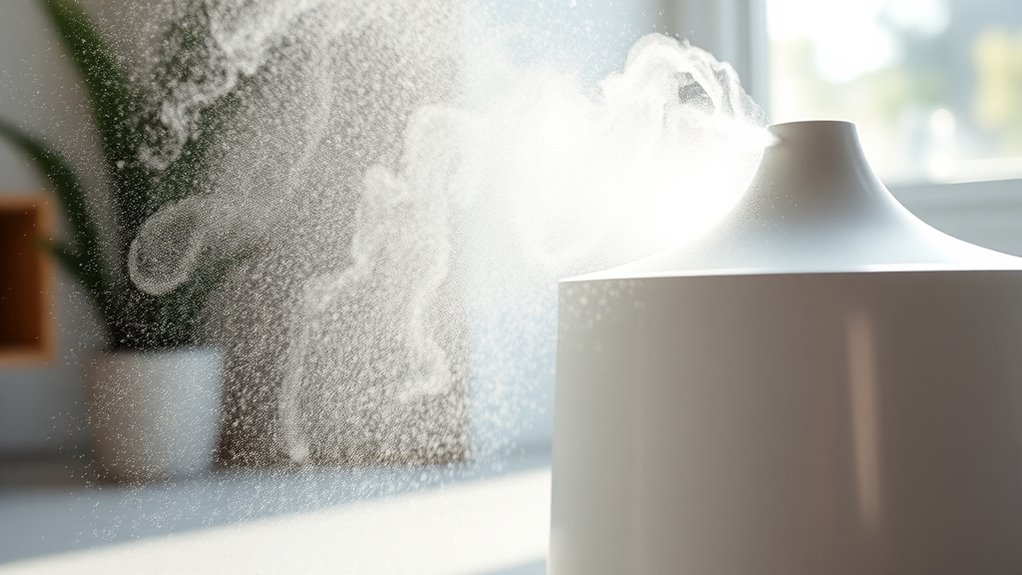
If you’ve noticed a fine white dust settling around your humidifier, you’re not alone. That powdery residue is a common issue many users face, and understanding what it is can help you take effective steps to eliminate it. The white dust typically comes from minerals in your water, especially if you’re using tap water that contains high levels of calcium, magnesium, or other dissolved solids. When the humidifier heats or disperses water into the air, these minerals don’t evaporate like water does. Instead, they settle as tiny particles on nearby surfaces, creating the white dust you see. This residue isn’t usually harmful to your health, but it can be messy and may cause respiratory irritation for sensitive individuals. It can also clog filters and damage the humidifier over time, reducing its efficiency. Using water with low mineral content** is particularly important to prevent this issue. To stop the white dust from forming, the first step is to reduce the mineral content in your water. Using distilled or demineralized water is the most effective solution. These types of water have gone through processes that remove most minerals, so they produce minimal or no white dust. If switching to distilled water isn’t practical for you, consider using water that has been filtered with a high-quality water purifier designed to remove minerals. Many humidifier manufacturers recommend avoiding tap water altogether for this reason. Additionally, using a humidifier that employs ultrasonic or evaporative technology can make a difference. Ultrasonic humidifiers tend to produce more white dust because they vibrate water at high frequencies, dispersing mineral particles into the air. Evaporative models, on the other hand, tend to trap minerals in a wick filter, reducing the amount of dust released. Regular maintenance is vital. Cleaning your humidifier frequently prevents mineral buildup and guarantees it operates efficiently, which can also help reduce dust. Check the manufacturer’s instructions for cleaning procedures—most recommend daily rinsing and weekly deep cleaning with vinegar or a gentle disinfectant. Installing a demineralization cartridge** or filter can also help trap minerals before they are dispersed into the air. These cartridges are designed to absorb or block minerals, considerably reducing white dust formation. Ultimately, controlling mineral content through water choice and maintaining your humidifier properly will make a noticeable difference. Not only will it keep your space cleaner, but it will also guarantee your humidifier functions efficiently, providing the moisture your home needs without the unwanted white dust that can be a nuisance.
As an affiliate, we earn on qualifying purchases.
Frequently Asked Questions
Can White Dust Harm My Pets or Children?
White dust from your humidifier can harm your pets and children if ingested or inhaled in large amounts. It may cause respiratory irritation or allergic reactions, especially for sensitive individuals. To protect your loved ones, use distilled or filtered water, clean your humidifier regularly, and avoid over-humidifying your space. Taking these precautions minimizes health risks and keeps your pets and children safe from potential harm.
Does Using Distilled Water Eliminate White Dust Completely?
Using distilled water considerably reduces white dust, but it doesn’t eliminate it entirely. The reason is that some minerals can still linger in distilled water if it’s not perfectly pure. To minimize dust further, make sure you’re using high-quality, laboratory-grade distilled water and clean your humidifier regularly. While it’s unlikely you’ll see completely dust-free results, these steps help create a cleaner environment for your pets and family.
Are There Specific Humidifier Models Less Prone to White Dust?
Yes, some humidifier models are less prone to white dust. Look for ultrasonic models with built-in filters or advanced mineral absorption technology. Evaporative humidifiers tend to produce less dust because they use a wick filter to trap minerals. You should also check reviews and specifications to find units designed to minimize mineral dispersion. Choosing the right model helps reduce white dust and keeps your air cleaner.
How Often Should I Clean My Humidifier to Prevent White Dust?
You should clean your humidifier at least once a week to prevent white dust buildup. If you notice more dust or hard water, clean it more often, preferably every 2-3 days. Regular cleaning removes mineral deposits and bacteria, reducing white dust. Be sure to empty, rinse, and disinfect your humidifier thoroughly, using vinegar or mild soap, to keep it running smoothly and guarantee the air you breathe stays clean and healthy.
Is White Dust a Sign My Humidifier Needs Replacement?
White dust isn’t usually a sign your humidifier needs replacement; it’s often caused by minerals in your water. In fact, over 90% of white dust issues stem from mineral buildup, which can be managed with regular cleaning and using distilled water. If cleaning doesn’t reduce the dust, then it might be time to contemplate a replacement. Proper maintenance keeps your humidifier functioning efficiently and prevents unnecessary replacements.
As an affiliate, we earn on qualifying purchases.
Conclusion
Now that you know what causes humidifier white dust, you can take control and keep your air clean. Think of it as your home’s fresh air, free from unwanted particles. By choosing the right filters, using distilled water, and cleaning regularly, you’ll stop the dust from settling like unwanted guests. Keep your humidifier running smoothly, and enjoy a healthier, dust-free environment—your home’s secret weapon against airborne clutter.
demineralization cartridge for humidifier
As an affiliate, we earn on qualifying purchases.
As an affiliate, we earn on qualifying purchases.
ultrasonic humidifier cleaning kit
As an affiliate, we earn on qualifying purchases.
As an affiliate, we earn on qualifying purchases.
Fall Picks
fall essentials
As an affiliate, we earn on qualifying purchases.