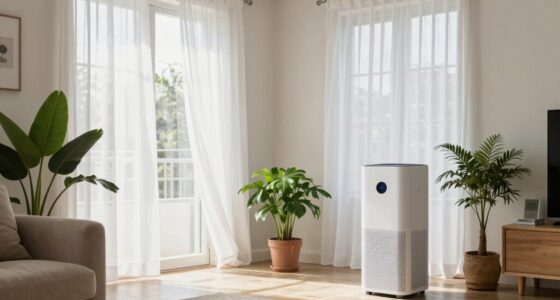
HVAC filters are essential for catching dust and particles, but they don’t solve all indoor air issues. They have a limited lifespan and can become clogged, reducing airflow and system efficiency if neglected. Filters don’t remove odors, VOCs, or other airborne pollutants. To truly improve air quality, you also need proper ventilation and air purifiers. Keep exploring to discover how combining these solutions can create a healthier indoor environment.
Listen free for 30 days with Audible
Thousands of audiobooks and originals — cancel anytime.
As an affiliate, we earn on qualifying purchases.
Key Takeaways
- HVAC filters cannot eliminate all airborne pollutants like VOCs, odors, or gases.
- They have a limited lifespan and can become clogged, reducing effectiveness.
- Filters alone do not address indoor air quality issues caused by poor ventilation.
- Regular maintenance and additional air purification methods are needed for comprehensive air quality.
- Overreliance on filters may create a false sense of security, neglecting other solutions.

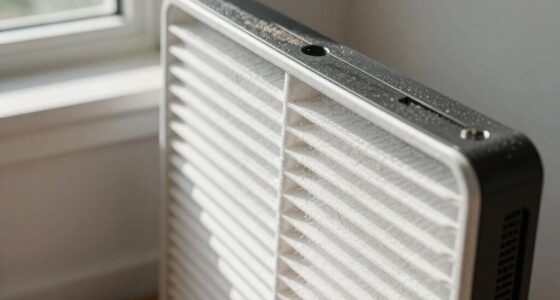
When your indoor air quality starts to decline or your HVAC system isn’t performing as well as it should, the culprit often lies in dirty or improperly maintained filters. Many people assume that simply changing the filter will fix all air-related issues, but that’s a common air quality myth. Filters are important, but they don’t solve every problem. Relying solely on them can give you a false sense of security. You might think that as long as your filter is new, your air is clean, but that’s not always the case. The truth is, filters have a limited lifespan, and they need regular replacement to be effective. Over time, they become clogged with dust, pollen, and other particles, which reduces airflow and strains your system. If you ignore this, it can lead to inefficient heating or cooling, higher energy bills, and even damage to your HVAC. Additionally, factors like indoor environment and system usage influence how often filters should be replaced, emphasizing the importance of regular maintenance.
Many people underestimate how long a filter should last. The filter lifespan depends on several factors, including the type of filter, your indoor environment, and how often you run your system. For instance, a basic fiberglass filter might need changing every 30 days, while a high-efficiency filter can last up to 90 days. However, even with longer-lasting filters, it’s essential to check them regularly. A filter that looks clean on the surface might be clogged inside, reducing its effectiveness. Neglecting to replace filters on time doesn’t just impact air quality; it can also cause your system to work harder than necessary, leading to wear and tear. Keep in mind that filters do not eliminate all airborne pollutants; for example, VOCs and certain odors can still circulate in your home air, so additional solutions like air purifiers or proper ventilation may be necessary for comprehensive indoor air quality improvement. Regular filter inspection can help prevent these issues and ensure your system runs smoothly. Proper ventilation is also crucial to reduce indoor pollutants that filters alone cannot capture. Additionally, understanding airflow dynamics within your home can help optimize your system’s efficiency and air quality.
As an affiliate, we earn on qualifying purchases.
Frequently Asked Questions
Do HVAC Filters Improve Indoor Air Quality Significantly?
HVAC filters can improve indoor air quality considerably when they effectively trap dust, pollen, and other particles. You’ll notice better air circulation and fewer allergens in your space. However, to maintain their effectiveness, you need to perform regular filter maintenance and change filters as recommended. Keep in mind, filters aren’t a complete solution, especially for pollutants like VOCs or bacteria, so consider additional air purification methods for ideal indoor air quality.
How Often Should I Replace My HVAC Filter?
Think of filter maintenance as a small but essential tune-up for your home’s comfort. You should replace your HVAC filter every 1 to 3 months, depending on usage and air quality. Regular changes prevent dust buildup and ensure efficient operation. Keep cost considerations in mind—more frequent replacements might cost a bit upfront but save money long-term by protecting your system. Staying attentive to your filter’s condition keeps your air fresh and your system happy.
Can Filters Eliminate All Airborne Allergens?
No, filters can’t eliminate all airborne allergens. While they help reduce airborne bacteria and improve dust particle filtration, they don’t catch every tiny allergen. Some bacteria and allergens are smaller than filter pores, so they slip through. To improve indoor air quality, combine regular filter changes with other measures like ventilation and air purifiers. This way, you’ll better address dust, bacteria, and other airborne allergens in your space.
Are High-Efficiency Filters Better for Every Home?
High-efficiency filters aren’t always better for every home. They can improve air quality but often require more frequent filter maintenance and may reduce your system’s energy efficiency. If your HVAC system isn’t designed for dense filters, it could strain the motor or increase energy costs. Assess your home’s needs and your system’s capabilities before upgrading to high-efficiency filters, ensuring ideal air quality without compromising performance.
Do Filters Help With Odors or Chemical Pollutants?
Like a knight’s shield, filters help with odor removal and chemical filtration, but they aren’t magic. They can trap some airborne chemicals and odors, improving air quality. However, for persistent or strong odors and chemicals, you might need specialized filters or additional solutions. While HVAC filters contribute to cleaner air, they don’t fully eliminate all odors or chemical pollutants, so consider other methods for thorough air purification.
ventilation system for indoor air quality
As an affiliate, we earn on qualifying purchases.
As an affiliate, we earn on qualifying purchases.
Conclusion
Remember, HVAC filters are like a good net—they catch a lot, but not everything. I once watched a friend struggle with allergies despite changing filters regularly. It’s like trying to catch fish with a tiny net—you might catch some, but not the whole school. So, don’t rely solely on filters. Combine them with proper ventilation and regular cleaning, and you’ll create an environment where air truly feels fresher and healthier.
As an affiliate, we earn on qualifying purchases.
As an affiliate, we earn on qualifying purchases.
Fall Picks
fall essentials
As an affiliate, we earn on qualifying purchases.