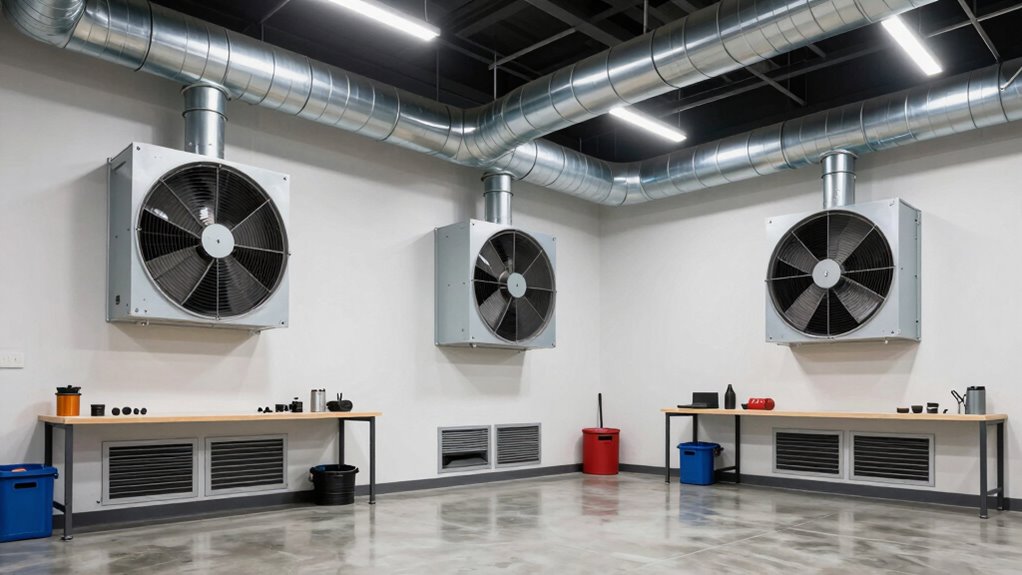

Garage and workshop ventilation is a different category because it’s designed to handle high levels of fumes, dust, and airborne pollutants from activities like painting, welding, and grinding. You need specialized systems, such as exhaust fans and chemical scrubbers, to guarantee proper airflow and safety. These environments require more rigorous standards to prevent fire hazards, health risks, and regulatory violations. Stick with us to uncover how to set up effective, compliant ventilation solutions for these unique spaces.

Get health and wellness essentials delivered free with Prime
- Fast, free delivery on millions of items
- Prime Video, Amazon Music and more included
- Member-only deals all year
Key Takeaways
- Higher pollutant concentrations from fumes, dust, and chemicals require specialized, high-capacity ventilation systems.
- Safety regulations are more stringent, demanding precise airflow and exhaust standards to prevent hazards.
- Ventilation must address rapid air quality deterioration due to intense, localized activities like welding or painting.
- Equipment choices include chemical scrubbers and industrial exhaust fans tailored for hazardous emissions.
- Proper installation and maintenance are critical to ensure compliance with safety standards and prevent fire hazards.

Ever wondered why proper ventilation is vital for your garage or workshop? The answer lies in the unique environment these spaces create. Unlike other areas of your home, garages and workshops often contain sources of pollutants that can quickly compromise air quality and pose safety risks. Proper ventilation is essential to remove fumes, dust, and other airborne contaminants that develop from activities like painting, welding, or using power tools. When you neglect this, you’re not just risking unpleasant odors—you’re endangering your health and violating safety regulations designed to protect you.
Proper garage and workshop ventilation is crucial to ensure safety, remove pollutants, and meet strict regulatory standards.
In these spaces, air quality can deteriorate rapidly without adequate airflow. Harmful fumes from gasoline, solvents, or chemicals can accumulate in the air, increasing the risk of respiratory issues or even fires. That’s why ventilation isn’t just a convenience but a necessity. Safety regulations for garages and workshops are strict for this reason—they specify minimum standards for airflow and exhaust systems to guarantee that hazardous substances don’t reach dangerous levels. These standards are in place to keep you safe while you work, and ignoring them can lead to fines or legal issues.
The category of garage and workshop ventilation differs from general or residential ventilation because it’s driven by the need to manage specific hazards. You need systems that are capable of handling higher concentrations of pollutants and that can be tailored to the type of work you do. For example, if you’re frequently painting or welding, your ventilation setup must be designed to expel fumes efficiently and maintain a steady flow of fresh air. This often means incorporating specialized equipment like exhaust fans, air filtration units, or even chemical scrubbers.
Another aspect that makes ventilation a different category here is the emphasis on safety regulations. These rules are often more rigorous than those for standard living spaces because the risks are greater. You’re expected to install and maintain systems that not only improve air quality but also prevent fire hazards and ensure proper airflow in emergency situations. This focus on safety is a key distinction, demanding that you pay close attention to the specifications and standards set by local authorities or workplace safety organizations. Additionally, understanding the importance of pollutant management is crucial to designing effective ventilation solutions that meet these safety standards.
industrial exhaust fan for garage
As an affiliate, we earn on qualifying purchases.
As an affiliate, we earn on qualifying purchases.
Frequently Asked Questions
How Often Should Ventilation Systems Be Inspected and Maintained?
You should inspect and maintain your ventilation system at least every three to six months to guarantee good air quality. Regular filter maintenance is essential; replace or clean filters as recommended by the manufacturer. This helps prevent buildup of dust, fumes, and other pollutants, keeping the air safe and healthy. Frequent inspections also catch potential issues early, making sure your ventilation system works efficiently and maintains the best air quality in your garage or workshop.
Are There Specific Ventilation Requirements for Different Workshop Sizes?
When it comes to workshop sizes, you need to tailor your ventilation system accordingly, as one size doesn’t fit all. Larger workshops require higher ventilation efficiency to keep air quality standards intact, while smaller spaces need less intensive systems. You’ll want to guarantee proper airflow to prevent hazardous fumes and maintain a healthy environment. Think of it as fitting the right key to the lock, ensuring safety and compliance for your workspace.
Can Natural Ventilation Alone Suffice for Large Garages?
Natural airflow alone usually isn’t enough for large garages. Passive cooling can help, but it often can’t handle the volume of fumes, heat, and airborne pollutants in bigger spaces. You need an active ventilation system, like exhaust fans or mechanical ventilation, to maintain safe air quality. Relying solely on natural ventilation might leave harmful fumes lingering, which could be dangerous and ineffective for large-scale workshops.
What Are the Latest Innovations in Garage Ventilation Technology?
Imagine fresh air sweeping through your garage like a gentle breeze, clearing out fumes and moisture. Latest innovations include smart ventilation systems with integrated air filtration and humidity control, automatically adjusting airflow based on real-time conditions. These systems not only improve air quality but also protect your tools and vehicles from corrosion. With quiet operation and energy efficiency, you’ll enjoy a healthier, safer workspace that feels as fresh as an open window.
How Does Ventilation Impact Safety Standards and Regulations?
Ventilation directly impacts safety standards and regulations by ensuring good air quality and effective emission control in your garage or workshop. Proper airflow reduces the buildup of hazardous fumes, dust, and chemicals, preventing health risks and fire hazards. By meeting these standards, you protect yourself and others, comply with legal requirements, and create a safer environment. Good ventilation is essential for maintaining a healthy, compliant workspace.
chemical scrubber ventilation system
As an affiliate, we earn on qualifying purchases.
As an affiliate, we earn on qualifying purchases.
Conclusion
In the end, understanding what sets garage and workshop ventilation apart isn’t just a small detail — it’s the secret to turning your space into a fortress of safety and efficiency. Proper ventilation isn’t just a minor upgrade; it’s like installing a superhero cape that protects you from harmful fumes and guarantees fresh air flows freely. When you prioritize the right ventilation, you’re not just improving your workspace — you’re transforming it into a powerhouse of safety and productivity.
high-capacity workshop exhaust fan
As an affiliate, we earn on qualifying purchases.
As an affiliate, we earn on qualifying purchases.
As an affiliate, we earn on qualifying purchases.
Halloween Picks
halloween
As an affiliate, we earn on qualifying purchases.