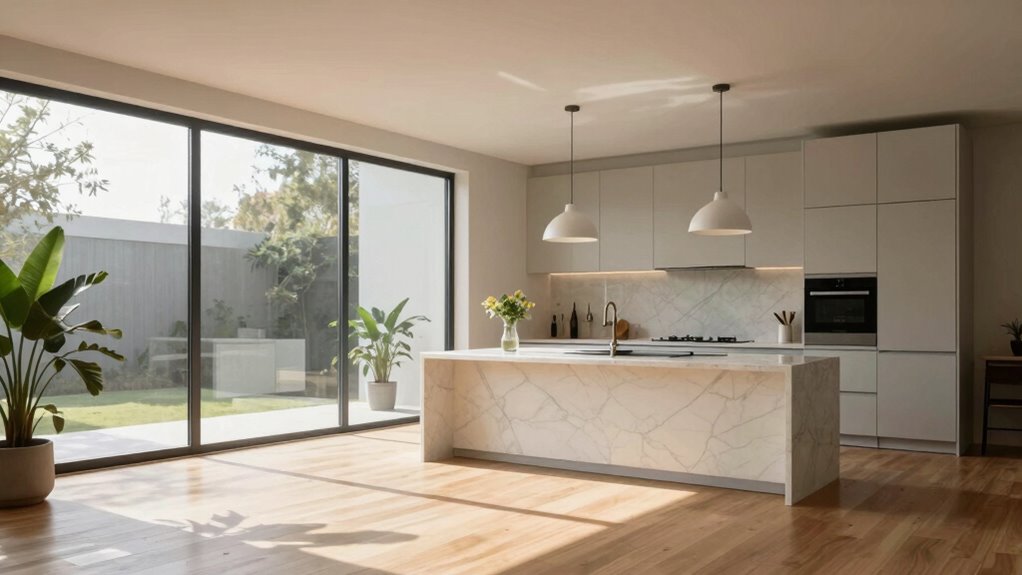

In open-plan homes, the lack of walls makes it harder to control airflow, temperature, and odors, which can cause the space to feel stuffy and uncomfortable. Odors and dust spread quickly, and uneven heating or cooling creates hot and cold spots. Noise also travels freely, reducing comfort. These issues happen because open layouts challenge effective ventilation and zoning. To improve your home’s comfort, understanding these factors can help you find solutions that work better for your space.
Key Takeaways
- Open layouts enable rapid spread of odors and dust, making the air feel less fresh.
- Inefficient airflow and poor ventilation cause stale, stuffy environments in open-plan spaces.
- Larger open areas hinder targeted temperature control, leading to uneven and uncomfortable temperatures.
- Lack of physical barriers allows noise and airflow to disrupt comfort and air quality perception.
- Without proper ventilation systems, open homes experience poor air circulation, making the air feel worse.

Have you ever wondered why open-plan homes have become so popular? It’s easy to assume that having a large, flowing space makes your home feel more spacious and inviting. After all, without walls dividing rooms, there’s a sense of freedom and connectivity. But despite their aesthetic appeal, many people find that open-plan layouts can actually make the air feel worse, not better. That’s because, in open spaces, air circulation becomes more complex and less predictable, which can lead to issues like stuffiness, lingering odors, and uneven temperature distribution.
Open-plan homes can feel more spacious but often struggle with poor air circulation and comfort issues.
When you walk into an open-plan area, you might notice that scents from the kitchen or other parts of the house seem to drift and settle unevenly. Without walls to contain smells, odors spread quickly and can linger longer than you’d like. This can make the air feel heavy or unpleasant, especially if cooking smells aren’t cleared out efficiently. Additionally, dust and allergens tend to circulate more freely in larger open spaces, which can impact air quality, especially if ventilation isn’t well-designed. You might find yourself constantly adjusting the thermostat or opening windows more often to try to improve comfort, but these efforts don’t always solve the underlying airflow problems.
Temperature control is another challenge. In traditional homes, separate rooms make it easier to heat or cool specific areas. But in an open-plan layout, warm or cool air can distribute unevenly, creating hot and cold spots. You may notice that the space near the windows feels different from the area near the center of the room, which can make it hard to achieve a consistent and comfortable environment. Without proper ventilation and zoning, the air can stagnate, making the space feel stuffy or stale. Installing efficient ventilation systems can help mitigate these issues and improve overall air quality.
Furthermore, the lack of physical barriers means sound travels freely, which can contribute to a perception of discomfort. Noise from one activity, like cooking or watching TV, can easily spill over into other areas, making it harder to relax or concentrate. This interconnectedness of space, while visually appealing, can compromise the sense of air quality and comfort, especially if you’re sensitive to smells or noise.
In essence, open-plan homes offer a modern, sleek look, but the way air moves within them can feel worse than in traditional, compartmentalized spaces. Without careful planning around ventilation, heating, and airflow, you might find yourself feeling less comfortable even in a spacious, airy environment.
Frequently Asked Questions
How Can I Improve Air Quality in Open-Plan Homes?
You can improve air quality in your open-plan home by increasing ventilation, using exhaust fans, and opening windows regularly. Invest in a high-quality air purifier to remove dust, allergens, and pollutants. Keep your space clean by dusting and vacuuming frequently, especially with HEPA filters. Avoid smoking indoors, and limit the use of harsh chemicals or aerosols. These steps help circulate fresh air and reduce indoor pollutants, making your home healthier and more comfortable.
What Are the Best Plants for Purifying Indoor Air?
Snake plants and pothos top the list for purifying your indoor air. These hardy plants absorb toxins like formaldehyde and benzene, improving air quality effortlessly. While they thrive with minimal care, their presence can make your open-plan space feel fresher and more vibrant. Keep them nearby to combat the stale, stuffy air often felt in large, open areas. They’re easy to maintain and effective, making your environment healthier and more inviting.
Does Furniture Placement Affect Air Circulation?
Yes, furniture placement considerably affects air circulation. You should avoid blocking vents or placing large furniture against walls, as it can hinder airflow. Instead, keep pathways clear to promote better air movement throughout your space. Positioning furniture strategically near windows or vents can help improve circulation, making the air feel fresher and reducing stuffiness. Regularly rearranging furniture can also prevent stagnant air pockets and enhance overall indoor air quality.
Are There Specific HVAC Systems Suited for Open-Plan Layouts?
Yes, you should consider zoned HVAC systems for open-plan layouts. These systems allow you to control temperature and airflow in different areas independently, improving comfort and air quality. Ductless mini-split systems are also effective because they provide flexible, targeted cooling and heating without extensive ductwork. By choosing the right system, you’ll enhance airflow, reduce drafts, and create a more comfortable living space, even in large, open areas.
How Does Open-Plan Design Impact Allergy Symptoms?
You catch more allergens in an open-plan space because “where there’s smoke, there’s fire.” With fewer walls to block airflow, dust, pet dander, and pollen circulate freely, worsening allergy symptoms. You might notice increased sneezing, congestion, or itchy eyes. To help, improve ventilation, use air purifiers, and clean regularly, so you don’t get overwhelmed by airborne irritants in your spacious living area.
Conclusion
So, when you step into an open-plan home, it’s like walking into a vast, echoing canyon where air struggles to find its place. Without walls to hold it in, freshness and comfort drift away like whispers lost in the wind. But with a few simple tweaks—adding plants, using fans, or creating cozy nooks—you can tame the open space’s wild spirit. Make it your sanctuary, where air feels warm and welcoming, not distant and harsh.