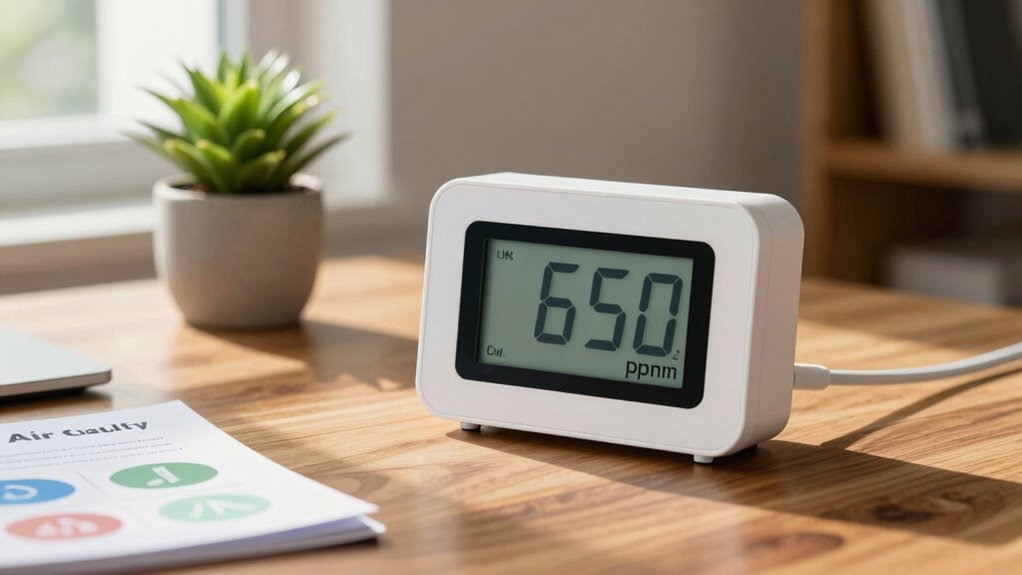
You can’t rely solely on CO2 monitor numbers because understanding air quality depends on the context—like whether levels are safe or indicate poor ventilation. Without this, you might overreact or ignore potential issues. Knowing thresholds, calibration needs, and standards helps you interpret data correctly. Recognizing device limits prevents mistakes. If you want to make informed decisions and guarantee a healthy environment, it’s essential to take these factors into account—there’s more to discover on how to do this effectively.
Key Takeaways
- CO2 levels must be interpreted relative to health standards to accurately assess air quality and ventilation.
- Thresholds indicate when ventilation is insufficient, guiding appropriate actions like opening windows.
- Proper calibration ensures CO2 readings reflect true air conditions, preventing misjudgments.
- Understanding sensor limitations avoids false readings and misinterpretation of indoor air quality.
- Contextual interpretation aligns CO2 data with established standards for effective decision-making.
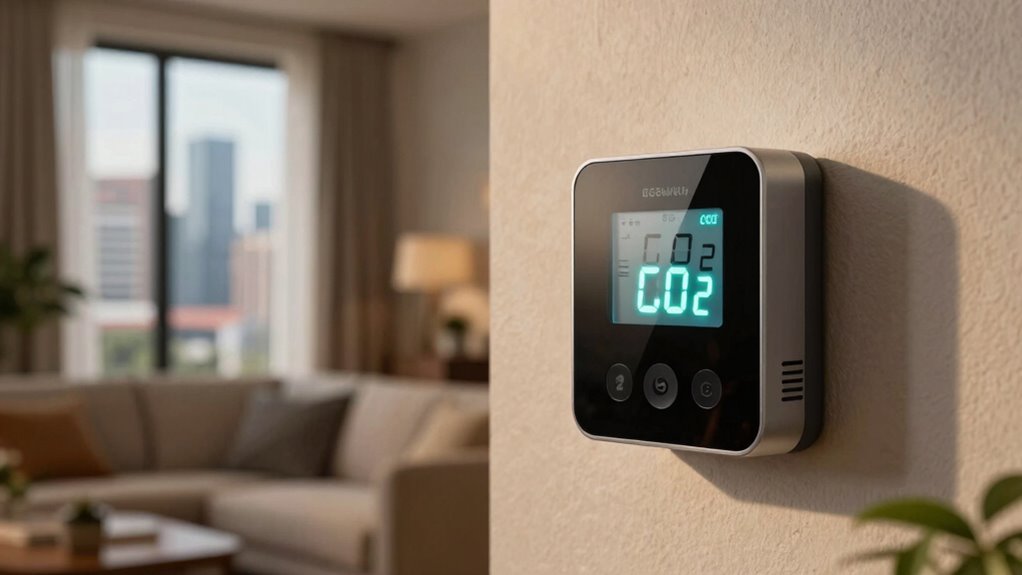
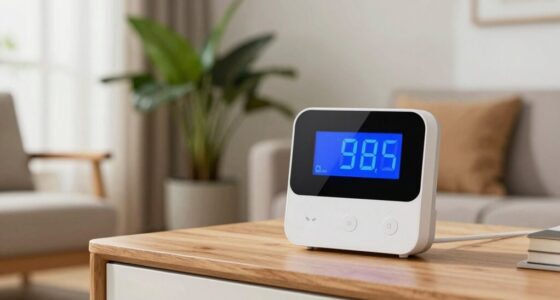
Understanding indoor air quality through CO2 monitoring involves more than just reading the numbers. It requires context—knowing what the levels mean *regarding* health and comfort. For example, a CO2 level of 800 ppm might be acceptable in a small meeting room, but if it rises above 1,200 ppm, it indicates poor ventilation. Without understanding these thresholds, you could either overreact or ignore signs of inadequate airflow. That’s why interpreting CO2 data within the right context is *crucial*. It helps you determine whether to open windows, improve ventilation systems, or limit occupancy. Proper sensor calibration ensures that your CO2 monitor’s readings truly reflect the actual levels of carbon dioxide in the air, and sensor calibration is essential for maintaining accuracy over time. Additionally, understanding the limitations of CO2 monitors** can prevent misinterpretation of the data. Recognizing the acceptable CO2 levels for different indoor environments can further refine your response strategies and improve overall air quality, especially when considering air quality standards established by health authorities. Being aware of sensor limitations** can help you avoid false readings and make more informed decisions about ventilation.

Temtop Air Quality Monitor CO2 Detector Professional Carbon Dioxide PM2.5 PM10 Formaldehyde Temperature and Humidity Monitor w/Audio Alarm Data Export (M2000 2nd)
8-IN-1 MULTIFUNCTIONAL CO2 MONITOR. Adopts SenseAir NDIR carbon dioxide sensor, Dart HCHO sensor, and Temtop professional-grade particle sensor….
As an affiliate, we earn on qualifying purchases.
As an affiliate, we earn on qualifying purchases.
Frequently Asked Questions
How Do CO2 Levels Vary in Different Indoor Environments?
You’ll see CO2 levels vary widely across indoor environments depending on air circulation and ventilation efficiency. Poorly ventilated spaces with limited airflow tend to have higher CO2 concentrations, while well-ventilated areas keep levels lower. In crowded rooms or indoors with stagnant air, CO2 can spike quickly. Monitoring these levels helps you understand when ventilation needs improving, ensuring healthier indoor air quality and reducing the risk of airborne contaminants.
What Factors Influence CO2 Readings Beyond Occupancy?
Beyond occupancy, factors like air circulation and ventilation efficiency considerably influence CO2 readings. Poor air circulation causes CO2 to accumulate, raising levels even with fewer people. Inefficient ventilation prevents fresh air from replacing indoor air effectively, leading to higher CO2 concentrations. Consequently, when interpreting CO2 monitor data, consider how well the space circulates air and how effectively it ventilates, rather than relying solely on occupancy numbers.
Can CO2 Monitors Detect Other Harmful Gases?
Your CO2 monitor can’t detect other harmful gases like volatile organic compounds or carbon monoxide. Think of it as a superhero with one power—it’s superb at measuring air quality related to CO2 but falls short elsewhere. Sensor accuracy is essential, so rely on dedicated detectors for specific hazards. Don’t assume your CO2 monitor covers all air quality threats; it’s a valuable tool, but not a catch-all solution.
How Often Should CO2 Monitors Be Calibrated?
You should calibrate your CO2 monitor at least once every six months to guarantee sensor accuracy. Regular calibration maintains reliable readings, especially in environments with fluctuating CO2 levels. If you notice inconsistent or inaccurate measurements, consider calibrating more frequently. Proper calibration helps your monitor accurately detect CO2 concentrations, giving you peace of mind and ensuring a safe environment. Always follow the manufacturer’s guidelines for calibration frequency.
Are There Legal Standards for Acceptable Indoor CO2 Levels?
You’ll be interested to know that many jurisdictions have legal standards for indoor CO2 levels, typically recommending a maximum of 1,000 ppm for safety. Ensuring legal compliance with these safety regulations helps protect occupants from poor air quality. It’s essential to monitor indoor CO2 accurately, follow local guidelines, and calibrate your CO2 monitor regularly to meet these standards and maintain a safe environment.
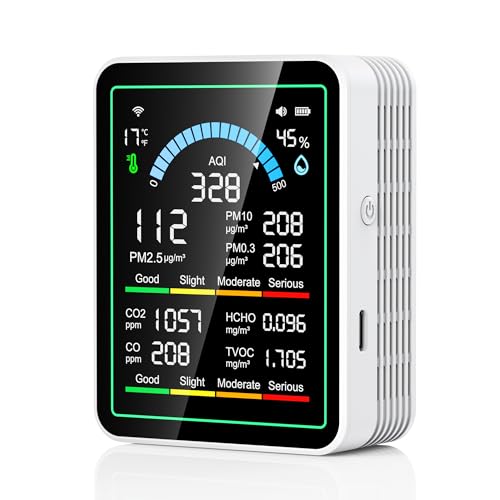
Air Quality Monitor Indoor, 10 in 1 Portable Smartair Quality Tester for CO2 | CO | TVOC | HCHO | Temp | AQI | PM0.3-1 Detection Hum for Home Cars Plants, Pets, Car, Hotel
【10-in-1 Smart Air Quality Monitor: Your All-Round Environmental Guardian】 This portable intelligent air quality tester delivers ultra-precise multi-gas…
As an affiliate, we earn on qualifying purchases.
As an affiliate, we earn on qualifying purchases.
Conclusion
So, savvy space seekers, steer clear of simple sensors and seek smarter solutions. Context is king—consider current conditions, occupancy, and ventilation to truly understand CO2 levels. By combining clarity with context, you prevent guesswork and promote healthier, happier environments. Remember, reliable readings rely on real-world reasoning, not just readings. Stay sharp, stay informed, and keep your spaces safe with smart strategies that surpass superficial scans. Your environment thanks you!

CO2 Monitor Air Quality Monitor Indoor Battery Powered, Carbon Dioxide Detector, Portable Temperature Humidity Meter, CO2 Alarm for Home, Hotel, Cars, Office or School
Battery Powered, Small and Portable:This air quality detector is small and thin, easy to carry. It comes with…
As an affiliate, we earn on qualifying purchases.
As an affiliate, we earn on qualifying purchases.
Air Quality Monitor Indoor, 10 in 1 Portable Smartair Quality Tester for CO2 | CO | TVOC | HCHO | Temp | AQI | PM0.3-1 Detection Hum for Home Cars Plants, Pets, Car, Hotel
【10-in-1 Smart Air Quality Monitor: Your All-Round Environmental Guardian】 This portable intelligent air quality tester delivers ultra-precise multi-gas…
As an affiliate, we earn on qualifying purchases.
As an affiliate, we earn on qualifying purchases.