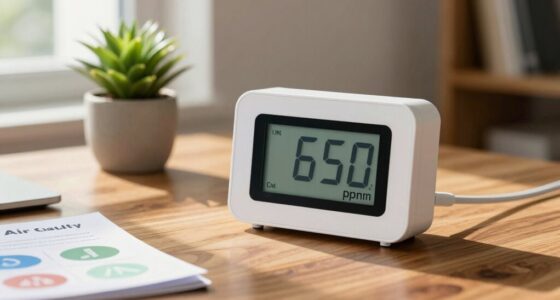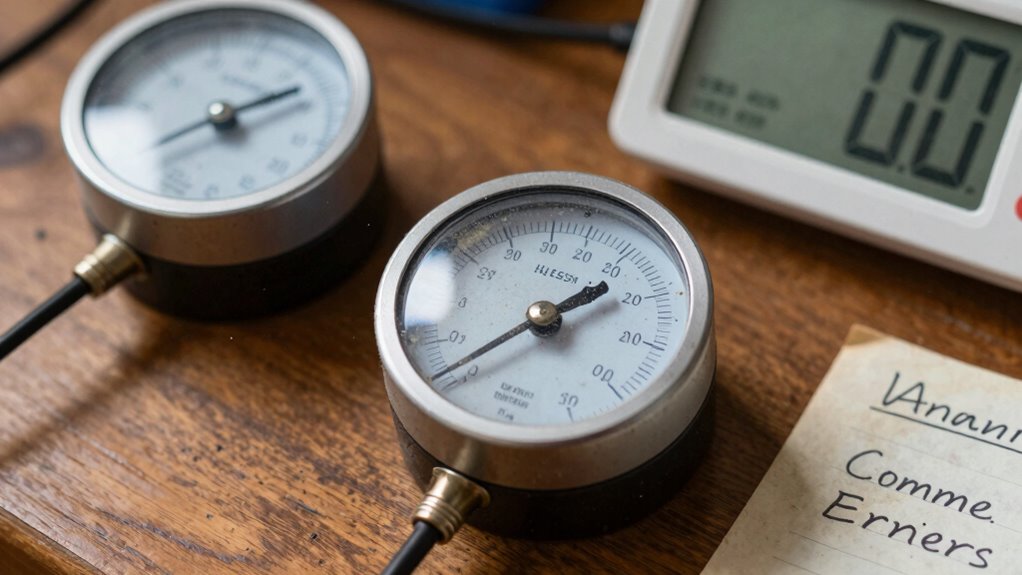
Many people make mistakes with hygrometers that affect their accuracy. You might forget to calibrate it regularly, causing unreliable humidity readings. Placing it near vents, windows, or heat sources can lead to false data. Not cleaning it properly or storing it in the wrong environment can also cause problems. Proper placement and maintenance are key. Keep these tips in mind, and if you keep exploring, you’ll discover how to guarantee your hygrometer gives trustworthy results.
Key Takeaways
- Failing to calibrate hygrometers regularly, leading to inaccurate humidity readings.
- Neglecting proper maintenance, such as cleaning or storing the device correctly.
- Placing hygrometers near heat sources, vents, or direct sunlight, causing false measurements.
- Ignoring environmental factors like temperature fluctuations that influence readings.
- Using hygrometers without understanding how placement impacts data accuracy.
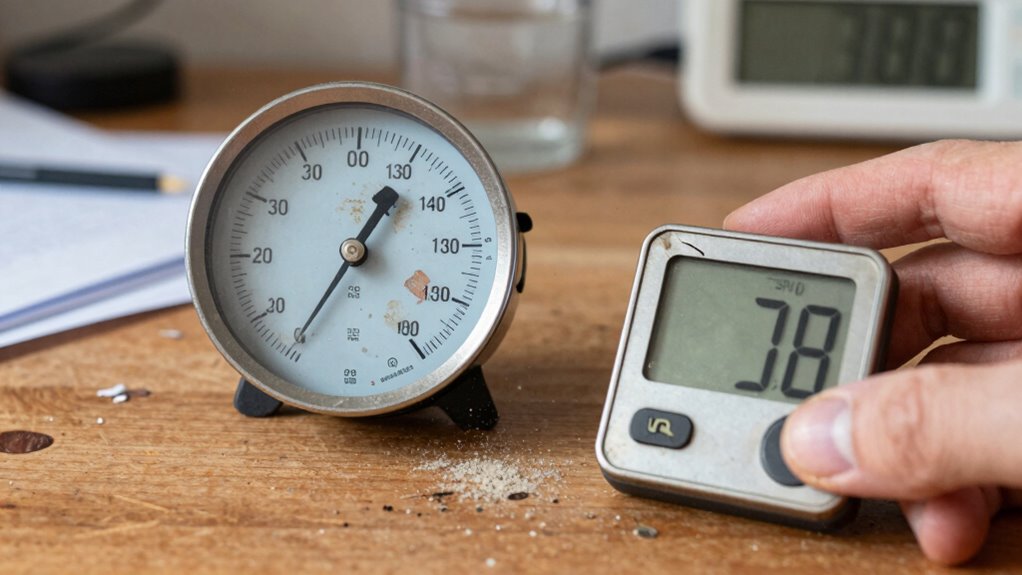
Hygrometers are essential tools for measuring humidity levels accurately, but many users make common mistakes that can compromise their readings. One of the most critical errors involves neglecting calibration accuracy. Over time, hygrometers can drift away from their original calibration, leading to inaccurate humidity measurements. If you don’t periodically check and recalibrate your device, you risk relying on faulty data, which can affect everything from maintaining a comfortable home environment to safeguarding sensitive equipment. To avoid this, you should test your hygrometer against a known standard, such as a salt test or a professional calibration service, at regular intervals. This simple step ensures your readings stay precise and trustworthy.
Regularly calibrate your hygrometer using known standards to ensure accurate, trustworthy humidity readings.
Another frequent mistake is ignoring proper maintenance routines. Hygrometers, especially mechanical or analog models, require regular cleaning and upkeep for peak performance. Dust, dirt, and other contaminants can interfere with the sensor or dial, causing skewed readings. It’s essential to follow the manufacturer’s instructions for cleaning, which might involve gently wiping the device with a soft cloth or avoiding harsh chemicals. Additionally, storing your hygrometer in a stable environment, away from direct sunlight, heat sources, or areas with high moisture, helps preserve its accuracy. Neglecting maintenance routines not only shortens the lifespan of your hygrometer but also diminishes the reliability of the data it provides. Regularly inspecting and maintaining your device can prevent issues caused by sensor degradation, which can be exacerbated by environmental factors. Proper device placement**** is also crucial for ensuring accurate readings over time.
Many users also forget that environmental factors matter. If you place your hygrometer in a location with fluctuating temperatures or drafts, its readings can become inconsistent. To maintain calibration accuracy, position the device in a stable, representative spot within the room or area you’re monitoring. Avoid placing it near vents, windows, or appliances that emit heat or moisture, as these can cause false readings. Consistency in placement and environment helps ensure that your measurements truly reflect the ambient humidity, making your data more useful. Knowing how to properly position your hygrometer is crucial for obtaining reliable data. Additionally, understanding the environmental influences on your device can help you interpret its readings more accurately and avoid misleading data.
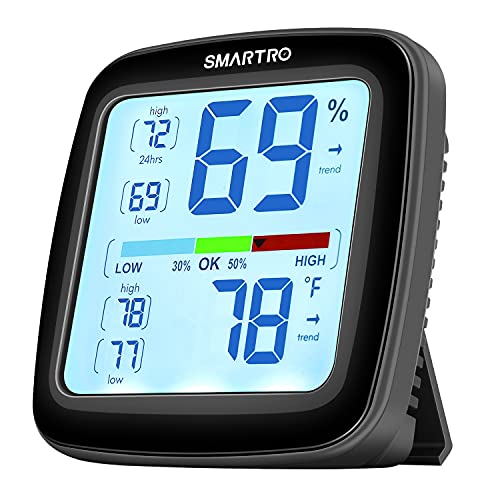
SMARTRO SC42 Professional Digital Hygrometer Indoor Thermometer Room Humidity Gauge Pro Accuracy Calibration
The Best Industrial Grade Accuracy: Humidity gauge with built-in Swiss sensors, it detects subtle humidity and temperature changes…
As an affiliate, we earn on qualifying purchases.
As an affiliate, we earn on qualifying purchases.
Frequently Asked Questions
How Often Should I Calibrate My Hygrometer?
You should calibrate your hygrometer at least once every six months to guarantee ideal humidity accuracy. Regular calibration helps you catch any deviations early, maintaining precise readings. If you notice inconsistent or unusual humidity levels, recalibrate immediately. Environmental changes or rough handling can affect calibration, so frequent checks are crucial for reliable results. Stick to this schedule to keep your hygrometer functioning accurately and protect your stored items or environment.
Can Temperature Affect Hygrometer Accuracy?
Temperature fluctuations can subtly influence your hygrometer’s readings, making it seem less precise than it truly is. While minor shifts won’t ruin accuracy, significant changes can cause discrepancies. To keep things reliable, consider adjusting your calibration frequency if your environment experiences frequent temperature swings. Regular calibration helps verify your hygrometer remains a trustworthy guide, especially when precise humidity levels are vital for your needs.
What’s the Best Placement for a Hygrometer?
You should place your hygrometer in a location that follows proper placement guidelines, avoiding direct sunlight, heat sources, or areas with fluctuating environmental factors. Keep it at eye level to guarantee accurate readings and away from drafts, vents, or appliances that might skew the results. By choosing a stable environment and following these placement guidelines, you’ll get precise humidity measurements essential for maintaining ideal conditions.
Are Digital Hygrometers More Reliable Than Analog?
Digital hygrometers are generally more reliable than analog, especially with proper calibration frequency. While some might worry about digital accuracy, they often provide more consistent readings and are easier to read. Analog models can be affected by environmental factors or mechanical wear, making digital devices a better choice for precise humidity monitoring. Just make sure you calibrate your digital hygrometer regularly to maintain peak accuracy.
How Long Does a Hygrometer Last Before Replacement?
A hygrometer typically lasts 2 to 5 years before needing replacement, but this depends on calibration frequency and environmental influence. You should calibrate it at least once a year to guarantee accuracy, especially if environmental conditions fluctuate. Harsh environments or exposure to dust, humidity, or chemicals can shorten its lifespan. Regular calibration and proper care help extend your hygrometer’s reliability, delaying the need for replacement.
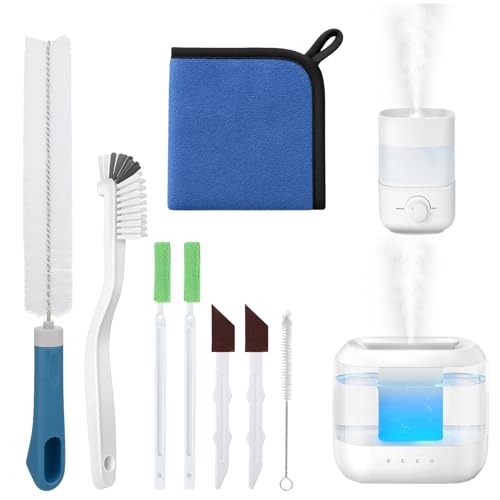
XANGNIER Humidifier Cleaner Brush Kits,8Pcs Humidifier Cleaning Brushes Tools Accessories
Humidifier Cleaning Solution:Still looking for a cleaning tool that can thoroughly clean your humidifier? Come and try our…
As an affiliate, we earn on qualifying purchases.
As an affiliate, we earn on qualifying purchases.
Conclusion
Avoiding these common hygrometer mistakes is your key to perfect humidity control. Think of your hygrometer as a trusted compass—without accurate readings, you’re lost at sea. So, calibrate regularly, keep it in the right spot, and handle it with care. Remember, mastering these simple steps transforms your environment from chaos to comfort. Don’t let small errors steer you astray—take control and navigate your space with confidence.

SECRUI Digital Hygrometer Thermometer for Room Temperature Humidity Meter Indoor Thermometer Accuracy Calibration LCD Temperature Sensor with Maximum and Minimum Records, TH1, White
[Excellent Result] The SECRUI KR-TH1 room temperature monitor will help you and your family live in the best…
As an affiliate, we earn on qualifying purchases.
As an affiliate, we earn on qualifying purchases.
SMARTRO SC42 Professional Digital Hygrometer Indoor Thermometer Room Humidity Gauge Pro Accuracy Calibration
The Best Industrial Grade Accuracy: Humidity gauge with built-in Swiss sensors, it detects subtle humidity and temperature changes…
As an affiliate, we earn on qualifying purchases.
As an affiliate, we earn on qualifying purchases.