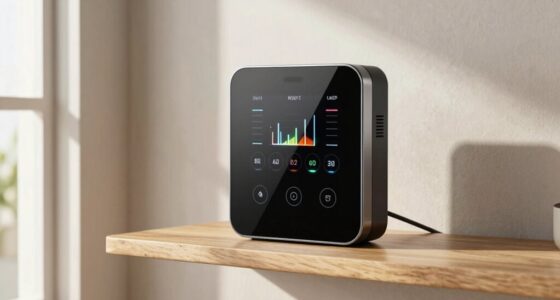
NDIR sensors are essential for accurately monitoring CO2 levels in shopping spaces, helping you guarantee good air quality, safety, and regulatory rules are met. They measure infrared light absorption by CO2 molecules, providing precise and reliable data over time. Proper calibration and maintenance prevent sensor drift, ensuring consistent readings. By using NDIR sensors, you can better manage ventilation and keep customers and staff comfortable. Keep exploring to discover how proper sensor care makes a difference.
Key Takeaways
- NDIR sensors provide precise, stable CO2 measurements essential for maintaining indoor air quality in shopping environments.
- They enable early detection of poor ventilation or overcrowding, ensuring customer and staff safety.
- Proper calibration of NDIR sensors prevents false readings, supporting regulatory compliance and safety standards.
- Reliable NDIR sensors help optimize ventilation systems, improving energy efficiency and occupant comfort.
- Regular maintenance of NDIR sensors ensures long-term accuracy, reducing operational costs and enhancing air quality monitoring.

Ever wondered how you can guarantee the CO2 levels in your shopping environment are accurate and reliable? The key lies in understanding how gas concentration measurements work and why sensor calibration is essential. When you’re managing a shopping space, whether it’s a grocery store, a restaurant, or a retail outlet, maintaining proper air quality isn’t just about comfort—it’s about safety and compliance. That’s where NDIR (Non-Dispersive Infrared) sensors come into play. They’re the gold standard for detecting CO2 because of their precision and stability over time. But even the best sensors need proper calibration to deliver trustworthy readings.
Gas concentration is a critical factor in ensuring your environment remains healthy for customers and staff. When CO2 levels rise, it can indicate poor ventilation or overcrowding, which could compromise air quality. NDIR sensors measure the amount of infrared light absorbed by CO2 molecules, providing highly accurate data on gas concentration. However, these sensors rely on precise calibration to function correctly. Sensor calibration involves adjusting the device to match known gas concentrations, ensuring that the readings stay accurate over time. Without proper calibration, the sensor might drift, giving you false readings that could lead to underestimating or overestimating CO2 levels.
Accurate CO2 readings depend on proper sensor calibration to prevent drift and ensure reliable air quality monitoring.
You need to think about sensor calibration not just as a routine maintenance task but as an essential process to keep your measurements reliable. If calibration isn’t performed regularly, your sensor could become less sensitive or produce inconsistent results, which can be dangerous when trying to maintain safe indoor air quality. Proper calibration involves exposing the sensor to a standard reference gas with a known concentration of CO2 and adjusting the sensor’s output accordingly. This process ensures that the gas concentration readings reflect the real environment, avoiding costly misjudgments. Additionally, understanding the importance of sensor calibration can help you better maintain the accuracy of your measurements over time. Regular calibration also helps prevent sensor drift, which can cause inaccurate readings and compromise safety.
Investing in NDIR technology and ensuring regular sensor calibration becomes a smart move for your shopping environment. It helps you monitor CO2 levels accurately, preventing issues like poor air quality or regulatory non-compliance. As indoor air quality depends heavily on measurement accuracy, precise sensors and proper calibration are crucial. Maintaining sensor reliability through consistent calibration can significantly extend the lifespan of your detection system and enhance its performance. To further ensure consistent performance, it’s important to understand the effects of sensor drift and how to mitigate it with routine checks. As a result, you create a safer, healthier space for everyone inside. Plus, with accurate gas concentration data, you can optimize ventilation systems and make informed decisions about occupancy limits or air exchange rates. In the end, the reliability of your measurements hinges on the quality of your sensors and the diligence with which you calibrate them. When you prioritize these factors, you guarantee that your environment stays comfortable, safe, and compliant—making NDIR sensors an indispensable tool in your shopping space management.

Temtop CO2 Monitor Indoor air Quality Monitor Portable CO2 Meter, CO2, Temperature, Humidity Home, Office or School
- Multifunctional Indoor Air Monitor: Measures CO2, temperature, humidity
- High-Precision NDIR Sensor: Accurate ±40 ppm +5% within 400–2500 ppm
- Fast Response Time: Updates every 5 seconds for real-time data
As an affiliate, we earn on qualifying purchases.
As an affiliate, we earn on qualifying purchases.
Frequently Asked Questions
How Does NDIR Compare to Other CO2 Measurement Methods?
NDIR outperforms other CO2 measurement methods by offering higher accuracy and reliability. Unlike chemical sensors, it faces fewer calibration challenges and maintains consistent readings over time. While some technologies struggle with temperature or humidity effects, NDIR’s advanced optics minimize these limitations. This makes NDIR a preferred choice for precise, long-term CO2 monitoring, ensuring your measurements are trustworthy and reducing maintenance concerns.
Can NDIR Sensors Detect Other Gases Besides CO2?
NDIR sensors primarily detect CO2, but they can sometimes identify other gases with similar infrared absorption spectra, like certain hydrocarbons. However, for effective gas detection beyond CO2, sensor calibration becomes essential to guarantee accuracy. You should regularly calibrate your NDIR sensors, especially if you’re monitoring multiple gases, to maintain reliable readings. While they’re specialized for CO2, understanding their limits helps you optimize their performance for your specific needs.
What Maintenance Is Required for NDIR CO2 Sensors?
You need to perform regular calibration procedures to keep your NDIR CO2 sensors accurate. This involves comparing sensor readings with known CO2 concentrations and adjusting as necessary. Additionally, monitor sensor durability by inspecting for dirt, dust, or damage that could affect performance. Proper maintenance guarantees reliable measurements and extends the lifespan of your sensors, helping you avoid costly replacements and maintain precise control of your CO2 environment.
How Accurate Are NDIR Sensors in Various Environments?
NDIR sensors are highly accurate across various environments, but their precision depends on calibration frequency and environmental influences. You should calibrate your sensor regularly to guarantee reliability, especially if you operate in fluctuating conditions. Factors like temperature, humidity, and air quality can affect readings, so maintaining your sensor and accounting for environmental influences helps sustain accuracy. Proper calibration and environmental awareness keep your NDIR sensor dependable.
Are NDIR Sensors Cost-Effective for Small-Scale CO2 Measurement?
You’ll find NDIR sensors quite cost-effective for small-scale CO2 measurement, especially given their high accuracy and reliability. With a market availability of affordable models, a typical cost analysis shows prices dropping steadily, making them accessible for hobbyists or small businesses. While initial investment might seem high, their long-term precision and low maintenance costs often outweigh the upfront expense, ensuring better data without breaking the bank.
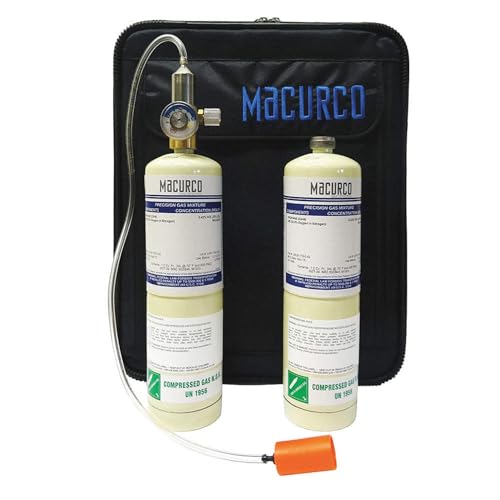
Macurco CM6-FCK CM-6/CM-12 Carbon Monoxide CO Field Calibration Kit, 17L 50 PPM, 17L 200 PPM, 0.2 LPM Reg
- Calibration Kit for CO Gas: Field calibration for carbon monoxide
- Complete Kit Components: Includes case, regulator, tubing, hood, cannister
- Compatible with CM-6: Used to calibrate CM-6 sensors
As an affiliate, we earn on qualifying purchases.
As an affiliate, we earn on qualifying purchases.
Conclusion
So, if you want to be a hero in the battle against climate change, ignoring NDIR sensors in CO₂ shopping isn’t an option—it’s like trying to fight a wildfire with a squirt gun. With NDIR technology, you’re not just shopping; you’re wielding the ultimate weapon to guarantee pure, safe air for everyone. Don’t settle for less; make the smart choice and let NDIR be your secret weapon in the fight for a healthier planet!

Kegco YH-76PRM-2 Commercial Grade Dual Body CO2 Draft Beer Regulator
- Space-Saving Durable Design: Slim, solid build for space efficiency
- Shock-Resistant Construction: Resists cracks and damage from drops
- Independent Pressure Control: Dispense two kegs at separate pressures
As an affiliate, we earn on qualifying purchases.
As an affiliate, we earn on qualifying purchases.

Professional Indoor Air Quality Monitor with AQI Alerts, Portable Real-Time Detector for Home, Car, Plants & Pets (Cheese White)
- 16-in-1 Air Quality Monitoring: Measures 7 key indoor air parameters
- All-in-One Design: No need for multiple testers, cost-effective
- Easy One-Tap Operation: Controls power, units, and prompts simply
As an affiliate, we earn on qualifying purchases.
As an affiliate, we earn on qualifying purchases.