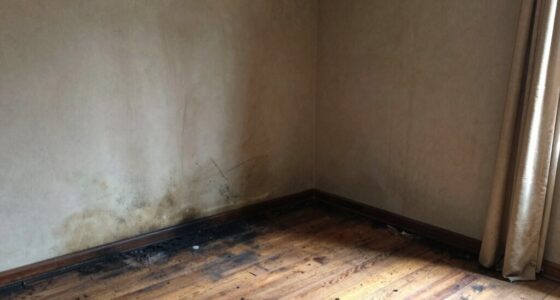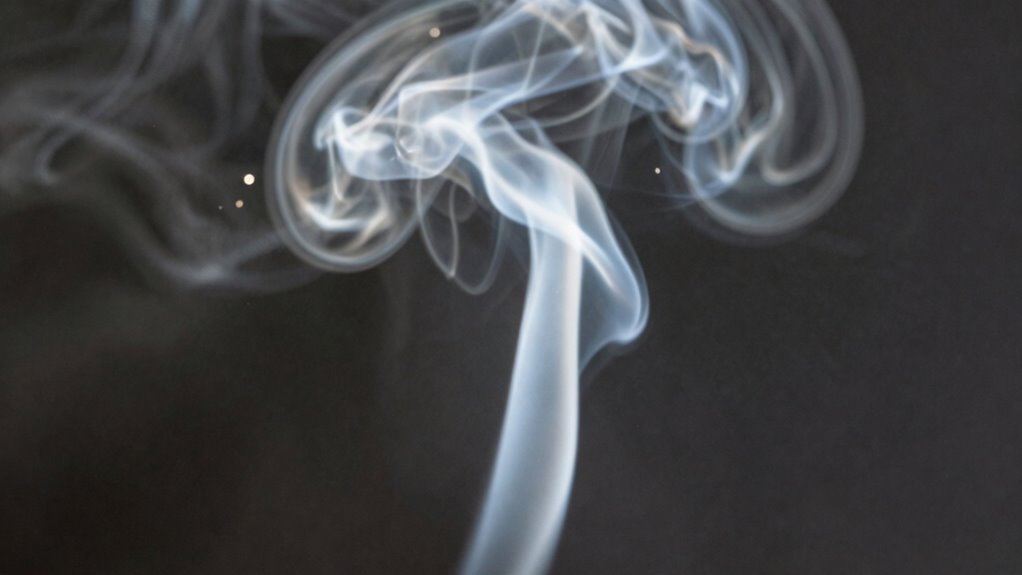

Smoke particles are tiny solid and liquid fragments that settle on surfaces and can cause stains or damage, while smoke smell comes from volatile compounds floating in the air and penetrating fabrics and walls. Removing particles involves physical cleaning, but eliminating the smell requires neutralizing or breaking down those airborne chemicals. Understanding the difference helps you pick the right cleaning method—if you keep exploring, you’ll discover how to fully address both issues effectively.
Key Takeaways
- Smoke particles are solid or liquid fragments suspended in the air, while smoke smell results from airborne volatile chemical compounds.
- Particles can settle on surfaces and cause visible staining, whereas smell permeates porous materials and fabrics.
- Removing particles involves physical cleaning; eliminating smoke smell requires neutralizing or breaking down odorous molecules.
- Smoke particles are a physical issue, but smoke smell is a chemical issue caused by volatile compounds.
- Addressing both requires different methods: surface cleaning for particles and chemical neutralization for odor.
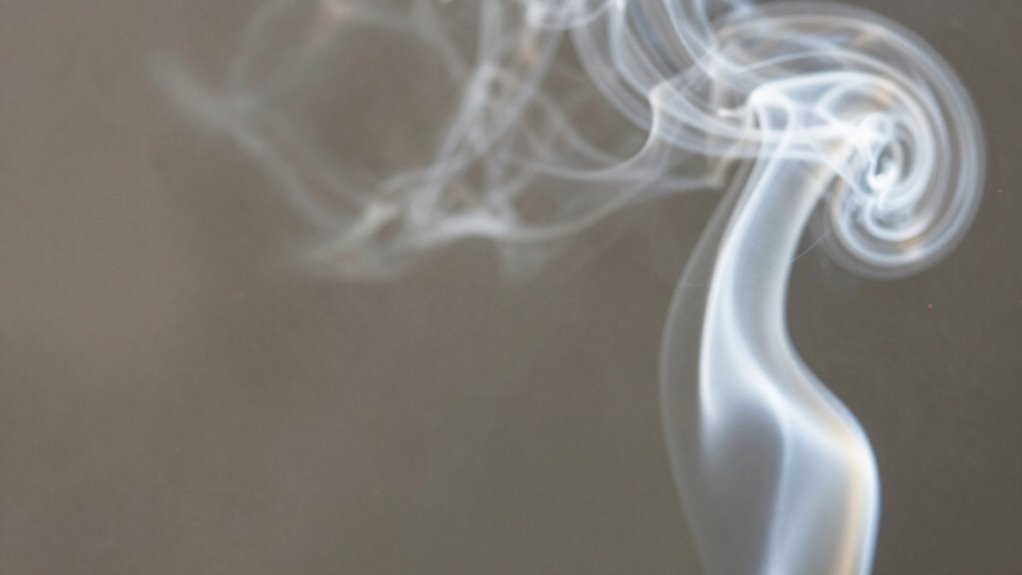
When it comes to smoke from fires or cigarettes, many people assume that the smell and the particles are the same issue, but in reality, they’re quite different. Smoke particles are tiny solid and liquid fragments suspended in the air, which can settle on surfaces or linger in the environment. These particles are often visible or felt as a haze, and they can cause staining or damage to materials over time. On the other hand, the smoke smell is an odor caused by volatile compounds released during combustion. These compounds are airborne and can permeate fabrics, furniture, and walls, creating an unpleasant and persistent scent.
Smoke particles settle on surfaces, while the smell comes from airborne compounds that permeate materials.
Understanding why smoke smell and particles are separate problems involves looking at how chemical reactions and odor absorption work. When smoke particles settle on surfaces, they often trap odorous molecules, making cleaning more complicated. The smell isn’t just about the particles themselves; it’s about the chemical reactions that occur when these particles interact with the environment. For instance, some compounds in smoke chemically react with the materials they contact, forming new substances that emit a distinct odor. This means that even if you remove visible particles, the smell can linger because of these chemical reactions that have altered surfaces or embedded themselves in porous materials.
Odor absorption plays a critical role in smoke smell. Unlike particles, which can often be physically removed through cleaning, odors are more elusive. They are absorbed deep into fabrics, carpets, and furnishings, making them difficult to eliminate with surface cleaning alone. To truly get rid of the smell, you need to break down or neutralize the odorous molecules. This often requires specialized odor absorption techniques, such as using activated charcoal, ozone treatments, or certain cleaning agents designed to chemically neutralize the odor compounds. These methods work by capturing or converting the volatile molecules so they no longer emit that unpleasant scent.
In essence, smoke particles are primarily a physical problem—they can be cleaned or vacuumed away—whereas smoke smell involves chemical processes that require targeted treatments to fully resolve. Recognizing this difference helps you choose the right approach for cleaning and odor removal. If you only focus on removing particles, you won’t address the underlying cause of the smell. Conversely, if you only try to mask the odor without dealing with the particles or chemical reactions, the problem will persist. To effectively eliminate smoke’s impact, you need to understand and treat both issues separately but holistically. It’s also important to note that some porous materials can trap odor molecules even after particles have been removed, making thorough treatment essential. Additionally, chemical reactions between smoke compounds and surfaces can produce persistent odors that are resistant to simple cleaning methods. Recognizing the role of odor absorption in this process can help you select more effective cleaning strategies. Moreover, understanding the nature of smoke residue can guide the selection of appropriate cleaning techniques for different materials.

Tobacco Outlet Products – Creamy Vanilla and Lavender With Chamomile Smoke Odor Exterminator 7oz Sprays 2 Pack (1 Each)
Eliminates Smoke and Pet Odors
As an affiliate, we earn on qualifying purchases.
As an affiliate, we earn on qualifying purchases.
Frequently Asked Questions
Can Smoke Smell Be Completely Removed From Clothing?
Yes, you can completely remove smoke smell from clothing. To do this, focus on eliminating clothing odor with fabric treatment like soaking in a mixture of vinegar and water or using specialized odor-eliminating sprays. Wash your clothes thoroughly with a strong detergent, and consider adding a cup of baking soda during washing. Air drying in fresh air also helps, ensuring the smoke smell is fully gone and your clothes smell fresh again.
Do Smoke Particles Pose Health Risks Even Without Odor?
Yes, smoke particles can pose serious health risks even without an odor. These tiny particles, with their complex and harmful particle composition, can infiltrate your lungs and bloodstream, causing health implications far worse than just smelling smoke. Ignoring them is like inviting invisible enemies into your body. Protect yourself by understanding that their danger isn’t just about smell—it’s about the dangerous particles that can silently harm your health.
How Long Do Smoke Particles Stay Airborne?
Smoke particles can stay airborne for varying durations depending on factors like particle size and ventilation. Generally, smaller particles have a longer airborne duration, sometimes lingering for hours, while larger ones settle quickly. Particle dispersion is influenced by air currents, temperature, and humidity. To reduce exposure, ventilate the area promptly, use air purifiers, and avoid areas with heavy smoke. This helps clear the particles faster and improves indoor air quality.
Are All Smoke Smells Caused by the Same Substances?
Not all smoke smells are caused by the same substances. The chemical composition varies depending on the odor sources, like burnt food, tobacco, or burnt materials. Different substances release different volatile compounds, which create distinct smells. So, if you’re dealing with smoke odor, identifying the specific odor source helps determine the chemicals involved, making it easier to choose the right cleaning or air-purifying methods to eliminate the smell effectively.
Can Air Purifiers Eliminate Both Smoke Smell and Particles Effectively?
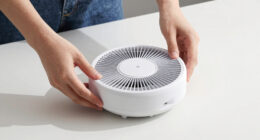
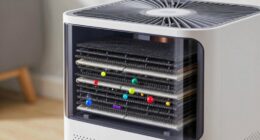
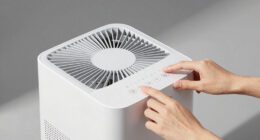
An air purifier can do a decent job, but it’s not a magic wand. While it can reduce smoke particles with HEPA filters, its limitations mean it might not fully eliminate stubborn smoke smells. To truly conquer odors, you need odor absorption techniques like activated carbon filters. These work together, making your space breathe easier. Remember, combining proper filtration with targeted odor remedies is your best shot at fresh, smoke-free air.

MOOKA Air Purifiers for Home Large Room up to 1076ft², H13 True HEPA Air Filter Cleaner, Odor Eliminator, Remove Smoke Dust Pollen Pet Dander, Night Light, B-D02L White
MOOKA B-D02L AIR PURIFIER FOR LARGE ROOM: With the high-efficiency filtration system, the air purifier covers an area…
As an affiliate, we earn on qualifying purchases.
As an affiliate, we earn on qualifying purchases.
Conclusion
Remember, smoke smell and smoke particles are like two sides of the same coin—one invisible, lingering in your senses, the other tangible and stubborn. You might mask the scent, but the particles embed themselves deeper, like memories that refuse to fade. Addressing both means truly clearing your space, not just covering up the problem. Only then can you breathe freely again, reclaiming your environment from the unseen shadows that threaten your peace.

Ozone Generator 48,000mg, Commercial Ozone Machine Odor Removal, High Capacity O3 Ionizer Air Purifier Deodorizer, Portable Mini for Car, Home, Smoke, Pets, Industrial, for 4000 Square Feet -Black
⚠️𝗢𝗭𝗢𝗡𝗘 𝗛𝗔𝗦 𝗔 𝗦𝗧𝗥𝗢𝗡𝗚, 𝗣𝗨𝗡𝗚𝗘𝗡𝗧 𝗢𝗗𝗢𝗥. ⚠️𝗠𝗔𝗞𝗘 𝗦𝗨𝗥𝗘 𝗡𝗢 𝗣𝗘𝗢𝗣𝗟𝗘, 𝗣𝗘𝗧𝗦, 𝗢𝗥 𝗣𝗟𝗔𝗡𝗧𝗦 𝗔𝗥𝗘 𝗔𝗥𝗢𝗨𝗡𝗗 𝗪𝗛𝗘𝗡 𝗜𝗡 𝗨𝗦𝗘….
As an affiliate, we earn on qualifying purchases.
As an affiliate, we earn on qualifying purchases.

Unsmoke Wall Wash with Biosolv, Multipurpose Degreaser for Walls and Smoke Damage, Hard Surface Cleaner, 1-Gal Bottle
1 Gallon Bottle Unsmoke Wall Wash with Biosolv, Multipurpose Degreaser for Walls and Smoke Damage
As an affiliate, we earn on qualifying purchases.
As an affiliate, we earn on qualifying purchases.