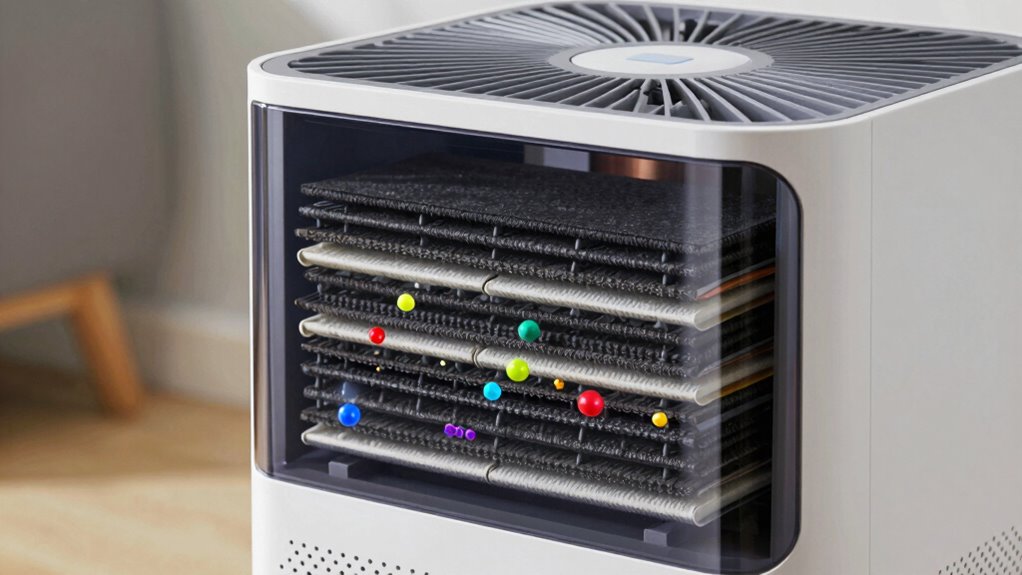
Standard HEPA filters are great for dust, pollen, and pet dander, but they don’t effectively remove VOCs, which are gaseous pollutants from paints, cleaning supplies, and furniture. To tackle these, you need a different filter strategy, like activated carbon filters that adsorb VOC molecules. These filters have specific surface properties to trap gases, but they require regular maintenance. Keep exploring how specialized filters can improve your indoor air quality and guarantee your air stays cleaner for longer.
Listen free for 30 days with Audible
Thousands of audiobooks and originals — cancel anytime.
As an affiliate, we earn on qualifying purchases.
Key Takeaways
- VOCs are gaseous pollutants that require adsorption, not just particle filtration, making specialized filters essential.
- HEPA filters effectively capture particles but cannot adsorb VOC molecules, necessitating activated carbon or similar technologies.
- Activated carbon filters have unique pore structures designed specifically for trapping gaseous compounds like VOCs.
- Proper maintenance and timely replacement of VOC-specific filters prevent saturation and VOC re-emission.
- Regular air quality testing ensures filter performance aligns with VOC removal needs, guiding filter strategy adjustments.
Volatile Organic Compounds (VOCs) are common indoor pollutants that can affect your health and comfort, especially in enclosed spaces. When you’re trying to improve indoor air quality, understanding how VOCs behave and how to effectively remove them becomes essential. Unlike larger particles or allergens, VOCs are gaseous emissions from products like paints, cleaning supplies, and furniture. Because of their gaseous nature, standard air filtration methods may not be enough. This is where air quality testing comes into play; it helps identify VOC levels, so you know whether your current purifiers are adequate or if you need a device specifically designed for VOC removal. Regular testing can also indicate when filters are losing their effectiveness, helping you maintain peak air quality and guarantee the filter lifespan isn’t prematurely shortened.
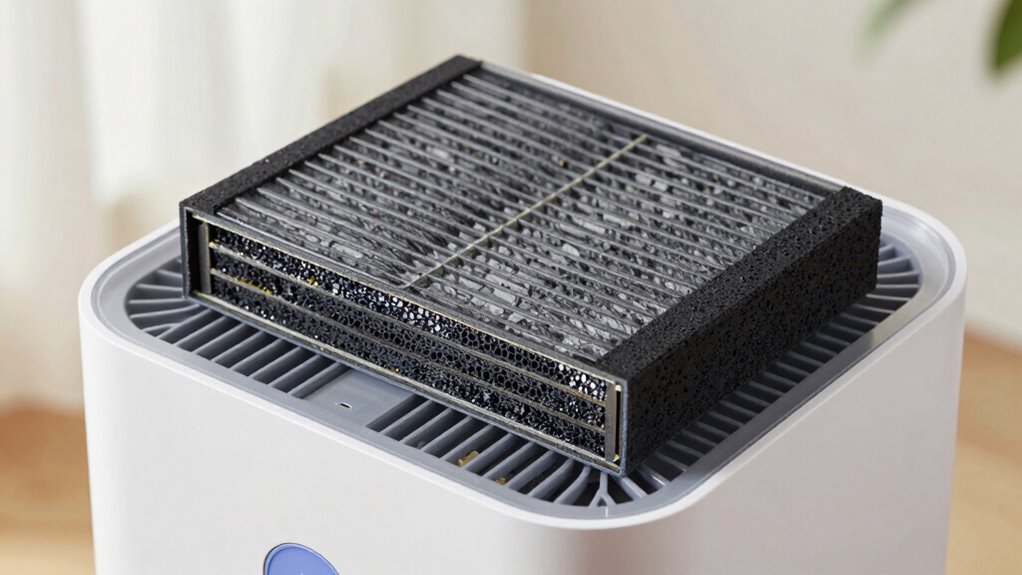
Traditional filters, such as HEPA, excel at capturing particles like dust, pollen, and pet dander but fall short when it comes to gaseous contaminants like VOCs. To target these pollutants effectively, your purifier needs a different filter strategy. Activated carbon filters are indispensable because they adsorb VOC molecules, trapping them within their porous structure. However, not all activated carbon filters are equal; some have higher surface areas and better pore structures, which means they can absorb more VOCs over a longer period. That’s why choosing a purifier with a high-quality carbon filter is essential for VOC mitigation. Additionally, some advanced filters combine activated carbon with other technologies like impregnations or catalytic materials to enhance VOC removal efficiency. Understanding the filter lifespan is crucial because saturated filters can release captured VOCs back into the air, negating their benefits. Proper maintenance and understanding of filter saturation can prevent this issue and ensure continuous protection. Furthermore, selecting filters with optimal adsorption capacity can significantly improve your purifier’s effectiveness against VOCs. Alongside proper filter selection, implementing air quality testing regularly helps you track VOC levels and adjust your maintenance routine accordingly. Keeping an eye on filter performance can also help you decide when it’s time to replace or upgrade your filtration system.
activated carbon air purifier filter
As an affiliate, we earn on qualifying purchases.
As an affiliate, we earn on qualifying purchases.
Frequently Asked Questions
How Do VOC Levels Vary in Different Indoor Environments?
You’ll notice VOC levels vary greatly depending on your indoor environment. Factors like air quality and emission sources—such as cleaning products, paints, or furniture—significantly influence VOC concentrations. In spaces with poor ventilation or new materials, VOC levels tend to spike, affecting air quality. Understanding these variations helps you choose the right purifier with a specialized filter strategy to effectively target and reduce harmful VOCs in your indoor air.
Are There Specific Materials That Emit More VOCS?
You might notice that materials like pressed wood, carpets, and paints emit more VOCs, making them significant VOC sources. These materials often have higher emission rates due to their chemical composition, especially during newness or renovation. Recognizing which materials contribute most helps you understand that specific VOC sources demand tailored filtration strategies. Choosing products with lower emission levels can reduce indoor VOC concentrations, improving your air quality effectively.
Can VOC Filters Remove All Types of Volatile Organic Compounds?
VOC filters can’t remove all types of volatile organic compounds because their effectiveness depends on chemical adsorption, which varies with different VOCs. Some compounds are harder to capture, especially those with low reactivity. You should consider filter durability too, as prolonged exposure can reduce performance. To guarantee thorough removal, choose filters designed specifically for VOCs, and replace them regularly to maintain their ability to target a broad range of VOCs effectively.
How Often Should Voc-Focused Filters Be Replaced?
You should replace VOC-focused filters every 3 to 6 months, depending on usage and air quality. Filter lifespan varies with factors like pollution levels and room size, so monitoring filter performance is crucial. Regular replacement guarantees maximum absorption of volatile organic compounds and maintains purifier efficiency. Don’t wait too long—neglecting timely replacements can reduce air quality and strain your device. Stay proactive for cleaner, healthier indoor air.
What Are the Health Risks of Long-Term VOC Exposure?
Long-term VOC exposure can cause serious health issues, like respiratory problems or headaches. Imagine working in a home with high chemical emissions from paints; over time, you might develop asthma or chronic bronchitis. Poor indoor air quality from VOCs worsens these risks. You need effective filters that target VOCs specifically, reducing chemical emissions and safeguarding your health from prolonged exposure’s hidden dangers.
As an affiliate, we earn on qualifying purchases.
Conclusion
Imagine your air purifier as a vigilant guardian, tirelessly patrolling your space, targeting invisible threats like VOCs. To do this effectively, it needs a specialized filter strategy that acts like a finely tuned net, capturing these elusive molecules before they settle into your lungs. Without the right approach, VOCs slip through, lingering like shadows in the air. So, choose a purifier with a dedicated VOC filter, and breathe easy knowing your environment stays fresh and safe.
air purifier with activated carbon filter
As an affiliate, we earn on qualifying purchases.
As an affiliate, we earn on qualifying purchases.
high surface area activated carbon filter
As an affiliate, we earn on qualifying purchases.
As an affiliate, we earn on qualifying purchases.
Flea & tick season Picks
flea and tick prevention
As an affiliate, we earn on qualifying purchases.