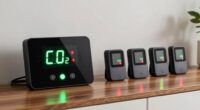
When you vacuum, the agitation and airflow stir up tiny particles trapped in surfaces, releasing dust, pet dander, pollen, and allergens into the air. Many vacuums, especially those without HEPA filters, can also emit these particles back into your indoor environment through the exhaust. Poorly maintained or old vacuums tend to release even more. Understanding why this happens can help you minimize particle dispersal—keep going to discover effective ways to reduce airborne dust during cleaning.
Key Takeaways
- Vacuuming stirs up dust, pet dander, and allergens trapped in surfaces, temporarily increasing airborne particles.
- Many vacuums release small particles through exhaust, especially if they lack HEPA filters.
- Turbulence from vacuum brushes dislodges particles into the air, raising indoor air pollution.
- Poorly maintained or old vacuums with clogged filters emit more airborne dust.
- Using vacuums with proper filtration and cleaning filters regularly helps reduce particle release.
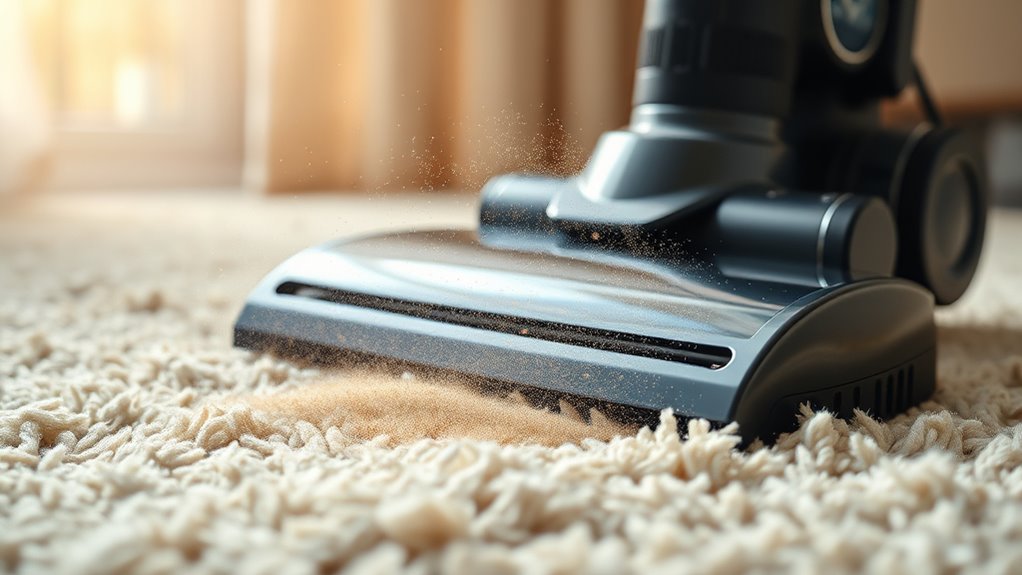
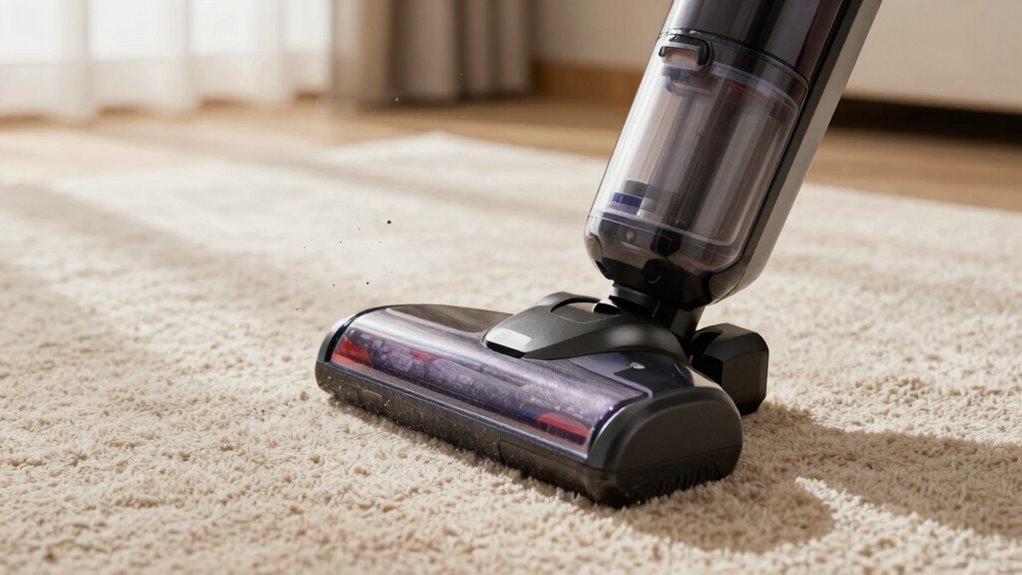
Although vacuuming is a common way to keep your home clean, it can unexpectedly increase the number of airborne particles. When you run your vacuum, it doesn’t just suck up dirt and dust; it also stirs up tiny particles trapped in carpets, upholstery, and other surfaces. These particles, often invisible to the naked eye, can become airborne and linger in the air you breathe. Instead of immediately improving your home’s air quality, vacuuming can temporarily make it worse, especially if your vacuum isn’t equipped with a good filtration system.
Vacuuming can temporarily worsen indoor air quality by stirring up hidden, airborne particles.
The main reason for this is that many vacuum cleaners release small particles back into the air through their exhaust. If your vacuum doesn’t have a high-efficiency particulate air (HEPA) filter, it’s more likely to emit dust, pet dander, pollen, and other allergens. These tiny particles can easily slip past basic filters and end up floating around your living space. As you vacuum, you create a turbulence that lifts these particles into the air, where they can stay suspended for hours or even days.
Furthermore, the type of flooring and surface you’re cleaning influences how many particles become airborne. Carpets tend to trap dust and allergens deep within their fibers. When you vacuum, some of these particles are dislodged, but others are pushed back into the air. Hard floors, on the other hand, may not trap as many particles, but dust and debris can still become airborne if you’re not careful. The agitation caused by the vacuum’s brush roll or beater bar can also send dust particles flying into the air.
Another factor is the condition of your vacuum cleaner. An old or poorly maintained vacuum can release more particles because its filters may be clogged or damaged, reducing its ability to trap dust effectively. Regularly replacing or cleaning filters can help minimize this problem. Additionally, vacuuming in a poorly ventilated space can cause particles to build up indoors, worsening air quality rather than improving it.
To reduce the airborne particles released during vacuuming, you can take some practical steps. Use a vacuum with a HEPA filter, and change or clean filters frequently. Vacuum slowly and methodically, especially in areas with lots of dust or pet hair, to prevent stirring up too many particles at once. Also, consider vacuuming before opening windows or turning on fans to help disperse airborne dust more quickly. These small adjustments can make a big difference in maintaining better indoor air quality while keeping your home clean. Incorporating proper filtration systems can significantly reduce the number of particles released during cleaning.
Frequently Asked Questions
Can Using a HEPA Filter Reduce Particle Dispersion?
Yes, using a HEPA filter can reduce particle dispersion. When you vacuum with a HEPA filter, it captures tiny particles like dust, pollen, and pet dander that would otherwise spread into the air. This helps improve indoor air quality and minimizes the risk of allergens circulating. Make sure your vacuum’s filter is properly maintained and replaced regularly for peak performance, so you get the maximum benefit in reducing airborne particles.
How Often Should I Vacuum to Minimize Particle Spread?
Vacuum at least twice a week, like a diligent gardener tending to your space. Regular vacuuming helps remove dust and allergens before they settle and become airborne. If you have pets or allergies, consider increasing the frequency to three or more times weekly. Use a vacuum with a HEPA filter to trap tiny particles and prevent dispersion. Staying consistent keeps your indoor air cleaner and healthier, reducing the spread of particles effectively.
Does Vacuuming Affect Indoor Air Quality Long-Term?
Vacuuming can impact indoor air quality long-term, but it depends on your vacuum’s filter and frequency. If you use a high-efficiency filter and vacuum regularly, you can reduce allergens and particles, improving air quality over time. However, if your vacuum isn’t effective or you vacuum infrequently, airborne particles may linger, potentially worsening air quality. Keep filters clean and vacuum often to maintain a healthier indoor environment.
Are Certain Vacuum Models Better at Controlling Particle Release?
Think of vacuum models like filters in a coffee maker—some catch more grounds than others. Higher-quality vacuums with HEPA filters are better at controlling particle release, trapping tiny dust and allergens effectively. You should look for models with sealed systems and powerful motors, as they minimize particle escape into the air. These features help keep your indoor air cleaner and healthier over time, especially if you’re sensitive to dust.
What Cleaning Techniques Help Prevent Particle Resuspension?
To prevent particle resuspension, you should use gentle, controlled movements when cleaning floors and surfaces. Always vacuum with a HEPA filter to trap fine particles effectively. Avoid over-wetting carpets and rugs, which can loosen particles. Regularly damp-dust surfaces to prevent dust from becoming airborne. Wearing a mask during cleaning helps limit inhalation of any disturbed particles. By following these techniques, you reduce the risk of airborne particles and improve indoor air quality.
Conclusion
So, while vacuuming seems like the best way to clean, it can actually stir up dust and allergens, making things worse. Instead of just pushing particles around, consider using a HEPA filter or wet cleaning methods. Because cleaning isn’t just about visible dirt—it’s about reducing invisible particles too. You want a healthier home, not just a cleaner surface. Remember, sometimes the best way to clean is to pause, breathe, and choose the right tools.