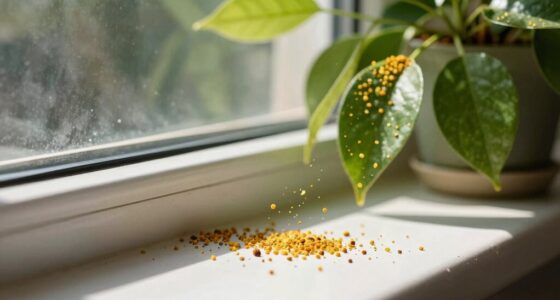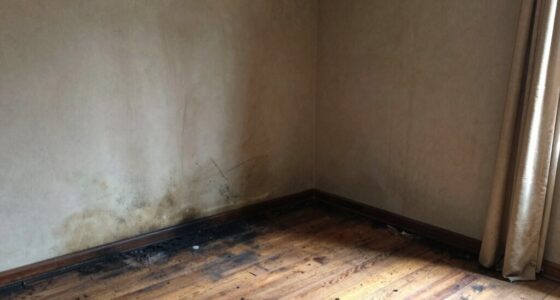
When you clean, you disturb settled dust and tiny particles, causing them to become airborne and spike local particle levels. Using ineffective tools like feather dusters or open brooms stirs up more dust, while agitation from vacuuming or scrubbing can dislodge particles hidden in hard-to-reach spots. Without proper containment and ventilation, these airborne particles linger longer, increasing health risks. If you want to understand how to prevent these spikes, there’s more to discover below.
Key Takeaways
- Dislodging settled particles through dusting, vacuuming, or scrubbing releases airborne dust and dirt.
- Using open or ineffective cleaning tools can stir up dust, increasing airborne particles.
- Lack of proper air filtration allows airborne particles to linger longer during cleaning.
- Cleaning in poorly ventilated areas prevents quick dispersal of dust, causing spikes.
- Inadequate containment measures allow dust to spread throughout the environment during cleaning.
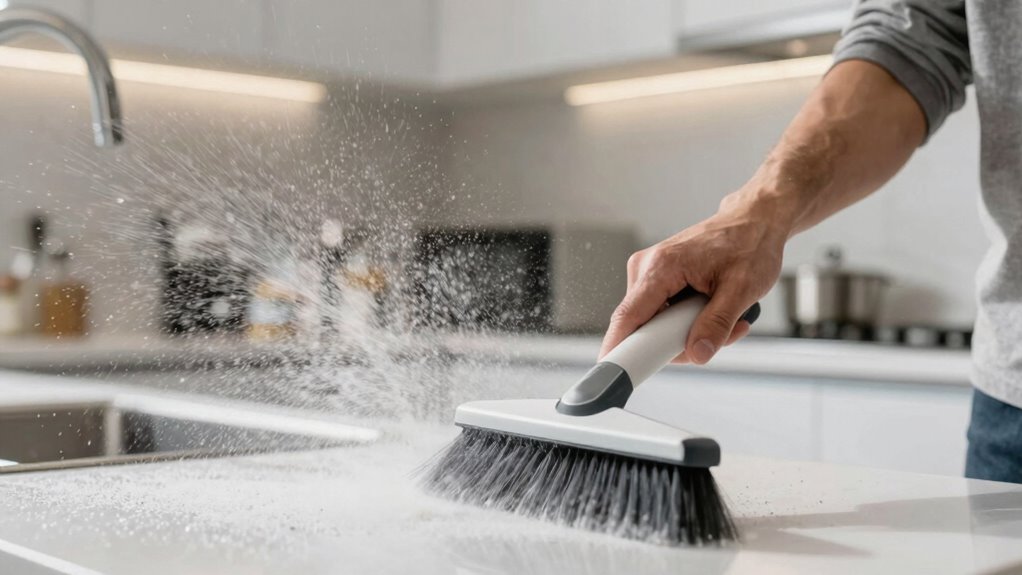
Cleaning activities can temporarily disturb the levels of particles in your environment, often leading to unexpected spikes in airborne contaminants. When you start dusting, vacuuming, or scrubbing, you’re dislodging dirt, dust, and other tiny particles that have settled on surfaces. These disturbed particles become airborne, instantly increasing the concentration of contaminants in your indoor air. The sudden surge can be particularly noticeable if you’re using cleaning tools that generate a lot of agitation or disturb dust in hard-to-reach areas. The key factor here is how effectively you manage these airborne particles once they’re stirred up, and that’s where air filtration comes into play. Proper air filtration systems are crucial because they help capture those airborne particles before you breathe them in. HEPA filters, in particular, are known for their ability to trap tiny particles, including dust mites, pet dander, and even some bacteria. When your cleaning routine kicks off, these filters work tirelessly to reduce the spike in particle levels, preventing them from lingering in the air. Without proper air filtration, those particles can hang around for hours, increasing the risk of allergy flare-ups or respiratory irritation. So, investing in a good air purifier or ensuring your HVAC system has high-quality filters can make a considerable difference during cleaning. Additionally, understanding the types of airborne contaminants released during cleaning can help you choose more effective filtration methods and reduce health risks. Your choice of cleaning tools also impacts how much particles are released into the air. Using microfiber cloths instead of traditional dusters can trap dust rather than just move it around. When vacuuming, opting for models with strong suction and HEPA filters ensures that dust and debris are contained rather than redistributed. Be cautious with tools like feather dusters or open broomsticks, which can stir up dust and send it flying into the air, causing a temporary spike in airborne contaminants. Effective dust containment techniques can significantly minimize particle dispersal during cleaning. Proper containment strategies such as sealing off rooms or covering vents can further prevent the spread of dust during activities. Employing dust control methods can also help reduce the amount of particles disturbed during cleaning sessions. The more effective and sealed your cleaning tools are, the less dust becomes airborne during your routine. It’s also worth considering the timing of your cleaning activities. Doing a thorough cleaning when your air filtration system is running or when windows can be opened for ventilation helps clear out the disturbed particles faster. Properly ventilating the space after cleaning can considerably reduce the duration of elevated particle levels.

LEVOIT Air Purifier for Home Allergies and Pets Hair Smokers in Bedroom, H13 True HEPA Filter, 24db Filtration System Cleaner Odor Eliminators, Remove 99.97% Dust Smoke Mold Pollen, Core 300, White
- AHAM Verified for Performance: Independently tested for air quality and efficiency
- Powerful Filtration System: 56W motor with 143 CFM CADR
- Effective for Large Rooms: Cleans 222 sq ft 4.8 times/hour
As an affiliate, we earn on qualifying purchases.
As an affiliate, we earn on qualifying purchases.
Frequently Asked Questions
How Do Air Purifiers Affect Particle Levels During Cleaning?
Air purifiers help reduce particle levels during cleaning by efficiently filtering airborne contaminants. Their effectiveness depends on air purifier efficiency and proper filter maintenance, ensuring they capture dust, pet dander, and other particles. However, if filters aren’t maintained regularly, their efficiency drops, causing particle levels to spike temporarily. You should run your air purifier during cleaning and replace filters as recommended to keep indoor air clean and safe.
Can Cleaning Products Contribute to Particle Spikes?
Cleaning products can spark particle spikes like fireworks, as chemical reactions release tiny particles into the air. When residues from these products settle and accumulate, they create a residue buildup that can stir up dust and allergens. As you scrub and wipe, you’re inadvertently releasing these particles, causing temporary surges in indoor air pollution. To keep particle levels steady, opt for eco-friendly cleaners that minimize chemical reactions and residue buildup.
Do Different Flooring Types Influence Particle Release During Cleaning?
Yes, different flooring materials influence particle release during cleaning. Hard surfaces like tile or hardwood tend to release fewer particles because they have less particle adhesion compared to carpets or rugs, which trap more particles. When you clean, loosened particles from carpet fibers or textured flooring can become airborne, causing spikes in particle levels. Choosing the right flooring and proper cleaning methods can help minimize particle release and improve indoor air quality.
How Does Humidity Impact Particle Levels When Cleaning?
Humidity effects markedly influence particle levels during cleaning. When moisture levels are high, particles tend to clump together, making them easier to settle and less likely to become airborne. Conversely, low humidity can cause particles to become lighter and more easily dispersed into the air, increasing airborne particles. To manage this, you should monitor humidity levels and adjust cleaning methods accordingly, using dehumidifiers or humidifiers as needed.
Are Certain Cleaning Tools More Likely to Cause Particle Spikes?
Certain cleaning tools, especially those with loose bristles or worn-out parts, can cause particle spikes. Using improper cleaning techniques, like aggressive scrubbing, also stirs up dust and debris. To minimize this, you should regularly maintain your tools, ensuring they’re in good condition, and adopt gentle cleaning methods. Proper tool maintenance and careful techniques help prevent unnecessary particle dispersion, keeping indoor air cleaner during your cleaning routines.

Shark Navigator Lift-Away Vacuum, HEPA, Carpet and Pet Hair, Blue, NV360
- Powerful Suction: Effective on carpets and hard floors
- Lift-Away Function: Detach for above-floor cleaning
- Pet Hair Removal: Specialized tools for pet hair
As an affiliate, we earn on qualifying purchases.
As an affiliate, we earn on qualifying purchases.
Conclusion
Understanding why particle levels spike during cleaning helps you take better precautions. While some might think these increases are unavoidable, using high-quality vacuums and proper cleaning techniques can markedly reduce airborne particles. Remember, maintaining good ventilation and choosing eco-friendly cleaning products also make a difference. Don’t let the fear of temporary spikes discourage you—by staying informed and proactive, you can create a healthier, cleaner environment without compromising safety or efficiency.

USANOOKS Microfiber Cleaning Cloth Grey – 12 Pcs (12.5"x12.5") – High Performance – 1200 Washes, Ultra Absorbent Microfiber Towel Weave Grime & Liquid for Streak-Free Mirror Shine – Car Washing Cloth
- High Absorbency Grip Root Weave: Locks in 8-10x weight in liquids
- Lint-Free and Scratch-Resistant: Ensures streak-free mirror shine
- Durable for 1200+ Washes: Long-lasting reusable microfiber cloths
As an affiliate, we earn on qualifying purchases.
As an affiliate, we earn on qualifying purchases.

KNKA Air Purifiers for Home Bedroom Up to 1,695 Ft² in 1 Hr, APH4000, White
- AHAM Certified High CADR: Reliable performance with high-speed purification
- Efficient Airflow Design: Maximized circulation for faster air exchange
- Covers Large Spaces: Purifies up to 1695 ft² with 1 air refresh per hour
As an affiliate, we earn on qualifying purchases.
As an affiliate, we earn on qualifying purchases.