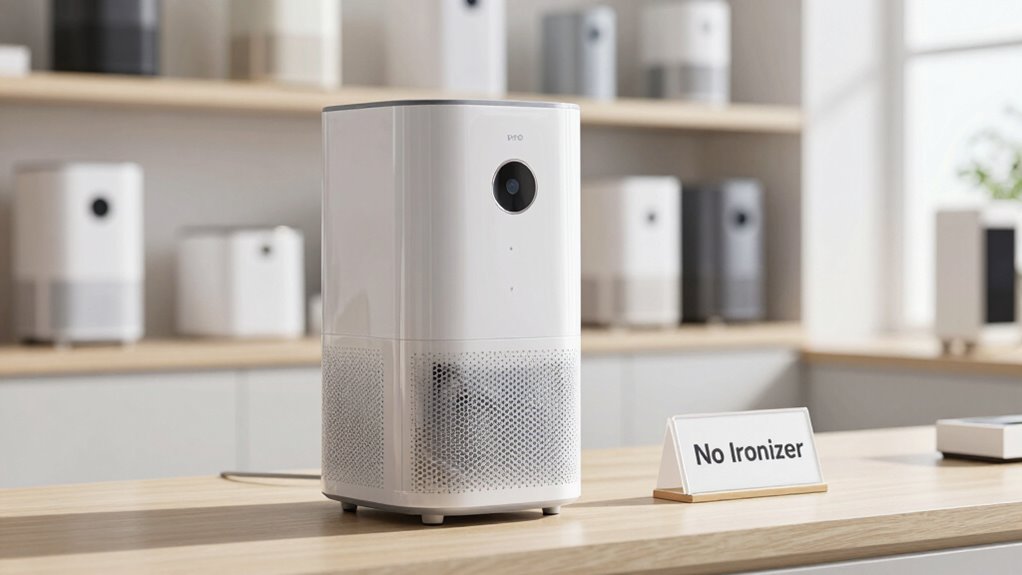
Choosing an air purifier without an ionizer doesn’t automatically mean it’s safer or more effective. While avoiding ionizers might reduce concerns about ozone emissions, other factors like overall design, filtration system, and pollutants targeted are just as important. Some ionizer-equipped models emit safe levels of ozone and can improve air quality. To make an informed choice, consider ozone safety levels, certifications, and technology features—more details can help you select the best option for your needs.
Key Takeaways
- “No ionizer” labels do not guarantee safer or more effective air purification; overall design matters more.
- Ionizers can emit low, safe ozone levels; absence of ionization doesn’t automatically mean better safety.
- Effectiveness depends on filtration quality (like HEPA) and additional technologies, not solely on ionizer presence.
- Check ozone emission levels and certifications to ensure device safety regardless of ionizer inclusion.
- Understand different air purification methods to select a device aligned with your specific indoor air quality needs.
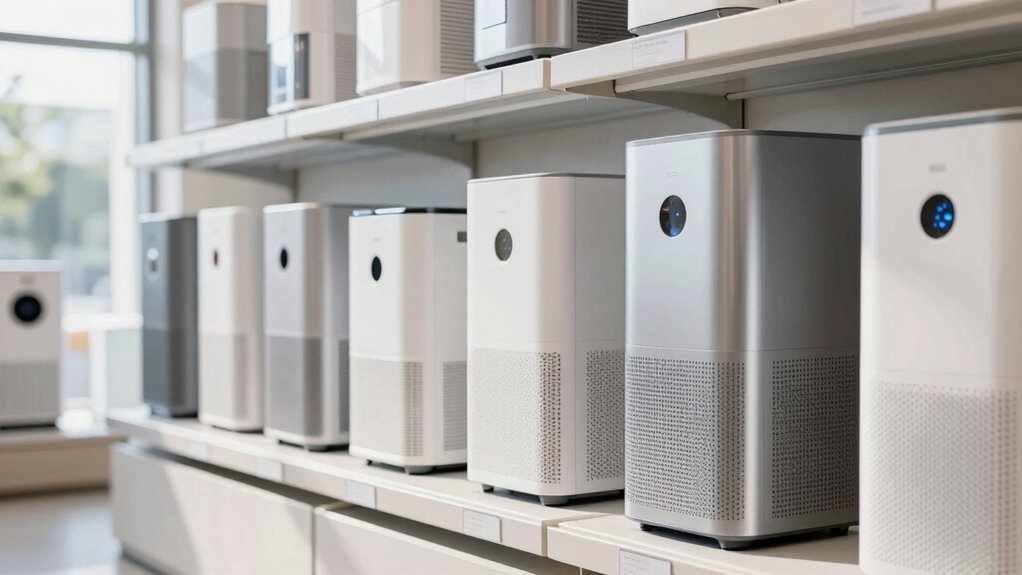
When shopping for air purifiers, the phrase “no ionizer” often appears as a selling point, but it can be misleading. Many consumers assume that avoiding ionizers automatically means the device is safer or more effective. However, this is a common misconception rooted in a lack of understanding about how air purification works. Air purification involves removing particles, allergens, and pollutants from the air, and there are various methods to achieve this. Not all ionizers are harmful, nor do all air purifiers with ionizers pose health risks. The key is understanding what the different technologies do and how they impact indoor air quality.
Consumer misconceptions about ionizers often stem from concerns over ozone production. Some ionizers generate small amounts of ozone as a byproduct, which can be irritating or harmful in high concentrations. This has led many to believe that all ionizer-based purifiers are unsafe, but that’s not true for every device. Many modern air purifiers with ionization features are designed to emit minimal ozone levels well within safety standards. Conversely, some “no ionizer” models rely solely on mechanical filters like HEPA or activated carbon, which are excellent at trapping particles and gases without producing ozone. Yet, these filters may not be as effective at neutralizing certain airborne viruses or volatile organic compounds (VOCs). Understanding the different purification methods is crucial for selecting a device that aligns with your health priorities.
Many ionizers emit minimal ozone within safety standards, but “no ionizer” doesn’t guarantee better or safer air purification.
It’s also worth noting that a purifier labeled “no ionizer” isn’t inherently better or worse. The effectiveness depends on the overall design, filtration system, and the specific pollutants you’re targeting. For example, if you’re primarily concerned about dust and pollen, a HEPA filter might suffice. But if you want to reduce odors or airborne bacteria, you might need a device that incorporates additional technologies, possibly including ionization, UV light, or photocatalytic oxidation. Additionally, considering the ozone emission levels is essential when evaluating air purifiers with or without ionizers. Furthermore, checking the certifications from independent testing agencies can provide additional assurance regarding safety and performance.
In your search, don’t fall for the misconception that “no ionizer” automatically means a safer or more effective air purifier. Instead, focus on the purifier’s overall air purification capabilities, the types of pollutants it targets, and whether it meets your specific needs. Read independent reviews and check the specifications for ozone emission levels. Knowledge is your best tool to make an informed decision, and understanding the nuances of air purification technology will help you avoid unnecessary restrictions based on misconceptions. Ultimately, a well-chosen air purifier—regardless of whether it has an ionizer—can significantly improve indoor air quality when aligned with your unique environment and health concerns. Understanding air purification technologies is essential for making an educated choice.

Purivortex Air Purifiers for Bedroom, Quiet Air Purifier with HEPA Filter for Pollen, Smoke, Dust, Pet Dander, Odor, Hair, Ozone Free, Covers Up to 880 Sq Ft, PX500 Black
Cleaner Air In Minutes: Purivortex is proven to filter common pollutants from your home’s air. This air purifier…
As an affiliate, we earn on qualifying purchases.
As an affiliate, we earn on qualifying purchases.
Frequently Asked Questions
Do All Air Purifiers Without Ionizers Clean Indoor Air Effectively?
Not all air purifiers without ionizers clean indoor air effectively, but many use advanced air purifier technology like HEPA filters to improve indoor air quality considerably. These purifiers excel at capturing airborne particles, allergens, and pollutants without producing ozone. While ionizer-free models might lack some features, they still provide excellent air cleaning, especially for sensitive individuals. Focus on the device’s filtration system to guarantee it meets your indoor air quality needs.
Are There Health Risks Associated With Ionizer Air Purifiers?
You might think ionizer air purifiers are completely safe, but ironically, electrostatic concerns can cause allergic reactions or respiratory issues for some users. While they effectively trap airborne particles, the ozone they produce could irritate your lungs or trigger asthma symptoms. So, if you’re prone to allergies or respiratory sensitivities, you should weigh these potential health risks before choosing an ionizer. Better safe than sorry, right?
How Do I Compare Filter Quality Among Non-Ionizer Models?
To compare filter quality among non-ionizer models, look at filter lifespan and maintenance requirements. Longer-lasting filters usually indicate higher quality and better filtration. Check how often filters need replacing and if they’re easy to clean or change. Consider models with filters made from high-grade materials, like HEPA or activated carbon, which effectively trap pollutants. This helps guarantee you get a reliable, efficient air purifier suited to your needs.
Can Non-Ionizer Purifiers Remove All Airborne Contaminants?
Think of a non-ionizer purifier as a vigilant gatekeeper, using electrostatic filtration to catch many airborne enemies. While it can remove dust, pollen, and some bacteria, it might not eliminate all contaminants like viruses or odors. Be aware that some models produce small amounts of ozone, which can be harmful in excess. So, while effective, non-ionizer purifiers have limits, and understanding these helps you choose the best for your air quality needs.
What’s the Best Way to Verify an Air Purifier’s True Effectiveness?
To verify your air purifier’s true effectiveness, check if it meets recognized air quality standards and has certifications from reputable programs like CADR or AHAM. Look for independent lab testing results and reviews that confirm its ability to remove airborne pollutants. Also, consider real-world performance reports. By ensuring it complies with industry standards and holds proper certifications, you can confidently trust that your purifier effectively improves your indoor air quality.

MOOKA Air Purifiers for Home Large Room up to 1076ft², H13 True HEPA Air Filter Cleaner, Odor Eliminator, Remove Smoke Dust Pollen Pet Dander, Night Light, B-D02L White
MOOKA B-D02L AIR PURIFIER FOR LARGE ROOM: With the high-efficiency filtration system, the air purifier covers an area…
As an affiliate, we earn on qualifying purchases.
As an affiliate, we earn on qualifying purchases.
Conclusion
In the end, steering clear of the “no ionizer” label might just lead you to a more balanced, healthier choice. Sometimes, what’s missing isn’t as essential as what’s truly present. Trust your instincts and look beyond the labels—they often whisper the real story. With a little patience and curiosity, you’ll find a solution that feels just right, gently guiding you toward cleaner, fresher air without the need for unnecessary fuss or doubt.

GermGuardian HEPA Air Purifier for Home, Large Rooms – 743 Sq. Ft. with HEPA Air Filter, UV-C Light & Odor Reduction, AC4825E, 22" Tower, Gray
TRUE HEPA 3-LAYER PROTECTION: HEPA filter captures 99.97% of smoke, dust, pollen, and pet dander as small as…
As an affiliate, we earn on qualifying purchases.
As an affiliate, we earn on qualifying purchases.

Ozone Generator 45,000mg/h, Industrial O3 Deodorizer for Areas of 2500 Square Feet – High Capacity Ozone Machine Air Ionizer Odor Clean
OZONE HAS A STRONG, PUNGENT ODOR.MAKE SURE NO PEOPLE, PETS, OR PLANTS ARE AROUND WHEN IN USE. For…
As an affiliate, we earn on qualifying purchases.
As an affiliate, we earn on qualifying purchases.