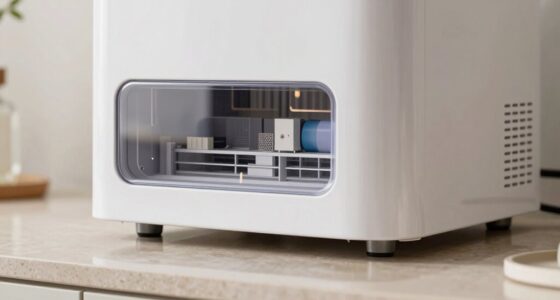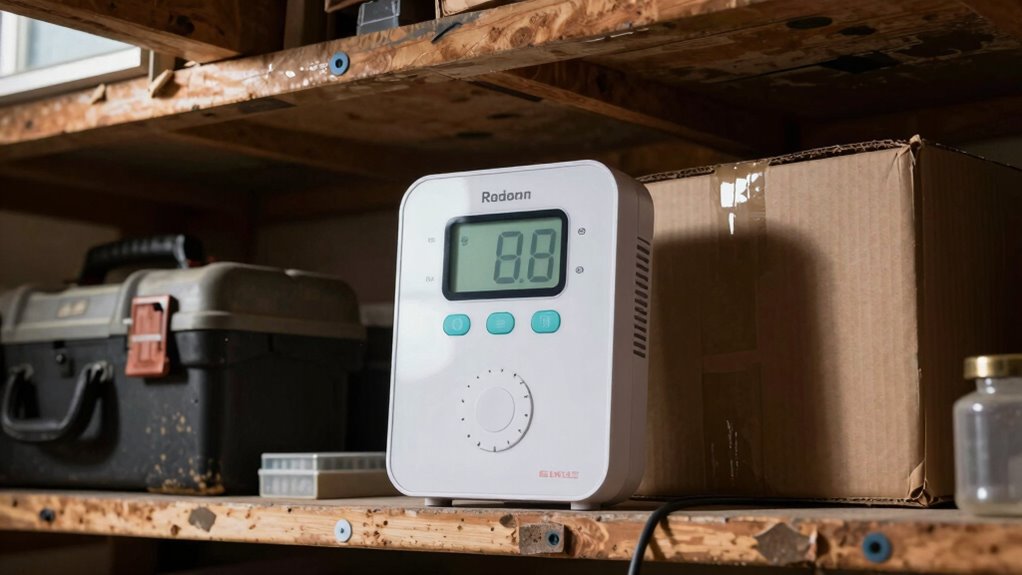

Including radon monitors in your basement air plan is essential because radon is an odorless, invisible gas that can build up to dangerous levels without you noticing. Regular monitoring helps you detect spikes early, track fluctuations over time, and guarantee your mitigation efforts are working effectively. By staying proactive, you can protect your health and make smarter decisions about your home’s safety. Keep exploring to discover how continuous monitoring offers unbeatable peace of mind.

Get health and wellness essentials delivered free with Prime
- Fast, free delivery on millions of items
- Prime Video, Amazon Music and more included
- Member-only deals all year
Key Takeaways
- Radon monitors detect dangerous, odorless gases early, ensuring timely mitigation and protecting indoor air quality.
- Continuous monitoring assesses the effectiveness of radon mitigation systems over time.
- Fluctuations in radon levels due to weather or structural changes require regular tracking.
- Data from monitors supports informed decisions for upgrades and adjustments in radon management.
- Incorporating radon monitors promotes a proactive approach to long-term basement safety.
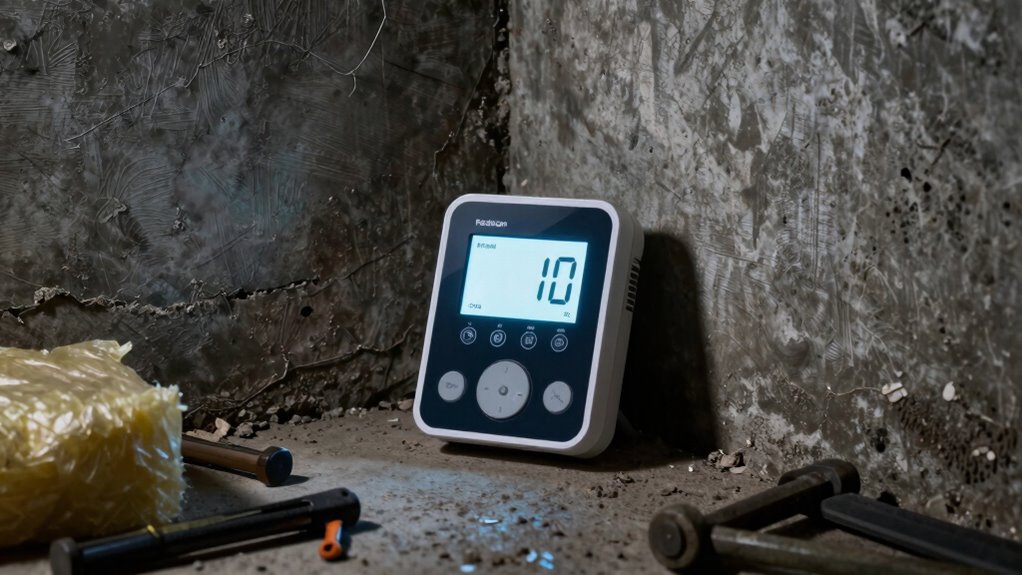
If you’re concerned about radon levels in your basement, installing a reliable radon monitor should be your first step. Radon is a radioactive gas that seeps into homes from the ground, and because it’s odorless and invisible, you might not realize there’s a problem until symptoms or high test results appear. Using a radon monitor helps you keep a close eye on the air quality in your basement, which is essential since this space often has the highest radon concentrations in a home. Regular air quality testing with a dependable device allows you to detect dangerous radon levels early, giving you the opportunity to take necessary measures before health risks increase.
Incorporating radon monitors into your basement air plans is indispensable for effective radon mitigation. If your monitor shows elevated radon levels, it indicates that your current ventilation or sealing efforts aren’t enough. With real-time data, you can assess whether your existing radon mitigation systems are working properly or if adjustments are needed. Without accurate monitoring, you risk underestimating the danger, which could lead to prolonged exposure. Radon mitigation strategies often involve ventilation improvements, sealing cracks in the foundation, or installing specialized systems like active soil depressurization. But without ongoing air quality testing, you won’t know if these efforts are truly reducing radon levels. Additionally, understanding how radon levels fluctuate over time can help you plan more effective long-term solutions. Monitoring also provides valuable data that can inform future improvements.
Having a radon monitor also guarantees you maintain a safe environment over time. Radon levels can fluctuate based on weather, seasons, and changes within your home’s structure. Continuous or periodic monitoring provides insight into these variations, so you can confirm your mitigation measures are effective throughout the year. It also empowers you to make informed decisions about further upgrades or adjustments, rather than relying on sporadic testing methods that might miss short-term spikes. Implementing regular testing further enhances your ability to detect and respond to changes promptly. Moreover, understanding the factors influencing radon levels can help you develop more precise and targeted mitigation strategies. For example, seasonal variations can impact radon concentrations, making ongoing monitoring crucial. When you combine radon monitoring with routine air quality testing, you create a proactive approach that prioritizes your health and safety.
As an affiliate, we earn on qualifying purchases.
Frequently Asked Questions
How Often Should Radon Monitors Be Calibrated?
You should calibrate your radon monitor at least once a year to guarantee accurate radon detection and maintain good air quality. Regular calibration helps prevent false readings and keeps your monitor functioning properly. If you notice any irregularities or suspect the device isn’t showing correct levels, calibrate it immediately. Consistent calibration is essential for effective radon detection, especially in basement areas where radon buildup can impact air quality.
Are There Different Types of Radon Monitors?
Just like a detective needs different tools, you have various types of radon monitors for accurate radon detection and better air quality. You can choose between short-term detectors, which give quick results, and long-term monitors for more complete readings. Some are digital, offering real-time data, while others are charcoal-based. Picking the right monitor depends on your needs, but all help you safeguard your home from radon risks effectively.
What Is the Cost of Installing a Radon Monitor?
The cost of installing a radon monitor varies depending on the type of radon detection device you choose. Typically, you’ll spend between $20 and $50 for a basic radon test kit, while electronic monitors can range from $100 to $300 or more. Investing in radon detection helps you monitor air quality accurately, ensuring your basement remains safe. Regular testing is essential to detect radon levels early and protect your family’s health.
Can Radon Monitors Detect Other Indoor Air Pollutants?
Radon monitors primarily detect radon levels, but some models can also identify certain indoor air pollutants like humidity, VOCs, or particulate matter, helping you assess overall indoor air quality. While they’re specialized for radon, monitoring air pollution sources is essential for a healthy home. Using these devices, you can pinpoint problem areas and improve ventilation, ultimately reducing health risks associated with indoor air pollution.
How Long Should a Radon Test Be Conducted?
You should conduct a radon test for at least 48 hours for short-term testing and over 90 days for long-term testing. Short-term testing provides quick results, helping you assess immediate risk, while long-term testing offers a more accurate picture of ongoing exposure. Both methods are essential; short-term tests are ideal for initial screening, whereas long-term tests help determine if mitigation efforts are necessary.
As an affiliate, we earn on qualifying purchases.
Conclusion
Think of radon monitors as your home’s silent guardians, much like a lighthouse guiding ships safely through fog. I once knew a family who ignored basement radon levels until a monitor revealed danger, prompting quick action. That small device became their beacon, protecting loved ones from unseen harm. Don’t wait for a warning—install radon monitors now. They’re your home’s first line of defense, ensuring your family’s safety is never left to chance.
continuous radon monitoring device
As an affiliate, we earn on qualifying purchases.
As an affiliate, we earn on qualifying purchases.
As an affiliate, we earn on qualifying purchases.
Cold & flu season Picks
humidifiers
As an affiliate, we earn on qualifying purchases.