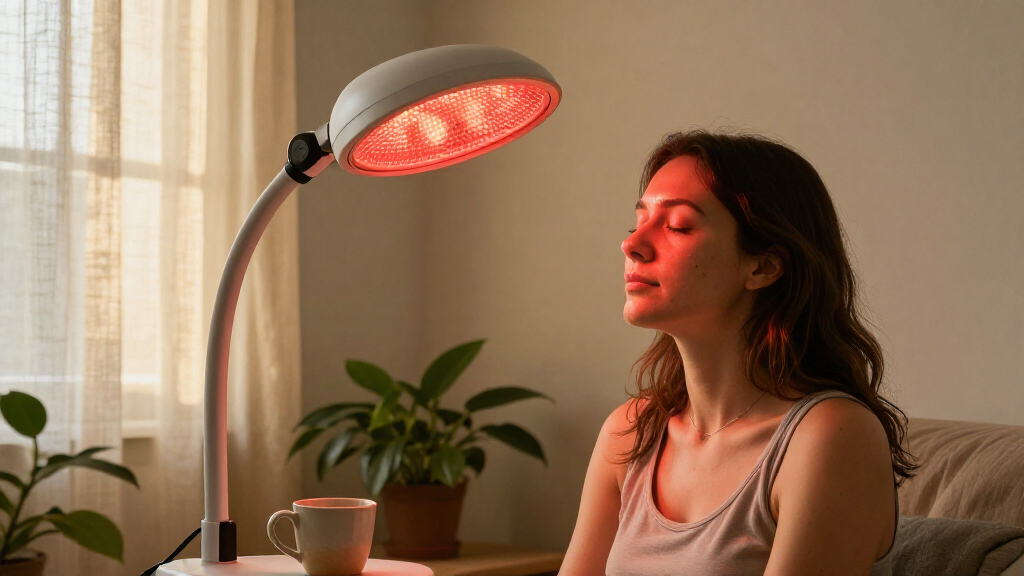

Among these red light therapy lamps, I’d put the Hooga HG300 first for buyers who want a focused panel with both red and near-infrared light, while the BestQool BQ60 stands out as a compact 105W option and the BestQool Pro100 offers a broader four-wavelength setup. The main choice is between a panel that concentrates light on a smaller area and a multi-head or adjustable lamp that can be positioned around the body. Wavelength combinations, coverage, setup, and controls matter more than a long feature list when choosing a device you’ll use consistently. Specs alone do not establish treatment results, so I’d also check the maker’s guidance and safety instructions. Continue reading for the full breakdown and help matching a lamp to your space and needs.

Get health and wellness essentials delivered free with Prime
- Fast, free delivery on millions of items
- Prime Video, Amazon Music and more included
- Member-only deals all year
Key Takeaways
- The Hooga HG300 is the clearest focused-panel pick: it offers red and near-infrared light in a compact format, while larger or multi-head designs may suit wider positioning needs better.
- The BestQool models serve different priorities: the BQ60 lists 105W and two wavelengths, while the Pro100 lists 160W and four wavelengths; the extra specs matter only if they fit your intended use.
- Several panels list 660nm, 850nm, and 940nm: Morfone’s body-and-face panel and the BEICHEN panel share this combination, so compare controls, mounting, and stated coverage rather than wavelength lists alone.
- Adjustability is a distinct category strength: the five-head FlaoAito lamp and the five-color adjustable-stand panel emphasize positioning flexibility, unlike the more panel-centered options.
- Repeated Viconor listings make exact model checking important: three entries use the same product name, so buyers should verify the specific listing’s dimensions, wavelengths, and included accessories before choosing.
| Morfone Red Light Therapy Panel for Body and Face, 660nm, 850nm, 940nm |  | Best for Adjustable Targeting | LED beads: 120 | Wavelengths: 660nm, 850nm, 940nm | Panel size: 14.2 × 6.3 inches | VIEW LATEST PRICE | See Our Full Breakdown |
| Hooga HG300 Red and Near-Infrared Light Therapy Panel |  | Best for Compact, Targeted Sessions | Wavelengths: 660nm red and 850nm near-infrared | LED count: 60 | Irradiance: Over 73 mW/cm² at 6 inches | VIEW LATEST PRICE | See Our Full Breakdown |
| 5-Color Red Light Therapy Panel with Adjustable Stand |  | Best for Multiple Color Modes | Light modes: Red 660nm, blue 465nm, purple 660nm + 465nm, yellow 600nm, orange 660nm + 600nm; all include 850nm near-infrared | LED count: 180 | Adjustable height: 45–60 inches | VIEW LATEST PRICE | See Our Full Breakdown |
| BEICHEN Red Light Therapy Panel for Face and Body, 660nm, 850nm, and 940nm |  | Best for a Simple Three-Wavelength Setup | Wavelengths: 660nm, 850nm, 940nm | Light modes: Continuous and intermittent | Bracket adjustment: Up to 180 degrees | VIEW LATEST PRICE | See Our Full Breakdown |
| Morfone Tri-Wavelength Red Light Therapy Panel |  | Best for a Larger Panel with Three Wavelengths | LED beads: 200 | Wavelengths: 660nm, 850nm, 940nm | Panel size: 16 × 8 inches | VIEW LATEST PRICE | See Our Full Breakdown |
| FlaoAito Red Light Therapy Lamp with 5 Adjustable Heads |  | Best for Multi-Angle Coverage | Brand: FlaoAito | Wavelengths: 660 nm red and 850 nm near-infrared | Adjustable heads: 5 | VIEW LATEST PRICE | See Our Full Breakdown |
| BestQool BQ60 Red Light Therapy Panel, 660nm Red and 850nm Near-Infrared, 105W |  | Best for Measurable Panel Output | Power: 105W | Wavelengths: 660 nm red and 850 nm near-infrared | Irradiance: 95.6 mW/cm² at 3 inches | VIEW LATEST PRICE | See Our Full Breakdown |
| Viconor Red Light Therapy Lamp for Face and Body |  | Best for Flexible Placement | LED count: 120 | Wavelengths: 660 nm red and 850 nm near-infrared | Power cord length: 1.8 m | VIEW LATEST PRICE | See Our Full Breakdown |
| Red Light Therapy Lamp with 660 nm and 850 nm LEDs |  | Best Compact USB Desktop Pick | LED count: 18 | Wavelengths: 660 nm red and 850 nm near-infrared | Power: 5 watts | VIEW LATEST PRICE | See Our Full Breakdown |
| Viconor Red Light Therapy Lamp for Face and Body |  | Best for Remote-Controlled Adjustments | Brand: Viconor | Wavelengths: 660 nm red and 850 nm near-infrared | LED configuration: 60 three-in-one chips; 180 LEDs total | VIEW LATEST PRICE | See Our Full Breakdown |
| Viconor Red Light Therapy Lamp for Face and Body |  | Best for Flexible Placement | LED count: 120 | Wavelengths: 660 nm red light and 850 nm near-infrared light | Stand adjustment: 180° angle and height adjustment | VIEW LATEST PRICE | See Our Full Breakdown |
| INTEO Red Light Therapy Lamp for Face and Body | 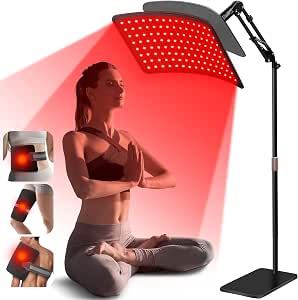 | Best for Adjustable Sessions | Panel dimensions: 13 × 7.5 in | Maximum device height: 46.5 in | Brightness levels: 5 | VIEW LATEST PRICE | See Our Full Breakdown |
| BestQool Pro100 Red Light Therapy Panel, 4 Wavelengths, 160W |  | Best for Measurable Output and Expansion | Wavelength count: 4 | Power: 160W | Dimensions: 19.7 × 8.4 × 2.6 inches | VIEW LATEST PRICE | See Our Full Breakdown |
| LanSuper Red and Near-Infrared Light Therapy Lamp for Face and Body |  | Best for Fine-Tuning Brightness and Position | LED beads: 140 | Wavelengths: 660 nm red light and 850 nm near-infrared light | Brightness levels: 9 | VIEW LATEST PRICE | See Our Full Breakdown |
| SUXIO Red Light Therapy Panel for Face and Body, 165 LEDs, 660 nm Red and 820 nm Near-Infrared Light |  | Best for Remote-Controlled Sessions | LED count: 165 | Wavelengths: 660 nm red light and 820 nm near-infrared light | Timer settings: 30, 60, and 90 minutes | VIEW LATEST PRICE | See Our Full Breakdown |
| red light therapy lamp | Wavelengths |
|---|---|
| Morfone Red Light Therapy Pane | 660nm, 850nm, 940nm |
| Hooga HG300 Red and Near-Infra | 660nm red and 850nm near-infrared |
| 5-Color Red Light Therapy Pane | — |
| BEICHEN Red Light Therapy Pane | 660nm, 850nm, 940nm |
| Morfone Tri-Wavelength Red Lig | 660nm, 850nm, 940nm |
| FlaoAito Red Light Therapy Lam | 660 nm red and 850 nm near-infrared |
| BestQool BQ60 Red Light Therap | 660 nm red and 850 nm near-infrared |
| Viconor Red Light Therapy Lamp | 660 nm red and 850 nm near-infrared |
| Red Light Therapy Lamp with 66 | 660 nm red and 850 nm near-infrared |
| Viconor Red Light Therapy Lamp | 660 nm red and 850 nm near-infrared |
| Viconor Red Light Therapy Lamp | 660 nm red light and 850 nm near-infrared light |
| INTEO Red Light Therapy Lamp f | — |
| BestQool Pro100 Red Light Ther | — |
| LanSuper Red and Near-Infrared | 660 nm red light and 850 nm near-infrared light |
| SUXIO Red Light Therapy Panel | 660 nm red light and 820 nm near-infrared light |
More Details on Our Top Picks
Morfone Red Light Therapy Panel for Body and Face, 660nm, 850nm, 940nm
The Morfone 120-bead panel earns this spot for pairing three wavelengths with a bracket that rotates 180 degrees, making it easier to aim the light at different areas than a fixed-position lamp. Its 660nm, 850nm, and 940nm wavelengths and five modes, including pulse, offer more ways to set up a session than the simpler two-wavelength Hooga HG300. At 14.2 × 6.3 inches, though, the panel is still a targeted-use format rather than a broad-coverage solution; its face-or-body description should not be mistaken for covering a large area at once. I also like that protective glasses are included. The tradeoffs are a 110V power requirement and a suggested routine of three to seven sessions weekly, which asks for regular use rather than occasional setup.
Pros:- Includes 660nm, 850nm, and 940nm wavelengths
- Five modes, including pulse, allow more setup choices
- 180-degree adjustable bracket helps direct the panel
- Protective sunglasses and a one-year manufacturing-defect warranty are included
Cons:- The 14.2 × 6.3-inch panel limits coverage at a time
- Requires a 110V outlet
- Suggested use of three to seven sessions per week takes ongoing consistency
Best for: People who want a positionable panel for alternating between face and smaller body areas, with multiple wavelengths and light modes.
Not ideal for: Buyers seeking wide, hands-free coverage in one session or those whose available outlet does not support 110V.
- LED beads:120
- Wavelengths:660nm, 850nm, 940nm
- Panel size:14.2 × 6.3 inches
- Bracket rotation:180 degrees
- Modes:5 modes, including pulse
- Voltage:110V
- Warranty:1 year against manufacturing defects
Our verdict“Choose this Morfone if adjustable positioning and three wavelengths matter more than covering a large area in one session.”
Hooga HG300 Red and Near-Infrared Light Therapy Panel
The Hooga HG300 is the most straightforward compact choice here: its 12.6-inch tabletop design is easier to place and store than the 45–60-inch stand supplied with the 5-Color Red Light Therapy Panel. The 660nm red and 850nm near-infrared lights have independent controls, so you can select either or use both without cycling through a broader set of color modes. A built-in timer and active cooling also make this a more self-contained tabletop setup than the BEICHEN panel, whose listed details do not specify dimensions or power. Its main limitation is area: Hooga describes this as a panel for targeted use, not a way to cover a large portion of the body at once. I’d favor it for a defined, smaller treatment area and a compact routine.
Pros:- Independent controls for 660nm red and 850nm near-infrared light
- Adjustable tabletop stand suits compact setups
- Built-in timer and active cooling are included
- Protective eyewear, power cord, and three-year warranty are supplied
Cons:- Designed for smaller targeted areas rather than broad coverage
- Offers two wavelengths rather than the three listed for the Morfone panels
Best for: People who want a compact tabletop panel for targeted sessions and prefer separate controls for red and near-infrared light.
Not ideal for: Buyers who want broad body coverage, a floor-standing setup, or multiple color choices beyond red and near-infrared.
- Wavelengths:660nm red and 850nm near-infrared
- LED count:60
- Irradiance:Over 73 mW/cm² at 6 inches
- Dimensions:12.6 × 4.92 × 2.44 inches
- Beam angle:60 degrees
- LED lifespan:50,000+ hours
- Features:Built-in timer, independent light controls, active cooling
- Warranty:3 years
Our verdict“Pick the Hooga HG300 for a compact tabletop setup and separate red and near-infrared controls, not large-area coverage.”
5-Color Red Light Therapy Panel with Adjustable Stand
If choosing among several light colors matters more than keeping the setup compact, this five-color panel offers the widest range of listed modes in this group. Red, blue, purple, yellow, and orange settings all include 850nm near-infrared, while the 180 LEDs and 45–60-inch stand make it more suited to face-and-body positioning than the tabletop Hooga HG300. The rotating panel can be set on the floor or a table, and five brightness levels, a timer, and remote control give the setup more adjustment points than the simpler BEICHEN panel. That flexibility comes with practical costs: the stand needs assembly and floor space, and the product data omit the panel’s dimensions and weight. I’d choose it for configurable use, not for a minimal footprint.
Pros:- Five selectable color modes, each with 850nm near-infrared
- 180 LEDs and adjustable stand support face and body positioning
- 360-degree panel rotation and five brightness levels offer setup flexibility
- Remote, timer, automatic shutoff, and protective eyewear are included
Cons:- Stand requires assembly and takes more space than the Hooga HG300 tabletop panel
- Panel dimensions and weight are not provided
- Five color options may be unnecessary for buyers seeking a simple red-and-infrared setup
Best for: Buyers who want multiple visible-light color settings, near-infrared in each mode, and a stand that can work at floor or tabletop height.
Not ideal for: People with limited space, those who want a simple two- or three-wavelength panel, or buyers who need known dimensions and weight before purchasing.
- Light modes:Red 660nm, blue 465nm, purple 660nm + 465nm, yellow 600nm, orange 660nm + 600nm; all include 850nm near-infrared
- LED count:180
- Adjustable height:45–60 inches
- Panel rotation:360 degrees
- Brightness levels:5
- Timer settings:20, 30, 40, 50, or 60 minutes
- Controls:Remote and wired controller with digital display
- Use:Floor or tabletop
Our verdict“Choose this panel if color-mode variety and stand adjustability outweigh the extra assembly and space requirements.”
BEICHEN Red Light Therapy Panel for Face and Body, 660nm, 850nm, and 940nm
The BEICHEN panel keeps the core setup simple: it combines 660nm visible red light with 850nm and 940nm infrared wavelengths, then adds continuous and intermittent modes, an adjustable bracket, and a timer. Compared with the Morfone 120-bead panel, its listed features cover similar wavelength and positioning needs without specifying a bead count or panel size. That makes the Morfone easier to evaluate for physical coverage, while BEICHEN leaves more basic buying questions unanswered. The bracket adjusts up to 180 degrees and sunglasses are included, so it can be aimed at different areas without requiring a separate stand. The tradeoff is limited product detail: there are no panel dimensions or power specifications in the provided data. I’d shortlist it only if the core features fit and those omissions do not block your decision.
Pros:- Combines 660nm, 850nm, and 940nm wavelengths
- Bracket adjusts up to 180 degrees for different aiming positions
- Offers continuous and intermittent modes plus a timer
- Sunglasses are included
Cons:- Panel dimensions, LED count, and power specifications are not provided
- Suggested use calls for repeated sessions three to seven times per week
- Has fewer listed mode and adjustment details than the 5-Color Red Light Therapy Panel
Best for: Buyers looking for a three-wavelength panel with adjustable aiming, a timer, and a straightforward continuous or intermittent mode selection.
Not ideal for: Shoppers who need panel dimensions, power details, or LED count to compare coverage and electrical setup before buying.
- Wavelengths:660nm, 850nm, 940nm
- Light modes:Continuous and intermittent
- Bracket adjustment:Up to 180 degrees
- Timer:Included
- Suggested session length:10–30 minutes
- Suggested frequency:3–7 times per week
- Included accessory:Sunglasses
Our verdict“Consider BEICHEN for a simple, aimable three-wavelength setup only if missing size and power details are acceptable.”
Morfone Tri-Wavelength Red Light Therapy Panel
Among the two Morfone options here, the Tri-Wavelength panel is the larger pick: its 16 × 8-inch face and 200 LED beads provide a broader panel than the 14.2 × 6.3-inch Morfone model. Both list 660nm, 850nm, and 940nm light, pulse modes, and a bracket that rotates 180 degrees, but this version also adjusts in height. That added area and positioning flexibility make it the better fit for buyers who want more panel coverage without moving to the floor stand and color selections of the 5-Color Red Light Therapy Panel. It is still not a large full-body panel, and the listed 110V requirement may limit where it can be used. Protective sunglasses are included; its suggested schedule calls for regular sessions.
Pros:- 200 LED beads across a 16 × 8-inch panel
- 660nm, 850nm, and 940nm wavelengths with multiple light combinations and pulse mode
- Bracket adjusts in height and rotates 180 degrees
- Protective sunglasses are included
Cons:- Still offers limited coverage compared with a large full-body panel
- Requires a 110V outlet
- Suggested use of three to seven sessions per week calls for a regular routine
Best for: People who want a three-wavelength panel with a larger face and height adjustment for targeting more than one body area.
Not ideal for: Buyers seeking a large full-body panel, or those without a compatible 110V outlet and room to position an adjustable bracket.
- LED beads:200
- Wavelengths:660nm, 850nm, 940nm
- Panel size:16 × 8 inches
- Modes:5 light combinations and pulse mode
- Bracket:Aviation-grade aluminum; 180-degree rotation and adjustable height
- Recommended use:10–30 minutes, 3–7 times per week
- Voltage compatibility:110V
- Warranty:1-year quality assurance
Our verdict“Choose this Morfone over its smaller sibling if you want a larger three-wavelength panel and height adjustment, while accepting targeted rather than full-body coverage.”
FlaoAito Red Light Therapy Lamp with 5 Adjustable Heads
Five adjustable heads give this FlaoAito a different job from the single-panel BestQool BQ60: it can direct light toward several areas or angles without repositioning one broad panel. It pairs 660 nm red with 850 nm near-infrared and offers steady, low-frequency pulse, and high-frequency pulse modes, giving users some control over how the light operates. Five brightness levels and timer choices up to 60 minutes add flexibility for home sessions. The tradeoff is that the timer starts at 20 minutes, so it cannot match the shorter preset options on the USB-powered 18-LED lamp in this lineup. I also can’t compare its light output with the BQ60 because no power or irradiance figures are provided. Choose it for adjustable coverage, not for documented output measurements.
Pros:- Five adjustable heads support coverage from multiple angles
- Combines 660 nm red and 850 nm near-infrared light
- Three modes and five brightness levels offer operating flexibility
- Portable design and timer options up to 60 minutes
Cons:- Shortest timer setting is 20 minutes
- No power or irradiance specifications are provided
Best for: Home users who want to aim light at multiple body areas or adjust several heads without moving a single panel.
Not ideal for: Buyers who need short sessions or want published power and irradiance figures to compare output.
- Brand:FlaoAito
- Wavelengths:660 nm red and 850 nm near-infrared
- Adjustable heads:5
- Brightness levels:5
- Light modes:Steady on, low-frequency pulse, high-frequency pulse
- Timer settings:20, 30, 40, 50, or 60 minutes
- Portability:Portable
Our verdict“Choose the FlaoAito if adjustable multi-angle coverage matters more to you than short timer presets or documented light output.”
BestQool BQ60 Red Light Therapy Panel, 660nm Red and 850nm Near-Infrared, 105W
The BestQool BQ60 stands out for buyers who want a panel with a stated output figure rather than a lamp whose specifications stop at wavelengths and controls. Its 105W power rating and listed irradiance of 95.6 mW/cm² at 3 inches make its output easier to compare on paper with the FlaoAito and Viconor lamps, which provide no irradiance figure in the supplied details. Red, infrared, and combined modes let users select which wavelengths to run, while the stand and hanging kit offer two placement approaches. The cost of that panel-style flexibility is a less specifically targeted form than the Viconor’s rotating curved lamp head. The BQ60 also has no stated dimensions, so I can’t judge its coverage area from the supplied information.
Pros:- Lists irradiance at a specified distance
- Selectable red, infrared, and combined modes
- Includes an adjustable stand and hanging kit
- Touchscreen controls and a cooling system
Cons:- Panel dimensions are not specified
- The panel format may be less targeted than a rotating lamp head
Best for: Buyers seeking a home panel with listed irradiance and the option to use red, near-infrared, or both wavelengths.
Not ideal for: Shoppers who need confirmed panel dimensions or prefer a compact lamp head aimed at a particular body area.
- Power:105W
- Wavelengths:660 nm red and 850 nm near-infrared
- Irradiance:95.6 mW/cm² at 3 inches
- Light modes:Red, infrared, or both
- Mounting:Adjustable U-shaped stand and hanging kit
- Controls:Touchscreen
- LED operation:Flicker-free
Our verdict“Pick the BQ60 if a stated irradiance figure and flexible mounting matter more than a compact, targeted lamp design.”
Viconor Red Light Therapy Lamp for Face and Body
This Viconor suits buyers who want a curved light surface that can be positioned on its stand or hung, rather than a multi-head setup like the FlaoAito. Its 120 LEDs combine 660 nm red and 850 nm near-infrared light, and adjustment up to 180 degrees helps direct the panel toward different areas without relying on a fixed desktop angle. The included 1.8 m power cord offers some freedom in placement, while the stand and hook give more mounting choices than the USB desktop lamp in this roundup. What’s missing is detail that would help compare its output: there is no stated power or irradiance, and the supplied session guidance is 15–30 minutes daily. Claims about skin or circulation benefits in the description are not independently verified here.
Pros:- 120 LEDs combine red and near-infrared wavelengths
- Curved panel is designed to focus light
- Adjusts up to 180 degrees
- Includes a stand, hook, and 1.8 m power cord
Cons:- Power and irradiance specifications are not provided
- Supplied session guidance calls for 15–30 minutes daily
- Timer and brightness controls are not specified
Best for: Home users who want a curved panel with a stand and hook for changing placement around the face or body.
Not ideal for: Buyers who need published irradiance or power data, or want timer and brightness controls specified.
- LED count:120
- Wavelengths:660 nm red and 850 nm near-infrared
- Power cord length:1.8 m
- Adjustment:Up to 180 degrees
- Included accessories:Stand and hook
- Suggested session duration:15–30 minutes daily
Our verdict“Choose this Viconor for flexible mounting and a curved panel, but look elsewhere if output measurements and control details guide your choice.”
Red Light Therapy Lamp with 660 nm and 850 nm LEDs
This 18-LED lamp is the most compact, straightforward option in this group: it runs from USB power, sits on a desktop, and adjusts in height and angle. Its 10-, 20-, and 30-minute timer choices also give it a shorter starting session than the FlaoAito, whose timer begins at 20 minutes. That convenience comes with a clear limitation: its stated 5-watt power and small LED count make it a different proposition from the 105W BestQool BQ60 panel, which also lists irradiance. The product description says the LEDs do not produce a noticeable skin-heating sensation, so this is not a choice for someone expecting warmth. It is also not water resistant, making placement near moisture a poor fit.
Pros:- USB power suits desktop setups
- Adjustable height and angle help direct the light
- Timer offers 10-, 20-, and 30-minute settings
- Combines 660 nm red and 850 nm near-infrared LEDs
Cons:- 5-watt power and 18 LEDs make it smaller-scale than the BestQool BQ60 panel
- Not water resistant
- Description says it produces no noticeable skin-heating sensation
Best for: Desk-based users who want a small USB-powered lamp with adjustable positioning and shorter timer presets.
Not ideal for: Buyers seeking a larger panel, a stated irradiance figure, noticeable warmth, or a water-resistant device.
- LED count:18
- Wavelengths:660 nm red and 850 nm near-infrared
- Power:5 watts
- Power source:USB
- Timer:10, 20, or 30 minutes
- Adjustability:Adjustable height and angle
- Mounting type:Desktop
- Water resistance:Not water resistant
- Warranty:12 months
Our verdict“Pick this lamp for a compact USB desktop setup and short timer choices, not for broad panel coverage or warmth.”
Viconor Red Light Therapy Lamp for Face and Body
Compared with the earlier Viconor lamp in this batch, this model puts more emphasis on hands-off adjustment: it adds a remote, four light modes, and five brightness levels. Its curved head rotates 360 degrees on a bracket stand, which gives it more aiming flexibility than the fixed-position choices and makes it easier to reposition for different body areas. The 660 nm red and 850 nm near-infrared wavelengths are delivered through 60 three-in-one chips, listed as 180 LEDs total. That control and positioning flexibility comes with missing practical details: the timer range and device dimensions are not stated, unlike the FlaoAito’s clearly listed timer intervals. Suggested sessions are 15–30 minutes, so buyers should also be comfortable with regular use rather than occasional short sessions.
Pros:- Remote and touch-panel controls
- Four light modes and five brightness levels
- 360-degree rotating head and bracket stand
- Combines 660 nm red and 850 nm near-infrared light
Cons:- Timer range is not specified
- Device dimensions are not provided
- Suggested sessions run 15–30 minutes and require regular use
Best for: People who want a stand-mounted lamp they can reposition for different body areas and adjust by remote.
Not ideal for: Buyers who need known device dimensions, a specified timer range, or a lamp suited to brief sessions.
- Brand:Viconor
- Wavelengths:660 nm red and 850 nm near-infrared
- LED configuration:60 three-in-one chips; 180 LEDs total
- Light modes:4
- Brightness levels:5
- Controls:Touch panel and remote control
- Lamp head rotation:360 degrees
- Suggested session duration:15–30 minutes
Our verdict“Choose this Viconor if remote operation and broad head rotation matter more than knowing the lamp’s size and timer range in advance.”
Viconor Red Light Therapy Lamp for Face and Body
The Viconor suits buyers who want to position a panel in more than one way: its curved 120-LED design can sit on the adjustable stand or hang from the included hook. The 660 nm red and 850 nm near-infrared wavelengths give it clearly stated light specifications, unlike the INTEO lamp, whose product details omit wavelengths. Its stand adjusts in height and angle, while the 3 m cord gives some freedom to place it away from an outlet. The tradeoff is limited output information: there is no irradiance or recommended treatment distance, making it harder to judge coverage and compare performance. Choose it for adaptable setup, not for precise output comparisons or substantiated health claims.
Pros:- Specifies both 660 nm red and 850 nm near-infrared light
- Can be hung or used with the included stand
- Stand adjusts through 180 degrees and in height
- Includes a 3 m power cord
Cons:- No irradiance or treatment-distance information is provided
- The curved panel’s treatment coverage is not specified
- Product text does not substantiate claimed skin or muscle benefits
Best for: People who want a red and near-infrared lamp they can either hang or position on a stand, with flexibility to change the setup at home.
Not ideal for: Buyers who need stated irradiance and treatment-distance figures to compare light output or plan a defined treatment area.
- LED count:120
- Wavelengths:660 nm red light and 850 nm near-infrared light
- Stand adjustment:180° angle and height adjustment
- Included accessories:Adjustable stand, hook, and 3 m power cord
- Suggested use:15–30 minutes daily
- Placement:Hanging or stand-mounted
Our verdict“Pick the Viconor if hanging and stand-mounted use matter more to you than having detailed output measurements.”
INTEO Red Light Therapy Lamp for Face and Body
The INTEO is the most configurable lamp here for directing and timing a session. Its detachable 13 × 7.5-inch panel can be handheld or bracket-mounted, and the head rotates 360 degrees while the stand adjusts in height. Five brightness levels, three working modes, and 10–90-minute timer settings offer more control than the simpler timer setup on the SUXIO panel. That flexibility comes with a major information gap: the listing gives no wavelengths or output intensity, so I can’t compare its light characteristics with the wavelength-specified Viconor or LanSuper. Assembly is also required. This makes the most sense for buyers who value positioning and session controls, but not for anyone choosing primarily by documented light output.
Pros:- Detachable panel supports handheld or bracket-mounted use
- 360-degree rotating lamp head helps direct the panel
- Five brightness levels and three working modes
- Timer options span 10 to 90 minutes
Cons:- No wavelengths or output intensity are specified
- Assembly is required
- The broad control range does not establish light output or treatment coverage
Best for: Home users who want a detachable panel, flexible mounting, and a wide range of brightness and timer controls.
Not ideal for: Buyers who want wavelength and output specifications before choosing a red light therapy device, or who prefer a setup that needs no assembly.
- Panel dimensions:13 × 7.5 in
- Maximum device height:46.5 in
- Brightness levels:5
- Working modes:3
- Timer settings:10–90 minutes
- Stand adjustment:180° flip and flexible height adjustment
- Lamp head rotation:360°
- Recommended use:15–25 minutes per session, 3–5 times weekly
Our verdict“Choose the INTEO for hands-on positioning and session control, but choose a wavelength-specified model if documented light characteristics are your priority.”
BestQool Pro100 Red Light Therapy Panel, 4 Wavelengths, 160W
The BestQool Pro100 is the strongest fit in this group for shoppers comparing published panel specifications. It lists 109 mW/cm² irradiance at 3 inches, four wavelengths, and a 60-degree beam angle—useful details absent from the Viconor and SUXIO listings. Its modular design also allows compatible BestQool PRO panels to connect, so buyers can expand coverage rather than replace the original panel. As a single unit, though, its 19.7 × 8.4-inch footprint may not suit people seeking broad coverage in one setup. Expansion depends on buying compatible PRO-series devices, and the listed four wavelengths are not individually identified in the supplied details. Compared with the more adjustable INTEO, this pick emphasizes output data and panel linking over detachable, handheld positioning.
Pros:- Lists irradiance of 109 mW/cm² at 3 inches
- Four wavelengths and a 60-degree beam angle are specified
- Three lighting modes support different panel-use preferences
- Compatible PRO series panels can connect for wider coverage
Cons:- The single panel’s dimensions may limit coverage
- Expansion requires compatible BestQool PRO series devices
- The four wavelengths are not individually identified in the supplied product details
Best for: Specification-focused home users who want stated irradiance and may later connect compatible panels for a wider setup.
Not ideal for: Buyers who need a broad treatment area from one compact panel, or who want every wavelength individually named in the product details.
- Wavelength count:4
- Power:160W
- Dimensions:19.7 × 8.4 × 2.6 inches
- Weight:6.61 pounds
- Irradiance:109 mW/cm² at 3 inches
- Beam angle:60 degrees
- Lighting modes:3
- Design:Connectable modular panels
Our verdict“Choose the Pro100 if published irradiance and the option to connect compatible panels matter more than compact size or handheld flexibility.”
LanSuper Red and Near-Infrared Light Therapy Lamp for Face and Body
LanSuper stands out for buyers who want a freestanding lamp with several ways to tailor its setup. It combines 660 nm red and 850 nm near-infrared light with nine brightness levels, more gradations than the five on the INTEO. The gooseneck rotates 360 degrees, and the lamp offers three height settings up to 60 inches, making it easier to direct light from different positions. Its 15-, 30-, and 45-minute timer choices are less expansive than INTEO’s 10–90-minute range, so this is the better fit for simpler preset sessions rather than highly customizable timing. Protective goggles are included, though the product text does not establish treatment results. Assembly is required, and no irradiance figure is provided to compare its output with the BestQool Pro100.
Pros:- Specifies 660 nm red and 850 nm near-infrared wavelengths
- Nine brightness levels allow finer adjustments than the INTEO
- Three height settings and a 360-degree gooseneck help with positioning
- Protective goggles are included
Cons:- Assembly is required
- No irradiance or treatment-distance specification is provided
- Timer is limited to 15-, 30-, or 45-minute settings
Best for: People who want a height-adjustable floor-style lamp with wavelength information, multiple brightness steps, and included protective goggles.
Not ideal for: Buyers who want published irradiance figures, avoid assembly, or need a timer with a wide range of durations.
- LED beads:140
- Wavelengths:660 nm red light and 850 nm near-infrared light
- Brightness levels:9
- Timer settings:15, 30, and 45 minutes
- Height adjustments:31 in, 47 in, and 60 in
- Gooseneck rotation:360°
- Included accessories:Protective goggles
Our verdict“Pick LanSuper if adjustable height, a flexible gooseneck, and fine brightness control outweigh the need for published output measurements.”
SUXIO Red Light Therapy Panel for Face and Body, 165 LEDs, 660 nm Red and 820 nm Near-Infrared Light
The SUXIO makes daily operation straightforward with a magnetic remote, four brightness levels, and an angled stand. It specifies 660 nm red and 820 nm near-infrared light, giving buyers more wavelength detail than the INTEO listing, while its 165 LEDs exceed the counts stated for the Viconor and LanSuper. LED count alone does not reveal irradiance or coverage, however, and SUXIO provides neither dimensions nor power specifications. Its timer choices—30, 60, or 90 minutes—also start longer than the 15–30-minute suggestion for Viconor, so session length deserves attention when comparing the two. Choose this panel for convenient controls and a simple angled setup, not for shoppers who need output data to judge performance.
Pros:- Specifies 660 nm red and 820 nm near-infrared light
- 165 LEDs are listed
- Includes a magnetic remote control
- Brightness and stand angle can be adjusted
Cons:- No dimensions or power specifications are provided
- No irradiance or treatment-distance figures are listed
- Timer settings are limited to 30, 60, or 90 minutes
Best for: Home users who want a wavelength-specified panel with a remote, adjustable brightness, and an angled stand.
Not ideal for: Buyers who need dimensions, power, irradiance, or treatment-distance data to evaluate coverage and output before purchase.
- LED count:165
- Wavelengths:660 nm red light and 820 nm near-infrared light
- Timer settings:30, 60, and 90 minutes
- Brightness:4 levels, with additional adjustment
- Stand:Adjustable angle
- Remote:Magnetic remote control
Our verdict“Choose SUXIO for convenient remote-controlled sessions, but opt for the BestQool Pro100 if stated irradiance is more important than simple controls.”
How We Picked
I ranked these red light therapy lamps by how clearly their stated features support a practical buying decision: wavelength information, form factor, listed power where provided, positioning options, and whether the product appears suited to focused or broader use. A panel with a defined wavelength combination and clear power specification can be easier to compare than a lamp whose listing gives fewer technical details. I also weighed setup and flexibility, since a device that is awkward to position may be harder to fit into a repeatable routine.
The ranking favors clear specifications and useful design choices, not promises of medical results. The Hooga HG300 leads as a straightforward panel pick; the BestQool BQ60 and Pro100 separate compact dual-wavelength use from a more feature-rich four-wavelength option. Adjustable and multi-head designs rank well for positioning, while products with overlapping names or limited supplied details are harder to distinguish on paper. I treat stated features as listing information, not independent verification, and recommend checking current manufacturer instructions before use.
Factors to Consider When Choosing Red Light Therapy Lamps
Choosing among red light therapy lamps is less about picking the longest feature list and more about matching the device to your intended area, room, and routine. I’d settle the practical questions below before comparing small specification differences.
Match the Form Factor to the Area You Want to Cover
A panel concentrates light in a defined area, which can suit a desk, bedside setup, or focused use on one body region. A multi-head lamp offers more positioning options, but each head may still cover a limited area, so flexibility does not automatically mean broader exposure. Before buying, measure the space where the device will sit and check the listed dimensions and recommended distance. A common mistake is assuming that “for face and body” means the product can cover both at once. If you expect to use it on larger areas, compare usable panel dimensions rather than relying on the product name. Choose a compact panel for a fixed spot; choose an adjustable design when positioning is your main constraint.
Read Wavelength Lists as Specifications, Not Proof of Results
Many listings in this roundup feature 660nm red light and 850nm near-infrared light, while some add 940nm or other wavelengths. A longer list can make a device more technically varied, but it does not by itself show that the lamp will meet your personal goal. Check whether the manufacturer explains which wavelengths operate together, how to use them, and what distance it recommends. Do not assume that two lamps with the same wavelength labels deliver the same output or coverage. If a listing leaves basic operating details unclear, consult the manufacturer before purchase rather than filling gaps with assumptions. I’d favor understandable instructions over a more complex spec sheet with little explanation.
Compare Output Claims Carefully
Some products publish a wattage figure, such as the 105W BQ60 or 160W Pro100, while others foreground LED counts or wavelength combinations. These numbers describe different aspects of a product and are not interchangeable measures of light reaching your skin. Check for manufacturer-provided irradiance data, the distance at which it was measured, and guidance on session length; without those details, direct performance comparisons are limited. A large wattage number alone is not a reliable reason to choose one lamp over another. Avoid extending exposure to compensate for unclear output information. When performance data is sparse, prioritize transparent use instructions and a return policy that fits your needs.
Choose Adjustability You Will Actually Use
Stands, hinges, and separate lamp heads can make it easier to direct light without holding a device in place. That convenience matters if you plan to use the lamp at different heights or positions, but extra joints and components can also add setup effort and storage needs. Check whether the stand is included, how the unit is meant to be mounted, and whether it can remain stable in your intended location. A common buying error is treating “adjustable” as a substitute for checking reach and footprint. If you have one regular use position, a simpler panel may be easier to set up consistently. If your use position changes, flexibility may be worth choosing over a more compact design.
Account for Safety, Comfort, and Manufacturer Guidance
Light devices can differ in brightness, heat, recommended distance, and eye-safety guidance, so read the instructions for the exact model you plan to buy. Do not assume that a red-looking light is comfortable to view directly or that near-infrared light is visible. Ask a qualified health professional if you have a condition, take medication that affects light sensitivity, or are unsure whether light exposure is appropriate for you. Protective eyewear should follow the manufacturer’s directions, not a guess based on the lamp’s color. Start only within the usage guidance supplied with the product, and stop if use causes discomfort. These steps are more useful than relying on broad wellness claims in a listing.
Decide When Extra Features Are Worth It
A four-wavelength or higher-wattage model may appeal to buyers who want a more feature-rich panel, but extra specifications can add complexity without solving a real need. A beginner may prefer a clearly described two-wavelength panel with straightforward placement and instructions. Someone prioritizing flexible positioning could value a multi-head lamp more than additional wavelengths. Before paying for more features, identify what problem they solve for your routine and whether the manufacturer explains how to use them. Also check what comes in the box, including stands, mounting hardware, timers, or eyewear, since accessories affect the overall setup. The best fit is the lamp whose capabilities you can use, not the one with the longest list.
Frequently Asked Questions
Should I choose a two-wavelength panel or a model with more wavelengths?
I’d start with the use instructions and output details, not the number of wavelengths alone. The BQ60 lists 660nm and 850nm, while the BestQool Pro100 lists four wavelengths, so they differ in specification breadth as well as stated power. A larger wavelength range may suit buyers who specifically want that feature, but the listing should explain how those wavelengths are used. If it does not, the extra numbers may not help you make a confident choice. For a simpler decision, compare coverage, placement, and manufacturer guidance first.
Can one lamp cover both my face and a larger body area?
That depends on the lamp’s illuminated area, distance, and how the manufacturer instructs you to position it. A product labeled for face and body may mean it can be repositioned for either use, not that it covers both at once. Check panel dimensions and any coverage guidance before deciding. Smaller panels can be practical for focused use but may require repositioning to address a larger area. If broad coverage is your priority, compare the lamp’s physical size and usable positioning rather than relying on the category label.
Is a multi-head lamp better than a flat panel?
Neither design is universally better; they solve different setup problems. A multi-head lamp, such as the FlaoAito option, emphasizes positioning flexibility, while a flat panel provides a more defined light surface. Separate heads can help direct light from different angles, but may take more space and require more adjustment. A panel may be simpler if you have one consistent placement and target area. I’d choose based on your available room and how often you need to change the lamp’s position.
What should I check when a listing gives wattage but not irradiance?
Wattage alone does not tell you how much light reaches the intended area at a particular distance. Look for irradiance data, the measurement distance, recommended positioning, and session guidance from the manufacturer. If those details are missing, avoid comparing the wattage figure as though it were a direct measure of treatment strength. You can ask the manufacturer for the missing information before buying. Clear instructions and transparent specifications are a stronger basis for comparison than a headline power number.
Why are there three Viconor entries, and how do I choose between them?
The roundup includes three listings with the same Viconor product name, but the supplied names do not distinguish their specifications. That means I would not assume they are identical or rank one as a different model based on the title alone. Open each listing and compare wavelength details, dimensions, controls, included accessories, and manufacturer instructions. Confirm the exact model or variant shown before placing an order, especially if the listing offers several configurations. If the differences remain unclear, contact the seller or manufacturer rather than choosing based on the repeated name.
Conclusion
For a best overall choice, I’d start with the Hooga HG300 if a focused red-and-near-infrared panel fits your routine. The best value in feature terms is the BestQool BQ60 for buyers who want a compact 105W panel with two listed wavelengths; compare current terms and included accessories before buying. For a best premium-style feature set, the BestQool Pro100 stands apart with its listed 160W output and four wavelengths, though those extras make most sense when you specifically want them. Beginners may prefer the simpler panel format and clear operating guidance of the Hooga over a more complex setup. For specific needs, choose the FlaoAito five-head lamp or the adjustable-stand panel when positioning flexibility matters, and favor a three-wavelength Morfone or BEICHEN panel if you are seeking a listed 660nm, 850nm, and 940nm combination. Before ordering any model, confirm its exact specifications, coverage, and manufacturer safety instructions.