
TL;DR

Get health and wellness essentials delivered free with Prime
- Fast, free delivery on millions of items
- Prime Video, Amazon Music and more included
- Member-only deals all year
A MedPage Today opinion article by physician Hamayle Saeed describes a mismatch between lower BMI thresholds used to screen Asian Americans for diabetes and the higher thresholds commonly used for GLP-1 weight-loss coverage. Saeed cites research and clinical guidance to argue that eligibility rules have not kept pace with ethnicity-specific measures of obesity; individual insurer policies and the effects of proposed changes remain unclear.
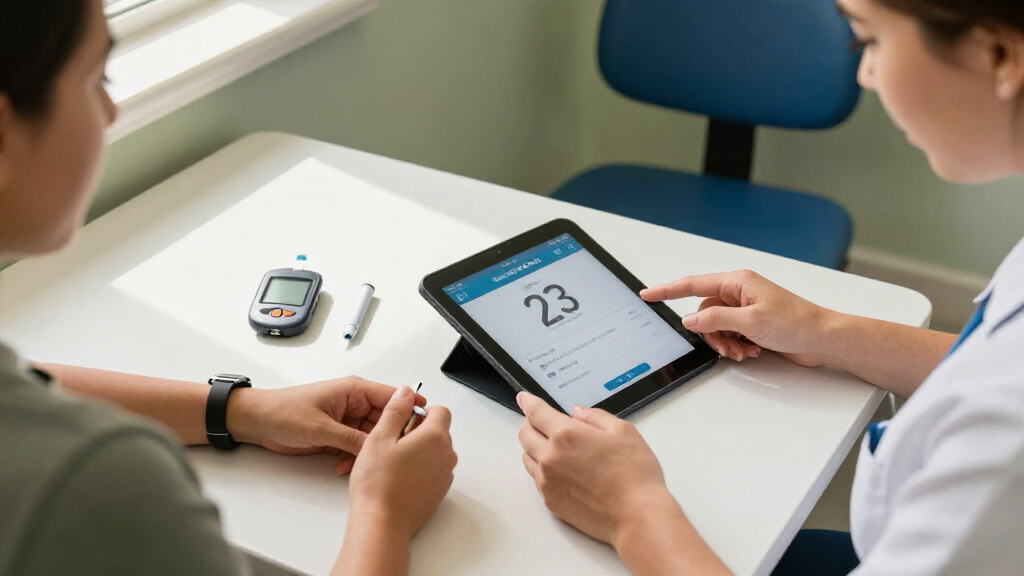
A South Asian physician says she was screened for diabetes under guidance that uses a BMI of 23 as a screening point for Asian Americans, but was denied a GLP-1 medication because her BMI of 26.5 fell below the usual weight-management eligibility thresholds. In an October 31 MedPage Today opinion article, Hamayle Saeed argues that the gap leaves some Asian patients assessed as being at elevated diabetes risk without access to weight-loss treatment under common criteria.
Saeed, who identifies herself as Pakistani and a physician, writes that her doctor began diabetes screening in line with the American Diabetes Association’s lower BMI screening threshold for Asian Americans. She says she did not have diabetes and was told she did not qualify for a GLP-1 receptor agonist for weight loss. The thresholds she describes are BMI 30, or BMI 27 with a weight-related condition. Her account is a first-person report; the article does not identify her clinician, insurer, or the specific medication she sought.
The opinion cites a study of nearly 1.5 million adults in England that compared BMI levels associated with the diabetes risk seen among white adults at BMI 30. The reported equivalent was BMI 23.9 for South Asian adults and 26.9 for Chinese adults. Saeed also cites a 2026 analysis of 352 GLP-1 trials, which found that BMI eligibility criteria produced lower eligibility rates for Asian and Korean American adults than for non-Asian American adults. Those figures describe trial eligibility in the analysis, not the proportion of patients currently denied coverage by insurers.
Saeed points to the 2025 STEP 11 trial in South Korea and Thailand, which studied semaglutide 2.4 mg among participants with BMI of at least 25 under local obesity criteria. She reports average weight loss of 16% with semaglutide and 3.1% with placebo. A post hoc analysis of 68 participants who began below BMI 30 found losses of 17.6% among those receiving semaglutide and 4.4% among those receiving placebo. These study results do not, by themselves, establish coverage eligibility or treatment suitability for any individual patient.
Why BMI Rules Affect Asian Patients
The policy issue raised by Saeed is that screening and treatment rules can use different BMI cutoffs even when they concern the same patient. A lower screening point can prompt earlier testing for diabetes, while an insurer or prior authorization process may apply a higher BMI threshold for weight-loss medication. The resulting mismatch can matter to people whose risk may not be reflected by a single BMI number.
Saeed says Asian populations can carry more visceral fat and less muscle at a given BMI than people of European descent, and cites guidance that recognizes lower BMI action points for some Asian groups. She also notes that California’s Medi-Cal program stopped covering GLP-1s for weight loss in January 2026 and Massachusetts’ MassHealth followed in July. The article does not provide enrollment or denial data, so the number of people affected by those changes is not established here.
For readers, the broader question is how clinical definitions, drug labeling and payer rules interact. A threshold used to identify risk does not automatically establish that a drug is appropriate, safe, or covered. But when the standards differ, patients and clinicians may face decisions shaped by administrative criteria that do not use the same population-specific measures as screening guidance.
Products Worth Considering
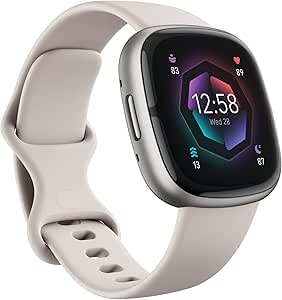
Fitbit Sense 2 Health and Fitness Smartwatch (Lunar White/Platinum)

Levoit Core 400S-P Smart Air Purifier for Large Rooms

Garmin Forerunner 570 GPS Running Smartwatch, 47mm, Aluminum, Black
As an affiliate, we earn on qualifying purchases.
How Screening and Coverage Diverged
The article describes several standards that do not line up. The World Health Organization set lower BMI action points for Asian populations in 2004, citing increased health risks at lower weights. Saeed says the ADA’s 2026 Standards of Care tell clinicians to confirm excess adiposity using cutoffs appropriate to ethnicity and specifically refer to South Asian patients. She also reports that the ADA released Asian-specific waist and BMI thresholds for diagnosing obesity in June 2026.
Drug trial criteria and insurance forms can follow different rules. Saeed writes that the pivotal trials informing GLP-1 labels used Western obesity definitions, and that BMI cutoffs in trial recruitment have limited Asian representation. She cites STEP 11 as newer evidence from an Asian setting using a lower local BMI threshold. Whether that evidence will prompt changes to US payer policies is not established by the article.
Saeed also says revised US labels for Wegovy and Zepbound describe eligible patients as adults with obesity, or adults with overweight and a weight-related condition, without specifying a BMI number in the indication. She argues that the familiar 30 and 27 thresholds remain in trial descriptions and payer authorization forms. Label wording and coverage criteria are distinct: a label does not by itself require an insurer to cover a medication.
“The ADA guideline that flags me for annual diabetes screening and the prior authorization form that denies me the drug are describing the same 26.5.”
— Hamayle Saeed, physician and MedPage Today opinion author
Coverage Rules Still Vary
The article does not name Saeed’s insurer, identify the medication she requested, or include the prior authorization form or a response from her health plan. Her account therefore cannot establish how frequently similar denials occur or whether every payer applies the same BMI criteria. The reported Medi-Cal and MassHealth coverage changes also do not show how many people lost access or what alternatives were available.
It is also unclear whether the 2025 STEP 11 findings, the 2026 trial analysis, or updated ethnicity-specific guidance will lead to changes in US insurance criteria. Trial results provide evidence about outcomes in a studied population, but do not settle individual treatment decisions or reimbursement policy. The source article does not report a formal proposal or timetable from the ADA, drugmakers, or insurers to revise eligibility rules.
Whether Payers Revise Eligibility
The next developments to watch are any changes by insurers and public programs to prior authorization criteria, and whether updated clinical guidance or trial evidence is reflected in those rules. Patients seeking GLP-1 treatment may need to check the specific requirements of their plan, since coverage depends on the plan and the treatment indication.
Further evidence could also clarify how BMI, waist measurements and other indicators of excess adiposity should inform treatment access across different populations. Saeed’s article calls attention to the policy gap but does not announce a change in coverage or eligibility. No payer response or scheduled policy review is identified in the source.
Key Questions
What BMI thresholds does Saeed say she encountered?
Saeed says she was screened for diabetes at a BMI of 23, a lower screening point used for Asian Americans, but that the GLP-1 weight-loss criteria she encountered were BMI 30, or BMI 27 with a weight-related condition.
Does a lower diabetes-screening threshold guarantee GLP-1 coverage?
No. Screening guidance and medication coverage criteria are separate. A lower threshold may prompt diabetes testing, but it does not automatically establish eligibility for a drug or require an insurer to cover it.
What did the STEP 11 study report?
As described in Saeed’s article, the 2025 trial in South Korea and Thailand reported average body-weight loss of 16% with semaglutide and 3.1% with placebo. A post hoc group of 68 participants who began below BMI 30 had reported losses of 17.6% and 4.4%, respectively. The findings do not determine an individual’s treatment or coverage.
Have US insurers changed their BMI requirements?
The source does not report a broad change to insurer rules. Saeed says BMI thresholds remain on payer prior authorization forms, but the article does not identify the plans or document a national policy change.
What remains unknown about Saeed’s denial?
The article does not identify her insurer, the medication requested, or the exact denial notice. It also provides no data on how often Asian patients face comparable decisions.
Source: medpagetoday.com