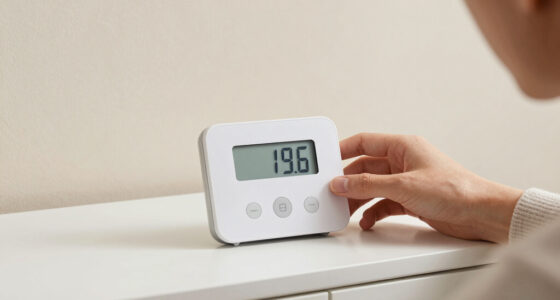
A programmable thermostat with humidity control can help manage indoor comfort, but humidity features vary widely: some models monitor moisture, while others can coordinate humidity equipment or report readings through an app. I’d put the ecobee Smart Thermostat Premium at the top for buyers who want a feature-rich system, while the Honeywell Home RTH9600WF stands out for its color touchscreen and the Sensi ST55 for a more straightforward smart-thermostat approach. The main tradeoff is between humidity-management capability, HVAC compatibility, and how much setup and connected functionality you want. A thermostat’s humidity reading alone does not mean it can control a humidifier or dehumidifier. Read on for the full breakdown and a guide to matching features with your equipment.

Get health and wellness essentials delivered free with Prime
- Fast, free delivery on millions of items
- Prime Video, Amazon Music and more included
- Member-only deals all year
Key Takeaways
Humidity monitoring and humidity control are not the same. Check whether a model can operate your humidifier or dehumidifier, not just display indoor humidity.
The ecobee Premium is the feature-rich pick among these 13, while the other ecobee models offer different ways to balance connected features and system needs.
Honeywell’s color-screen models prioritize on-device visibility; they may suit buyers who prefer controls at the wall over a phone-first routine.
Sensi’s lineup gives buyers several levels of simplicity, but a less feature-heavy thermostat may not suit a home that needs dedicated humidity equipment control.
HVAC wiring and accessory terminals shape the shortlist. A thermostat can have scheduling and Wi-Fi yet still be unsuitable for a particular heating, cooling, or humidity setup.
| Google Nest Smart Thermostat, Charcoal | 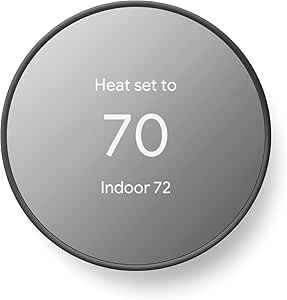 | Best for Occupancy-Based Scheduling | Display: 2-inch LCD | Connectivity: Wi-Fi (2.4 GHz and 5 GHz), Bluetooth Low Energy | Temperature control: Heating and cooling | VIEW ON AMAZON | See Our Full Breakdown |
| ecobee Smart Thermostat Essential Wi-Fi Thermostat |  | Best for Humidity Awareness and Platform Choice | Display: 3.74-inch LCD touchscreen | Connectivity: Wi-Fi | Compatible HVAC systems: Most 24 VAC equipment, including gas, oil, electric, dual fuel, forced air, heat pumps, and boilers | VIEW ON AMAZON | See Our Full Breakdown |
| Honeywell Home RTH9600WF Smart Color Wi-Fi Thermostat |  | Best for Color-Screen Scheduling and Energy Tracking | Model: RTH9600WF | Display: Selectable color LCD touchscreen | Connectivity: Wi-Fi | VIEW ON AMAZON | See Our Full Breakdown |
| Honeywell Home RTH9585WF1004 Wi-Fi Smart Color Thermostat |  | Best for Alexa and Google Home Programming | Model: RTH9585WF1004 | Display: Customizable color touchscreen | Connectivity: Wi-Fi | VIEW ON AMAZON | See Our Full Breakdown |
| Sensi ST55 Wi-Fi Smart Thermostat |  | Best for DIY Installation and Broad Smart-Home Support | Model: ST55 | Connectivity: Wi-Fi | Display and controls: LED display; buttons, app, touch, and voice control | VIEW ON AMAZON | See Our Full Breakdown |
| Vine Smart Thermostat with 4.3-Inch Touchscreen and Nightlight |  | Best for a Large, Easy-to-Read Display | Model: TJ-919T-V2 | Display: 4.3-inch LCD touchscreen | Connectivity: Wi-Fi | VIEW ON AMAZON | See Our Full Breakdown |
| Sensi Touch 2 Smart Wi-Fi Thermostat, ST76 |  | Best for Room-by-Room Temperature Balancing | Model: Touch 2 ST76 | Connectivity: Wi-Fi on 2.4 GHz and 5.0 GHz | Display: LCD touchscreen | VIEW ON AMAZON | See Our Full Breakdown |
| Honeywell Home X7B Smart Wi-Fi Programmable Thermostat |  | Best Overall for Humidity Monitoring | Display: 4.3-inch customizable touchscreen | Connectivity: Wi-Fi and Matter | Controls: App, touch, and voice | VIEW ON AMAZON | See Our Full Breakdown |
| ecobee Smart Thermostat Enhanced |  | Best for Occupancy- and Humidity-Aware Adjustments | Display: 4-inch LCD | Connectivity: Wi-Fi | Humidity feature: Temperature adjustments based on humidity, occupancy, and schedules | VIEW ON AMAZON | See Our Full Breakdown |
| Amazon Smart Thermostat |  | Best for Alexa-First Homes | Model: S6ED3R | Dimensions: 3.56 × 3.56 × 0.84 inches | Humidity feature: Indoor humidity sensing | VIEW ON AMAZON | See Our Full Breakdown |
| Honeywell Home X7S Smart Wi-Fi Programmable Thermostat, Black |  | Best for Matter Smart Homes | Display: 4.3-inch customizable touchscreen | Connectivity: Wi-Fi, 2.4 or 5 GHz | Smart-home compatibility: Matter, Amazon Alexa, Google Assistant, Apple Home | VIEW ON AMAZON | See Our Full Breakdown |
| ecobee Smart Thermostat Premium with Wi-Fi, Siri and Alexa |  | Best for Room-by-Room Comfort and Air Quality | Connectivity: Wi-Fi | Voice assistants: Siri and Alexa built in | Included sensor: SmartSensor | VIEW ON AMAZON | See Our Full Breakdown |
| Sensi Lite Wi-Fi Smart Thermostat (ST25) | 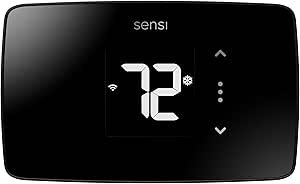 | Best for Straightforward DIY Scheduling | Model: ST25 | Connectivity: Wi-Fi; 2.4 GHz required | Compatible systems: Air conditioner, boiler, furnace, heat pump | VIEW ON AMAZON | See Our Full Breakdown |
| programmable thermostat with humidity control | Connectivity | Display | Power | Model |
|---|---|---|---|---|
| Google Nest Smart Thermostat | Wi-Fi (2.4 GHz and 5 GHz), Bluetooth Low Energy | 2-inch LCD | Battery powered; 2 AA batteries included | — |
| ecobee Smart Thermostat Essent | Wi-Fi | 3.74-inch LCD touchscreen | Battery powered | — |
| Honeywell Home RTH9600WF Smart | Wi-Fi | Selectable color LCD touchscreen | 24 volts; battery powered | RTH9600WF |
| Honeywell Home RTH9585WF1004 W | Wi-Fi | Customizable color touchscreen | AC power; listed supply voltage is 120 volts | RTH9585WF1004 |
| Sensi ST55 Wi-Fi Smart Thermos | Wi-Fi | — | 24 V AC | ST55 |
| Vine Smart Thermostat with 4.3 | Wi-Fi | 4.3-inch LCD touchscreen | — | TJ-919T-V2 |
| Sensi Touch 2 Smart Wi-Fi Ther | Wi-Fi on 2.4 GHz and 5.0 GHz | LCD touchscreen | — | Touch 2 ST76 |
| Honeywell Home X7B Smart Wi-Fi | Wi-Fi and Matter | 4.3-inch customizable touchscreen | — | — |
| ecobee Smart Thermostat Enhanc | Wi-Fi | 4-inch LCD | 24 volts; corded electric | — |
| Amazon Smart Thermostat | 2.4 GHz Wi-Fi; 802.11 b/g/n | — | — | S6ED3R |
| Honeywell Home X7S Smart Wi-Fi | Wi-Fi, 2.4 or 5 GHz | 4.3-inch customizable touchscreen | Hardwired; C-wire required | — |
| ecobee Smart Thermostat Premiu | Wi-Fi | — | — | — |
| Sensi Lite Wi-Fi Smart Thermos | Wi-Fi; 2.4 GHz required | LCD | Two AAA batteries or C-wire; C-wire required for heat pump and heat/cool-only systems | ST25 |
More Details on Our Top Picks
Google Nest Smart Thermostat, Charcoal
The Google Nest Smart Thermostat is a strong fit for buyers who want schedules to adapt when the home is empty, rather than relying only on a fixed weekly program. Its occupancy-based adjustments, app control, and alerts for eligible HVAC systems make it more responsive than the straightforward scheduling focus of the Sensi ST55. It can monitor indoor humidity, but the supplied features do not describe humidity-based equipment control, so I would treat it as a thermostat with humidity awareness—not a dedicated humidity controller. The Google Home app and voice-assistant support add convenient remote adjustments, while C-wire needs vary by system. Skip this model if active humidity management is your main goal or your HVAC setup needs a power accessory you do not want to add.
Pros:- Occupancy-based adjustments can reduce unnecessary heating or cooling in an empty home.
- Remote temperature changes and schedules are available through the Google Home app.
- Compatible with Google Assistant, Alexa, and Matter-certified voice assistants.
- Can provide alerts for potential issues with eligible HVAC systems.
Cons:- Humidity monitoring is not described as humidity-based equipment control.
- Some HVAC systems require a C-wire or compatible power accessory.
- Remote functions and notifications depend on a working internet connection and Wi-Fi.
Best for: Households with variable daily occupancy that want app scheduling, automatic away adjustments, and basic humidity awareness.
Not ideal for: Buyers seeking explicit humidity-driven heating or cooling control, or households whose HVAC system needs a C-wire solution they do not plan to install.
- Display:2-inch LCD
- Connectivity:Wi-Fi (2.4 GHz and 5 GHz), Bluetooth Low Energy
- Temperature control:Heating and cooling
- Power:Battery powered; 2 AA batteries included
- Voltage:24 volts
- Smart home compatibility:Google Assistant, Amazon Alexa, Android, iOS, and Matter-certified voice assistants
- Mounting:Wall mount
- C-wire:Not required in most homes; needed for some systems
Our verdict“Choose the Nest for adaptable occupancy-based scheduling, but pick a model with clearly specified humidity control if managing moisture is your priority.”
ecobee Smart Thermostat Essential Wi-Fi Thermostat
Among these five, the ecobee Smart Thermostat Essential is the clearest match for a buyer specifically seeking indoor humidity detection, alongside programmable schedules and app control. That puts it ahead of the Sensi ST55 on the humidity brief, since the supplied Sensi details do not list humidity detection. The large 3.74-inch touchscreen and support for Apple HomeKit, Google Assistant, and Alexa also make daily adjustments accessible across different smart-home setups. Its auto-away and auto-scheduling features add flexibility without requiring a purely fixed routine. The tradeoff is that humidity detection is not the same as stated humidity-driven control of HVAC equipment, and some homes need a separately purchased Power Extender Kit for power. Check system compatibility and C-wire needs before choosing it.
Pros:- Indoor humidity detection directly matches the roundup’s humidity-awareness focus.
- Color touchscreen and app provide convenient ways to manage schedules and settings.
- Works with Apple HomeKit, Google Assistant, and Amazon Alexa.
- Auto-away, auto-scheduling, and fan control support flexible day-to-day operation.
Cons:- Humidity detection is specified, but humidity-driven HVAC control is not.
- Homes without a C-wire may need a separately sold Power Extender Kit.
- SmartSensor and trim kit are sold separately, and HVAC compatibility needs checking.
Best for: Smart-home households that want a touchscreen thermostat with indoor humidity detection, programmable schedules, and Apple, Google, or Alexa integration.
Not ideal for: Buyers who need documented automatic humidity control or a complete no-extra-parts installation in a home without a C-wire.
- Display:3.74-inch LCD touchscreen
- Connectivity:Wi-Fi
- Compatible HVAC systems:Most 24 VAC equipment, including gas, oil, electric, dual fuel, forced air, heat pumps, and boilers
- Smart home compatibility:Apple HomeKit, Google Assistant, Amazon Alexa
- Listed features:Indoor humidity detection, programmable schedules, auto-away, auto-scheduling, fan control
- Power:Battery powered
- Mounting:Wall mount
- C-wire:Power Extender Kit may be needed for homes without a C-wire; sold separately
Our verdict“Pick the ecobee Essential when humidity detection and broad smart-home compatibility matter more than having humidity-based equipment control explicitly confirmed.”
Honeywell Home RTH9600WF Smart Color Wi-Fi Thermostat
The Honeywell Home RTH9600WF suits buyers who want an at-a-glance color interface and useful scheduling tools more than humidity-specific features. Its selectable color touchscreen, energy tracking, weather information, and smart alerts offer a more information-rich control experience than the simpler LED interface on the Sensi ST55. It supports remote adjustments and flexible schedules, but the listed product details do not specify humidity detection or humidity-driven control. That makes it a less direct fit for this roundup than the ecobee Smart Thermostat Essential, which explicitly lists indoor humidity detection. A required C-wire also narrows installation options, and this Honeywell model does not work with electric baseboard heat. I’d choose it for programming and energy feedback, not as a humidity-management solution.
Pros:- Selectable color touchscreen makes schedules and thermostat information easier to view.
- Energy tracking and personalized tips support more informed schedule adjustments.
- Remote control, flexible scheduling, weather information, and smart alerts are included.
- ENERGY STAR certified.
Cons:- Requires a C-wire, limiting suitability for some existing installations.
- Does not work with electric baseboard heat.
- Humidity detection or humidity-based control is not listed in the supplied product details.
Best for: Homeowners with compatible forced-air, hot-water, steam, or heat-pump systems who want a customizable color display and energy-use feedback.
Not ideal for: Electric-baseboard households, homes without a C-wire, and buyers who need specified humidity sensing or humidity-based control.
- Model:RTH9600WF
- Display:Selectable color LCD touchscreen
- Connectivity:Wi-Fi
- Compatible systems:Forced-air gas, oil, or electric; hot water and steam; heat pumps with electric backup
- Power:24 volts; battery powered
- Battery:1 AAA battery required
- C-wire:Required
- Dimensions:1 x 4.75 x 3.5 inches
Our verdict“Choose this Honeywell for a customizable display and energy feedback on a compatible wired system, not for dedicated humidity management.”
Honeywell Home RTH9585WF1004 Wi-Fi Smart Color Thermostat
The RTH9585WF1004 is a sensible choice for households centered on Alexa or Google Home that want a programmable thermostat with a customizable color screen and energy reports. Its feature mix is close to the Honeywell Home RTH9600WF: both support Wi-Fi, color touchscreens, and energy-focused tools, while the RTH9585WF1004 specifically names Alexa and Google Home compatibility in its supplied details. Neither model’s listed features establish humidity detection or humidity-based equipment control, so this pick does not meet the roundup’s humidity brief as directly as the ecobee Smart Thermostat Essential. A required C-wire and incompatibility with electric baseboard heat also limit its fit. I’d rank it for connected scheduling and reports, not for buyers whose deciding factor is moisture management.
Pros:- Customizable color touchscreen offers a clear local control interface.
- Wi-Fi and mobile app support remote adjustments and programming.
- Energy reports and equipment alerts provide useful system feedback.
- Works with Amazon Alexa and Google Home.
Cons:- A C-wire is required.
- Incompatible with 120–240-volt electric baseboard heat.
- Humidity detection and humidity-driven control are not specified in the supplied details.
Best for: Alexa- or Google Home households with compatible central HVAC that want a color touchscreen, remote scheduling, and energy reports.
Not ideal for: Electric-baseboard users, homes without a C-wire, or buyers choosing primarily for explicit humidity sensing and control.
- Model:RTH9585WF1004
- Display:Customizable color touchscreen
- Connectivity:Wi-Fi
- Smart home compatibility:Amazon Alexa and Google Home
- Compatible systems:Forced-air gas, oil, or electric; hot water; steam; heat pumps with electric backup
- Incompatible systems:Electric baseboard heat (120–240 volts)
- Power:AC power; listed supply voltage is 120 volts
- C-wire:Required
Our verdict“Pick the RTH9585WF1004 for Alexa or Google Home scheduling and energy reports, but not if humidity control is the main requirement.”
Sensi ST55 Wi-Fi Smart Thermostat
The Sensi ST55 is the practical pick for buyers who want programmable Wi-Fi control without making installation or humidity features the centerpiece. Its built-in level and step-by-step app instructions give it a clearer DIY advantage than either Honeywell color-screen model, both of which require a C-wire. The ST55 says a C-wire is unnecessary for most applications, though the exact requirement still depends on the HVAC setup. It also supports Alexa, Apple HomeKit, Google Assistant, and SmartThings, making it a flexible alternative to the Google Nest Smart Thermostat for households using several platforms. The limitation for this roundup is direct: the supplied features do not list humidity detection or humidity-based control. Choose it for straightforward scheduling and installation support, not active moisture management.
Pros:- Built-in level and app instructions support a more approachable DIY installation.
- C-wire is not required for most applications.
- Supports Alexa, Apple HomeKit, Google Assistant, SmartThings, and Vera.
- Includes programmable scheduling, remote access, usage reports, filter indication, and maintenance alerts.
Cons:- C-wire needs can vary by HVAC setup, so compatibility must be checked before installation.
- Humidity detection and humidity-based equipment control are not listed.
- Works only with compatible HVAC equipment.
Best for: DIY-minded homeowners with compatible air conditioners, boilers, furnaces, or heat pumps who want app scheduling and broad smart-home compatibility.
Not ideal for: Buyers who need specified indoor humidity detection or humidity-based HVAC control, or households with an incompatible system or a setup requiring an unplanned C-wire.
- Model:ST55
- Connectivity:Wi-Fi
- Display and controls:LED display; buttons, app, touch, and voice control
- Power:24 V AC
- Batteries:2 AA batteries included
- Smart home compatibility:Amazon Alexa, Apple HomeKit, Google Assistant, SmartThings, Vera
- HVAC compatibility:Air conditioner, boiler, furnace, heat pump
- Listed features:Programmable scheduling, remote access, usage reports, filter indicator, maintenance alerts
- C-wire:Not required for most applications; requirements vary by HVAC setup
Our verdict“Choose the Sensi ST55 for DIY-friendly scheduling and wide platform support, but look elsewhere if humidity management is the primary goal.”
Vine Smart Thermostat with 4.3-Inch Touchscreen and Nightlight
I’d choose the Vine Smart Thermostat for a home where a clear wall display matters as much as app control. Its 4.3-inch touchscreen and programmable nightlight make schedule changes easier to see than on the compact Amazon Smart Thermostat, while 7-day programming and Auto Home/Away mode offer useful control over routine heating and cooling. The Vine and Smart Life apps add remote access, with Alexa and Google Assistant available for voice commands. Its humidity-control fit is limited, though: the supplied details do not specify humidity monitoring or humidity-based adjustments, so I wouldn’t choose it if that is the main reason for upgrading. It also needs a C-wire and a compatible 24V system. Compared with the Honeywell Home X7B, it gives up documented humidity monitoring and Matter support in favor of its nightlight and straightforward scheduling.
Pros:- Large 4.3-inch touchscreen with a programmable nightlight
- 7-day scheduling and Auto Home/Away mode
- Remote access through the Vine Thermostat or Smart Life app
- Alexa and Google Assistant voice control
Cons:- Provided product details do not specify humidity monitoring or humidity-based adjustments
- Requires a C-wire
- Compatibility is limited to supported 24V AC systems
Best for: Households that want a prominent touchscreen, remote app access, and weekly schedules on a compatible 24V HVAC system.
Not ideal for: Buyers seeking verified humidity monitoring or humidity-responsive control, or homeowners without a C-wire who do not want to address power requirements.
- Model:TJ-919T-V2
- Display:4.3-inch LCD touchscreen
- Connectivity:Wi-Fi
- Scheduling:7-day programmable
- Voice assistants:Amazon Alexa and Google Assistant
- System compatibility:Most supported 24V AC conventional and heat pump systems
- Power requirement:Hardwired; C-wire required
- Dimensions:1.02 × 4.84 × 3.35 inches
Our verdict“Pick the Vine for its readable touchscreen and scheduled control, but choose the Honeywell Home X7B instead if humidity monitoring is a priority.”
Sensi Touch 2 Smart Wi-Fi Thermostat, ST76
The Sensi Touch 2 stands out for households whose main challenge is uneven temperatures between rooms. It can pair with up to 15 separately sold Sensi Room Sensors, giving it a room-balancing route that the Amazon Smart Thermostat does not offer in the supplied details. Flexible schedules, remote access, and usage reports help connect comfort settings with energy use, while app-guided installation can make setup more approachable. Its place in a humidity-control roundup is more qualified: the supplied specifications do not list humidity sensing or humidity-based adjustments. Buyers focused on indoor moisture should look instead at the Honeywell Home X7B, which explicitly includes humidity monitoring. The Sensi also requires a C-wire, and using its strongest room-balancing feature means adding sensors separately.
Pros:- Pairs with up to 15 Sensi Room Sensors for temperature balancing
- Flexible schedules, remote access, and energy usage reports
- App-guided DIY installation
- Works with Alexa and Google Assistant
Cons:- Humidity monitoring or humidity-based control is not specified in the supplied product details
- Requires a C-wire
- Room sensors are sold separately
Best for: Homeowners with hot or cold spots who are willing to add Sensi Room Sensors and want schedules and energy reports.
Not ideal for: Buyers who primarily need humidity monitoring or do not have a C-wire and want to avoid installation work.
- Model:Touch 2 ST76
- Connectivity:Wi-Fi on 2.4 GHz and 5.0 GHz
- Display:LCD touchscreen
- Compatible HVAC systems:Air conditioner, boiler, furnace, and heat pump
- Room sensor support:Up to 15 Sensi Room Sensors, sold separately
- Controls:App, touchscreen, and voice
- Voice assistants:Amazon Alexa and Google Assistant
- Power requirement:24 V common wire (C-wire)
Our verdict“Choose the Sensi Touch 2 for sensor-supported room balancing, not as a first choice when humidity control is your primary need.”
Honeywell Home X7B Smart Wi-Fi Programmable Thermostat
The Honeywell Home X7B is my strongest fit here for shoppers who want a programmable thermostat with documented humidity monitoring. Its 4.3-inch customizable touchscreen, app and voice controls, and ENERGY STAR certification support everyday scheduling, while Matter compatibility can help it fit into a broader smart-home setup. That makes it a more direct humidity-focused choice than the Vine Smart Thermostat, whose supplied details do not list humidity monitoring. The distinction is monitoring, not a promise of independent humidity control: the product information notes that some HVAC equipment or accessories may be needed for humidity monitoring, and it does not spell out humidity-based operation. A C-wire is required, though an adapter voucher is included if needed. It also does not work with 120–240V electric baseboard heat.
Pros:- Humidity monitoring is specifically listed
- Customizable 4.3-inch touchscreen
- Wi-Fi and Matter connectivity with app, touch, and voice control
- ENERGY STAR certified, with an adapter voucher if a C-wire solution is needed
Cons:- Some HVAC equipment or accessories may be required for humidity monitoring
- Requires a C-wire
- Not compatible with 120–240V electric baseboard heat
Best for: Smart-home households with compatible 24V HVAC equipment that want programmable temperature control and a touchscreen with humidity monitoring.
Not ideal for: Homes with electric baseboard heat, or buyers expecting humidity control without checking whether their HVAC equipment and accessories support it.
- Display:4.3-inch customizable touchscreen
- Connectivity:Wi-Fi and Matter
- Controls:App, touch, and voice
- Humidity feature:Humidity monitoring; some systems or accessories may be required
- Compatibility:Up to 3 heat/2 cool heat pump with electric backup, or 2 heat/2 cool conventional systems
- Voltage:24 volts
- Power requirement:Hardwired; C-wire required
- Certifications:ENERGY STAR
- Smart-home compatibility:Amazon Alexa, Google Assistant, and Apple Home
Our verdict“For a compatible 24V system, the X7B is the clearest pick in this group for humidity monitoring paired with programmable smart controls.”
ecobee Smart Thermostat Enhanced
The ecobee Smart Thermostat Enhanced is the most compelling option here for buyers who want temperature adjustments tied to both occupancy and humidity. Its supplied description says it adjusts temperatures based on occupancy, schedules, and humidity, making it more active about responding to changing home conditions than the Honeywell Home X7B, which is specified for humidity monitoring. It also supports a broad range of HVAC equipment, including humidifiers, and includes a Power Extender Kit for homes without a C-wire. That bundle can reduce a common installation obstacle, though buyers should confirm system compatibility before wiring. The tradeoff is that room-by-room sensing requires separately sold SmartSensors. The listed details also do not provide a humidity setpoint range or specific humidity-control outputs, so buyers needing precise equipment-level humidity management should verify those capabilities.
Pros:- Adjusts temperature based on occupancy, schedules, and humidity
- Power Extender Kit is included for homes without a C-wire
- Compatible with a broad range of HVAC systems, including humidifiers
- Supports major app and voice-control platforms and is ENERGY STAR certified
Cons:- SmartSensors for room-by-room comfort are sold separately
- Supplied product details do not specify humidity setpoints or particular humidity-control outputs
Best for: Homeowners who want a smart thermostat to adapt temperature using occupancy, schedules, and humidity, including those without a C-wire.
Not ideal for: Buyers who need included room sensors or documented details about humidity setpoints and specific humidifier or dehumidifier control.
- Display:4-inch LCD
- Connectivity:Wi-Fi
- Humidity feature:Temperature adjustments based on humidity, occupancy, and schedules
- Compatible HVAC systems:Air conditioner, boiler, furnace, heat pump, and humidifier
- Power:24 volts; corded electric
- Included power accessory:Power Extender Kit
- Voice and platform compatibility:Amazon Alexa, Android, Apple HomeKit, Google Assistant, and iOS
- Certification:ENERGY STAR
- Warranty:3 years
Our verdict“Choose the ecobee Enhanced if you want humidity- and occupancy-aware temperature adjustments, and verify its humidity-control details if you need direct equipment control.”
Amazon Smart Thermostat
The Amazon Smart Thermostat is a sensible choice for Alexa households that want scheduled heating and cooling with indoor humidity sensing and presence-based adjustments. Its humidity sensor makes it more relevant to this roundup than the Sensi Touch 2, whose supplied specs do not list a humidity feature, but the product details do not say that it adjusts humidity or controls a humidifier or dehumidifier. Compared with the ecobee Smart Thermostat Enhanced, it has a simpler, smaller control surface and depends more heavily on Alexa for voice control; an Alexa-enabled device is required for voice commands. It works with most 24V systems, but not electric baseboard heat, and needs a C-wire or separately sold power adapter. Its 2.4 GHz-only Wi-Fi may also rule it out for some network setups.
Pros:- Includes indoor humidity sensing
- Supports schedules and automatic adjustments based on presence and temperature
- Remote control through the Alexa app and compatible Echo devices
- ENERGY STAR and ECOLOGO Gold certified
Cons:- Humidity sensing is listed, but humidity-based adjustment or humidifier control is not specified
- Requires a C-wire or separately sold power adapter
- Supports 2.4 GHz Wi-Fi only, and voice control requires an Alexa-enabled device
Best for: Alexa-centered homes seeking schedules, presence-based temperature adjustments, and indoor humidity sensing on a compatible 24V system.
Not ideal for: Buyers who need humidity-based equipment control, 5 GHz Wi-Fi, or thermostat voice commands without a separate Alexa-enabled device.
- Model:S6ED3R
- Dimensions:3.56 × 3.56 × 0.84 inches
- Humidity feature:Indoor humidity sensing
- Connectivity:2.4 GHz Wi-Fi; 802.11 b/g/n
- Compatibility:Most 24V HVAC systems; not compatible with 110–240V systems such as electric baseboard heat
- Power requirement:C-wire or separately sold power adapter kit
- Controls:Three touch buttons, Alexa app, Ring app, and compatible Echo devices
- Features:Schedules, emergency heat mode, vacation mode, energy dashboard, and automatic air filter ordering
- Certifications:ENERGY STAR and ECOLOGO Gold
Our verdict“Pick the Amazon Smart Thermostat for an Alexa-led home that needs humidity sensing, but choose the ecobee Enhanced if you want stated humidity-aware temperature adjustments.”
Honeywell Home X7S Smart Wi-Fi Programmable Thermostat, Black
The X7S is the clearest fit here for buyers who want humidity monitoring alongside broad smart-home integration. Its 4.3-inch customizable touchscreen, occupancy sensing, and app and voice controls make it easier to adjust schedules around who is home, while Matter support connects it with Apple Home, Alexa, and Google Assistant. Compared with the Sensi Lite, the X7S offers a more substantial touchscreen and wider platform integration, but it also has a firmer wiring requirement: a C-wire is required. Humidity monitoring is useful for keeping an eye on indoor conditions, though some related features may need extra equipment. I’d choose it over the ecobee Premium when Matter support and a customizable display matter more than built-in air-quality monitoring and a room sensor.
Pros:- Humidity monitoring adds indoor-condition visibility beyond temperature scheduling
- Matter support works with Apple Home, Alexa, and Google Assistant
- Occupancy sensing can adjust settings when people arrive or leave
- Customizable 4.3-inch touchscreen and First Alert app provide several control options
Cons:- Requires a C-wire, which may complicate installation in some homes
- Does not support 120–240V electric baseboard heating
- Some humidity monitoring features may require additional equipment or accessories
Best for: Households with a C-wire that want humidity monitoring, a large customizable display, and Matter compatibility across smart-home platforms
Not ideal for: Homes with 120–240V electric baseboard heat, no C-wire, or buyers who expect humidity features to work without possible extra accessories
- Display:4.3-inch customizable touchscreen
- Connectivity:Wi-Fi, 2.4 or 5 GHz
- Smart-home compatibility:Matter, Amazon Alexa, Google Assistant, Apple Home
- Controls:First Alert app, touchscreen, voice
- Humidity feature:Humidity monitoring
- HVAC compatibility:Up to 3 heat/2 cool heat pump with electric backup, or 2 heat/2 cool conventional
- Power:Hardwired; C-wire required
- Certification:ENERGY STAR
Our verdict“Choose the X7S if humidity monitoring, Matter compatibility, and a configurable touchscreen are priorities and your HVAC setup has a C-wire.”
ecobee Smart Thermostat Premium with Wi-Fi, Siri and Alexa
The ecobee Premium earns its place for buyers who want comfort information beyond the thermostat’s immediate location. Its included SmartSensor can help account for occupancy and conditions in another room, while the built-in air-quality monitor provides alerts and filter reminders. That makes it a broader indoor-comfort pick than the Honeywell X7S, which specifically offers humidity monitoring and Matter support but does not list an included room sensor or air-quality monitor. The ecobee’s built-in Siri and Alexa also reduce reliance on a separate speaker, though Siri needs an Apple home hub. I’d favor the X7S for Matter-centered homes or a large customizable screen; the Premium makes more sense when room sensing and air-quality alerts outweigh that platform preference. Check HVAC compatibility before installation.
Pros:- Included SmartSensor adds room occupancy sensing to comfort adjustments
- Built-in air-quality monitor provides alerts and filter reminders
- Siri and Alexa are built in for voice control
- Installation kit and three-year warranty are included
Cons:- Siri functionality requires an Apple home hub
- Some security features require an ecobee Smart Security subscription
- Specific HVAC compatibility should be checked before purchase
Best for: Households seeking room-aware temperature control, air-quality alerts, and built-in Siri or Alexa, especially those with an Apple home hub for Siri
Not ideal for: Buyers focused specifically on humidity monitoring, Matter integration, or a thermostat that works with Siri without an Apple home hub
- Connectivity:Wi-Fi
- Voice assistants:Siri and Alexa built in
- Included sensor:SmartSensor
- HVAC compatibility:Compatible with 95% of HVAC systems
- Air-quality features:Built-in monitor with alerts and filter reminders
- Installation accessories:Power Extender Kit, Trim Kit, and installation materials
- Certification:ENERGY STAR
- Warranty:3 years
Our verdict“Pick the ecobee Premium for room sensing and air-quality monitoring, but choose the Honeywell X7S if explicit humidity monitoring and Matter support are your priorities.”
Sensi Lite Wi-Fi Smart Thermostat (ST25)
The Sensi Lite is the straightforward choice for buyers who mainly need programmable schedules and remote control, rather than a dedicated humidity-monitoring feature. Its app, touch, and voice controls cover everyday temperature changes, while geofencing and usage reports add basic ways to manage routines. Compared with the Honeywell X7S, it is less focused on humidity and smart-home breadth, but its DIY-oriented installation details—including a built-in level and step-by-step instructions—make it a simpler match for hands-on buyers. Unlike the ecobee Premium, it does not include a room sensor or built-in air-quality monitor. The tradeoff is that C-wire needs vary by system, and heat pumps and heat/cool-only setups require one. I’d choose it for uncomplicated scheduling, not for monitoring indoor humidity.
Pros:- DIY installation includes a built-in level and step-by-step instructions
- Scheduling, geofencing, remote access, and usage reports support everyday energy management
- Works with Amazon Alexa, Google Assistant, and SmartThings
- Can run on batteries or C-wire, depending on the HVAC setup
Cons:- Does not list humidity monitoring, unlike the Honeywell X7S
- Requires a C-wire for heat pump and heat/cool-only systems
- Requires a 2.4 GHz Wi-Fi connection
Best for: DIY-minded owners of compatible 24-volt HVAC systems who want app-based schedules, geofencing, and remote access without extra room or air-quality sensors
Not ideal for: Buyers who need humidity monitoring, have a heat pump or heat/cool-only system without a C-wire, or rely on 5 GHz Wi-Fi
- Model:ST25
- Connectivity:Wi-Fi; 2.4 GHz required
- Compatible systems:Air conditioner, boiler, furnace, heat pump
- Power:Two AAA batteries or C-wire; C-wire required for heat pump and heat/cool-only systems
- Display:LCD
- Controls:App, touch, voice
- Compatible assistants:Amazon Alexa, Google Assistant, SmartThings
- Certification and warranty:ENERGY STAR; 3 years
Our verdict“Choose the Sensi Lite for accessible DIY scheduling on a compatible system, but skip it if humidity monitoring is a must-have.”

How We Picked
I ranked these 13 thermostats around the specific promise of programmable temperature control with useful humidity support. I weighed whether the listed model’s humidity feature is monitoring, reporting, or control of compatible equipment; whether its scheduling and smart functions can simplify everyday adjustments; and how its interface suits app-first versus wall-control households. I also considered how clearly each option fits different buyer priorities, from basic smart scheduling to richer connected features.
The ranking favors products that appear to offer a stronger combination of humidity relevance, usable controls, and flexibility, while treating a long feature list as no substitute for confirmed HVAC compatibility. Models with appealing screens or simple scheduling can still rank lower for this search if their humidity-control role is unclear or limited. Since model revisions and system configurations can differ, I’d verify the manufacturer’s current wiring diagram and humidity-equipment support before buying.
Factors to Consider When Choosing Programmable Thermostat With Humidity Control
Before choosing by screen design or app features, I’d match the thermostat to the job your HVAC system needs it to do. These checks can prevent the common mistake of buying a model that reads humidity but cannot operate the equipment meant to change it.
Separate Humidity Readings From Humidity Control
A displayed humidity percentage is useful for awareness, but it does not prove the thermostat can run a whole-home humidifier or dehumidifier. Look for explicit support for the accessory type you own, including any required terminals, relays, or setup settings. Portable units with their own controls usually remain separate from thermostat automation. If your main goal is preventing overly dry winter air or reducing excess moisture in summer, confirm that the thermostat can call the right equipment rather than only reporting conditions. Also check whether humidity adjustments are automatic, scheduled, or manual; those approaches give you different levels of hands-on control.
Confirm HVAC Compatibility Before Comparing Features
Thermostats can vary in support for conventional furnaces, heat pumps, multi-stage systems, and accessory equipment. Start with your existing thermostat’s wiring labels and your HVAC system’s model information, then compare them with the exact thermostat’s compatibility chart. A wire count alone is not a reliable compatibility check, especially when a system uses uncommon terminals or a proprietary control board. Some installations need a common wire or an included power adapter, which can change the work involved. If the wiring is unclear, ask an HVAC professional before removing the existing thermostat.
Decide How Much Scheduling You Will Actually Use
Programmable schedules can reduce unnecessary heating or cooling when the home is empty, but a complex schedule is only helpful if someone will maintain it. Think about weekday and weekend routines, household members with different preferences, and whether temperature changes should follow occupancy. App control can make quick edits easier, while a clear wall interface can help guests or family members who do not use the app. Avoid paying extra attention to automation features that do not match your routine. A simple schedule with occasional adjustments may be a better fit than multiple layers of smart-home rules.
Choose the Control Style That Fits Your Household
A large color touchscreen makes settings visible at the wall, while a phone-centered thermostat can keep everyday changes out of sight until needed. Consider who needs to operate the system: children, visitors, older adults, or renters may benefit from direct controls and clear labels. If you rely on a voice assistant or smart-home platform, confirm compatibility for the exact thermostat model and the functions you expect to control. Do not assume every feature available in an app is also available through voice commands. A polished screen is less useful if humidity setup and scheduling still require steps your household finds confusing.
Match the Humidity Strategy to Your Climate and Equipment
Homes in dry climates may need humidification support, while damp homes may rely on ventilation or dehumidification; one thermostat feature cannot solve every moisture problem. High indoor humidity can come from ventilation issues, leaks, or an undersized cooling system, so thermostat automation is not a substitute for fixing the cause. Ask whether your HVAC equipment can safely manage humidity without overcooling or adding heat. In some systems, humidity control depends on equipment configuration and installer settings. Set realistic expectations about what the thermostat can do before treating a software setting as a home-moisture solution.
Account for Setup, Privacy, and Ongoing Upkeep
Connected thermostats may depend on Wi-Fi, an account, app permissions, and ongoing software support, so consider how much connected access you want. Check whether core scheduling and wall controls remain useful if your internet connection drops. Sensor placement and calibration also matter: a thermostat near a sunny window, kitchen, or draft can make decisions from unrepresentative readings. Keep the installation manual and note your original wiring before making changes, which can simplify troubleshooting later. For humidity features, periodically compare the thermostat’s reading with another reliable indoor sensor if the displayed value seems inconsistent.
Frequently Asked Questions
Does a thermostat that displays humidity automatically control a humidifier?
No. A humidity display usually reports indoor moisture, but control requires compatible wiring and a thermostat feature that can operate the humidifier. Check the model’s installation guide for supported accessory terminals and the type of humidifier it can run. If the guide describes monitoring only, you will need another control method for the equipment. Verify compatibility with your HVAC system before purchase rather than relying on the product name or screen.
Can I use one thermostat to control both my HVAC system and a whole-home dehumidifier?
Sometimes, but support depends on the thermostat, the dehumidifier, and the HVAC wiring configuration. Some systems use dedicated accessory terminals, while others need a separate controller or installer-configured relay. Ask whether the setup can dehumidify without lowering the temperature more than you want. A thermostat that supports a humidifier may not support a dehumidifier, so confirm each function separately. When equipment manuals conflict or wiring is unfamiliar, have an HVAC technician check the plan.
Will these smart thermostats work if my system does not have a C-wire?
It depends on the exact model and your HVAC system. Some thermostats require a C-wire, while others may support an adapter or an approved alternative; the available solution can vary by system type. Do not assume a thermostat will be compatible just because the old unit operated without a visible C-wire. Compare the wire labels with the model’s compatibility checker and installation instructions. If you need an adapter, confirm that it supports your system and does not affect accessory wiring for humidity equipment.
Is a thermostat’s humidity reading accurate enough to guide home moisture decisions?
It can help you track trends, but a single reading is not a full diagnosis of moisture problems. Readings can differ by sensor location, airflow, calibration, and nearby heat sources. If you are making a major decision about a humidifier or dehumidifier, compare the thermostat reading with a separate indoor hygrometer placed away from windows and vents. Persistent condensation, musty odors, or damp areas may point to a building or ventilation issue rather than a thermostat setting. Treat the reading as one useful signal, not proof that a room is healthy or dry.
Should I choose a touchscreen thermostat or a simpler model if humidity control is my main goal?
Choose based on humidity-equipment support first, then decide which interface your household will use comfortably. A touchscreen can make settings easier to view at the wall, but it does not guarantee control of a humidifier or dehumidifier. A simpler thermostat may cover scheduling and app adjustments while offering fewer on-device options. Compare the accessory wiring support and setup steps in the installation manuals before focusing on appearance. If several household members will adjust settings directly, clear wall controls may be worth prioritizing once compatibility is confirmed.
Conclusion
For the broadest feature set, I’d start with the ecobee Smart Thermostat Premium as the best overall and best premium choice, then verify its support for your specific humidity equipment. For buyers who want a visible wall interface, the Honeywell Home RTH9600WF is a strong touchscreen-focused option. The Sensi ST55 is my best value direction for someone seeking connected scheduling without making a feature-rich display the priority, while the Amazon Smart Thermostat is a reasonable starting point for a beginner who wants a more straightforward smart-home setup. If your main need is controlling a whole-home humidifier or dehumidifier, choose by confirmed accessory compatibility first; the thermostat that fits your wiring and equipment is a better specific-needs pick than one with attractive features but unverified control support.