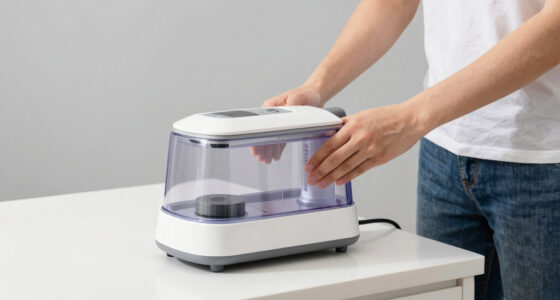
For most craft benches, I’d start with the FumeClear FC-2001A: its H13 HEPA and activated-carbon filtration make it a well-rounded choice for soldering and similar small projects. The YIHUA 948DQ-I stands out for its tiltable stand and included filters, while the Adjustable Solder Fume Extractor with 10-Foot Exhaust Hose suits buyers who can direct fumes away from the work area. The main tradeoffs are filtration type, how close the intake can sit to the source, and whether a compact unit or hose setup fits your bench. A tabletop extractor can help manage fumes, but it is not a substitute for suitable room ventilation or safe handling of hazardous materials. Read on for the full comparison and guidance on matching a design to your craft.

Get health and wellness essentials delivered free with Prime
- Fast, free delivery on millions of items
- Prime Video, Amazon Music and more included
- Member-only deals all year
Key Takeaways
- The FC-2001A is the strongest all-around fit in this lineup because it combines H13 HEPA filtration with activated carbon rather than relying on a single filter type.
- The YIHUA 948DQ-I prioritizes setup flexibility: its tiltable stand and included filters give it a different appeal from fixed, compact desktop units.
- A long exhaust hose changes the use case: the adjustable hose model is a better match when fumes can be routed away, but it needs a workable path and placement.
- Compact models trade work-area reach for a smaller footprint; the TBK001 and Helucidy JJ-Z131 are aimed at benches where space matters more than covering a broad area.
- Product names can suggest more capability than a spec proves: check stated filter layers, replacement availability, airflow details, and intended materials before relying on any unit for a particular craft.
| YIHUA 948DQ-I Solder Fume Extractor with Tiltable Stand and 8 Filters |  | Best for Adjustable Bench Positioning | Model: 948DQ-I | Voltage: 110–127 V | Power plug: US standard | VIEW ON AMAZON | See Our Full Breakdown |
| KUAIQU KQ-30SP Solder Fume Extractor with HEPA and Activated Carbon Filter |  | Best for Targeted, Adjustable Capture | Model: KQ-30SP | Power: 30 watts | Airflow: 80 m³/h | VIEW ON AMAZON | See Our Full Breakdown |
| Solder Fume Extractor with LED Light and Helping Hands |  | Best for Hands-Free Soldering | Manufacturer: Buhobha | Model: hxfs-001 | Weight: 2.42 pounds | VIEW ON AMAZON | See Our Full Breakdown |
| FumeClear FC-2001A Solder Fume Extractor with H13 HEPA and Activated Carbon Filters |  | Best for Higher-Capacity Filtration | Model: FC-2001A | Filtration: H13 HEPA and activated carbon | Filtration efficiency: 99.97% | VIEW ON AMAZON | See Our Full Breakdown |
| TBK001 Mini Solder Fume Extractor with Activated Carbon Filter |  | Best Compact Cordless Pick | Motor speed: 10000 RPM | Fan speeds: 3 | Filter type: Replaceable activated carbon | VIEW ON AMAZON | See Our Full Breakdown |
| KQZ B1 Solder Fume Extractor with H13 HEPA Filter |  | Best for High Airflow in a Compact Setup | Model: B1 | Airflow: 168 m³/h | Filter: 9 mm pre-filter and H13 HEPA activated-carbon filter | VIEW ON AMAZON | See Our Full Breakdown |
| FumeClear FC-2001S Portable Solder Fume Extractor |  | Best for Flexible Positioning | Airflow: 128–168 m³/h | Filtration: Pre-filter, H12 HEPA filter, and activated carbon | Fine particle capture: Up to 99.99% | VIEW ON AMAZON | See Our Full Breakdown |
| NT-M1 Desktop Solder Fume Extractor with H13 HEPA Filter |  | Best Compact Pick | Dimensions: 5.1 × 5.1 × 6.3 in | Weight: 3 lbs (1.4 kg) | Maximum airflow: 168 m³/h | VIEW ON AMAZON | See Our Full Breakdown |
| DX50 Solder Fume Extractor with HEPA and Carbon Filter |  | Best for a Sturdy Soldering Station | Model: DX50 | Airflow: 106 CFM (180 m³/h) | Motor speed: 7,500 RPM | VIEW ON AMAZON | See Our Full Breakdown |
| H2 Desktop Fume Extractor for Laser Engraving and Soldering |  | Best for Compatible Desktop Laser Engravers | Manufacturer: TURNING POINT TECHNOLOGY INC | Model: H2 | Weight: 4.13 pounds | VIEW ON AMAZON | See Our Full Breakdown |
| ToolBud Solder Fume Extractor with Removable Magnetic Flaps |  | Best for Adjustable Benchtop Coverage | Manufacturer: ToolBud | Model: TB-SAS-DY-01 | Material: Iron | VIEW ON AMAZON | See Our Full Breakdown |
| KOTTO Solder Smoke Absorber and Fume Extractor |  | Best for Simple Close-Range Soldering | Brand: KOTTO | Model number: Yellow | Filter: 0.4-inch activated carbon | VIEW ON AMAZON | See Our Full Breakdown |
| Adjustable Solder Fume Extractor with 10-Foot Exhaust Hose |  | Best for Outdoor Exhaust | Brand: Martians | Model: MFDZ0005 | Airflow: 50–200 CFM | VIEW ON AMAZON | See Our Full Breakdown |
| Helucidy JJ-Z131 Compact Fume Extractor with H13 HEPA and Activated Carbon Filter |  | Best for Compact Multi-Stage Filtration | Model: JJ-Z131 | Manufacturer: Helucidy | Filtration: Pre-filter plus H13 HEPA and activated carbon filter | VIEW ON AMAZON | See Our Full Breakdown |
| tabletop fume extractor for craft | Model |
|---|---|
| YIHUA 948DQ-I Solder Fume Extr | 948DQ-I |
| KUAIQU KQ-30SP Solder Fume Ext | KQ-30SP |
| Solder Fume Extractor with LED | hxfs-001 |
| FumeClear FC-2001A Solder Fume | FC-2001A |
| TBK001 Mini Solder Fume Extrac | — |
| KQZ B1 Solder Fume Extractor w | B1 |
| FumeClear FC-2001S Portable So | — |
| NT-M1 Desktop Solder Fume Extr | — |
| DX50 Solder Fume Extractor wit | DX50 |
| H2 Desktop Fume Extractor for | H2 |
| ToolBud Solder Fume Extractor | TB-SAS-DY-01 |
| KOTTO Solder Smoke Absorber an | — |
| Adjustable Solder Fume Extract | MFDZ0005 |
| Helucidy JJ-Z131 Compact Fume | JJ-Z131 |
More Details on Our Top Picks
YIHUA 948DQ-I Solder Fume Extractor with Tiltable Stand and 8 Filters
The YIHUA 948DQ-I suits craft benches where soldering or wood burning stays close to a fixed work area. Its tiltable stand lets me angle the intake toward the source, while the side fenders help limit airflow that could disturb the capture zone. Front and rear filters address particles and odors, and eight included filters give buyers replacements to hand. Compared with the Buhobha hxfs-001, this model has a more substantial adjustable stand and airflow guides, while Buhobha offers a stated 5–6-inch capture range and adds a light and helping hands. The main constraint is reach: YIHUA specifies an effective distance of about 10 cm, so the work must remain close to the intake. Its US-standard plug and 110–127 V range also make it a poor fit for other electrical systems without suitable compatibility.
Pros:- Front and rear filtration is designed to capture particles and reduce odors.
- Stand tilts up to 30° to aim the filtering area at the work.
- Two side fenders help limit disruptive airflow around the capture area.
- Eight filters are included.
Cons:- Effective extraction distance is limited to about 10 cm.
- 110–127 V operation and a US-standard plug limit electrical compatibility.
Best for: Soldering and wood-burning crafters who want a tilting tabletop unit with airflow guides and spare filters for a dedicated bench.
Not ideal for: Crafters who need to capture fumes from farther away or use a power supply outside the listed 110–127 V range with a US-standard plug.
- Model:948DQ-I
- Voltage:110–127 V
- Power plug:US standard
- Filter type:Front and rear filtration adsorbers
- Included filters:8
- Stand tilt:Up to 30°
- Effective extraction distance:10 cm
- Included accessories:2 fenders and 1 tiltable stand
Our verdict“Choose the YIHUA if an adjustable stand and supplied spare filters matter more than reaching beyond a close-in craft workspace.”
KUAIQU KQ-30SP Solder Fume Extractor with HEPA and Activated Carbon Filter
The KUAIQU KQ-30SP is the most adjustable option here for directing extraction at a changing craft setup. Its flexible gooseneck nozzle can be positioned near the soldering point, and stepless speed control with a digital display gives more precise adjustment than the YIHUA 948DQ-I’s tilting stand and fixed-distance design. A HEPA and activated carbon composite filter is intended to capture fine particles and odors, while the 400-hour reminder helps track filter service. It also includes five pre-filter pads and lists a two-year warranty. The tradeoff is that the supplied information gives no working distance, so buyers cannot compare its reach directly with the YIHUA’s 10 cm or the FumeClear FC-2001A’s stated 15 cm. At 4.4 pounds and roughly eight inches square, it is better suited to a regular tabletop station than a pocketable portable setup.
Pros:- Flexible gooseneck nozzle supports targeted placement near the fume source.
- Stepless speed control and a digital display allow visible, fine adjustment.
- HEPA and activated carbon composite filtration addresses particles and odors.
- Includes five extra pre-filter pads and a 400-hour filter reminder.
Cons:- The supplied product data does not state a working or capture distance.
- Its 4.4-pound weight and tabletop footprint are less convenient for portable setups.
Best for: Bench-based solderers and small-craft makers who want a movable nozzle, visible speed control, and a filter-use reminder.
Not ideal for: Buyers who need a documented capture distance, cordless portability, or a compact unit for frequent travel between work areas.
- Model:KQ-30SP
- Power:30 watts
- Airflow:80 m³/h
- Weight:4.4 pounds
- Dimensions:7.87 x 7.87 x 4.72 inches
- Filter:HEPA and activated carbon composite
- Filter reminder:400 hours
- Included accessories:5 extra pre-filter cotton pads
- Warranty:2 years
Our verdict“Pick the KUAIQU for adjustable, close-targeted capture and filter tracking, but choose a model with a stated working range if reach is a deciding factor.”
Solder Fume Extractor with LED Light and Helping Hands
The Buhobha hxfs-001 makes the most sense when a craft job needs both fume capture and help holding small pieces in place. Two adjustable helping hands and an LED work light turn it into a more complete soldering station than the YIHUA 948DQ-I, which focuses on a tilting stand, fenders, and spare filters instead. The adjustable suction head and dual-side filtration offer flexibility around the work, with a stated capture range of 5–6 inches. That distance is a useful guide for arranging a task, though it still calls for keeping fumes near the intake. At 2.42 pounds with a compact package, it is easier to shift between work areas than the larger FumeClear FC-2001A. Its 110V AC requirement narrows power compatibility, and the listed motor speed does not provide an airflow figure for direct performance comparison.
Pros:- Two adjustable helping hands support small components during soldering.
- Included LED light illuminates the immediate work area.
- Adjustable suction head and dual-side filtration provide flexible positioning.
- Light 2.42-pound weight suits workspaces where the extractor is moved between tasks.
Cons:- Specified fume capture range is limited to 5–6 inches.
- Designed for 110V AC power.
- No airflow capacity is provided for comparison with models such as the FC-2001A.
Best for: Small-electronics hobbyists and craft makers who solder while needing a light and adjustable clips to hold components.
Not ideal for: Buyers seeking cordless operation, broad documented airflow performance, or compatibility beyond standard 110V AC.
- Manufacturer:Buhobha
- Model:hxfs-001
- Weight:2.42 pounds
- Package dimensions:9.17 x 7.32 x 4.37 inches
- Power source:AC
- Input voltage:110V AC
- Motor speed:2400–2700 RPM
- Fume capture range:5–6 inches
- Included components:Fume extractor, LED light, and two helping hands
Our verdict“Choose the Buhobha when holding and lighting small soldering work matters as much as nearby fume capture.”
FumeClear FC-2001A Solder Fume Extractor with H13 HEPA and Activated Carbon Filters
The FumeClear FC-2001A is the strongest fit for a stationary craft bench where filtration capacity and a stated working range matter more than a small footprint. It pairs H13 HEPA and activated carbon with a listed purification capacity of 120–180 m³/h, and its three-speed brushless motor lets the operator adjust airflow. The stated working range reaches 15 cm, farther than the YIHUA 948DQ-I’s 10 cm specification, though both still call for close placement near the fume source. Compared with the compact TBK001, this is a much more substantial, plugged-in unit rather than a portable personal extractor. Its metal body and included hood, bamboo pipe, and pre-filters support a more adaptable bench arrangement. The tradeoffs are its 9.03-pound weight, larger dimensions, and eventual replacement-filter needs; the supplied data also describes 110V and 220V operation, so buyers should verify their setup.
Pros:- Combines H13 HEPA and activated carbon filtration.
- Three-speed brushless motor with stated 120–180 m³/h purification capacity.
- Stated working range of up to 15 cm exceeds the YIHUA’s listed 10 cm.
- Includes five pre-filters, a 2-in-1 main filter, hood, and bamboo pipe.
Cons:- At 9.03 pounds and 11.8 x 10.37 x 12.8 inches, it needs more bench space than compact alternatives.
- Replacement filters will be needed over time.
- The listed 110V and 220V operation warrants checking compatibility with the intended setup.
Best for: Crafters with a dedicated workbench who want H13 HEPA and carbon filtration, adjustable fan speeds, and a stated capture range beyond 10 cm.
Not ideal for: Traveling makers or owners of cramped benches who favor a lightweight cordless extractor such as the TBK001.
- Model:FC-2001A
- Filtration:H13 HEPA and activated carbon
- Filtration efficiency:99.97%
- Air purification capacity:120–180 m³/h
- Working range:Up to 15 cm
- Motor:Brushless, three-speed adjustment
- Voltage:110V; supports 110V and 220V operation
- Weight:9.03 lb
- Dimensions:11.8 x 10.37 x 12.8 in
Our verdict“Choose the FC-2001A for a permanent craft bench that can accommodate a larger extractor and benefits from its stated capacity and 15 cm working range.”
TBK001 Mini Solder Fume Extractor with Activated Carbon Filter
The TBK001 is the clear choice when a craft extractor needs to fit a crowded bench or move with a portable soldering kit. At just 1.77 x 3.15 x 3.15 inches, it occupies far less space than the FumeClear FC-2001A, and its rechargeable USB Type-C design avoids tying the setup to a nearby outlet while working. Three fan speeds offer basic adjustment, while the replaceable activated carbon filter is aimed at solder smoke and fine particles. The LED ring and curing light add task-specific convenience, although they do not change the unit’s limited coverage. Compared with the KUAIQU KQ-30SP, the TBK001 prioritizes size and cordless use over a gooseneck nozzle, digital speed display, and stated 80 m³/h airflow. It is best treated as a small, close-range aid—not a substitute for a larger extractor at a busy or shared craft bench.
Pros:- Compact dimensions suit crowded benches and portable kits.
- Rechargeable USB Type-C operation supports cordless use.
- Three fan speeds let users adjust the extractor for the task.
- Includes an LED ring light and curing light.
Cons:- Small form factor may limit coverage compared with tabletop units such as the FC-2001A.
- Activated carbon filters require periodic replacement.
- The supplied data does not state airflow or a capture distance.
Best for: Portable soldering hobbyists and makers with limited bench space who want a rechargeable, close-range extractor with built-in lights.
Not ideal for: Crafters handling larger or frequent fume-producing jobs who need a stated airflow capacity or a wider capture area.
- Motor speed:10000 RPM
- Fan speeds:3
- Filter type:Replaceable activated carbon
- Charging:DC 5V Type-C
- Full charge time:About 2.5 hours
- Controls:Push button
- Dimensions:1.77 x 3.15 x 3.15 inches (D x W x H)
- Special feature:Portable
Our verdict“Pick the TBK001 for portability and minimal bench footprint, but choose a larger unit for jobs that need documented airflow or broader capture.”
KQZ B1 Solder Fume Extractor with H13 HEPA Filter
The KQZ B1 pairs 168 m³/h airflow with a pre-filter and an H13 HEPA activated-carbon cartridge, making it a strong fit for a craft bench where solder smoke and light odors need targeted capture. Its 360° gooseneck lets me position the hood near the source without rearranging the extractor. Compared with the NT-M1, the B1 lists a similar maximum airflow but weighs a pound more and does not specify a variable-speed control; the NT-M1 is the more clearly adjustable choice. The B1’s included five pre-filters are useful for routine maintenance, though the product data gives no noise level or replacement-filter cost. I’d choose it for a compact soldering station, not as a substitute for room ventilation or extraction for heavier craft processes.
Pros:- 168 m³/h listed airflow supports targeted capture at a small workbench
- H13 HEPA and activated-carbon filtration addresses particles and odors
- 360° adjustable gooseneck helps place the hood near the smoke source
- Includes five replacement pre-filters
Cons:- Noise level is not specified in the product information
- Replacement filter costs are not provided
- No adjustable fan-speed control is listed
Best for: Hobby solderers who want strong listed airflow, a flexible hood, and spare pre-filters for a dedicated bench.
Not ideal for: Noise-sensitive makers or buyers who need clear information about ongoing filter costs before choosing.
- Model:B1
- Airflow:168 m³/h
- Filter:9 mm pre-filter and H13 HEPA activated-carbon filter
- Particle capture claim:99.99% of particles as small as 0.3 μm
- Voltage:110–220 V
- Hose:66 mm, 360° adjustable gooseneck
- Weight:4 pounds
- Included components:Extractor, 5 pre-filters, main filter, tube, hood, power cable, user manual
Our verdict“Choose the KQZ B1 for a compact soldering bench where strong listed airflow and a repositionable hood matter more than documented noise and filter costs.”
FumeClear FC-2001S Portable Solder Fume Extractor
The FC-2001S stands out for its extendable hose and three-stage filter stack: pre-filter, H12 HEPA, and high-iodine activated carbon. That combination suits craft stations where solder smoke, dust, and some odors need to be captured close to the source. Its listed airflow range of 128–168 m³/h is lower at the top end than the DX50’s stated 180 m³/h, but the FumeClear emphasizes reach and portability rather than a metal housing or multiple speed settings. The key limitation is placement: its nozzle needs to point directly at the smoke for best results, so it cannot be treated as general room cleaning. I’d favor it over the KQZ B1 when hose reach is the deciding factor, but the B1 lists H13 rather than H12 filtration.
Pros:- Three-stage filtration combines a pre-filter, H12 HEPA, and activated carbon
- Extendable hose allows flexible positioning around a small workspace
- Listed airflow range reaches up to 168 m³/h
- Specified for both 110V and 220V environments
Cons:- Nozzle must be aimed directly at the smoke source for best capture
- Uses an H12 HEPA filter rather than the H13 filtration listed for the KQZ B1
- Product information does not give a hose length or unit weight
Best for: Makers with compact or crowded benches who need an extendable hose to reach soldering projects in different positions.
Not ideal for: Users who cannot keep the nozzle close to the fume source or who specifically want an H13 filter designation.
- Airflow:128–168 m³/h
- Filtration:Pre-filter, H12 HEPA filter, and activated carbon
- Fine particle capture:Up to 99.99%
- Contaminant capture:Up to 99.97%
- Activated carbon:Coconut shell, 500–700 mg/g iodine content
- Voltage:110V and 220V
- Hose:Extendable
Our verdict“Pick the FC-2001S if hose reach and three-stage filtration matter more than a specified H13 filter or a higher stated airflow ceiling.”
NT-M1 Desktop Solder Fume Extractor with H13 HEPA Filter
At 3 pounds and 5.1 × 5.1 × 6.3 inches, the NT-M1 is the easiest option here to fit on a crowded craft desk or move between work areas. It combines a stepless airflow dial with a 25.6-inch, 360° flexible hose, so I can adjust suction and aim the intake without committing to fixed placement. Like the KQZ B1, it lists airflow up to 168 m³/h and H13 HEPA filtration; the NT-M1’s clear advantage is its smaller footprint and stated airflow control. Its carbon powder is described as helping with light odors, not as a solution for strong or persistent fumes. The product is intended for hobby and light-duty work, so I’d choose a larger-capacity approach for frequent, demanding extraction rather than asking this desktop unit to handle it.
Pros:- Compact 5.1 × 5.1 × 6.3-inch body weighs 3 pounds
- Stepless rotary control allows airflow adjustment
- Hose extends up to 25.6 inches and adjusts 360°
- H13 HEPA, carbon powder, and a 10 mm pre-filter form a multi-stage filter setup
Cons:- Described for hobby and light-duty use rather than industrial extraction
- Carbon powder is specified for reducing light odors only
- Maximum airflow is similar to the KQZ B1 rather than a clear step up
Best for: Craft hobbyists with limited desk space who want a lightweight extractor with adjustable airflow and a long flexible hose.
Not ideal for: Makers doing frequent heavy-duty work or needing strong odor control beyond the stated light-odor reduction.
- Dimensions:5.1 × 5.1 × 6.3 in
- Weight:3 lbs (1.4 kg)
- Maximum airflow:168 m³/h
- Filter:H13 HEPA with carbon powder and 10 mm pre-filter
- Hose length:Up to 25.6 in (0.65 m)
- Hose adjustment:360° flexible positioning
- Fan speed:Stepless rotary adjustment
Our verdict“Choose the NT-M1 when desk space, low weight, and adjustable airflow are higher priorities than heavy-duty capacity or stronger odor treatment.”
DX50 Solder Fume Extractor with HEPA and Carbon Filter
The DX50 combines a metal housing, three airflow settings, and a 20-inch gooseneck, giving it a more station-like setup than the lightweight NT-M1. Its stated 180 m³/h airflow is the highest listed among these five products, while HEPA and activated carbon address fine particles and odors during light soldering or PCB repair. The three settings let me choose between different airflow levels, though they are less finely adjustable than the NT-M1’s stepless dial. Five included pre-filters add practical maintenance supplies. The tradeoff is scope: this is explicitly a light-duty desktop extractor, not a high-volume laser-engraving system. For soldering, it offers a sturdier build than the portable FumeClear FC-2001S; for more adaptable hose reach, the FC-2001S may suit a shifting workspace better.
Pros:- Listed airflow of 180 m³/h is the highest among these five products
- Metal housing offers a sturdier bench-mounted feel than the lightweight NT-M1
- Three adjustable speeds support different soldering tasks
- Includes five pre-filters and a 20-inch flexible gooseneck
Cons:- Specified for light-duty soldering and PCB repair, not high-volume laser engraving
- Three discrete speeds offer less fine control than the NT-M1’s stepless adjustment
- The 20-inch hose may limit placement compared with an extendable-hose extractor
Best for: PCB repair hobbyists and regular soldering users who want a metal-bodied desktop unit with multiple airflow settings.
Not ideal for: Laser engravers or makers handling high-volume smoke who need extraction designed for demanding processes.
- Model:DX50
- Airflow:106 CFM (180 m³/h)
- Motor speed:7,500 RPM
- Filter:HEPA and activated carbon
- HEPA particle capture:99.97%
- Airflow settings:3 adjustable speeds
- Hose:20 in, 360° adjustment
- Input voltage:110–220V
- Housing:Metal
Our verdict“Choose the DX50 for a steady soldering or PCB-repair bench where a metal housing and three airflow settings matter more than laser-scale capacity.”
H2 Desktop Fume Extractor for Laser Engraving and Soldering
The H2 earns a distinct place for craft rooms that combine soldering with a compatible small desktop laser engraver. Its primary cotton, activated-carbon, and HEPA stages target particles and odors, while included adapters cover specified 50–63 mm and 40–63 mm connections. Unlike the DX50, which is described for light-duty soldering and PCB repair, the H2 is positioned for both soldering and small laser equipment; its three fan speeds and four function modes add operating choices. The compact vertical design and 4.13-pound weight suit a crowded bench, but filter upkeep is a real commitment: the listed pre-filter life is 1–15 days and HEPA life is 2–3 months. I’d check connector fit and accept recurring filter changes before choosing it over a hose-focused solder extractor such as the KQZ B1.
Pros:- Primary cotton, activated carbon, and HEPA filters provide three filtration stages
- Three fan speeds and four function modes offer more operating choices than the DX50
- Includes adapters for compatible 50–63 mm and 40–63 mm connections
- Compact vertical design and 4.13-pound weight suit a limited workbench
Cons:- Pre-filter life is listed as only 1–15 days, which can mean frequent maintenance
- Compatibility is described for small desktop equipment, not larger laser systems
- Adapter fit must be checked against the specific craft machine
Best for: Makers using a compatible small desktop laser engraver alongside soldering tools who want included duct adapters and multi-stage filtration.
Not ideal for: Users with larger laser equipment, unknown connector sizes, or limited capacity for frequent pre-filter replacement.
- Manufacturer:TURNING POINT TECHNOLOGY INC
- Model:H2
- Weight:4.13 pounds
- Package dimensions:10.43 × 9.61 × 7.05 inches
- Power:Corded electric, 50 watts
- Filter system:Primary cotton, activated carbon, and HEPA filters
- Fan speeds and function modes:3 fan speeds; 4 function modes
- Adapter sizes:50–63 mm and 40–63 mm
- Filter life:Pre-filter: 1–15 days; HEPA filter: 2–3 months
Our verdict“Pick the H2 if your craft setup includes a compatible small desktop laser engraver and you can keep up with its frequent pre-filter changes.”
ToolBud Solder Fume Extractor with Removable Magnetic Flaps
The ToolBud suits craft benches where the soldering spot shifts but the extractor needs to stay compact. Its two detachable magnetic panels expand the intake area around small projects, a more adaptable setup than the KOTTO’s fixed capture arrangement. Two removable carbon filters give you a way to clean or replace the filtration media, though they do add upkeep rather than making the unit maintenance-free. The low-noise motor is a practical fit for a shared hobby room, and its 2.23-pound weight makes repositioning manageable. The tradeoff is reach: ToolBud is intended for small workspaces, so it is less suited to broad work surfaces or fumes that need to be ducted outdoors. Choose it for close-range soldering, not as a room-wide air cleaner.
Pros:- Two magnetic panels can expand the extraction area
- Includes two removable carbon filters
- Compact, 2.23-pound design is easier to reposition
- Low-noise motor suits shared hobby spaces
Cons:- Coverage may be limited on larger work surfaces
- Carbon filters require cleaning or replacement
- No exhaust hose is listed for outdoor venting
Best for: Crafters who solder small pieces at a compact bench and want movable panels to widen the intake area around a project.
Not ideal for: People working across a large table or seeking outdoor exhaust; this compact unit is intended for localized coverage and uses carbon filters that need care.
- Manufacturer:ToolBud
- Model:TB-SAS-DY-01
- Material:Iron
- Color:Yellow
- Item weight:2.23 pounds
- Package dimensions:6.85 x 5.63 x 3.11 inches
- Power source:AC
- Included filtration:Two removable carbon filters
- Included panels:Two detachable magnetic panels
Our verdict“Pick the ToolBud for small craft benches where adjustable magnetic coverage matters more than long-range extraction or ducted exhaust.”
KOTTO Solder Smoke Absorber and Fume Extractor
KOTTO is a straightforward choice for crafters who solder at a consistent spot and want a specified capture distance rather than adjustable ducting. Its 3000 RPM fan is described as drawing fumes from 5–6 inches away, so positioning the unit near the work is central to getting the intended benefit. The 0.4-inch activated carbon filter targets solder and flux fumes, and the included replacement filter gives you a spare to start with. Compared with the ToolBud, KOTTO has a stated capture distance and a carrying handle, but it lacks ToolBud’s removable magnetic panels for expanding the intake area. The compromise is equally clear: it is for nearby work, and the filter needs replacement over time. I’d choose it for a fixed soldering station, not a wide craft table.
Pros:- Activated carbon filter is specified for solder and flux fumes
- Listed 5–6-inch fume capture distance gives a clear placement target
- Includes one replacement filter
- Carrying handle and non-slip feet help with positioning
Cons:- Designed for fumes near the unit rather than broad workspace coverage
- Filter needs replacement over time
- No outdoor exhaust hose is specified
Best for: Hobbyists with a dedicated soldering spot who can position an extractor within a few inches of the work.
Not ideal for: Crafters who move projects across a large table or need outdoor fume venting; its listed capture distance is 5–6 inches and no exhaust hose is included.
- Brand:KOTTO
- Model number:Yellow
- Filter:0.4-inch activated carbon
- Fan speed:3000 RPM
- Fume capture distance:5–6 inches
- Power:120V, 30W
- Frequency:50/60Hz
- Working temperature:-20°C to 60°C
- Included components:One smoke absorber and one replacement filter
Our verdict“Choose KOTTO for a stationary soldering setup where close placement and a spare filter matter more than flexible coverage.”
Adjustable Solder Fume Extractor with 10-Foot Exhaust Hose
For craft work where sending fumes outside is the priority, this Martians extractor has a different approach from filter-focused benchtop units. Its 10-foot flexible exhaust hose can route fumes away from the room, while the adjustable gooseneck helps position the intake over a soldering point. A 50–200 CFM airflow range with stepless control lets you tune suction to the task; the Helucidy JJ-Z131 instead relies on a compact filter unit and a 25.6-inch arm, making it easier to keep on the bench but not an outdoor-ducting substitute. The Martians’ single channel keeps the setup focused on one work zone, and its listed 65 dB(A) noise level may be intrusive in a quiet craft room. It makes most sense where hose routing is practical and filtered recirculation is not the goal.
Pros:- Flexible exhaust hose extends up to 10 feet for outdoor venting
- Airflow adjusts from 50 to 200 CFM
- Gooseneck intake can be positioned near the fume source
- Modular mounting bracket is included
Cons:- Listed noise level is 65 dB(A), which may be disruptive in a quiet room
- One channel serves a single work zone
- Hose routing requires a practical path to an outdoor vent
Best for: Makers with a window or suitable outdoor route who want adjustable extraction from one soldering or craft work zone.
Not ideal for: Crafters who need a quiet, fully self-contained benchtop unit or cannot route a 10-foot hose outdoors.
- Brand:Martians
- Model:MFDZ0005
- Airflow:50–200 CFM
- Exhaust hose length:10 feet (3 meters)
- Noise level:65 dB(A)
- Voltage:110 volts
- Wattage:12 watts
- Number of channels:1
- Included components:Fume extraction unit, AC/DC power adapter, flexible duct assembly, modular mounting bracket
Our verdict“Choose the Martians model when you can vent outdoors and want adjustable airflow, accepting more setup and noise than a compact filtered unit.”
Helucidy JJ-Z131 Compact Fume Extractor with H13 HEPA and Activated Carbon Filter
The Helucidy JJ-Z131 is the most filtration-specific pick in this group, pairing a pre-filter with an H13 HEPA and activated carbon filter. The listed 99.97% efficiency for particles down to 0.3 microns gives buyers a concrete filtration claim to compare, while its 50 CFM airflow and 25.6-inch flexible arm suit close work at a compact bench. Unlike the Martians extractor, it does not offer a long hose for outdoor exhaust; instead, it keeps the system self-contained and directs intake toward the task. Its footprint is just 5.9 x 5.9 inches, and the listed noise level is below 50 dB, making it a better fit for a small hobby room. The tradeoff is reach and capacity: 50 CFM may be limiting over a larger table, and the supplied arm is not especially long.
Pros:- Pre-filter plus H13 HEPA and activated carbon filtration
- Listed 99.97% efficiency for particles down to 0.3 microns
- Compact 5.9 x 5.9-inch footprint with a flexible 25.6-inch arm
- Includes five replacement pre-filters
Cons:- 50 CFM airflow may be limited for larger work areas
- 25.6-inch arm may not reach every bench layout
- A filtered benchtop design rather than a long-hose outdoor exhaust system
Best for: Bench crafters who want a compact, self-contained unit with specified HEPA and carbon filtration for close-range soldering and hobby tasks.
Not ideal for: People working over a broad table or needing fumes exhausted outdoors; its listed airflow is 50 CFM and its arm is 25.6 inches long.
- Model:JJ-Z131
- Manufacturer:Helucidy
- Filtration:Pre-filter plus H13 HEPA and activated carbon filter
- Filtration efficiency:99.97% for particles down to 0.3 microns
- Motor:30W brushless
- Airflow:50 CFM
- Noise level:Below 50 dB
- Dimensions:5.9 x 5.9 x 7.3 inches
- Flexible arm length:25.6 inches
Our verdict“Pick the Helucidy JJ-Z131 for a small bench where specified multi-stage filtration and a compact footprint matter more than broad coverage or outdoor venting.”

How We Picked
I compared these 14 tabletop extractors by how well their stated designs match common craft tasks: soldering, small repair work, and other bench projects that produce localized fumes. I gave more weight to clearly described filtration, a usable intake position, and practical workspace fit than to broad claims in a product name. Models listing both HEPA and activated-carbon filtration stood out for buyers seeking a combination of particle and odor-control media, while compact or single-filter designs were judged by their narrower use cases.
The ranking reflects those differences rather than treating every unit as interchangeable. The FC-2001A leads for its clearly stated filter combination; the YIHUA ranks highly for adjustability and included filters; and hose-based or compact models rise for buyers whose setup calls for those specific features. I also considered likely maintenance needs, ease of positioning, and how much information is available to judge suitability. Where details such as airflow, filter life, or replacement-part availability are not clear from the product information, I treat that uncertainty as a reason to verify before buying—not as evidence of performance.
Factors to Consider When Choosing Tabletop Fume Extractor For Crafts
Choosing a tabletop extractor starts with the fumes your craft produces and how you work at the bench, not with the largest number of features. I’d use these factors to check whether a model’s design fits the task, room, and maintenance routine.
Match Filtration to the Material and Task
HEPA media and activated carbon address different parts of the problem: HEPA filters target airborne particles, while carbon media can adsorb some gases and odors. A unit listing both types may offer broader filtration than one listing only a carbon or HEPA filter, but the labels alone do not show how much air the unit moves through the media. Check the manufacturer’s stated application and any limits for the materials you use. Resin, adhesives, solvents, and heated plastics can produce emissions that a solder-focused tabletop unit may not be designed to handle. For unknown or higher-risk substances, consult the material’s safety information and use appropriate room ventilation rather than relying on a small extractor alone.
Place the Intake Near the Source
Capture works best when the intake can sit close to where fumes rise, before they spread across the bench. Think about the reach and angle you need for your usual hand position, tools, and project size. A tiltable stand or flexible hose can help with changing work, but those features matter only if the intake remains stable and does not obstruct the task. A compact fixed unit may suit a consistent soldering station, while larger crafts can need more reach than a tabletop fan provides. Avoid buying by fan size alone; look for usable airflow information and a practical way to position the capture point.
Choose Between Recirculating Filters and Exhaust
Many desktop extractors draw air through filters and return it to the room; a hose-based design may instead let you route captured air elsewhere, depending on its setup. These approaches are not interchangeable: recirculating models depend on suitable, maintained filters, while exhaust arrangements need a safe destination and a clear route. A long hose can improve placement options but may take up space and make setup less convenient. Before choosing external exhaust, check the manufacturer’s instructions and local requirements, and never vent fumes into another occupied indoor area. If you cannot route exhaust safely, a suitable recirculating model and general room ventilation may be the more practical arrangement.
Check Replacement Filters Before Buying
A filter’s usefulness depends on replacing it when required, so check whether compatible replacements are easy to identify and obtain. Ask how the maker indicates replacement timing and whether the unit uses one combined cartridge or separate layers. A bundle with several filters can reduce early maintenance friction, but it does not reveal the long-term supply situation. Filter life varies with the substances captured, operating time, and workspace conditions, so avoid assuming a fixed service period unless the maker specifies one. If replacement details are vague, include that uncertainty in your decision rather than treating the included filter as a permanent solution.
Fit the Extractor to Your Bench and Workflow
Measure the space the unit occupies alongside the clearance needed for hands, tools, and materials. Magnetic flaps, helping hands, lighting, or an adjustable stand can support a particular workflow, but add-ons may also crowd a small bench or limit where the intake can sit. Consider whether you work at one station or move between craft areas; a portable model may be easier to relocate, while a heavier or hose-connected setup may suit a dedicated bench. Check the unit’s power requirements, controls, stability, and noise information where available. These details affect whether you will keep it positioned and running during the work that produces fumes.
Know When a Tabletop Unit Is Not Enough
Tabletop extractors are designed around localized capture, so they are not a complete solution for every craft or room. Large projects, multiple fume sources, or processes that release substantial emissions may call for source-capture equipment with higher capacity or a professionally planned ventilation system. Do not use a compact solder extractor as proof that a room is safe for solvent-heavy work or other processes outside its stated applications. Check material safety data and follow the process maker’s ventilation guidance. If fumes persist, escape capture, or cause irritation, stop work and reassess the setup rather than simply moving the extractor farther away.
Frequently Asked Questions
Is an H13 HEPA filter enough for soldering fumes?
H13 HEPA filtration is intended to capture particles, but soldering fumes may also include gases and odors that a HEPA filter alone does not address. A unit that also lists activated carbon may offer a broader filter combination, though the product specifications should explain its intended use. Capture position matters too: place the intake close to the source so fumes reach the filter before spreading. Check the maker’s guidance for solder type, flux, and filter replacement. Keep room ventilation in use when appropriate, since a tabletop extractor is not a guarantee of complete removal.
Can I use a solder fume extractor for resin, glue, or laser engraving?
Do not assume that a solder-focused extractor is suitable for every craft material. Resin, adhesives, and laser processing can create different emissions, and filter labels alone do not establish compatibility. Look for explicit manufacturer guidance for the material and process, then check the material safety information for ventilation requirements. The H2 is specifically described for laser engraving and soldering, but its stated scope still needs to match your machine and materials. If the maker does not confirm suitability, use ventilation designed for that process instead of relying on a generic desktop unit.
Should I choose a filtered tabletop unit or one with an exhaust hose?
A filtered tabletop model is generally easier to place when you need a self-contained bench setup, but it depends on the right filters being installed and replaced. An exhaust hose can route captured air away from the immediate work area, yet only helps when it can discharge to an appropriate location under the maker’s instructions. Hose length, bends, and placement can affect convenience and may complicate a crowded workspace. Do not vent into another indoor area or assume an exhaust hose makes every process safe. Choose based on your room layout, the materials you handle, and the manufacturer’s stated setup requirements.
How close should a tabletop extractor sit to my work?
Keep the intake as close to the fume source as the manufacturer recommends while leaving enough room to work safely. The goal is to capture fumes before they drift toward your face or across the room, not to place the unit where it blocks your hands or tools. A tiltable stand or flexible positioning can help keep the intake aligned as the project changes. Test the arrangement with the extractor running and check whether fumes visibly escape the capture area, without using smoke or substances that could create a hazard. If capture is poor, adjust the position and review whether the unit is suited to the task.
What should I check before buying a replacement filter?
Match the replacement to the exact model and filter configuration; similarly named products may not share cartridges. Confirm which layers it contains, whether the filter is sold as a combined unit or separate parts, and what the manufacturer says about installation and replacement timing. Check that the part is available from a source you can use before committing to a model with a proprietary cartridge. Filter life depends on the fumes captured and how often the extractor runs, so a bundle count does not establish a standard service interval. If compatibility or supply is unclear, ask the seller or manufacturer before purchase.
Conclusion
For the best overall, I’d choose the FumeClear FC-2001A for its stated H13 HEPA and activated-carbon combination. The best value in practical features is the YIHUA 948DQ-I, with its tiltable stand and included filters making it a flexible choice for a bench setup. For beginners doing small soldering tasks, the KOTTO or TBK001 may suit a simpler, compact station, provided the filter setup matches the work. The best premium-style pick for a dedicated workspace is the FC-2001A, while buyers with room to route captured air should look closely at the 10-foot hose model. For tight benches, compare the TBK001 and Helucidy JJ-Z131; for laser work, consider the H2 only after confirming its guidance covers your materials and machine. My final check before choosing would be replacement-filter access and manufacturer-approved use for the exact craft process.
Cold & flu season Picks
humidifiers
As an affiliate, we earn on qualifying purchases.