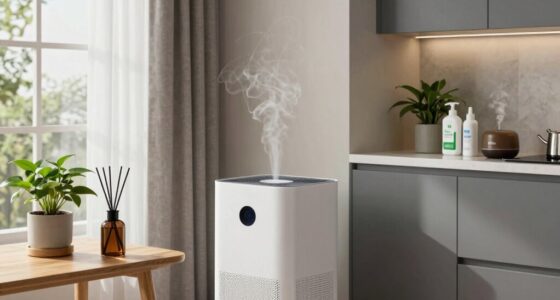
If you have adverse reactions to essential oil diffusers, it’s often due to sensitivities, allergies, or poor-quality oils. Some oils contain compounds that irritate your skin, eyes, or respiratory system, especially if the diffuser is used in a poorly ventilated space. Using synthetic or contaminated oils can also cause issues. To stay safe, choose high-quality oils and use your diffuser carefully. Keep exploring to discover how to enjoy your diffuser without discomfort.
Key Takeaways
- Sensitivities or allergies to specific essential oils can cause skin, respiratory, or allergic reactions.
- Low-quality or adulterated oils may contain synthetic additives that provoke adverse effects.
- Individuals with respiratory conditions like asthma are more prone to irritation from diffuser scents.
- Poor ventilation and diffuser placement in enclosed spaces can intensify scent exposure and reactions.
- Prolonged use or high concentrations of certain oils may lead to headaches, dizziness, or nausea.

Essential oil diffusers have become popular for their ability to fill your space with natural, calming scents while also offering potential health benefits. You may use them to create a soothing atmosphere, reduce stress, or even improve your sleep. But despite their widespread popularity, some people react negatively to essential oil diffusers, experiencing symptoms like headaches, respiratory issues, or skin irritations. Understanding why certain individuals react differently can help you make informed choices and use these products safely.
One reason for adverse reactions is the sensitivity or allergy to specific essential oils. Not everyone’s body responds the same way, and some oils contain compounds that can trigger allergic responses. For example, oils like eucalyptus or peppermint, which contain menthol, might cause respiratory irritation or worsen asthma symptoms in sensitive individuals. If you notice headaches, dizziness, or difficulty breathing after using a diffuser, it’s worth considering whether the oils you’re using are causing the problem. Testing with small amounts or switching to hypoallergenic options can help you identify the culprits.
Sensitivity to certain oils like eucalyptus or peppermint can cause allergic reactions and respiratory issues.
Another factor is the quality of the essential oils themselves. Not all oils are created equal, and some may contain synthetic additives or impurities that can irritate your skin, eyes, or respiratory system. Cheaper oils or those purchased from unreliable sources might be contaminated or adulterated. When you use low-quality oils, you risk exposing yourself to chemicals that your body perceives as harmful. To mitigate this, look for pure, therapeutic-grade oils from reputable suppliers. Proper storage and handling are also vital, as oils exposed to heat or sunlight can degrade and produce harmful byproducts.
Your personal health conditions also influence how you react to diffusers. People with asthma, allergies, or respiratory sensitivities are more likely to experience adverse effects. Even if you’re generally healthy, prolonged exposure to certain scents can still lead to headaches or nausea. If you’re pregnant or have underlying health issues, consult with a healthcare professional before using essential oils. Using a well-ventilated space and limiting the duration of diffuser use can minimize potential risks.
Finally, your environment plays a role. Poor ventilation can trap concentrated scents, leading to overwhelming or irritating atmospheres. If your diffuser is placed in a small, enclosed space without fresh air, the scent can become too intense. Always follow the manufacturer’s instructions regarding the number of drops and diffuser placement, and ensure good airflow in the room. Additionally, understanding the volatile compounds present in essential oils can help you select options less likely to cause reactions. By doing so, you can enjoy the benefits while reducing the likelihood of negative reactions.

Lagunamoon Essential Oils Aromatherapy Set – 6 Oils for Diffusers, Home Care, Candle Making Scents, Fragrance, Humidifiers, Gifts – Peppermint, Tea Tree, Lavender, Eucalyptus, Orange (10mL)
Top selling essential oils set: We create our essential oils using rigorously tested ingredients. Top blends, make pampering…
As an affiliate, we earn on qualifying purchases.
As an affiliate, we earn on qualifying purchases.
Frequently Asked Questions
Can Diffuser Scents Cause Long-Term Health Problems?
Yes, diffuser scents can cause long-term health problems if you’re exposed to certain essential oils regularly. Some oils contain allergens or irritants that may build up over time, potentially affecting your respiratory system or causing skin issues. To minimize risks, use high-quality oils, guarantee proper ventilation, and avoid prolonged exposure. Listening to your body and consulting a healthcare professional if you notice adverse effects is always a good idea.
Are There Specific Oils That Are More Likely to Trigger Reactions?
Yes, certain oils are more likely to trigger reactions. You should watch out for cinnamon, clove, and peppermint, as they contain strong compounds that can cause irritation or allergic responses. If you’re sensitive, start with milder oils like lavender or chamomile. Always do a patch test before prolonged use, and dilute essential oils properly to minimize the risk of adverse reactions.
How Do I Identify if I Have an Allergy to Diffuser Oils?
Think of your body as a sensitive garden, easily affected by unfamiliar plants. To identify if you’re allergic to diffuser oils, pay attention to your body’s signals. Notice if you develop sneezing, itchy eyes, skin rashes, or difficulty breathing after using the diffuser. Stop using the oils immediately and consult a healthcare professional. Patch testing with small amounts can also help determine sensitivities before full exposure.
Do Diffuser Materials Affect Allergic Responses?
Yes, diffuser materials can affect your allergic responses. If your diffuser is made from certain plastics or metals, it might release chemicals or cause irritation, especially if you’re sensitive. Opt for diffusers made from hypoallergenic materials like glass or ceramic to reduce risks. Always check for any reactions after using a new diffuser, and consider replacing materials that cause irritation to protect your skin and respiratory health.
Can Improper Maintenance Increase Health Risks?
Ignoring proper maintenance can turn your diffuser into a health hazard, like a ticking time bomb releasing mold and bacteria. If you don’t clean it regularly, you risk inhaling harmful spores and pollutants that could cause allergies, respiratory issues, or infections. So, you gotta clean your diffuser often, rinse it thoroughly, and replace filters if needed. This way, you keep your air pure and your health safe from unseen dangers.

Pure Daily Care Aromatherapy Top 10 Essential Oil Set – Therapeutic Grade Single Ingredient Oils – Uplift Mind, Body and Spirit – 10 x 10 Ml Bottles – No Fillers & No Additives
Premium Essential Oils Set: This set includes 10 high-quality, single-note essential oils: Clove, Eucalyptus, Jasmine, Lavender, Lemongrass, Nutmeg,…
As an affiliate, we earn on qualifying purchases.
As an affiliate, we earn on qualifying purchases.
Conclusion
As you breathe in the fragrant mist, remember that essential oil diffusers are like gateways—unlocking serenity or stirring sensitivities. Just as a lantern can illuminate or cast shadows, your diffuser’s aroma can soothe or irritate. Pay attention to your reactions, and adjust accordingly. In this delicate dance of scents, you hold the key to creating a sanctuary of calm or a storm of discomfort. Choose wisely, and let your environment reflect the harmony you seek.

CoreFavor Waterless Essential Oil Diffuser (M60) with 3x120ml Oil, Portable Battery-Operated Cold Air Aroma Scent Machine, 4 Adjustable Intensity Levels, Quiet Diffuser for Bedroom Office Bathroom Car
WATERLESS NANO-MIST TECHNOLOGY FOR INSTANT RELAXATION: Experience the purity of aromatherapy with our advanced ultrasonic cold-mist atomization. Unlike…
As an affiliate, we earn on qualifying purchases.
As an affiliate, we earn on qualifying purchases.

AromaRoom Air Purifiers for Bedroom with True HEPA13 Filters 3-in-1, Pet Air Purifier with Aroma Pad for Wildfires Smoke Pollen Dander, 22dB Quiet Air Cleaners for Baby Room Office Dorm
EFFICIENT PURIFICATION: With brushless motor and 360-degree air intake design, Aroma Room air purifier can purify air twice…
As an affiliate, we earn on qualifying purchases.
As an affiliate, we earn on qualifying purchases.