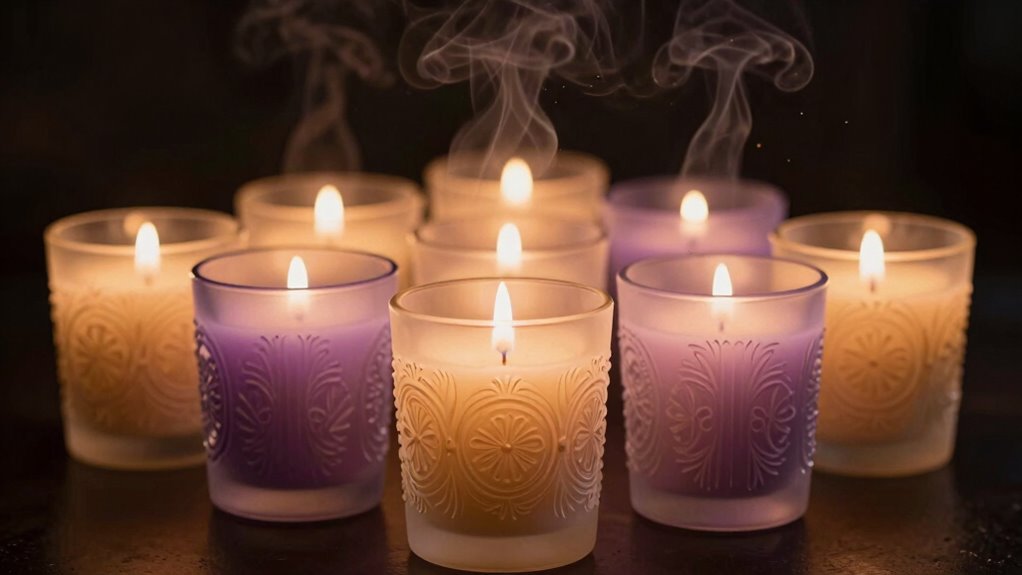

When you burn scented candles, they release odors, volatile organic compounds (VOCs), and tiny particles into your indoor air, which can affect air quality and your health. The wax melts and carries fragrance oils, releasing VOCs, while incomplete combustion can create particles like soot. Choosing candles made from natural waxes and practicing safe burning habits can reduce these emissions. If you want to understand how to enjoy candles safely while maintaining good air quality, there’s more to learn.
Key Takeaways
- Melting scented candles release fragrance oils and VOCs that can impact indoor air quality.
- Burning candles produces tiny particles and combustion byproducts that may irritate respiratory systems.
- Natural wax candles reduce VOC emissions and soot compared to synthetic or lower-quality options.
- Proper wick trimming and good ventilation minimize soot and particulate buildup during candle use.
- Responsible burning habits ensure a cozy atmosphere while protecting indoor air from odors, VOCs, and particles.
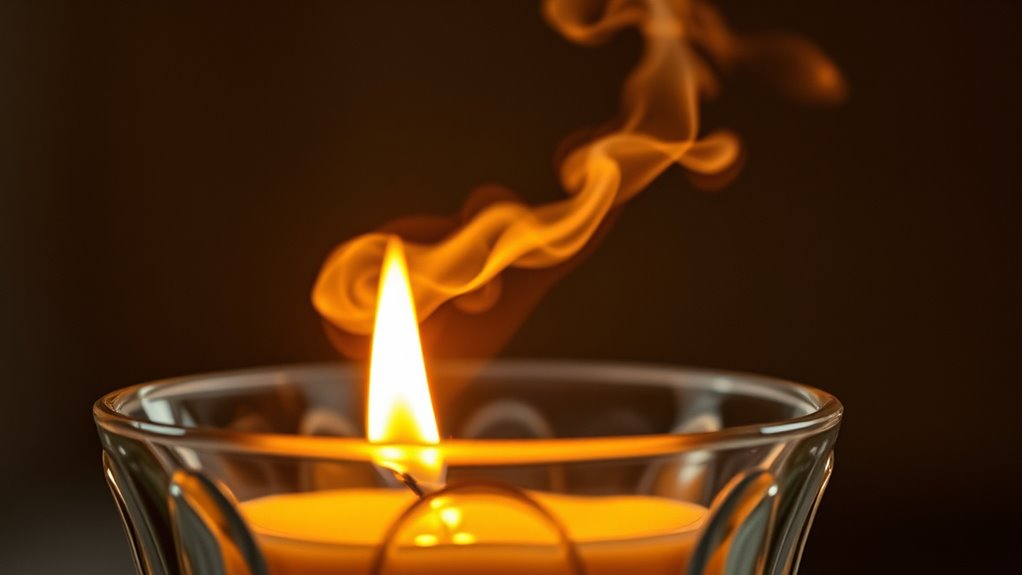
Scented candles have become a popular way to create a warm, inviting atmosphere in any space. When you light one, you’re not just adding a cozy glow—you’re also introducing fragrances that can influence your mood and environment. But beyond their pleasant aromas, scented candles impact the air in ways you might not immediately notice. Understanding how they release odors, VOCs (volatile organic compounds), and particles can help you make informed choices about their use.
Scented candles influence air quality through odors, VOCs, and particles, so choose natural options and burn responsibly.
As you burn a scented candle, the wax melts, releasing fragrance oils into the air. These oils carry the scent, but they also contain VOCs, which are organic chemicals that vaporize at room temperature. Many of these compounds are naturally occurring, like limonene or linalool, but some are synthetic, especially in budget candles. While VOCs are generally harmless in small amounts, prolonged or frequent exposure can cause irritation or sensitivities in some people. You might notice a slight chemical smell or irritation in your throat or eyes if you burn candles for extended periods or in poorly ventilated spaces. It’s worth noting that certain fragrances and additives can produce higher VOC emissions, so reading labels and choosing candles with natural ingredients can minimize potential risks.
In addition to VOCs, burning candles also releases tiny particles into the air. These particles come from incomplete combustion of the wax or wicks, especially if the wick isn’t trimmed properly or if the candle burns unevenly. The particles are often microscopic and can include soot or other combustion byproducts. If you burn candles frequently or in a small room without good ventilation, these particles can accumulate, potentially irritating your respiratory system or worsening allergies. People with asthma or sensitivities should be particularly cautious. To reduce particle emissions, you should keep wicks trimmed to about a quarter-inch, burn candles in well-ventilated areas, and avoid leaving them unattended for long periods. Additionally, using natural waxes can help reduce soot and particulate matter released during burning.
While scented candles can enhance your space, it’s essential to be aware of what they release into the air. Choosing high-quality candles made from natural waxes—like soy, beeswax, or coconut—can notably cut down on VOCs and soot. Proper burning habits, such as trimming wicks and ensuring good ventilation, also help minimize negative effects. By understanding these factors, you can enjoy your scented candles safely, creating a cozy atmosphere without compromising your indoor air quality.

Chesapeake Bay Balance + Harmony Scented Candle Water Lily Pear Fragrance 50 Hours Burn Time Warm & Decorative Soy Wax Blend
- Fragrance Profile: Tropical fruits, peach, pear, floral notes
- Burn Time: Approximately 50 hours
- Packaging: Frosted jar for aesthetic appeal
As an affiliate, we earn on qualifying purchases.
As an affiliate, we earn on qualifying purchases.
Frequently Asked Questions
Are There Health Risks Associated With Long-Term Scented Candle Use?
Yes, long-term scented candle use can pose health risks. When you burn candles, especially those with artificial fragrances or paraffin wax, you might inhale VOCs and fine particles that can irritate your lungs or trigger allergies. Over time, this exposure could contribute to respiratory issues or other health problems. To mitigate risks, choose candles made from natural ingredients and ensure good ventilation when burning them.
How Do Different Wax Types Affect Indoor Air Quality?
Different wax types impact indoor air quality in various ways. Paraffin wax releases more VOCs and soot, which can worsen air quality and irritate your lungs over time. Soy and beeswax candles produce fewer pollutants, making them safer options. Choose natural waxes if you want cleaner air, and always guarantee proper ventilation. Your choice of wax directly influences the amount of indoor particles and chemicals released when burning candles.
Can Scented Candles Trigger Allergies or Asthma?
Yes, scented candles can trigger allergies or asthma symptoms. When you burn them, they release VOCs, particles, and fragrances that may irritate your respiratory system. If you’re sensitive or have asthma, these emissions might cause coughing, wheezing, or breathing difficulty. To reduce risks, choose candles made from natural waxes, avoid synthetic fragrances, and guarantee proper ventilation while burning candles. Always monitor your reactions and consult with a healthcare professional if needed.
What Are the Safest Ingredients for Making Scented Candles?
You should choose natural ingredients like soy, beeswax, or coconut wax for making scented candles, as they emit fewer harmful VOCs. Use pure essential oils instead of synthetic fragrances to avoid irritants and allergens. Avoid paraffin wax and synthetic scents, which can release harmful particles. Opting for natural ingredients creates a safer environment, especially if you or others in your home have allergies or asthma.
Do Natural Scents Emit Fewer VOCS Than Synthetic Fragrances?
Natural scents generally emit fewer VOCs than synthetic fragrances, making them safer for your indoor air. When you choose candles with plant-based oils or essential oils, you reduce the risk of chemical emissions that can irritate your lungs or provoke allergies. By prioritizing pure, natural ingredients, you’re promoting healthier, happier environments, avoiding artificial additives, and creating calming, clean fragrances that fill your space without compromising your well-being.

Bamboo Two Pack Odor Eliminating Highly Fragranced Candles – Eliminates 95% of Pet, Smoke, Food, and Other Smells Quickly – Up to 80 Hour Burn time – 12 Ounce Premium Soy Blend
- Odor Eliminating Technology: Attacks malodors effectively
- Long Burn Time: Up to 80 hours
- High Fragrance Load: Rich, lasting scent
As an affiliate, we earn on qualifying purchases.
As an affiliate, we earn on qualifying purchases.
Conclusion
So, next time you light a scented candle, remember the irony: while you’re chasing a calming aroma, you’re also inhaling VOCs and particles that might do more harm than good. That cozy glow might come with hidden risks you didn’t see coming. Sometimes, the simplest pleasures come with the most surprising downsides. Enjoy your candles, but maybe keep the windows open—who knew that relaxing scent could be so sneaky?
Chesapeake Bay Balance + Harmony Scented Candle Water Lily Pear Fragrance 50 Hours Burn Time Warm & Decorative Soy Wax Blend
- Fragrance Profile: Tropical fruits, peach, pear, floral notes
- Burn Time: Approximately 50 hours
- Packaging: Frosted jar for aesthetic appeal
As an affiliate, we earn on qualifying purchases.
As an affiliate, we earn on qualifying purchases.

Remedy Environmental Candle for Musty Rooms, Unscented Soy 3-Wick, 5 oz
- Freshens Musty Rooms: Even burn with full tin coverage
- Effective Odor Control: Distributes soy and botanical formula
- Trusted by Professionals: Maintains air freshness in contaminated spaces
As an affiliate, we earn on qualifying purchases.
As an affiliate, we earn on qualifying purchases.