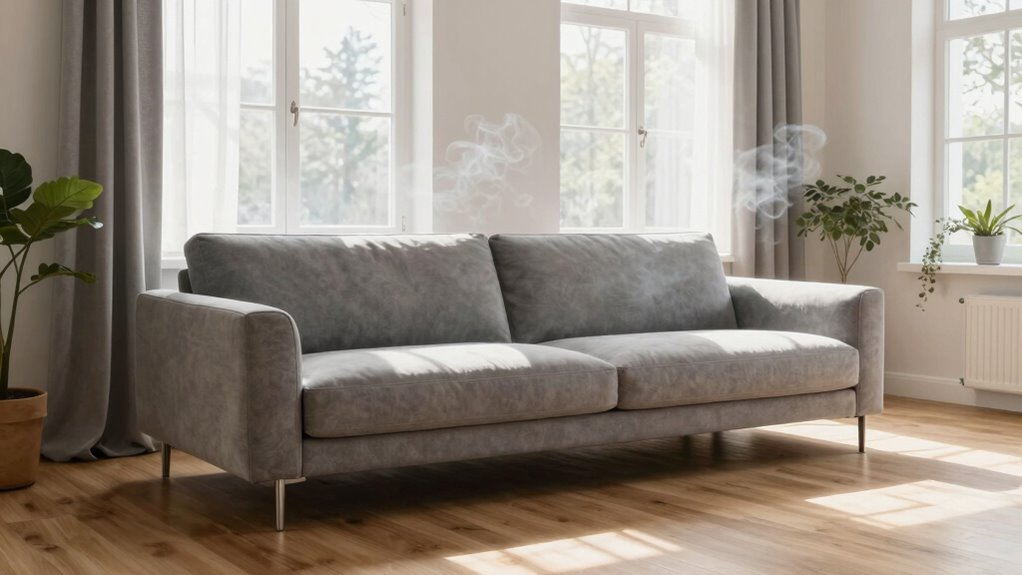

When you buy new furniture, that distinct smell comes from off-gassing, where volatile organic compounds (VOCs) evaporate from materials like adhesives and finishes. This smell usually lasts from several days to weeks. To reduce off-gassing, guarantee proper ventilation, choose low-VOC products, and consider adding air purifiers or indoor plants. If odors linger or seem unusual, it might be time to consult professionals. Keep exploring to find more tips for a healthier home environment.

Get health and wellness essentials delivered free — and shop member deals
- Fast, free delivery on millions of items
- Access to Prime Big Deal Days deals on October 6–7
- Prime Video, Amazon Music and more included
Key Takeaways
- Off-gassing is a natural process where volatile compounds from new furniture materials evaporate, often causing a temporary odor.
- The duration of new furniture smells can vary, lasting from a few days to several weeks depending on materials used.
- Proper ventilation and airflow through windows and fans can significantly reduce indoor odors and improve air quality.
- Choosing low-VOC and eco-friendly furniture options helps minimize harmful emissions and supports a healthier indoor environment.
- If odors persist beyond typical durations or are unusually strong, consider consulting professionals for assessment and solutions.
Understanding Off-Gassing: What It Is and Why It Happens

When you bring home new furniture, you might notice an unfamiliar smell wafting through your space, and that’s a result of off-gassing. This phenomenon occurs when volatile compounds from the materials used in your furniture evaporate into the air. These compounds can come from adhesives, finishes, and fabrics, undergoing chemical reactions that release fumes. The intensity of the smell often fades over time as the volatile compounds dissipate. While off-gassing is usually temporary, it’s important to be aware of it, especially if you’re sensitive to chemicals. Proper ventilation can help reduce the concentration of these compounds in your home, ensuring a healthier environment while you enjoy your new furniture without worry. Additionally, understanding the chemical reactions involved in off-gassing can provide insight into the materials used in your furniture. Furthermore, opting for sustainable solutions like eco-friendly furniture can minimize the impact of off-gassing in your living space. Incorporating proper ventilation considerations in your home can significantly enhance air quality and further alleviate any concerns related to off-gassing. Many modern furniture manufacturers are now focused on low-VOC materials, which can help minimize off-gassing and create a safer indoor atmosphere.
Common Sources of Off-Gassing in Furniture
When you bring home new furniture, you might not realize that it’s emitting chemicals from various materials. Adhesives and finishes can release harmful compounds, while foam and upholstery may also contribute to off-gassing. Understanding these common sources can help you make informed choices about your furniture. Additionally, choosing furniture with sustainable materials can significantly reduce your exposure to these harmful emissions. Incorporating furniture made from natural fibers can further minimize harmful off-gassing. Ensuring proper airflow around the unit where the furniture is placed can also help minimize the concentration of harmful chemicals in your home. Furthermore, opting for furniture with a low contrast ratio can improve the overall comfort and aesthetic of your living space. A good air purifier can effectively remove indoor pollutants caused by off-gassing, contributing to a healthier indoor environment.
Chemical Emissions From Materials
Many people don’t realize that their new furniture can release harmful chemicals into the air, known as off-gassing. Common materials used in furniture, like particleboard, foam, and certain fabrics, can emit volatile organic compounds (VOCs). These emissions can affect your indoor air quality and overall health. To guarantee chemical safety, it’s important to check material labeling before making a purchase. Look for furniture made from low-emission materials or those certified by organizations like GREENGUARD. Choosing pieces with minimal synthetic additives can help reduce your exposure to harmful chemicals. Additionally, a whole-house water filtration system can improve the overall safety and quality of your home environment by ensuring that water contaminants are eliminated. Selecting furniture with a proper transfer switch can also enhance your home’s safety and reduce potential hazards. Furthermore, many manufacturers now produce energy-efficient models that minimize chemical emissions during the furniture’s lifecycle. Additionally, investing in products designed with reliable ride-tech setups can further ensure a healthier indoor environment. By being mindful of the materials in your furniture, you can enjoy your new pieces without worrying about unwanted emissions. Regular maintenance of your home’s air quality using seasonal checklists can also play a crucial role in reducing the effects of off-gassing.
Adhesives and Finishes Impact
Although you might not think about it, adhesives and finishes play a significant role in the off-gassing of new furniture. The types of adhesives used—like polyurethane, PVA, or epoxy—can release volatile organic compounds (VOCs) into your space. Similarly, the finish formulations, whether oil-based or water-based, also contribute to this phenomenon.
Consider these common sources of off-gassing:
- Wood glues: They can emit strong chemical odors.
- Varnishes and lacquers: These finishes often contain solvents that release harmful fumes.
- Paints: Even a fresh coat can produce lingering VOCs.
Being aware of these factors can help you choose furniture that minimizes off-gassing and promotes a healthier home environment.
Foam and Upholstery Concerns
While you might appreciate the comfort of foam and upholstery in your new furniture, it’s important to recognize that these materials can also contribute to off-gassing. Foam, especially memory foam, often contains chemicals that release volatile organic compounds (VOCs). Additionally, upholstery fabrics may hold onto these substances, affecting indoor air quality. The use of luxurious fabrics in haute couture may also involve similar concerns regarding chemical treatments.
Here’s a quick overview of common foam and upholstery concerns:
| Material Type | Off-Gassing Potential | Tips for Fabric Durability |
|---|---|---|
| Memory Foam | High | Regular ventilation |
| Synthetic Fabrics | Moderate | Use upholstery cleaning |
| Natural Fibers | Low | Choose treated fabrics |
Understanding these concerns helps you make informed choices while ensuring your furniture remains comfortable and durable. Additionally, it can be beneficial to consider the impact of VOCs on your health and indoor air quality when selecting new furniture.
Health Concerns Associated With VOCS

When you bring new furniture into your home, you might not realize that it can release volatile organic compounds (VOCs), which pose various health risks. These chemical exposures can impact your air quality and lead to several health concerns, especially in poorly ventilated spaces. Additionally, using proper tool maintenance techniques can help you keep your home environment healthier. Regularly monitoring air quality can also help you identify potential VOC sources.
You may experience symptoms such as:
- Headaches that linger and distract you
- Nausea that makes it hard to enjoy your space
- Respiratory issues that flare up unexpectedly
Being aware of VOCs helps you take proactive steps to improve your environment. Ventilating your home and choosing low-VOC furniture can make a significant difference in your comfort and well-being, allowing you to enjoy your new purchases without worry. Additionally, understanding better indoor air practices can further enhance the quality of your living space. It’s also helpful to consider space-saving techniques that can reduce clutter and improve air circulation in your home.
How Long Does the New Furniture Smell Last?

New furniture often comes with a distinct smell that can linger in your home. Typically, you might notice this scent for a few days to several weeks, depending on the materials used and the furniture’s durability. High-quality pieces often off-gas less, aligning with current interior design trends that favor sustainable choices. Understanding pool water chemistry can also help you grasp the importance of maintaining a healthy indoor environment. Additionally, the use of fresh ingredients in furniture production can influence the level of off-gassing. It’s important to remember that user privacy is vital when considering the overall healthiness of your home environment.
Here’s a quick overview of how long different types of furniture might smell:
| Furniture Type | Smell Duration | Durability Level |
|---|---|---|
| Solid Wood | 1-3 weeks | High |
| Particle Board | 2-4 weeks | Medium |
| Upholstered Items | 1-6 weeks | Variable |
Tips for Reducing Off-Gassing in Your Home

To minimize off-gassing in your home, start by ensuring proper ventilation. Open windows and doors to let fresh air circulate, helping to disperse those chemical odors. You can also enhance air quality with a few simple strategies:
- Add indoor plants like peace lilies or spider plants, which naturally filter toxins from the air.
- Invest in air purifiers equipped with HEPA filters to trap harmful particles and improve overall air quality.
- Limit heat exposure by avoiding direct sunlight on new furniture, as heat can increase the release of volatile organic compounds (VOCs).
Choosing Low-VOC and Non-Toxic Furniture Options

Finding furniture that minimizes off-gassing is key to maintaining a healthy indoor environment. Look for options made from eco-friendly materials like bamboo, solid wood, or recycled metal. These materials typically emit fewer volatile organic compounds (VOCs).
Check for certification labels such as GREENGUARD or FSC to guarantee your furniture meets safety standards. These labels indicate that the products have been tested for harmful emissions and sourced sustainably.
| Eco-Friendly Materials | Certification Labels |
|---|---|
| Bamboo | GREENGUARD |
| Solid Wood | FSC |
| Recycled Metal | Cradle to Cradle |
The Role of Ventilation in Mitigating Odors

While it’s important to choose low-VOC furniture, proper ventilation plays a crucial role in reducing any lingering odors. Good air exchange helps improve indoor air quality, flushing out those persistent smells. You can enhance ventilation in your space by:
- Opening windows to let fresh air circulate
- Using fans to boost airflow and disperse odors
- Installing air purifiers to filter out harmful particles
These methods not only help with off-gassing but also create a more pleasant living environment. By ensuring adequate ventilation, you’ll allow your new furniture’s scent to dissipate more quickly, making it easier for you to enjoy your space without overwhelming odors. Don’t underestimate the power of fresh air in making your home feel welcoming and comfortable.
When to Seek Professional Help for Persistent Odors

Even with proper ventilation, some odors may linger longer than expected, signaling that it might be time to seek professional help. If you notice persistent smells affecting your indoor air quality, especially after several weeks, don’t hesitate to act. Consider whether these odors might be linked to the materials used in your new furniture, as some pieces may off-gas for longer periods. If you’re unsure, check your furniture warranties; they often provide guidance on what to do in these situations. Professionals can assess the source of the odor and recommend solutions to improve your indoor environment. Remember, addressing these issues sooner rather than later can help maintain a healthy space for you and your family.
Frequently Asked Questions
Can Off-Gassing Occur in Older Furniture as Well?
Yes, off-gassing can occur in aging furniture too. As furniture ages, it can still release chemical emissions from materials like wood, foam, and adhesives used in its construction. Over time, these materials may break down or react with environmental factors, leading to a release of VOCs (volatile organic compounds). If you’re concerned about older pieces, guarantee good ventilation and consider using air purifiers to minimize any potential effects from these emissions.
Are There Any Benefits to Off-Gassing in New Furniture?
Yes, there are benefits to off-gassing in new furniture. While the initial smell might seem off-putting, it often indicates the release of chemicals that can actually improve indoor air quality over time. As volatile organic compounds dissipate, they can reduce potential toxins lingering in your space. By allowing these emissions to occur, you’re promoting a healthier environment, ensuring your home feels fresher and safer for you and your loved ones.
How Can I Tell if Furniture Is Off-Gassing?
You can tell if furniture is off-gassing by noticing any strong chemical odors. These emissions can affect your indoor air quality, so pay attention to your environment. If you smell something unusual, it might indicate off-gassing. Additionally, observe any changes in your health, like headaches or respiratory issues, after bringing new furniture home. Keeping the area well-ventilated can help minimize these effects while allowing you to enjoy your new furniture.
Does Humidity Affect the Rate of Off-Gassing?
Yes, humidity does influence the gas emission rate from furniture. Higher humidity levels can accelerate off-gassing because moisture in the air can help release trapped volatile organic compounds (VOCs). When you’re in a humid environment, you might notice stronger odors from new furniture as a result. To minimize off-gassing, try to keep your indoor humidity levels in check by using dehumidifiers or ensuring proper ventilation in your space.
Are Pets Affected by Off-Gassing From Furniture?
Yes, your pets can be affected by off-gassing from furniture. Just like you, they have sensitive noses that can detect odors. While most new furniture odors won’t harm your furry friends, some chemicals might irritate their respiratory systems. To guarantee pet safety, keep your pets away from new furniture during the off-gassing period. Ventilate your space well to minimize any potential risks and watch for any unusual behavior in your pets.
Conclusion
In the dance of new furniture and fresh beginnings, it’s easy to feel overwhelmed by that new smell. But remember, off-gassing is just a momentary guest, not a permanent resident. By choosing low-VOC options and ensuring good ventilation, you can create a harmonious space without the worry. So, breathe easy and let your home reflect your style, free from the shadows of off-gassing. After all, every new chapter deserves a fresh, clean start.
Evergreen bestsellers Picks
bestsellers
As an affiliate, we earn on qualifying purchases.