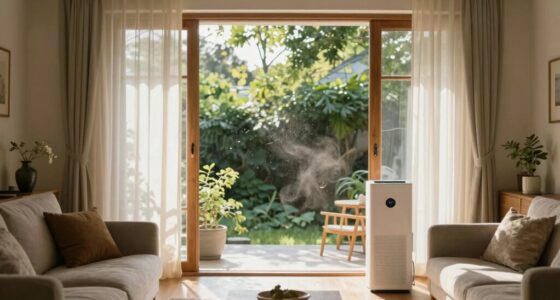
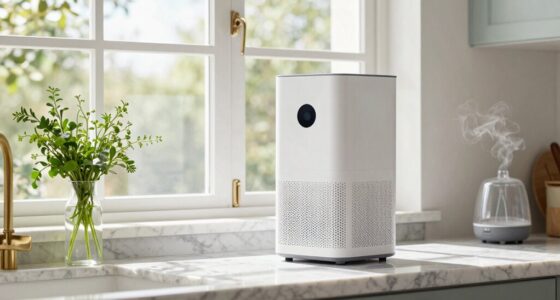
Air Changes Per Hour (ACH) measures how often the total air volume in a space gets replaced each hour. A higher ACH means better air quality and filtration, which is essential for your health. For example, an ACH of 6 indicates air is replaced six times in an hour, reducing pollutants and odors. Knowing about ACH helps you create a fresher indoor environment and manage your air quality more effectively. You’ll find more insights on optimizing ACH for your spaces ahead.
Key Takeaways
- Air Changes Per Hour (ACH) measures how often the air volume in a space is completely replaced in one hour.
- Higher ACH values indicate improved air quality and more effective ventilation, reducing pollutants and allergens.
- ACH is calculated using the formula: ACH = (CFM × 60) ÷ room volume in cubic feet.
- Different environments have varying ACH requirements; for example, kitchens need 15-30 ACH while bedrooms need 0.35-1.0 ACH.
- Proper ventilation and system maintenance are crucial to achieving optimal ACH and ensuring clean indoor air quality.

LEVOIT Air Purifiers for Home Large Room Up to 1875 Ft² with Washable Pre-Filter, AHAM VERIFIDE, Air Quality Monitor, HEPA Sleep Mode for Allergies, Pet Hair in Bedroom, Vital 200S-P, White
𝐖𝐇𝐘 𝐂𝐇𝐎𝐎𝐒𝐄 𝐀𝐇𝐀𝐌 𝐕𝐄𝐑𝐈𝐅𝐈𝐃𝐄 𝐏𝐑𝐎𝐃𝐔𝐂𝐓𝐒: AHAM (Association of Home Appliance Manufacturers) is an ANSI-accredited organization that sets strict...
As an affiliate, we earn on qualifying purchases.
Defining Air Changes Per Hour (ACH)

Have you ever wondered how often the air in a room is completely replaced? This concept is known as Air Changes Per Hour (ACH). It measures how many times the entire volume of air in a space is replaced within an hour. A higher ACH means better air filtration and overall indoor air quality. For example, a room with an ACH of 6 means the air is replaced six times per hour, enhancing HVAC efficiency. If your system isn’t running efficiently, you might not achieve ideal ACH levels, leading to stale air and potential health issues. Understanding ACH helps you create a healthier environment, ensuring you breathe cleaner, fresher air in your home or workspace. Additionally, employing data-driven decisions can optimize your HVAC system for improved air quality. A well-maintained air purifier can significantly improve your indoor air quality, enhancing the effectiveness of your ACH. To further enhance your indoor air quality, consider using truck bed accessories that can provide extra ventilation during outdoor activities. Moreover, integrating smart appliances can help monitor and adjust your ACH automatically. Maintaining a proper ACH can significantly contribute to overall indoor air quality and comfort in your living spaces.

Aprilaire V22BEC Energy Recovery Ventilator (ERV), 120 CFM Air Exchanger for Homes up to 6,000 Sq. Ft. – Whole-House Fresh Air Ventilation System (HRV/ERV) with Wall, Ceiling, or Floor Mount Bracket
HEALTHY INDOOR AIR – Replaces stale indoor air with fresh outdoor air to improve Indoor Air Quality throughout...
As an affiliate, we earn on qualifying purchases.
The Importance of ACH in Indoor Air Quality

Why is ACH so vital for your indoor air quality? It directly impacts how effectively your space can maintain clean, fresh air. A higher ACH rate means more frequent air exchanges, which enhances air purification and reduces the buildup of harmful pollutants. When air changes occur regularly, you’re also promoting odor control, preventing stale smells from lingering in your environment. This is especially crucial in spaces like kitchens and bathrooms, where odors can accumulate quickly. Maintaining a proper ACH not only improves comfort but also safeguards your health by minimizing airborne allergens and toxins. Moreover, understanding indoor air quality can help you identify sources of pollutants and take effective measures to mitigate them. Additionally, optimizing heat distribution within your space can further enhance air circulation and quality. Furthermore, regular monitoring of bioluminescent organisms can provide insights into the health of your indoor ecosystem. Ultimately, understanding and optimizing ACH levels is a key step toward achieving a healthier indoor atmosphere. Higher contrast ratios can also contribute to a more visually pleasing environment. Don’t underestimate its importance for your well-being! Additionally, investing in premium, thoughtfully curated essentials can further enhance your indoor environment by ensuring you have the right tools for improved air quality.

Coway Airmega AP-1512HH(W) True HEPA Purifier with Air Quality Monitoring, Auto, Timer, Filter Indicator, and Eco Mode, 16.8 x 18.3 x 9.7, White
Coway Mighty (AP-1512HH) is designed to accommodate room sizes up to 361 sq. ft (CADR: Dust 246 /...
As an affiliate, we earn on qualifying purchases.
How ACH Is Calculated
Understanding how ACH is calculated is essential for ensuring your indoor environment remains healthy. To determine your room’s ACH, you first need to know the room’s volume in cubic feet. Next, measure the airflow rate of your air filtration system in cubic feet per minute (CFM). You can calculate ACH using the formula: ACH = (CFM × 60) ÷ room volume. This formula gives you the number of times the air in your room is replaced in an hour. Additionally, humidity control plays a role in effective air changes, as high humidity can reduce air quality and filtration efficiency. By keeping these factors in mind, you can better manage your indoor air environment for ideal health. Understanding temperature control can also be beneficial, as it affects air circulation and overall air quality. Furthermore, Kesha Norman’s wedding showcased the importance of personal touches, which can enhance the atmosphere of any event, similar to how proper air management enhances indoor environments. Choosing energy-efficient cloud servers can help reduce the overall carbon footprint of your indoor air systems by promoting sustainable practices. Additionally, maintaining optimal airflow in your living spaces can significantly improve both air quality and comfort. Incorporating essential oils like eucalyptus oil can also contribute to a fresher indoor environment by providing natural decongestant effects.

VENTS-US Frigate HRV 120s Heat Recovery Ventilator – Whole House Ventilation Fan with Up to 118 CFM and Freeze Protection
HVI Certified Whole-House Air Exchange: A complete system that ensures continuous, balanced fresh air supply and stale air...
As an affiliate, we earn on qualifying purchases.
Recommended ACH Levels for Different Spaces
Now that you understand how ACH is calculated, it’s important to know the recommended levels for different spaces. Residential areas typically require fewer air changes per hour compared to commercial spaces, which often have higher traffic and activity. For instance, Gold IRAs can benefit from proper ventilation and air quality to ensure a secure storage environment for precious metals. Maintaining good indoor air quality is essential for overall health and comfort, and this is particularly crucial in densely populated areas where Bollywood films often depict vibrant lifestyles. Additionally, ensuring proper ventilation can help prevent excessive sun exposure and its harmful effects on skin health. Let’s explore the specific guidelines for each type of environment to guarantee the best air quality. Maintaining appropriate seasonal checklists for air quality can also help ensure that your spaces remain comfortable and efficient year-round.
Residential Spaces Guidelines
When you consider the air quality in your home, it’s essential to know the recommended air changes per hour (ACH) for different spaces. For living areas, aim for 0.35 to 1.0 ACH, ensuring your ventilation efficiency keeps pollutants at bay. Bedrooms benefit from 0.35 to 1.0 ACH to promote restful sleep and fresh air circulation. Kitchens, where cooking can introduce odors and contaminants, should have 15 to 30 ACH, especially during meal preparation, and whole-house filtration systems can further improve air quality by reducing indoor pollutants. Implementing smart appliances can also assist in monitoring and optimizing air quality effectively. Bathrooms require 8 to 10 ACH to quickly remove humidity and prevent mold growth. By understanding these guidelines, you can optimize your home’s air quality and create a healthier environment for you and your family. Remember, proper ventilation is key to maintaining comfort and well-being. Additionally, selecting the right performance upgrades for your ventilation system can enhance its efficiency and effectiveness.
Commercial Spaces Standards
How do air changes per hour (ACH) impact the comfort and health of commercial spaces? The right ACH levels greatly enhance air quality and ventilation efficiency, guaranteeing a healthier environment for occupants. Here are recommended ACH levels for different commercial spaces:
- Office Spaces: Aim for 4-6 ACH to maintain ideal air quality and comfort.
- Retail Stores: Target 6-10 ACH, especially during peak hours, to accommodate higher foot traffic.
- Restaurants: Work toward 15-20 ACH to effectively manage odors and maintain a pleasant atmosphere.
- Gyms and Fitness Centers: Guarantee 20-30 ACH for proper air circulation and to mitigate humidity and airborne contaminants.
Factors Influencing ACH
When considering air changes per hour (ACH), two key factors come into play: ventilation system design and room volume calculation. Your system’s design directly affects how efficiently air circulates, while accurately calculating the room’s volume guarantees you’re meeting the necessary ACH levels. Let’s explore how these factors impact your indoor air quality.
Ventilation System Design
Effective ventilation system design hinges on several key factors that influence air changes per hour (ACH). By understanding these elements, you can optimize airflow dynamics and enhance air purification in your space. Here are four critical factors:
- Room Size: Larger spaces require increased ACH for effective air exchange.
- Occupancy Levels: More occupants generate more pollutants, necessitating higher ACH.
- Airflow Patterns: Efficient layouts promote better circulation and reduce stagnant zones.
- Filter Efficiency: High-quality filters improve air purification, impacting overall ACH rates.
Room Volume Calculation
What factors should you consider when calculating room volume for ideal air changes per hour (ACH)? First, determine the room’s dimensions—length, width, and height. Multiply these measurements to find the total volume. Next, think about the intended use of the space. Different activities may require varying ventilation rates to ensure proper air exchange. For instance, a kitchen will need higher ACH than a bedroom. Consider the number of occupants as well; more people generally mean more air is needed to maintain comfort and safety. Finally, take into account any existing ventilation systems and their efficiency. By evaluating these factors, you’ll better understand how to achieve the necessary ACH for your specific environment.
Ventilation Systems and Their Impact on ACH
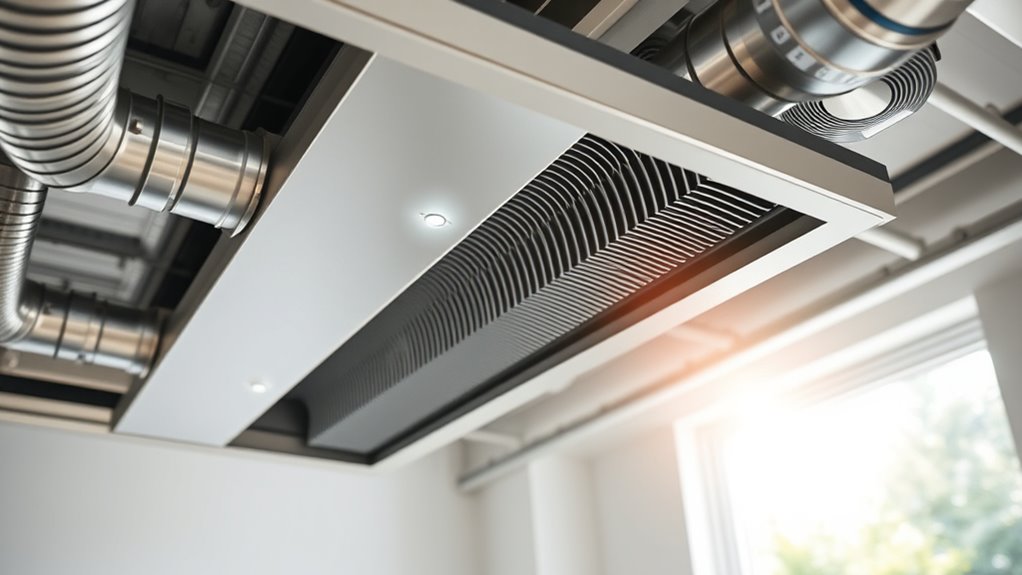
While many people overlook the importance of ventilation systems, they play a crucial role in determining air changes per hour (ACH) within a space. Effective ventilation improves indoor air quality by facilitating air filtration and odor control, making your environment healthier and more comfortable.
Here are four key factors that impact ACH:
- Type of Ventilation: Natural, mechanical, or hybrid systems each affect air exchange rates differently.
- System Design: Properly designed systems optimize airflow to enhance ACH.
- Air Filtration Quality: High-quality filters capture pollutants, improving air freshness and reducing odors.
- Maintenance Frequency: Regular upkeep ensures systems operate efficiently, maximizing ACH and air quality.
Improving ACH in Your Home or Workplace

To improve air changes per hour (ACH) in your home or workplace, implementing a few strategic measures is essential. Start by enhancing your air filtration system. High-quality HEPA filters can capture smaller particles, markedly increasing air quality. Next, consider investing in an air purification unit. These devices help remove contaminants and allergens, further boosting ACH.
You should also guarantee proper ventilation; open windows when weather permits to allow fresh air in. If your space has exhaust fans, use them effectively, especially in kitchens and bathrooms, to expel stale air. Finally, maintain your HVAC system regularly to maximize performance. By focusing on these areas, you’ll create a healthier environment with improved ACH, benefiting everyone inside.
Common Misconceptions About ACH
Many people misunderstand air changes per hour (ACH), leading to confusion about its importance and how it works. Here are some common misconceptions:
- Higher ACH is always better – While more air changes can improve air quality, too many can waste energy and disturb temperature balance.
- ACH measures air purification – ACH only indicates how often air is replaced, not the effectiveness of purification systems.
- All spaces need the same ACH – Different environments, like homes and hospitals, have unique requirements based on usage.
- ACH guarantees clean air – Even with high ACH, pollutants can linger unless effective air purification systems are in place.
Understanding these misconceptions can help you make informed decisions about your indoor air quality.
The Future of Indoor Air Quality and ACH

As we move into a future increasingly focused on health and sustainability, understanding the role of air changes per hour (ACH) becomes essential for maintaining ideal indoor air quality. You’ll find that advancements in technology and design are enhancing ventilation efficiency, allowing for lower energy consumption while improving air quality. Incorporating smart systems that monitor pollutants and adjust ACH in real-time can guarantee a healthier environment. As regulations evolve, you may need to adapt your spaces to meet new standards. Embracing these changes not only protects your health but also contributes to a more sustainable future. By prioritizing ACH and effective ventilation, you’re investing in both your well-being and the planet’s health.
Frequently Asked Questions
How Does ACH Affect Energy Consumption in Buildings?
ACH considerably impacts energy consumption in buildings. Higher air change rates often mean increased ventilation standards, which can lead to higher energy use for heating or cooling. If you focus on energy efficiency, you can find a balance between adequate ventilation and lower energy costs. By optimizing ACH, you’ll guarantee your building maintains good air quality without unnecessarily straining your HVAC system, ultimately reducing your energy bill while meeting necessary standards.
Can ACH Levels Impact Allergies or Asthma Symptoms?
When it comes to managing allergies and asthma, you can’t afford to ignore air quality. Higher ACH levels can profoundly improve air circulation, reducing allergens like dust and pollen in your space. By ensuring better ventilation, you’re not just preventing allergies; you’re also creating a healthier environment for yourself. So, if you want to breathe easier and keep those symptoms at bay, think about increasing your air changes per hour.
What Tools Measure ACH in Indoor Environments?
To measure ACH in indoor environments, you can use tools like an anemometer, which assesses airflow, or a CO2 monitor for air exchange rates. These devices help you evaluate ventilation standards by determining how much air is being exchanged in a given time. You might also consider using a flow hood for more precise measurements. By keeping track of these factors, you can guarantee your indoor air quality meets health and comfort needs.
Are There Specific ACH Requirements for Healthcare Facilities?
Yes, there are specific ACH requirements for healthcare facilities. You’ll find that ventilation standards often dictate higher air exchange rates to guarantee patient safety and comfort. For example, operating rooms typically require 15 to 20 ACH, while isolation rooms need at least 12. These standards help minimize airborne contaminants and maintain a healthy environment. So, when designing or evaluating a healthcare space, be certain to follow these essential ventilation guidelines.
How Does Outdoor Air Quality Influence Indoor ACH?
Imagine your indoor air as a delicate dance, swaying to the rhythm of outdoor air quality. When outdoor air’s fresh and clean, your ventilation standards can effectively enhance indoor ACH, promoting pollutant removal. However, if outdoor air is laden with toxins, it can stifle that dance, causing indoor air to stagnate. So, maintaining good outdoor air quality is essential for ensuring your indoor environment stays vibrant and healthy.
Conclusion
In the dance of air within your space, understanding air changes per hour (ACH) is key to a revitalizing, healthy environment. Just like a gentle breeze rustles leaves, the right ACH keeps indoor air clean and inviting. As you navigate rooms filled with laughter or quiet moments, remember that improving ACH can transform your experience. With the right knowledge and tools, you can create an oasis of comfort, where every breath feels like a breath of fresh air.