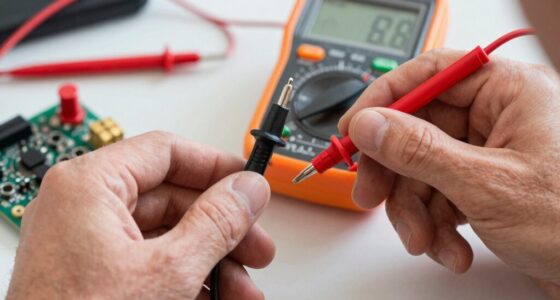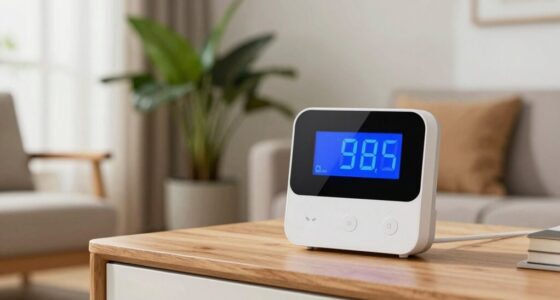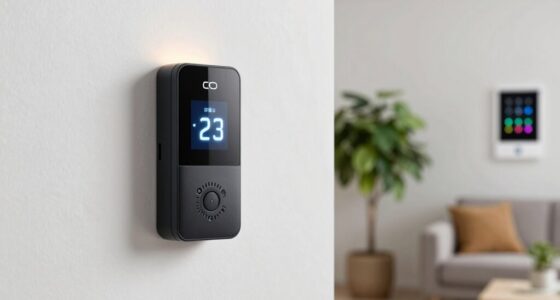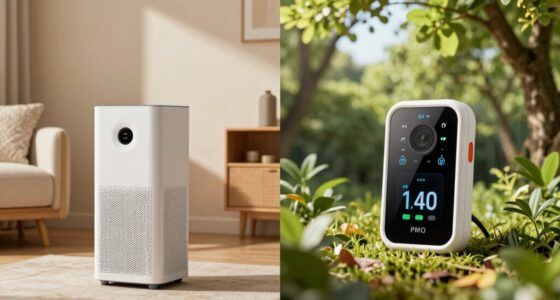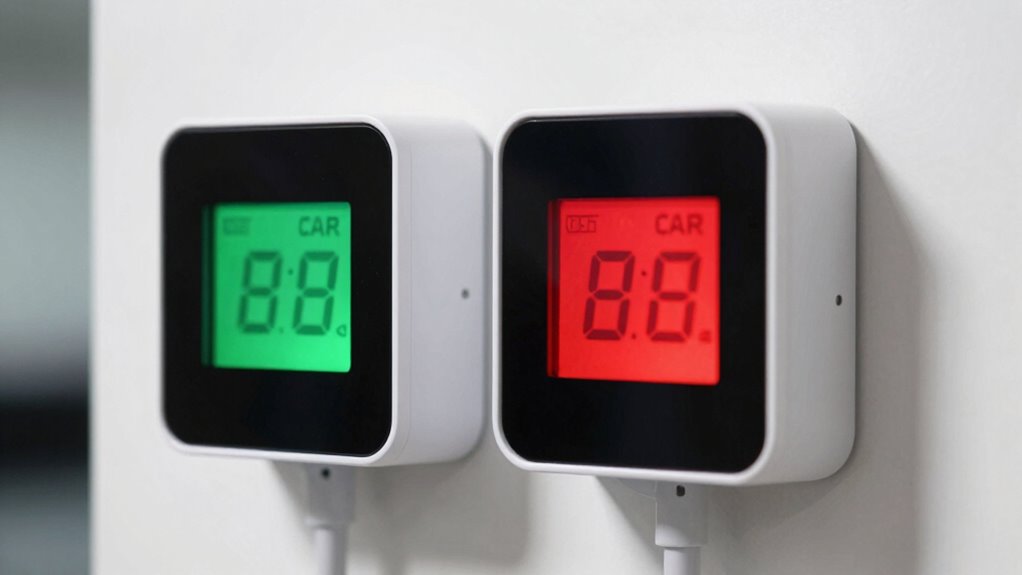
Air monitors often disagree because they use different sensors with varying quality and sensitivity. Calibration issues, sensor drift, and external factors like temperature and humidity also cause fluctuations in readings. Cheaper devices may not detect pollutants as accurately as professional monitors, and placement near pollution sources can skew results. Environmental conditions and maintenance play a role too. If you keep exploring, you’ll discover how to interpret these differences and make smarter choices.
Key Takeaways
- Variations in sensor quality and sensitivity lead to differing pollutant detection accuracy among devices.
- External environmental factors like temperature and humidity influence sensor performance and readings.
- Calibration inconsistencies and sensor drift cause discrepancies over time across different monitors.
- Placement near pollution sources or cleaner areas affects measured pollutant levels, causing variability.
- Maintenance frequency and device type impact data reliability and the likelihood of conflicting readings.
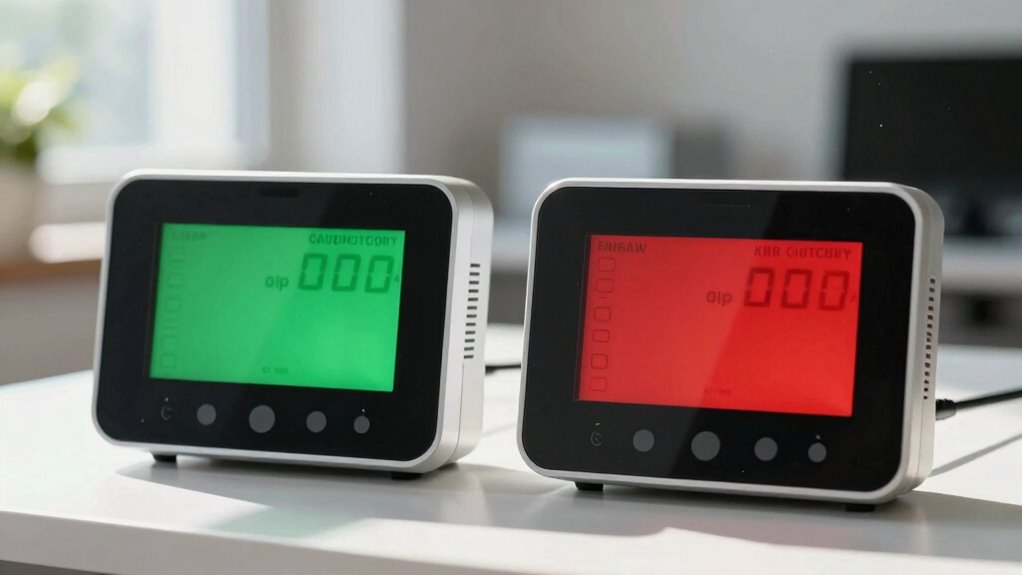
Have you ever wondered why different air monitors often give conflicting readings? It’s a common question, especially when you’re trying to gauge the quality of the air around you. The truth is, there are several reasons behind these discrepancies, and understanding them can help you interpret the data more accurately. One key factor is sensor calibration. Air monitors rely on sensors to detect pollutants and particles, but these sensors need to be calibrated regularly to maintain their accuracy. If one monitor’s sensor isn’t properly calibrated, it might report higher or lower readings than it should, leading you to believe the air quality is worse or better than it really is. This calibration process ensures that the device’s data accurately reflects the true concentrations of pollutants, which is essential for making informed decisions about your environment. Additionally, sensor quality can vary significantly between different devices, further contributing to inconsistent readings. Variations in sensor quality can also impact how well the device detects specific pollutants, adding to the overall discrepancies. External factors can also cause sensor drift, which impacts calibration and overall accuracy if not regularly checked. Another critical aspect influencing differing readings is data accuracy. Not all air monitors are created equal; some are designed for professional use with highly precise sensors, while others are consumer-grade devices that prioritize convenience over exactness. The quality of the sensors directly impacts data accuracy. Cheaper monitors might use less sensitive sensors or simpler detection methods, which can lead to inconsistent or less reliable readings. This variability makes it challenging to compare data across different devices or to determine the real state of air quality based on a single monitor. Moreover, sensor sensitivity can vary depending on the pollutant type, further complicating data interpretation. Environmental factors also play a significant role. Temperature, humidity, and even the presence of other chemicals in the air can affect how sensors perform. Some sensors might be more sensitive to these conditions than others, which can cause fluctuations in readings. For instance, high humidity might interfere with a sensor’s ability to detect certain pollutants accurately, leading to discrepancies between monitors placed in the same space. Additionally, the placement of the monitors influences the readings; a device near a pollution source will naturally show different results than one placed in a cleaner area. External conditions can also cause sensor drift over time, which impacts sensor calibration and overall accuracy if not regularly checked. Recognizing these factors and the importance of sensor maintenance helps you understand that no single device provides a perfect snapshot of air quality. Instead, it’s wise to take multiple readings, verify your monitors are properly calibrated, and understand their limitations. By doing so, you can better interpret the data and make smarter decisions about your environment.

BREATHE Airmonitor Plus: Smart Air Quality Monitor Indoor – 8-in-1 CO2 Meter, Formaldehyde Detector, VOC Meter, PM1/2.5/10, Temperature & Humidity – Air Quality Tester for Home with App
PROFESSIONAL INDOOR AIR QUALITY MONITORING: Accurately track CO₂, PM1, PM2.5, PM10, TVOC, Formaldehyde (HCHO), Temperature and Humidity in…
As an affiliate, we earn on qualifying purchases.
As an affiliate, we earn on qualifying purchases.
Frequently Asked Questions
Can Calibration Improve Agreement Between Different Air Monitors?
Calibration can improve agreement between different air monitors by enhancing calibration consistency and adjusting for sensor sensitivity differences. When you calibrate monitors regularly, you guarantee their readings align more accurately, reducing discrepancies. Proper calibration accounts for sensor drift and variability, making measurements more reliable across devices. As a result, you’ll notice better consistency in air quality data, helping you make informed decisions based on more precise, comparable monitor readings.
Do Environmental Factors Affect Air Monitor Readings Differently?
Environmental factors subtly influence your air monitor readings, especially indoor airflow and ambient humidity. Changes in airflow can lead to uneven distribution of particles, while humidity levels may affect sensor sensitivity. You might notice discrepancies between monitors in different spots or conditions. Understanding these influences helps you interpret data more accurately, recognizing that environmental nuances can cause slight variations, emphasizing the importance of consistent placement and calibration for reliable readings.
How Do Different Sensor Technologies Influence Measurement Discrepancies?
Different sensor technologies influence measurement discrepancies through variations in sensor sensitivity and data filtering. You’ll find that some sensors are more sensitive to certain pollutants, causing inconsistent readings. Data filtering techniques also differ, affecting how noise and outliers are handled. These factors combined lead to differences in accuracy and reliability among air monitors, making it essential to understand each technology’s strengths and limitations when comparing their measurements.
Are Some Air Monitors More Reliable Than Others?
Some air monitors are more reliable than others, but it’s not always obvious at first glance. You need to take into account factors like sensor lifespan, which affects how long a monitor provides accurate readings, and data synchronization, ensuring all devices report consistently. A trustworthy monitor maintains calibration over time and keeps data aligned. So, while some may seem dependable initially, only those with durable sensors and proper sync can truly be trusted.
Can User Error Cause Disagreements Between Air Monitors?
Yes, user error can cause disagreements between air monitors. If you don’t have proper user training or if you place devices incorrectly, readings can vary markedly. For example, placing monitors in areas with drafts or direct sunlight skews results. Ensuring proper placement and understanding device operation helps improve accuracy, reducing discrepancies. Proper training is essential for consistent readings and reliable air quality assessments.

Amazon Smart Air Quality Monitor – Know your air, Works with Alexa
Know your air – Amazon Smart Air Quality Monitor makes it easy to understand what’s in your indoor…
As an affiliate, we earn on qualifying purchases.
As an affiliate, we earn on qualifying purchases.
Conclusion
Imagine trying to tune two radios to the same station, but each picks up a different signal. That’s what happens when air monitors disagree—they’re like radios with different antennas. Small calibration differences or sensor limitations can cause conflicting readings. Just like you’d trust a radio that clearly signals your favorite song, you need to understand each monitor’s quirks. Recognizing these differences helps you interpret air quality data more accurately, keeping you safer in the long run.

16 in 1 Air Quality Monitor Indoor 7" Large Display 9 AQI+7 Alerts, CO2 Monitor Air Quality Tester for CO2, TVOC, PM2.5 PM1.0 PM10, HCHO Temperature Humidity AQI & Time Air Quality Meter for Home
【16-in-1 Air Quality Monitor Indoor】Experience the ultimate indoor air quality monitoring with our 16-in-1 Air Quality Monitor, offering…
As an affiliate, we earn on qualifying purchases.
As an affiliate, we earn on qualifying purchases.

GoveeLife Smart Air Quality Monitor with PM2.5, WiFi, Temperature & Humidity Sensors, LED Display, 2s Refresh, 2-Year Data Storage, for Home & Office Wired
High Accuracy & Fast Refresh Data: With this smart sensor, the PM2.5 accuracy is ±15 µg/m³ while temperature…
As an affiliate, we earn on qualifying purchases.
As an affiliate, we earn on qualifying purchases.