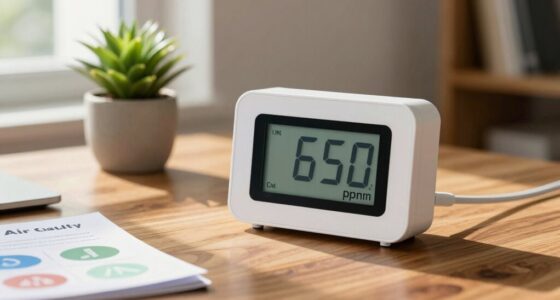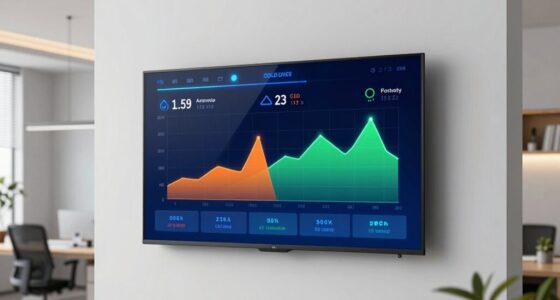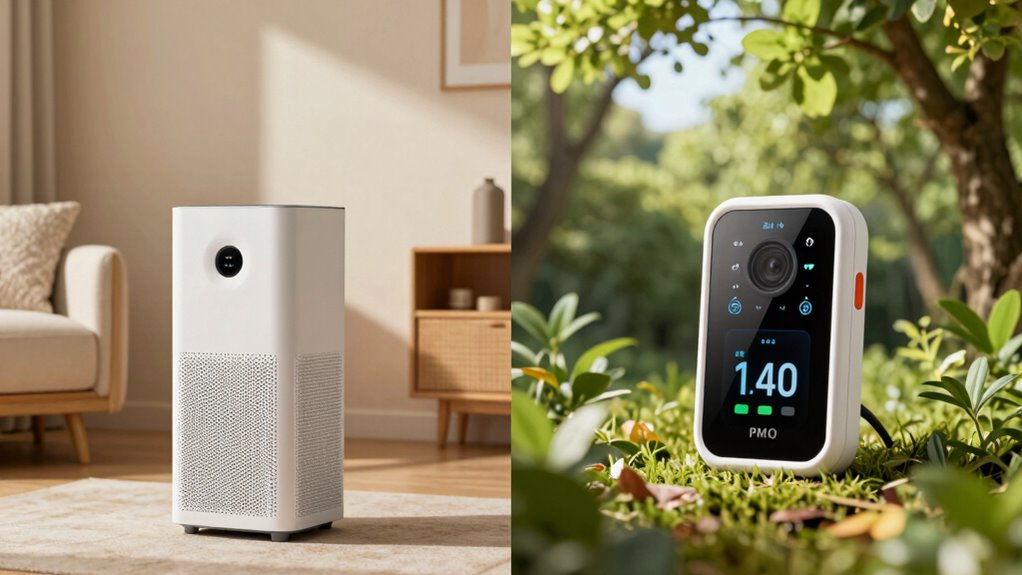

To compare indoor and outdoor PM effectively, consider particle size, sources, and concentration levels. Outdoor PM mainly comes from vehicle emissions, industry, and wildfires, while indoor PM often results from cooking, smoking, and household products. Indoor air can sometimes have higher PM levels due to limited airflow. Understanding these differences helps you manage exposure better—if you want a clearer picture of how they stack up, you’ll find useful details as you explore further.
Key Takeaways
- Compare particle sizes: indoor PM often includes smaller, fine particles from cooking, while outdoor PM varies with industrial and traffic emissions.
- Assess sources: indoor PM mainly originates from household activities; outdoor PM stems from transportation, industry, and natural events.
- Measure concentrations: indoor PM levels can be higher due to limited airflow; outdoor levels fluctuate with environmental conditions.
- Evaluate health risks: both environments contain PM capable of deep lung penetration, but exposure duration and sources differ.
- Use consistent metrics: compare PM mass concentration (e.g., µg/m³) and particle size fractions (PM2.5, PM10) for accurate apples-to-apples analysis.

Air pollution from particulate matter (PM) affects both indoor and outdoor environments, but understanding their differences is essential for protecting your health. When you hear about air quality issues, it’s easy to assume that outdoor pollution is the primary concern, but indoor PM can be just as harmful. Indoor air often contains a mix of particles from cooking, smoking, cleaning products, and even outdoor air that seeps inside. Knowing how indoor and outdoor PM compare helps you make better choices to reduce your exposure and safeguard your well-being.
Indoor PM from cooking, smoking, and household products can be just as harmful as outdoor pollution.
Outdoor PM typically originates from vehicle emissions, industrial processes, wildfires, and natural sources like dust and pollen. These particles can travel long distances, especially fine particles (PM2.5), which are small enough to penetrate deep into your lungs and even enter your bloodstream. Because outdoor pollution is constantly changing based on weather, traffic, and industry activity, it can be difficult to control, but staying informed about local air quality reports helps you plan outdoor activities to minimize exposure. Wearing masks during high pollution days, avoiding strenuous outdoor exercise, and keeping windows closed can reduce the risks associated with outdoor PM.
Indoor PM, on the other hand, has different sources. Cooking, especially frying and grilling, produces a significant amount of fine particles. Burning candles, using fireplaces, or smoking indoors also dramatically increase indoor PM levels. Additionally, certain household products like cleaning sprays, air fresheners, and even some furniture emit tiny particles or volatile compounds that can convert into PM. Indoor particles tend to be more concentrated because of limited airflow, especially in tightly sealed homes, which means you might be exposed to higher levels of PM inside than outside, even when outdoor air quality is good. Using exhaust fans while cooking, opening windows when possible, and regularly cleaning to reduce dust can help lower indoor PM levels.
Comparing indoor and outdoor PM involves understanding the size, composition, and sources of particles in each environment. While outdoor PM often contains pollutants from combustion and industrial activities, indoor PM is more influenced by personal habits and household materials. Both can pose health risks, particularly for children, the elderly, and those with respiratory conditions. To truly compare apples to apples, consider how each environment impacts your specific health situation and take steps to reduce exposure. Using air purifiers, improving ventilation, and staying aware of air quality reports are essential actions. Recognizing that both indoor and outdoor PM contribute to your overall risk allows you to make smarter choices, ensuring you protect yourself regardless of where you are. Additionally, proper filtration systems can significantly reduce indoor PM levels, making your home safer.

GoveeLife Smart Air Quality Monitor CO2 Detector H5140, Display & Alarm
- High-Precision CO2 Sensor: Accurate ±(40ppm + 5%) with quick 5s updates
- Multi-Function Display: Shows CO₂, temperature, humidity, and clock
- Customizable Alerts: Buzzer, app notifications, and email warnings
As an affiliate, we earn on qualifying purchases.
Frequently Asked Questions
How Do Seasonal Changes Affect Indoor and Outdoor PM Levels?
Seasonal changes markedly impact indoor and outdoor PM levels. During winter, indoor PM may rise due to heating sources, while outdoor PM can increase from wood burning or temperature inversions. In summer, outdoor PM often spikes from pollen and pollution, affecting indoor air quality. You should monitor both environments, adjusting ventilation or air purifiers accordingly to manage seasonal fluctuations and maintain healthier air year-round.
What Are the Health Implications of Different PM Sizes Indoors Versus Outdoors?
Imagine tiny messengers delivering health signals; smaller PM particles, like whispers, penetrate deep into your lungs and bloodstream, risking inflammation, asthma, or cardiovascular issues. Larger particles, like distant thunder, settle in your nose or throat, causing irritation or allergies. Indoors, you might face more of the whispering particles from cooking or cleaning, while outdoors, the thunder of traffic and pollution dominates. Both sizes pose health risks, so stay vigilant indoors and out.
How Accurate Are Home Testing Methods for Indoor PM Compared to Outdoor Sensors?
Home testing methods can be fairly accurate for indoor PM, especially when using reliable devices, but they often lack the precision of outdoor sensors. You might notice some variability due to device quality, placement, and calibration. For more accurate readings, verify your device is properly maintained and positioned away from sources of immediate pollution. Keep in mind, outdoor sensors typically offer broader, more consistent data than most home kits.
Can Indoor Air Purifiers Effectively Reduce PM Compared to Outdoor Ventilation?
Sure, indoor air purifiers can do a decent job at reducing PM, but don’t kid yourself—they’re no match for good outdoor ventilation. While purifiers trap particles inside, outdoor airflow constantly refreshes the air, diluting pollutants. So, if you want truly cleaner air, open your windows when possible. Otherwise, your purifier’s just a fancy dust collector, not a miracle worker against outdoor pollution.
How Do Building Materials Influence Indoor PM Concentrations?
Building materials markedly influence indoor PM levels by releasing particles or VOCs that attach to dust and other pollutants. For example, certain paints, carpets, or engineered wood emit volatile compounds and particulate matter, increasing indoor concentrations. You can reduce this impact by choosing low-emission materials, ensuring good ventilation, and regularly cleaning. Being mindful of the materials used in your home helps you control indoor air quality and minimize PM buildup.

ECOWITT WN1821 Weather Station Kit, Includes WN1821 Indoor CO2 Detector Display Console, and Multi-Channel WN31 Thermometer and Hygrometer Sensor, 915 MHz
- Display Type: 4.9-inch LCD screen
- Connectivity: Wi-Fi enabled
- Power Options: DC or battery powered
As an affiliate, we earn on qualifying purchases.
Conclusion
So, whether you’re battling indoor or outdoor PM, the key is understanding the sources and differences. It’s a coincidence how both environments impact your health in similar ways, yet they demand different approaches. Recognize the patterns, stay proactive, and use the right tools to protect yourself. Because in the end, whether inside or outside, your breathing space should always prioritize clean, safe air—no matter where you find yourself.

Smart WiFi Indoor Air Quality Monitor, Remote CO2, Temperature, Humidity, TVOC & Air Pressure Tracking, Power Status Monitoring, 3.7" E-Ink Display with App for Home, Bedroom, Office & School
- Tracks Multiple Indoor Air Parameters: CO2, temperature, humidity, TVOC, air pressure
- Custom Alerts and Notifications: Set thresholds; receive app, email, SMS alerts
- Professional-Grade Sensor Technology: SCD4x sensor with anti-interference tech
As an affiliate, we earn on qualifying purchases.

Ambient Weather AQIN Pro Wireless Indoor Air Quality Particulate Monitor
- Large Display: Real-time air quality data including PM and CO2
- High-Quality Sensor: Measures fine particles and indoor pollution
- Smart Connectivity: Integrates with Ambient Weather Network, Google Home, Alexa
As an affiliate, we earn on qualifying purchases.