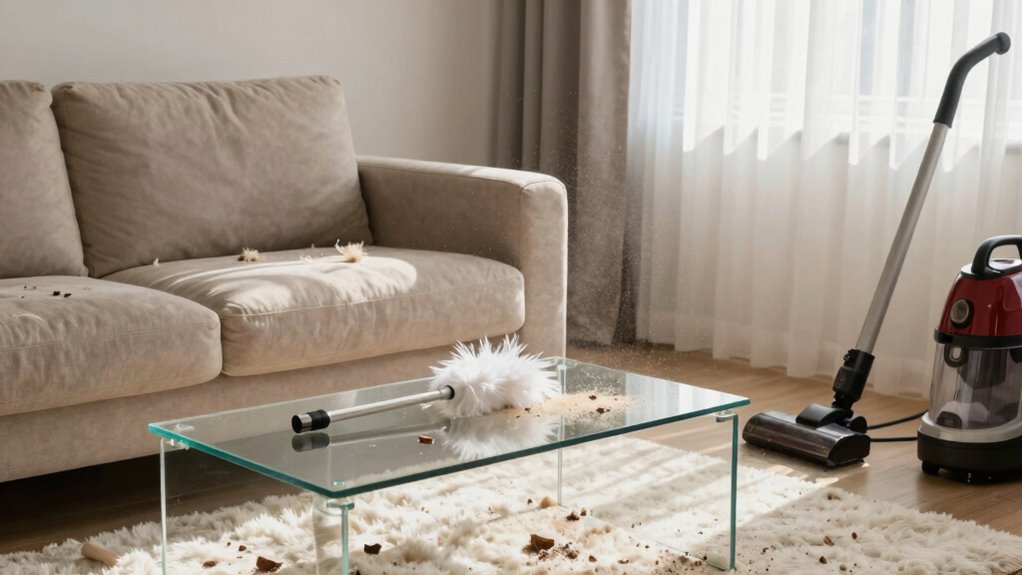

Using feather dusters or sweeping can kick dust into the air, making it harder to control. Neglecting to change your air purifier filters regularly reduces their effectiveness and can circulate dust. Cluttered surfaces trap dust, while inconsistent cleaning routines allow dust to settle in hard-to-reach spots. Choosing the right tools, like microfiber cloths and HEPA-filter vacuums, helps keep dust down. Keep these habits in mind, and you’ll discover more ways to maintain a cleaner, dust-free home.
Key Takeaways
- Sweeping or dusting with dry tools can disperse dust into the air rather than trapping it.
- Using feather dusters or dry cloths spreads dust instead of capturing it.
- Cleaning before air purifiers and filters are maintained reduces their effectiveness in controlling dust.
- Infrequent or inconsistent cleaning allows dust to settle and become airborne during subsequent cleanup.
- Overly vigorous cleaning or stirring up dust without proper tools can increase airborne particles.

Have you ever wondered why some homes stay spotless with minimal effort? The secret often lies in the cleaning habits you develop daily. One habit that can considerably influence the amount of dust in your home is how you use air purifiers. If you rely on them properly, they can trap airborne particles and allergens, reducing dust buildup over time. However, neglecting to change filters regularly or leaving them off during certain times can diminish their effectiveness, allowing dust to settle on surfaces more quickly. Incorporating air purifiers into your cleaning schedule is key. For instance, turning them on during cleaning or when you’re home can help clear out dust and pet dander, making your environment fresher and cleaner. Proper maintenance of air purifier filters is essential to ensure they function optimally. Regularly replacing filters and choosing models with HEPA filtration can enhance their ability to capture smaller particles and improve indoor air quality. Additionally, understanding the importance of air quality can motivate you to maintain your devices and habits more diligently. Developing a good understanding of indoor air quality and its impact on health can encourage better habits and equipment choices. Another habit that stirs up more dust is inconsistent cleaning schedules. When you clean sporadically, dust tends to accumulate unchecked, settling into hard-to-reach corners and settling on surfaces. Establishing a regular cleaning routine helps prevent this buildup. Whether it’s daily dusting, vacuuming, or weekly mopping, sticking to a schedule keeps dust levels manageable. It also minimizes the need for deep cleans, saving you time and effort in the long run. The trick is to set realistic goals—perhaps dust every other day and vacuum twice a week—and stick to them. Doing so prevents dust from reaching levels that require intensive efforts to remove. Additionally, your choice of cleaning tools and methods impacts dust circulation. Using a feather duster or sweeping with a broom can often kick dust into the air, making it harder to control. Instead, opt for microfiber cloths or damp cloths that trap dust rather than disperse it. When vacuuming, make sure your vacuum has a HEPA filter, which captures smaller particles and prevents them from being released back into the air. Regularly cleaning your vacuum’s filters also guarantees maximum efficiency. Finally, your habits around clutter can increase dust levels. The more items you leave out—papers, decorative objects, stuffed animals—the more surfaces there are for dust to settle on. Keeping surfaces tidy and decluttering regularly reduces dust traps and makes cleaning less of a chore. Incorporating clutter control into your routine can significantly lower dust buildup. With these habits in place, you’ll notice less dust and a fresher home. With thoughtful use of air purifiers, a consistent cleaning schedule, and mindful habits, you’ll create an environment that stays cleaner longer with less effort.

Shark Navigator Lift-Away Vacuum, HEPA, Carpet and Pet Hair, Blue, NV360
- Powerful Suction: Effective on carpets and hard floors
- Lift-Away Function: Detach for above-floor cleaning
- Pet Hair Removal: Specialized tools for pet hair
As an affiliate, we earn on qualifying purchases.
As an affiliate, we earn on qualifying purchases.
Frequently Asked Questions
How Often Should I Replace My Vacuum Filters?
You should replace your vacuum filters every 3 to 6 months for ideal vacuum maintenance, depending on usage and filter type. Regularly checking the filter’s condition helps you gauge the filter lifespan and guarantees your vacuum runs efficiently. A dirty filter can reduce suction and stir up dust, so don’t wait too long. Replacing filters as needed keeps your home cleaner and healthier, and your vacuum performing at its best.
Can Using Too Much Cleaning Product Cause More Dust?
Killing two birds with one stone, using too much cleaning product can indeed cause more dust. Excess cleaning chemical residues settle and cling to surfaces, trapping allergens from sprays and creating a dusty environment. Over-application can also stir up dust particles each time you clean, making your home dustier. To keep dust levels down, use cleaning products sparingly and opt for natural or hypoallergenic options whenever possible.
Do Air Purifiers Reduce Dust Buildup Effectively?
Air purifiers are effective for reducing dust buildup, especially if they have HEPA filters designed to trap small particles. They complement dust reduction techniques like regular vacuuming and dusting. To maximize their effectiveness, keep windows closed during heavy dust days and maintain filters regularly. Using an air purifier helps improve indoor air quality and minimizes dust, making your home cleaner and healthier with less effort.
Is Dusting With a Dry Cloth Better Than a Damp One?
Using a damp cloth is better than a dry one for dusting because it traps dust more effectively and prevents it from becoming airborne. A dry cloth might just spread dust around, making cleaning less efficient. Damp cloth advantages include better dust pickup and reducing allergens. Dry cloth effectiveness is limited because it doesn’t hold onto dust well. For ideal cleaning, always use a slightly damp cloth on surfaces.
What Are the Best Ways to Prevent Dust Accumulation?
Think of your home as a sanctuary where dust tries to invade every corner. To prevent buildup, keep up with cleaning frequency, and don’t forget to maintain your air purifier—clean filters regularly to keep dust from swirling back into the air. Vacuum and dust often, especially in hidden spots. By staying vigilant, you create a cleaner, fresher space where dust can’t easily settle, making your home a true haven.

USANOOKS Microfiber Cleaning Cloth Grey – 12 Pcs (12.5"x12.5") – High Performance – 1200 Washes, Ultra Absorbent Microfiber Towel Weave Grime & Liquid for Streak-Free Mirror Shine – Car Washing Cloth
- High Absorbency Grip Root Weave: Locks in 8-10x weight in liquids
- Lint-Free and Scratch-Resistant: Ensures streak-free mirror shine
- Durable for 1200+ Washes: Long-lasting reusable microfiber cloths
As an affiliate, we earn on qualifying purchases.
As an affiliate, we earn on qualifying purchases.
Conclusion
By paying attention to these cleaning habits, you can considerably reduce dust buildup in your home. Did you know that the average person inhales about 2,000 dust particles daily? That’s a stark reminder of how important it is to keep your space tidy. Simple changes like dusting with a damp cloth and vacuuming regularly can make a huge difference. Start today—your lungs will thank you for it!

MOOKA Air Purifiers for Home Large Room up to 1076ft², H13 True HEPA Air Filter Cleaner, Odor Eliminator, Remove Smoke Dust Pollen Pet Dander, Night Light, B-D02L White
- Large Coverage Area: Covers up to 1076 ft² with 6 air changes/hour
- High-Efficiency Filtration: Captures pet dander, smoke, dust, pollen, and odors
- True HEPA Filter: Removes airborne particles as small as 0.3 microns
As an affiliate, we earn on qualifying purchases.
As an affiliate, we earn on qualifying purchases.
USANOOKS Microfiber Cleaning Cloth Grey – 12 Pcs (12.5"x12.5") – High Performance – 1200 Washes, Ultra Absorbent Microfiber Towel Weave Grime & Liquid for Streak-Free Mirror Shine – Car Washing Cloth
- High Absorbency Grip Root Weave: Locks in 8-10x weight in liquids
- Lint-Free and Scratch-Resistant: Ensures streak-free mirror shine
- Durable for 1200+ Washes: Long-lasting reusable microfiber cloths
As an affiliate, we earn on qualifying purchases.
As an affiliate, we earn on qualifying purchases.