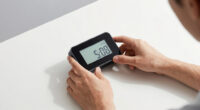
To get accurate CO2 levels, place your monitor where air flows freely, avoiding corners, behind furniture, or close to sources like stoves or fireplaces. Keep it at breathing height, about 3-6 feet from the ground, and away from direct sunlight, drafts, or humidity. Regularly calibrate and avoid obstructions that disrupt airflow. Mastering these rules guarantees reliable results—continue exploring to learn more ways to optimize your sensor placement.

Get health and wellness essentials delivered free with Prime
- Fast, free delivery on millions of items
- Prime Video, Amazon Music and more included
- Member-only deals all year
Key Takeaways
- Place monitors at breathing zone height (3-6 feet) for accurate air quality readings.
- Avoid areas with drafts, direct sunlight, humidity, or airflow obstructions.
- Ensure good air circulation by avoiding corners, behind furniture, or enclosed spaces.
- Keep sensors away from CO2 sources like stoves, fireplaces, or smokers for representative measurements.
- Regularly calibrate devices in fresh air environments to maintain measurement accuracy.
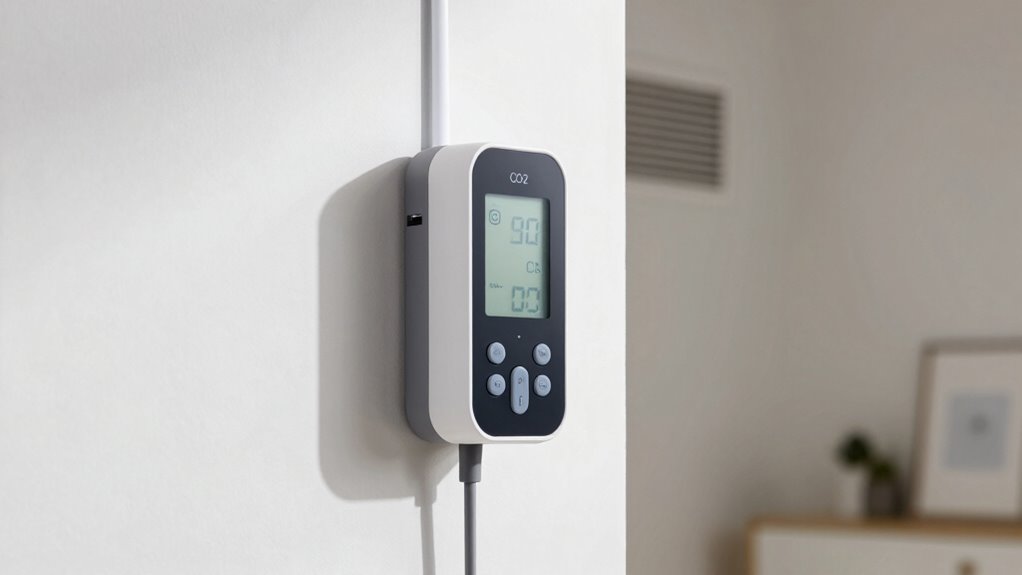
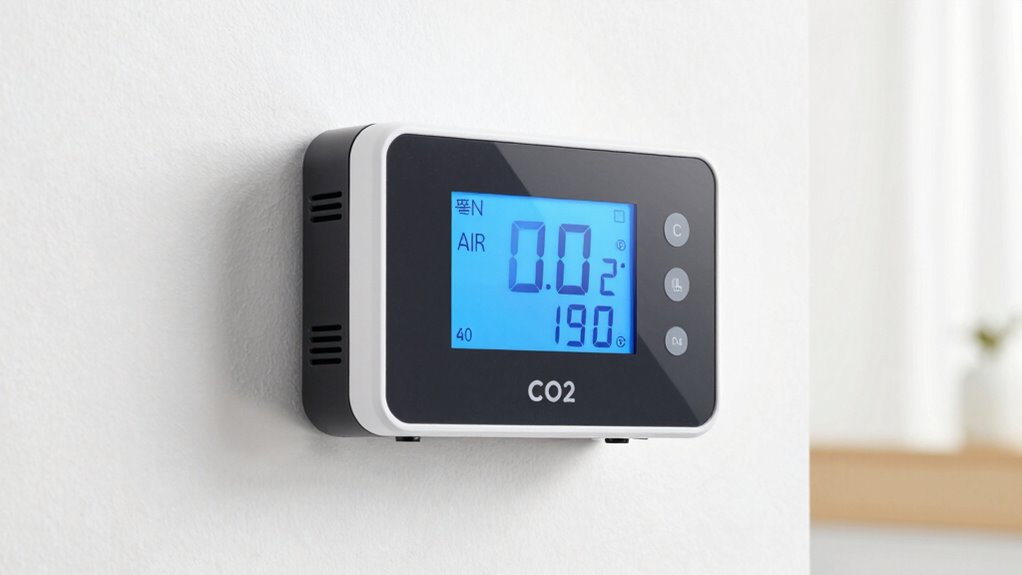
Proper placement of CO2 monitors is vital to guarantee accurate detection of carbon dioxide levels in indoor spaces. If you want to assure your monitor provides reliable readings, you need to think carefully about where you position it. One of the key factors is air circulation. You should avoid placing the monitor in stagnant air zones, such as corners or behind furniture, where airflow is limited. Instead, position it in areas with good air movement, like near vents, open spaces, or central locations where fresh air circulates regularly. Proper air circulation helps the sensor detect changes in CO2 levels more accurately, giving you a real-time picture of indoor air quality. Additionally, it’s beneficial to place the monitor away from airflow obstructions, which can disrupt accurate readings. Another critical aspect is sensor calibration. Even if you place your monitor correctly, its readings can become inaccurate if it’s not properly calibrated. Many monitors require periodic calibration to maintain precision. Check your device’s instructions to see how often calibration is recommended and follow the process carefully. When calibrating, make sure the monitor is in a fresh air environment with normal CO2 levels to establish an accurate baseline. Proper sensor calibration ensures that your readings are trustworthy, and it prevents false alarms or missed high CO2 levels that could compromise indoor air quality. It’s also helpful to understand the air exchange rate of your space, as this influences how quickly CO2 levels can change and how effective your monitor will be at detecting those changes. Understanding airflow patterns can further enhance your placement strategy, ensuring optimal detection. Placement height also plays a role in accurate detection. CO2 tends to mix evenly in the air, but it’s best to position the monitor at breathing zone height—roughly 3 to 6 feet from the ground. Avoid placing it on the floor or too high on the wall, as this can skew readings. Additionally, steer clear of locations near sources of CO2 emissions, like gas stoves, fireplaces, or smokers, since these can temporarily elevate levels and give false impressions of overall air quality. It’s also important to consider indoor air quality factors, such as humidity and temperature, which can influence sensor performance. Finally, consider the environment surrounding your CO2 monitor. Keep it away from direct sunlight, drafts, or humidity sources like bathrooms or kitchens, which can interfere with sensor accuracy. Consistent placement in a stable environment ensures your device performs effectively over time. By combining good air circulation, proper calibration, appropriate height, and environmental considerations, you’ll maximize the accuracy of your CO2 monitor. This careful placement allows you to monitor indoor air quality effectively and maintain a healthy, safe environment.
As an affiliate, we earn on qualifying purchases.
Frequently Asked Questions
How Often Should CO2 Monitors Be Calibrated?
You should calibrate your CO2 monitor at least once every six months to guarantee monitoring accuracy. However, calibration frequency may need to increase if the device is used heavily, exposed to extreme conditions, or if you notice inconsistent readings. Regular calibration helps maintain reliable performance, so check your manufacturer’s recommendations and perform calibration more often if you suspect the monitor’s accuracy is compromised.
Can CO2 Monitors Detect Other Gases Accurately?
You might think CO2 monitors can detect every gas under the sun, but their primary focus is gas detection accuracy for CO2. While some models have sensors that pick up other gases, their accuracy isn’t guaranteed outside their main target. If you need precise detection of various gases, look for monitors specifically designed for that purpose. Otherwise, trust your CO2 monitor for what it’s best suited — CO2.
What Is the Lifespan of a Typical CO2 Monitor?
A typical CO2 monitor lasts about 5 to 10 years, depending on maintenance schedules and sensor types. Regularly calibrating the device and replacing sensors as recommended guarantees accuracy and prolongs lifespan. Some sensors, like non-dispersive infrared (NDIR), tend to last longer, while chemical sensors may need more frequent replacement. Staying on top of maintenance schedules helps you get the most reliable performance from your CO2 monitor over its lifespan.
Are There Specific Certifications Required for CO2 Monitors?
You should confirm your CO2 monitor meets specific certification standards to guarantee safety and accuracy. Look for devices certified under recognized programs like UL, CE, or CSA, which demonstrate regulatory compliance. These certifications confirm that your monitor adheres to industry safety and performance requirements. Always verify the certification labels before purchasing or installing a CO2 monitor, as it helps ensure reliable operation and compliance with local regulations.
How Do Environmental Factors Affect CO2 Monitor Readings?
You’re right to take into account how environmental factors influence CO2 monitor readings. Changes in indoor air quality, such as increased humidity, temperature fluctuations, or poor ventilation, can skew results. If the ventilation standards aren’t met, readings may not reflect true air quality, making it seem better or worse than it is. Keep monitors away from drafts, heat sources, or direct sunlight to guarantee accurate readings—otherwise, you’re fighting an uphill battle.
As an affiliate, we earn on qualifying purchases.
Conclusion
Remember, placing your CO2 monitor correctly is like planting a tree in the right spot—it guarantees healthy growth and accurate readings. I once saw a classroom where a monitor near the door missed rising CO2 levels during a busy class, much like a gardener overlooking a shady corner. Always follow the placement rules, position your monitor thoughtfully, and you’ll catch those sneaky CO2 spikes before they become a problem, keeping your space safe and breathable.
As an affiliate, we earn on qualifying purchases.
air quality monitor with calibration
As an affiliate, we earn on qualifying purchases.
As an affiliate, we earn on qualifying purchases.
Halloween Picks
halloween
As an affiliate, we earn on qualifying purchases.