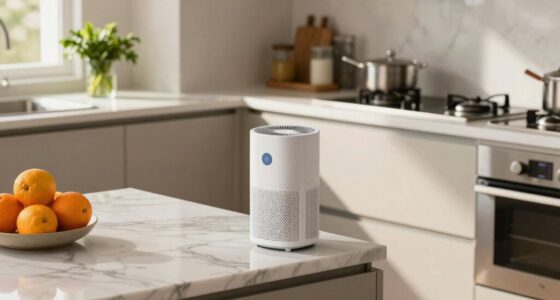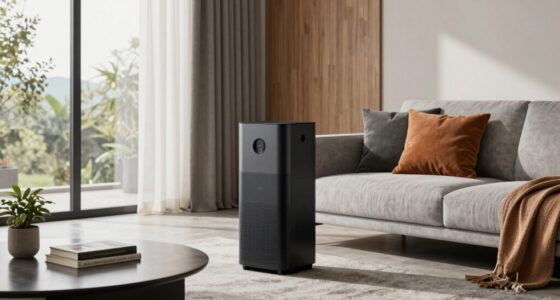
To create a calm, low-irritant nursery, focus on maintaining high air quality. Choose low-VOC paints and eco-friendly decor to reduce harmful emissions. Opt for non-toxic furniture and natural fabrics to minimize allergens. Incorporate air-purifying plants for added freshness and install effective ventilation systems. Soft earth tones and gentle lighting promote tranquility. Regularly monitor and maintain clean air for your baby’s comfort and health. Discover other essential tips to enhance your nursery’s serenity and safety.
Key Takeaways
- Choose low-VOC or no-VOC paints and eco-friendly decor to improve indoor air quality in the nursery.
- Select non-toxic, organic furniture and fabrics to reduce allergens and irritants in the environment.
- Implement effective ventilation strategies and air filtration systems to maintain fresh, clean air.
- Incorporate calming colors and soft lighting to create a serene atmosphere that promotes relaxation.
- Regularly monitor air quality and maintain cleanliness to ensure a healthy nursery space for infants.

Indoor Air Quality Monitor 16-in-1 with CO2 Detector, PM2.5P, PM10, M1.0, HCHO & TVOC – Portable Air Quality Tester with AQI Alerts, Temperature & Humidity Meter Kit for Home Office Nursery RV
16-in-1 Indoor Air Quality Monitor for Complete Air Detection: This 16-in-1 indoor air quality monitor tracks CO2, PM1.0,...
As an affiliate, we earn on qualifying purchases.
Understanding Air Quality and Its Impact on Infants

When it comes to your baby’s health, understanding air quality is vital. Poor air quality can markedly impact their respiratory health, making it essential for you to be aware of air pollution sources. Common indoor pollutants, like dust and chemicals, can contribute to respiratory issues, especially in infants with developing lungs. To create a safe environment, regularly check your home’s air quality and invest in air purifiers if necessary. Additionally, maintaining clean-home systems can significantly enhance your nursery’s atmosphere. Did you know that venting/clearances in your nursery setup can also play a crucial role in achieving optimal air quality? Open windows to let fresh air circulate, while being mindful of outdoor pollution levels. By taking these steps, you can help reduce harmful exposures and promote better air quality for your little one. Ultimately, a healthy nursery environment supports your baby’s growth and well-being. Additionally, using the best air purifiers can significantly enhance the air quality in your nursery, ensuring a safer space for your infant. Ensure you regularly check and clean filters to maintain optimal performance of the air purifier. Moreover, understanding the importance of color accuracy in your nursery’s environment can contribute to creating a visually calming space for your baby.

16 in 1 Air Quality Monitor Indoor 7" Large Display 9 AQI+7 Alerts, CO2 Monitor Air Quality Tester for CO2, TVOC, PM2.5 PM1.0 PM10, HCHO Temperature Humidity AQI & Time Air Quality Meter for Home
【16-in-1 Air Quality Monitor Indoor】Experience the ultimate indoor air quality monitoring with our 16-in-1 Air Quality Monitor, offering...
As an affiliate, we earn on qualifying purchases.
Choosing Low-Irritant Paints and Finishes
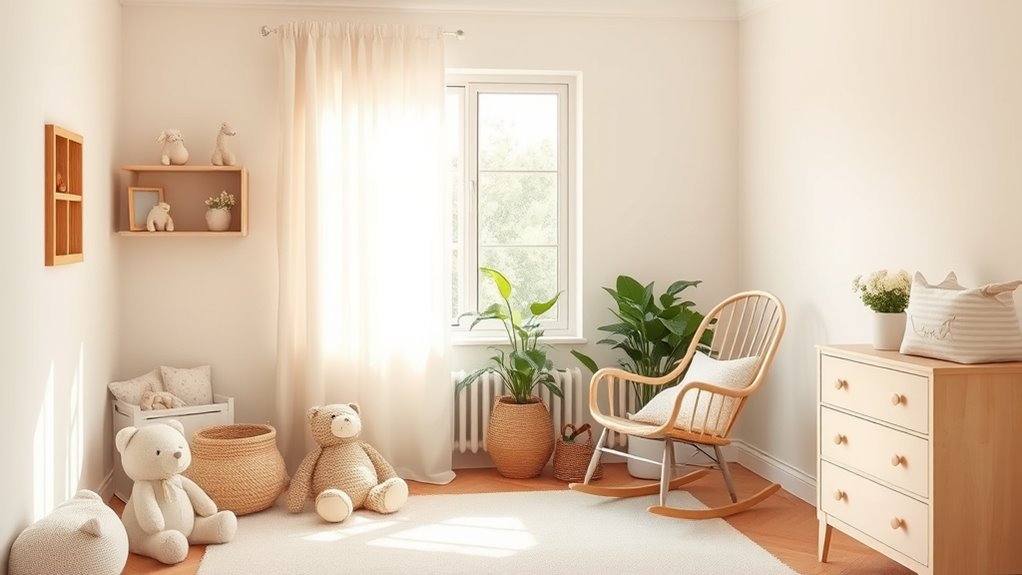
How can you guarantee your nursery is a safe space for your baby? Choosing low-irritant paints and finishes is vital. You’ll want to pick options that minimize harmful emissions and irritants. Here are some tips to guide your selection:
Creating a safe nursery for your baby begins with selecting low-irritant paints and finishes to minimize harmful emissions.
- Opt for paints labeled “low-VOC” or “no-VOC” to reduce volatile organic compounds.
- Look for eco-friendly wall murals that use water-based adhesives and inks.
- Consider non-toxic wall decals that are safe for your baby’s environment.
- Test for allergies by painting a small area first and monitoring for reactions.
Implementing these strategies assures a healthier atmosphere for your little one, allowing them to thrive in a serene and safe nursery. Additionally, utilizing energy-efficient cloud servers can help support sustainable practices in your home environment.

GoveeLife Smart Air Quality Monitor for Home, CO2 Detector for Health, Sleep Quality & Energy Efficiency, Thermometer Hygrometer with Real-Time Display & Alarm, for Office, Bedroom, Kitchen
Fast & Accurate: Equipped with the SCD4x CO₂ sensor (photoacoustic NDIR principle), it ensures accuracy of ±(40ppm +...
As an affiliate, we earn on qualifying purchases.
Selecting Non-Toxic Furniture and Decor

As you create a nurturing environment for your baby, selecting non-toxic furniture and decor is essential for their health and safety. Look for items made from eco-friendly materials, like solid wood or bamboo, which are less likely to emit harmful chemicals. When choosing finishes, prioritize non-toxic options that avoid harmful solvents and VOCs. This way, you guarantee a safe space for your little one. Pay attention to certifications like Greenguard or FSC, which indicate lower toxicity levels. Additionally, consider the benefits of sustainable materials that contribute to a healthier indoor environment. Artificial intelligence tools can help you identify the best non-toxic products available in the market. Implementing a strategy to evaluate potential risks can further ensure the safety of your nursery. Avoid synthetic materials that can release irritants over time. By thoughtfully selecting furniture and decor, you’re not just enhancing the nursery’s aesthetics; you’re also safeguarding your baby’s well-being, creating a calm and healthy atmosphere for them to thrive. Additionally, consider the importance of educational resources for investors that can help you understand the best practices in creating a safe space. The use of architectural solutions can also help in designing a nursery that maximizes both safety and comfort.
Amazon Product B0FPLTB6QS
As an affiliate, we earn on qualifying purchases.
The Importance of Natural Fabrics

Selecting non-toxic furniture and decor sets the foundation for a healthy nursery, but the choice of fabrics is just as important. Opting for natural fibers and organic materials can markedly reduce irritants in your baby’s environment. Here are a few key benefits of choosing natural fabrics:
- Breathability: Natural fibers like cotton and linen allow air circulation, keeping your nursery comfortable.
- Hypoallergenic: Organic materials are less likely to trigger allergies, ensuring a safer space for your little one.
- Durability: Fabrics made from natural fibers tend to last longer, reducing waste and the need for replacements.
- Non-Toxic: Many natural textiles are free from harmful chemicals, promoting a healthier atmosphere.
Incorporating Air-Purifying Plants
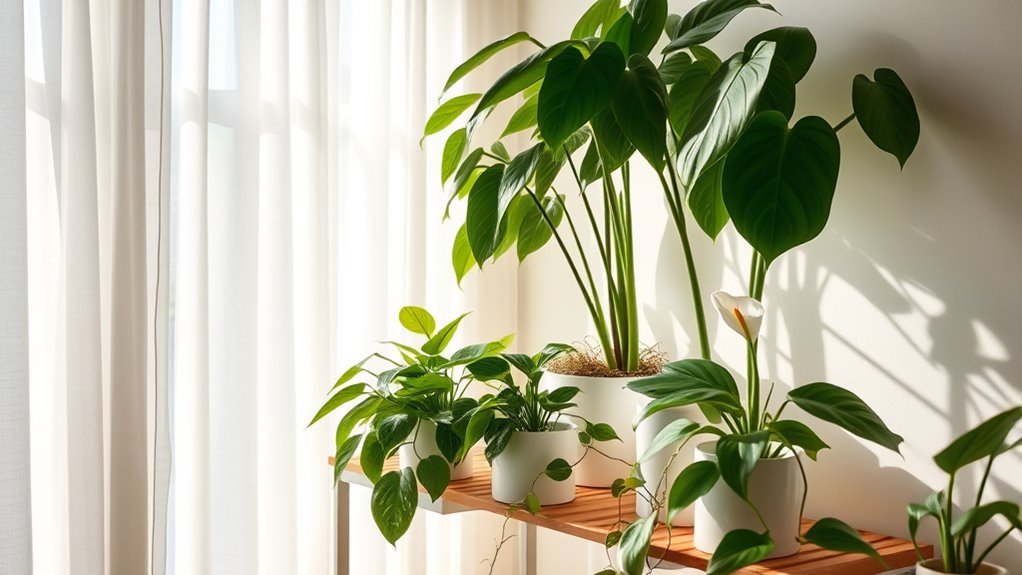
While you’re creating a peaceful nursery environment, incorporating air-purifying plants can considerably enhance air quality and promote a soothing atmosphere. Consider plants like spider plants, peace lilies, and snake plants, as they effectively filter out harmful toxins. When selecting air-purifying plants, think about their size and light requirements to guarantee proper growth and health. Additionally, native plants are often more resilient and better suited to thrive in your specific environment.
Strategic plant placement is vital; position them where they can thrive and be easily seen. Hanging plants, for instance, can add greenery without taking up floor space. Placing pots on shelves or window sills also maximizes light exposure. Not only will these plants purify the air, but they’ll also create a calming visual that contributes to your nursery’s overall tranquility. Additionally, using starter rigs for watering can help maintain optimal moisture levels for your plants.
Effective Ventilation Strategies

To keep your nursery air fresh, you’ll want to explore effective ventilation strategies. You can use natural airflow techniques, install mechanical ventilation systems, and monitor air quality regularly. Each approach plays a vital role in ensuring a healthy environment for your plants. Additionally, understanding the importance of environmental considerations can help you create a sustainable growing space. Implementing calm organizing solutions can also contribute to a more serene atmosphere in your nursery. A well-ventilated space can reduce pollutant buildup and enhance the overall health of your plants. Consider incorporating smart design elements to further improve the comfort and functionality of your nursery. Utilizing robotic cleaning solutions can also help maintain air quality by reducing dust and allergens in the environment.
Natural Airflow Techniques
Effective ventilation strategies play a crucial role in maintaining a healthy nursery environment, especially when you harness natural airflow techniques. By optimizing airflow patterns and strategically considering window placement, you can create a serene atmosphere. Here are four effective strategies to boost natural airflow:
- Open windows: Position them across from each other to create cross-ventilation.
- Use vents: Install vents high and low to facilitate air movement; this approach aligns with effective air circulation principles that enhance overall air quality.
- Incorporate ceiling fans: These can help circulate air without introducing noise or irritants.
- Position furniture wisely: Avoid blocking airflow pathways, ensuring unobstructed movement throughout the nursery.
Additionally, understanding survival and camping technology can further enhance your approach to maintaining air quality and comfort in your nursery setting.
Mechanical Ventilation Systems
Natural airflow techniques are a great start, but sometimes they aren’t enough to guarantee ideal air quality in a nursery. That’s where mechanical ventilation systems come in. These systems effectively exchange stale air with fresh, filtered air, making certain your nursery remains comfortable and healthy. Look for units equipped with air filtration systems to remove allergens and pollutants, creating a calm environment for your little ones. Regular ventilation maintenance is essential to keep these systems running efficiently. Don’t overlook filter changes and system checks, as they can considerably impact air quality. By integrating mechanical ventilation, you’re taking proactive steps to guarantee a safe and soothing nursery atmosphere, allowing your child to thrive in a low-irritant setting. Utilizing mechanical systems can also help maintain temperature control, ensuring a comfortable environment for optimal development. Moreover, proper air filtration plays a crucial role in enhancing the overall effectiveness of these ventilation systems. Additionally, incorporating smart appliances can further optimize air quality management, ensuring a healthier nursery environment.
Air Quality Monitoring
While you focus on creating a nurturing environment for your child, monitoring air quality in the nursery is essential for maintaining ideal health and comfort. Effective ventilation strategies play a vital role in this process. Here are four key steps you can take:
- Invest in air filtration systems that reduce allergens and pollutants.
- Identify pollutant sources such as cleaning products, paints, or furniture that may release harmful chemicals.
- Maintain proper humidity levels to prevent mold growth that can affect air quality.
- Regularly ventilate the space by opening windows or using exhaust fans to promote fresh air circulation.
Creating a Calming Color Palette

When designing a nursery, choosing the right colors can markedly impact your baby’s mood and sleep patterns. Opt for calming color schemes like soft pastels or gentle earth tones. These soothing visual tones create a peaceful atmosphere that promotes relaxation. Shades of blue, green, and lavender are particularly effective, as they evoke tranquility and comfort. Avoid bold, bright colors that might overstimulate your child. Instead, consider using a mix of these calming hues on walls, furniture, and accessories for a cohesive look. You can also incorporate subtle patterns to add interest without overwhelming the space. Overall, creating a serene environment through thoughtful color choices will help ensure your baby feels secure and at ease in their nursery.
Utilizing Soft Lighting for Serenity

Soft lighting can transform your nursery into a serene retreat, promoting relaxation for both you and your little one. When choosing light fixtures, consider options that emit a gentle glow, creating a calming atmosphere. You’ll find that the right lighting not only enhances the room’s aesthetic but also supports peaceful moments together.
Benefits of Soft Lighting
Creating a serene atmosphere in your nursery can be as simple as adjusting the lighting. Soft lighting provides an ambient glow that soothes both you and your little one, promoting relaxation and comfort. Here are some benefits of incorporating soft lighting into your nursery:
- Enhanced sleep quality: The gentle, sleep-inducing illumination helps your baby drift off peacefully.
- Reduced anxiety: Soft lighting lowers stress levels, creating a calm environment for both parent and child.
- Encouragement of bonding: The warm light fosters intimate moments during feeding or bedtime routines.
- Versatile decor: Soft lighting complements various nursery styles, adding to the overall aesthetic.
Choosing Light Fixtures
Selecting the right light fixtures can substantially enhance the soft glow in your nursery, contributing to a tranquil environment. Opt for LED fixtures, as they not only provide soft, warm light but also save energy. Look for options that offer dimmable lighting, allowing you to adjust the brightness according to the time of day or your child’s needs. This flexibility helps create a soothing atmosphere during nap time or bedtime. Consider installing wall sconces or table lamps with soft shades to diffuse light gently. Avoid harsh overhead lighting, which can disrupt the calm vibe you’re aiming for. By choosing the right fixtures, you’ll foster a serene space that promotes relaxation and comfort for both you and your little one.
Establishing a Routine for Clean Air Maintenance

While it might seem overwhelming at first, establishing a routine for clean air maintenance is essential for your nursery’s health. Regularly monitoring and improving air quality can considerably reduce harmful pollutants. Here are four key steps to incorporate into your routine:
- Change air filters in your air filtration system monthly to keep it effective.
- Identify pollutant sources like cleaning products or paints, and opt for low-emission alternatives.
- Ventilate the nursery daily by opening windows or using exhaust fans, especially when cooking or using chemicals.
- Monitor humidity levels to prevent mold growth, ideally keeping it between 30-50%.
Frequently Asked Questions
How Often Should I Change the Air Filter in the Nursery?
You should change the air filter in the nursery every 1 to 3 months. Regular air filter maintenance is essential for ensuring good air quality. If you notice dust accumulation or a drop in air quality, it’s a sign to replace it sooner. Monitoring the air quality will help you determine when it’s time for a change. Keeping up with this will create a healthier environment for your little one.
What Temperature Is Ideal for a Nursery Environment?
The ideal temperature for a nursery is between 68°F and 72°F. Keeping it cozy, like a sunny day at the beach, helps your little one sleep better. Make certain good air circulation and consider air purification to maintain a healthy environment. Regularly check the temperature and adjust as needed, so your baby stays comfortable. A well-regulated nursery can make a world of difference in your child’s mood and overall well-being.
Can I Use Air Fresheners in the Nursery?
It’s best to avoid air fresheners in the nursery, as they can release harmful chemicals that affect air quality and your baby’s health. Instead, consider using natural air purifiers like plants or essential oils, ensuring they’re safe for infants. Regularly ventilating the room also helps maintain fresh air without introducing irritants. You want to create a safe, calming environment for your little one, so choose options that promote air freshening naturally.
Are Essential Oils Safe for Infants in the Nursery?
Essential oils aren’t generally recommended for infants due to potential risks. Studies show that 80% of parents believe essential oils are safe, but they can cause respiratory issues or allergic reactions in little ones. If you’re considering using them, always consult your pediatrician first. Infant safety should be your top priority, so if you do opt for essential oils, use them cautiously and guarantee proper dilution to minimize any potential harm.
How Do I Check the Humidity Levels in the Nursery?
To check the humidity levels in the nursery, you’ll want to use a hygrometer. Place it in a central location away from direct sunlight and drafts for the most accurate reading. Ideally, you should aim for humidity levels between 30% and 50%. Regularly monitor the hygrometer to guarantee the environment stays comfortable for your baby. If it’s too low or high, consider using a humidifier or dehumidifier to adjust the levels accordingly.
Conclusion
In crafting your nursery, you’re not just decorating a room; you’re nurturing a sanctuary for your little one. By prioritizing air quality through thoughtful choices in paint, furniture, and plants, you’re fostering a peaceful environment that whispers tranquility. With soft lighting and a soothing color palette, you’re creating a haven where both you and your child can breathe easy. Remember, a little effort in maintaining clean air goes a long way in nurturing health and happiness.