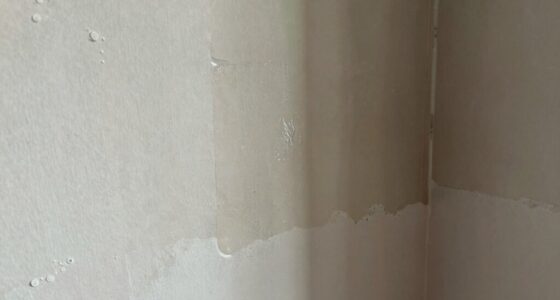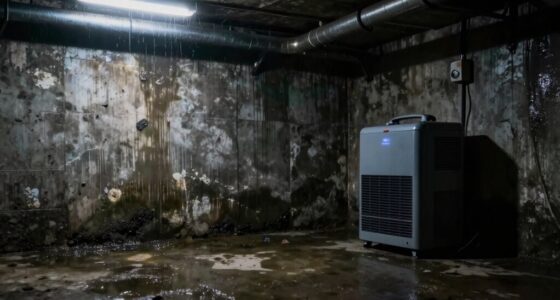
In the first 48 hours after a flood, act quickly to prevent extensive damage. Turn off electricity and use pumps or vacuums to remove standing water. Open windows, use fans, and set up dehumidifiers to promote airflow and drying. Focus on drying all accessible areas, especially hidden spots like behind walls and beneath floors. Remove soaked materials, monitor moisture levels, and prevent mold growth. For detailed steps to safeguard your space, continue exploring these essential flood dry-out strategies.
Listen free for 30 days with Audible
Thousands of audiobooks and originals — cancel anytime.
As an affiliate, we earn on qualifying purchases.
Key Takeaways
- Turn off electrical power and remove excess water using pumps or vacuums immediately.
- Increase airflow with fans and open windows to promote rapid drying.
- Assess moisture levels with a moisture meter and remove severely soaked materials.
- Keep doors open to improve ventilation and prevent mold growth in hidden areas.
- Document damage with photos and records, acting swiftly within the first 48 hours.

Have you ever wondered what it takes to effectively dry out a flooded space? When your home or business experiences flooding, the first 48 hours are essential for minimizing damage and preventing mold growth. Acting quickly and efficiently can make all the difference. The first step is to guarantee safety. Turn off the power supply to avoid electrical hazards, and if there’s standing water, avoid contact to prevent potential injuries. Once it’s safe, remove excess water using pumps or wet/dry vacuums. The faster you extract the water, the less it will seep into walls, floors, and furniture. It’s important to prioritize removing water from all accessible areas, but don’t forget to keep an eye on hidden spots like crawl spaces or behind appliances, as these can harbor lingering moisture.
Next, focus on ventilating the affected space. Opening windows and doors helps promote airflow, which accelerates drying. Use fans to circulate air, but avoid oscillating fans that might blow contaminated dust or debris around. If available, set up commercial-grade air movers and dehumidifiers, which are far more effective at removing moisture from the air and materials. Positioning these devices properly can considerably reduce drying time, so aim to create a cross-breeze that pulls moisture out of the space. Keep doors open to allow air to circulate into less accessible areas, but be cautious if mold is present, as it can become airborne and cause health issues. Additionally, understanding the importance of rapid drying can help prevent long-term damage and health risks associated with mold.
Another essential step is to assess the extent of moisture damage. Use moisture meters to identify damp spots, especially behind walls and under floors. This helps you determine where to focus drying efforts and whether professional help is necessary. It’s indispensable to start drying out materials as soon as possible because the longer water sits, the higher the risk of mold growth, structural deterioration, and odor development. For porous materials like drywall, insulation, and carpet padding, rapid drying is necessary. Sometimes, removal of severely soaked items is the best option to prevent further issues.
Finally, document everything. Take photos and keep records of the damage and your drying process. This documentation can be helpful for insurance claims later. Remember, speed and thoroughness are your best tools during these initial hours. Acting decisively, ventilating properly, and removing moisture efficiently will set the foundation for successful drying and eventual restoration. The first 48 hours are your window to minimize damage, so stay vigilant and proactive.
wet/dry vacuum for water removal
As an affiliate, we earn on qualifying purchases.
As an affiliate, we earn on qualifying purchases.
Frequently Asked Questions
How Can I Prevent Mold Growth After Flooding?
To prevent mold growth after flooding, you should dry out the affected areas within 48 hours. Use fans and dehumidifiers to reduce moisture, and open windows for ventilation. Remove soaked items and porous materials like drywall and carpeting. Clean surfaces with mold-killing solutions, and monitor humidity levels. Acting quickly helps stop mold spores from settling and spreading, protecting your home and health.
What Safety Precautions Should I Take During Flood Dry-Out?
You should wear protective gear like gloves, masks, and waterproof boots to avoid mold spores and contaminated water. Make certain proper ventilation by opening windows and using fans, but avoid creating a cross-breeze that could spread contaminants. Turn off the electricity before starting work to prevent shocks, and be cautious of structural damage or weakened floors. Always follow safety guidelines to protect yourself during the flood dry-out process.
When Should I Call a Professional for Flood Damage?
Imagine calling in a pro is like summoning a superhero—don’t wait until it’s a disaster. You should call a professional for flood damage as soon as the water recedes and you notice ongoing issues like mold, structural damage, or persistent odors. If the floodwaters were contaminated or the damage is extensive, expert intervention guarantees safe cleanup and repairs. Acting quickly minimizes long-term harm and saves you money in the long run.
How Long Does the Dry-Out Process Typically Take?
The dry-out process usually takes anywhere from a few days to several weeks, depending on the extent of the flooding and the materials affected. You’ll want to monitor moisture levels regularly and use industrial fans or dehumidifiers to speed things up. Keep in mind that thorough drying is essential to prevent mold growth and structural damage, so don’t rush it. Patience and proper equipment are key to a complete dry-out.
Can I Dry Out My Property Without Professional Equipment?
You can attempt to dry out your property without professional equipment, but it’s challenging. Use fans and dehumidifiers to increase airflow and reduce moisture. Open windows and doors to promote ventilation, and remove any standing water promptly. Keep in mind, DIY efforts may not fully eliminate all moisture, especially in hidden areas. For thorough drying and mold prevention, consider hiring professionals with specialized equipment.
As an affiliate, we earn on qualifying purchases.
Conclusion
In the first 48 hours after a flood, taking quick action can prevent costly damage and mold growth. Remember, water can cause irreversible harm if not addressed promptly. Did you know that mold can begin to develop within just 24 to 48 hours of water exposure? Acting fast keeps your home safe and minimizes repairs. Stay vigilant, dry out thoroughly, and protect your space from lasting damage. Your swift response makes all the difference.
As an affiliate, we earn on qualifying purchases.
As an affiliate, we earn on qualifying purchases.
NFL season / tailgating Picks
team gear
As an affiliate, we earn on qualifying purchases.