Your hygrometer numbers often don’t agree because different types respond to environmental factors, calibration, and handling in unique ways. Analog models can drift over time, while digital ones are sensitive to temperature and humidity changes. Placement matters—near drafts, windows, or heat sources can skew results. User errors, like improper setup or interpretation, also cause discrepancies. If you want to understand why these differences happen and how to minimize them, keep reading for helpful insights.

Get health and wellness essentials delivered free with Prime
- Fast, free delivery on millions of items
- Prime Video, Amazon Music and more included
- Member-only deals all year
Key Takeaways
- Different hygrometer types use varying measurement methods, leading to discrepancies in readings.
- Calibration drift over time causes some devices to provide inaccurate or inconsistent results.
- Environmental factors like temperature, drafts, and direct sunlight can affect hygrometer accuracy.
- Improper placement or handling of hygrometers can produce inconsistent or misleading numbers.
- Variations in device sensitivity and maintenance practices contribute to differences in displayed humidity levels.
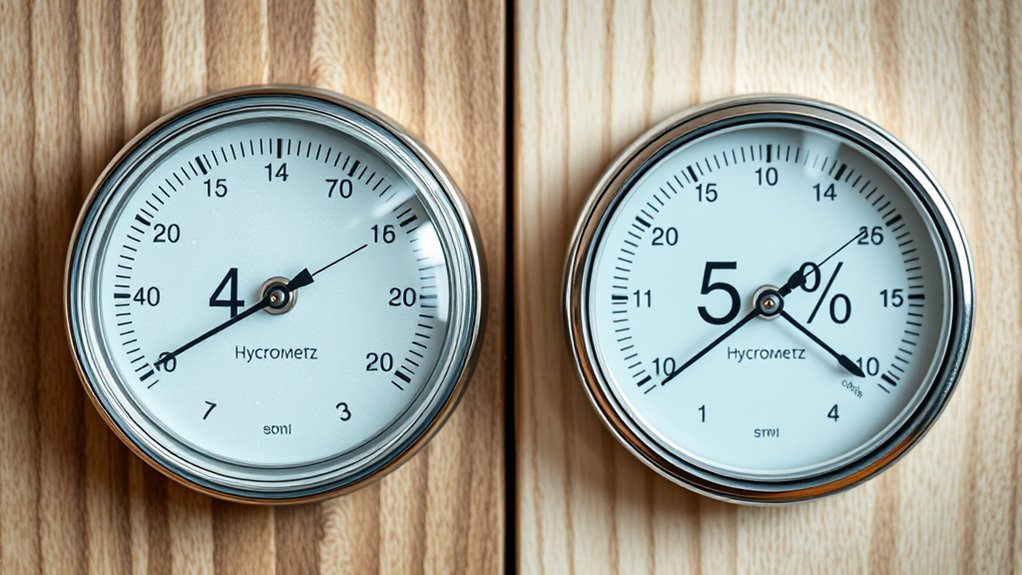
Hygrometer numbers, which indicate the level of humidity in the air, are essential for maintaining a comfortable and healthy environment. However, it’s common to notice that different hygrometers often show varying readings, which can be confusing. When this happens, it’s natural to wonder why your devices don’t agree. Several factors contribute to these discrepancies, and understanding them can help you interpret your hygrometer readings more accurately.
First, not all hygrometers are created equal. There are different types, such as analog dial, digital, and psychrometers, each with its own method of measuring humidity. Analog models rely on a moisture-absorbing material that expands or contracts with humidity changes, while digital devices use sensors that can be more precise but also more sensitive to environmental factors. Psychrometers, which use a wet and dry bulb thermometer, require proper calibration and technique to provide accurate results. Because each type has its limitations and sensitivities, they might not always produce identical readings.
Calibration is another critical factor. Over time, hygrometers can drift from their original calibration, especially if they aren’t maintained regularly. Analog devices are particularly susceptible to this issue, as their internal mechanisms can become misaligned. Digital hygrometers may also need periodic calibration or reset to ensure accuracy. If one device isn’t calibrated correctly, its reading will differ from others, leading to confusion. Regular calibration against a known standard or using a salt test can help guarantee your hygrometers give consistent, reliable readings.
Environmental factors can also influence the readings. Temperature fluctuations, drafts, direct sunlight, and even nearby sources of moisture or dryness can cause a hygrometer to respond differently. For example, placing a hygrometer near a window or a heat vent can lead to inaccurate readings because of localized temperature or humidity variations. Additionally, some devices are more sensitive to these environmental influences than others, which explains why two hygrometers in the same room might show different numbers.
Finally, user error plays a role. Incorrect placement, improper handling, or misunderstanding how to read your device can all lead to discrepancies. For example, if you don’t allow a digital hygrometer time to stabilize after moving it, its reading might not reflect the true humidity level. Similarly, reading an analog dial from an angle or in poor lighting can cause misinterpretation.
digital hygrometer calibration kit
As an affiliate, we earn on qualifying purchases.
As an affiliate, we earn on qualifying purchases.
Frequently Asked Questions
Can Temperature Affect Hygrometer Readings?
Yes, temperature can affect hygrometer readings. When the temperature changes, it influences how the hygrometer measures humidity; warmer air can hold more moisture, which might cause the device to show higher humidity levels. If your hygrometer isn’t temperature-compensated, fluctuations can lead to inaccurate readings. To get precise results, make sure your hygrometer is placed in a stable temperature environment or use a device that accounts for temperature variations.
How Often Should I Calibrate My Hygrometer?
Like a wise gardener tending to delicate plants, you should calibrate your hygrometer monthly to guarantee accuracy. Regular calibration keeps your readings trustworthy, much like adjusting a compass before a journey. If you notice inconsistent numbers or drastic changes, calibrate more frequently. Use the salt test or a calibration kit for precise results. Consistent calibration helps you maintain the perfect environment, whether for your home, greenhouse, or storage space.
Do Different Types of Hygrometers Give Different Results?
Yes, different types of hygrometers can give varying results. Mechanical hygrometers rely on a coil or hair that expands and contracts with humidity, while digital ones use sensors that may vary in accuracy. You might notice discrepancies between them, especially if calibration isn’t consistent. To guarantee accuracy, always calibrate your hygrometers regularly and use the same type for consistent readings.
Why Do Hygrometer Readings Vary Between Locations?
Hygrometer readings vary between locations because of differences in temperature, humidity sources, and airflow. Warmer areas tend to show higher humidity, while cooler spots may read lower. Nearby moisture sources like kitchens or bathrooms can also affect readings. Additionally, poor calibration or placement of your hygrometer impacts accuracy. Always position it away from direct sunlight, drafts, or moisture sources, and regularly calibrate to get more consistent measurements.
What Is the Most Accurate Method to Measure Humidity?
Think of measuring humidity like chasing a mirage—you want clarity, not distortion. The most accurate method is using a calibrated digital hygrometer paired with a psychrometer. Calibrating regularly guarantees your readings stay true, like a compass pointing north. For even greater precision, consider professional lab testing, but for everyday use, a well-maintained digital device is your best bet to keep humidity levels honest and reliable.
analog hygrometer with calibration adjustment
As an affiliate, we earn on qualifying purchases.
As an affiliate, we earn on qualifying purchases.
Conclusion
So, next time your hygrometer numbers don’t match, picture the tiny, invisible dance happening inside your device—moisture molecules slipping past sensors or lingering in corners. Think of it as a quiet tug-of-war, where each reading captures just a moment in that fleeting, ever-changing atmosphere around you. By understanding these subtle shifts, you’ll tune into your environment more intuitively, turning your space into a haven of perfect, comfortable humidity—like catching a gust of fresh, balanced air.
As an affiliate, we earn on qualifying purchases.
psychrometer thermometer for humidity
As an affiliate, we earn on qualifying purchases.
As an affiliate, we earn on qualifying purchases.
Columbus Day / Indigenous Peoples' Day Picks
long weekend sales
As an affiliate, we earn on qualifying purchases.