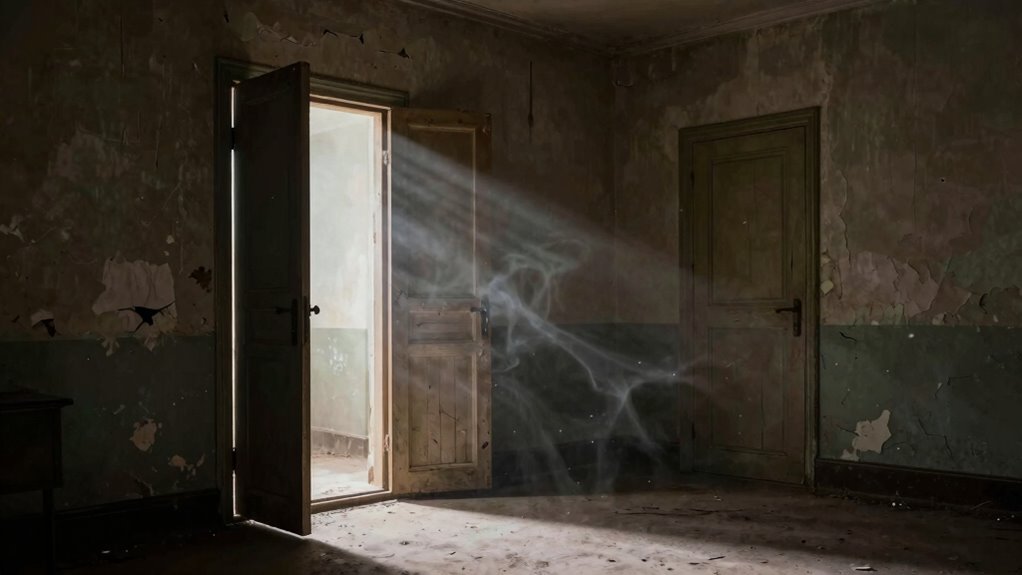

To solve the “stale room” mystery, start by understanding how doors, pressure, and airflow interact. Closed or sealed doors trap air, causing odors to linger. Opening doors slightly or adjusting vents creates pressure differences that encourage fresh air exchange. Poor ventilation and uneven airflow lead to pockets of stale air. By managing door positions, increasing ventilation, and balancing pressure, you can improve airflow and eliminate odors. Keep exploring to uncover how these elements work together to transform your space.
Listen free for 30 days with Audible
Thousands of audiobooks and originals — cancel anytime.
As an affiliate, we earn on qualifying purchases.
Key Takeaways
- Closed or sealed doors trap stale air, preventing fresh airflow and causing persistent odors.
- Pressure differences drive air movement; higher internal pressure pushes odors out when doors open.
- Proper airflow, achieved via vents and fans, is essential to prevent odor pockets and promote fresh air circulation.
- Gaps around doors or poor ventilation systems hinder air exchange, leading to stagnation and odor retention.
- Adjusting door positions, enhancing ventilation, and opening windows help reduce stale odors by improving airflow and pressure balance.
Have you ever stepped into a room and immediately noticed a strange, persistent smell of stale air? It’s as if the space is holding onto odors that refuse to fade, no matter how many times you air it out. This phenomenon often puzzles people because it’s not always about dirt or clutter; sometimes, it’s about how air moves and interacts with the room’s structure. Understanding the role of doors, pressure, and airflow can help you solve this mystery and improve the environment.
First, consider how doors influence airflow. When a door is closed, it can trap air inside, preventing fresh air from entering and stale air from escaping. If the room is sealed tightly, the air inside becomes stagnant, leading to that musty smell. Conversely, a slightly open door creates a pressure imbalance, allowing air to flow in and out. But if the door is tightly sealed and the room isn’t ventilated properly, the air becomes trapped, and odors linger. Sometimes, even small gaps around doors or windows can create uneven airflow, causing certain spots to hold onto stale air longer than others.
A closed door traps air, causing stale odors to linger and making ventilation efforts less effective.
Pressure differences between rooms play a significant role too. When you open a door, air naturally moves from areas of higher pressure to lower pressure, seeking equilibrium. If the pressure inside the room is higher than outside, opening the door causes stale air to rush out, but if the pressure is lower inside, fresh air struggles to enter, and the stale air remains. HVAC systems can influence this balance, especially if they’re not functioning correctly or if vents are blocked. Negative pressure in a room can pull in contaminated air from adjacent spaces, intensifying the stale smell.
Flow dynamics are also indispensable. Air always seeks the easiest path of least resistance. If airflow is restricted or uneven, some areas receive less fresh air, and the stale air accumulates in corners or behind furniture. Poor ventilation design can create pockets where odors settle, making the smell seem worse in specific spots. Proper airflow involves not just opening windows but ensuring that vents, fans, and air purifiers work harmoniously to circulate fresh air efficiently. Additionally, ventilation systems and their placement greatly impact how well air is exchanged and odors are removed.
To combat the mystery of the stale room, you need to think about how doors are positioned, how pressure is maintained, and how air flows through the space. Opening a window, adjusting vents, or installing a fan can help equalize pressure and encourage fresh air circulation. Sometimes, the solution is as simple as reconfiguring the door placement or improving ventilation to break the cycle of stagnation. By understanding these factors, you can turn a stale, odor-ridden space into a fresh, inviting room.
Frequently Asked Questions
How Do Door Placement and Size Affect Airflow in the Stale Room?
Door placement and size directly influence airflow in the stale room. Larger doors allow more air to pass through, promoting better ventilation, while smaller doors restrict flow. Placing doors strategically, such as near vents or high-pressure zones, encourages fresh air entry and stale air exit. Proper positioning ensures balanced pressure and ideal airflow, preventing the room from becoming stagnant. Adjusting door size and placement is essential for effective air circulation.
What Role Does External Pressure Play in Airflow Dynamics?
External pressure acts like an invisible hand guiding airflow, pushing air into or pulling it out of the room. When outside pressure differs from inside, it creates a pressure gradient that influences flow direction and speed. You’ll notice this as doors may swing open or shut unexpectedly, or airflow becomes uneven. Understanding this pressure difference helps you control ventilation and improve air quality in the stale room.
Can Changing Room Pressure Eliminate Stale Air Completely?
Changing room pressure can profoundly reduce stale air, but it usually can’t eliminate it completely. When you increase pressure, invigorating air flows in more effectively, pushing out the old, but some pockets of stale air may still linger in corners or behind objects. To maximize freshness, combine pressure adjustments with good ventilation, regular cleaning, and strategic airflow management. This way, you create a healthier, more revitalizing environment overall.
How Do Flow Patterns Differ Between Ventilation Types?
You’ll notice that flow patterns vary markedly between ventilation types. Natural ventilation relies on pressure differences and wind, creating unpredictable, often irregular flow paths. Mechanical systems, like HVAC, produce more controlled, directed airflow, ensuring better circulation. Exhaust fans create localized flow, pulling stale air out. Overall, mechanical ventilation offers consistent and efficient airflow, while natural methods depend on environmental factors, leading to more variable patterns.
What Are the Best Methods to Measure Airflow and Pressure Accurately?
You should use an anemometer or airflow hood to measure airflow accurately, ensuring you take multiple readings for consistency. For pressure, employ a manometer or pressure gauge, placing it at strategic points to capture differences effectively. Always calibrate your instruments regularly, keep sensors clean, and record environmental conditions, like temperature and humidity, to improve measurement precision. Proper placement and technique are key to reliable airflow and pressure data.
Conclusion
As you step back, the “stale room” becomes a quiet pond, trapped and unmoving. Doors and pressure act like gentle currents, guiding fresh air in and out, preventing stagnation. When you understand airflow, it’s like opening a window on a breezy day—renewal flows naturally. By mastering doors and pressure, you can turn that still pond into a lively stream, where fresh ideas and energy continuously flow, keeping the space vibrant and alive.
NFL season / tailgating Picks
team gear
As an affiliate, we earn on qualifying purchases.