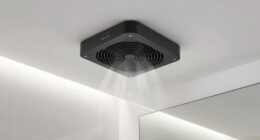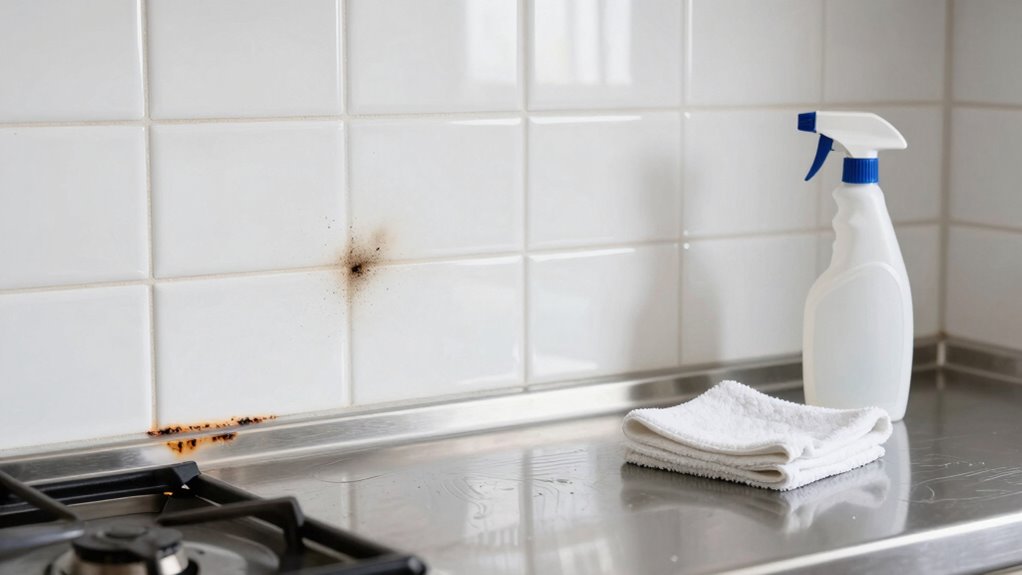

After a small kitchen fire, you should first guarantee the fire is completely out and ventilation is improved by opening windows and activating exhaust fans. Wear protective gloves and masks to guard against soot and fumes. Clean surfaces gently with warm water and mild soap, removing loose soot with a vacuum or soft brush. Tackle stubborn stains with baking soda or vinegar and dry everything thoroughly. To fully eliminate odors, consider placing bowls of vinegar or baking soda around the area. Continuing will give you detailed steps to restore your kitchen safely.
Key Takeaways
- Ensure the fire is fully extinguished, hazards are cleared, and ventilation is established before cleaning.
- Wear protective gear like gloves and masks to prevent soot inhalation and skin contact.
- Remove loose soot with a vacuum or soft brush, then wipe surfaces with a damp, mild soap solution.
- Clean fabrics and upholstery separately using hot water and odor-neutralizing agents like vinegar or baking soda.
- Rinse, dry thoroughly, and use odor absorbers or professional treatments for persistent smoke smells.

After a small kitchen fire, cleaning up quickly and carefully is essential to restore safety and cleanliness. Fire incidents, even minor ones, can leave behind soot, smoke residues, and lingering odors that pose health risks and make your kitchen look unappealing. Your first priority is to guarantee that the fire is completely out and that any hazards, like lingering smoke or hot spots, are addressed. Once you’re certain everything is safe, you can begin the cleaning process.
Start by ventilating the area. Open windows and turn on exhaust fans to clear out smoke and fumes. Good airflow helps reduce odors and prevents smoke particles from settling further into surfaces. Next, wear protective gear, such as gloves and a mask, to avoid inhaling soot or coming into contact with potentially harmful residues. Before touching anything, assess the damage and identify the most affected areas—these will need the most attention.
Begin cleaning with a gentle approach. Use a vacuum cleaner with a HEPA filter or a soft brush to remove loose soot from countertops, cabinets, and appliances. Be careful not to scrub too hard, as this can push soot deeper into surfaces. For hard surfaces, mix warm water with a mild, degreasing dish soap. Dampen a cloth or sponge and wipe down counters, walls, and appliances. Rinse the cloth frequently to avoid spreading soot around. For stubborn stains, you might need a specialized soot cleaner or a mixture of baking soda and water, which acts as a gentle abrasive.
Don’t forget to clean fabric items, such as curtains or dish towels, which can trap smoke odors. Wash these items separately in hot water with a strong detergent, or consider using a vinegar rinse to neutralize odors. For cabinets and drawers, remove everything and wipe inside thoroughly. Pay close attention to corners and crevices, where soot and debris tend to accumulate. You may need a small brush or toothbrush to get into tight spots.
Once you’ve wiped down all surfaces, rinse with clean water and dry everything thoroughly. Dampness can encourage mold, especially in humid environments, so guarantee all items are completely dry. If the smoke odor persists, place bowls of white vinegar or baking soda around the kitchen to absorb smells. For more stubborn odors, consider a professional cleaning or ozone treatment. Remember, patience is key; thorough cleaning takes time but is vital to making your kitchen safe and clean again after a fire.
Frequently Asked Questions
Can I Use Vinegar to Remove Soot Stains?
Yes, you can use vinegar to remove soot stains. Mix equal parts white vinegar and water in a spray bottle, then spray it onto the soot-covered areas. Let it sit for a few minutes to loosen the grime, then gently scrub with a soft cloth or sponge. Rinse with clean water and dry thoroughly. Vinegar’s natural acidity helps break down soot without damaging your surfaces.
How Long Should I Wait Before Cleaning After a Fire?
You should wait at least 24 hours before cleaning after a fire, allowing smoke and soot to settle. If possible, give it 48 hours for better results. During this time, ventilate the area well. Rushing to clean too soon can spread soot and damage surfaces. Once enough time has passed, you can start gentle cleaning, using the right cleaning agents like vinegar for soot stains, to restore your kitchen.
Is It Safe to Reuse Kitchen Appliances After a Fire?
You shouldn’t reuse kitchen appliances after a fire until they’ve been thoroughly inspected and cleaned by a professional. Fire damage can compromise their safety, and residual soot or electrical issues might pose risks. Even if they look fine, it’s better to have an expert assess them first. Don’t take chances—prioritize safety, and replace any appliances that show signs of damage or haven’t been properly evaluated.
What Protective Gear Is Recommended During Cleaning?
You should wear gloves, goggles, and a mask when cleaning after a fire. Gloves protect your skin from soot and chemicals, goggles shield your eyes from debris and irritants, and a mask prevents inhaling harmful smoke particles. It’s a common myth that masks aren’t necessary, but they’re essential for safety. Always use protective gear to avoid inhaling toxins and keep your skin safe during the cleanup process.
Should I Replace Appliances Damaged by Smoke?
Yes, you should substitute appliances damaged by smoke. Smoke can seep into electrical components and cause lingering odors or safety hazards. Even if appliances appear undamaged, smoke residue can compromise their function and pose health risks. You’ll want to have a professional inspect them, and if necessary, replace any that show signs of smoke infiltration or damage. Prioritizing safety helps ensure your kitchen remains safe and clean.
Conclusion
After cleaning up, you might wonder if the fire could ignite again from lingering residues. Remarkably, some experts believe that thorough removal of soot and grease actually reduces the risk of future fires, as these materials are highly combustible. By ensuring your kitchen is spotless, you not only restore its appearance but also create a safer space. So, taking the time to clean properly isn’t just about aesthetics — it’s about preventing another small fire from starting again.