To prevent ceiling fans from spreading dust, regularly clean the blades and components using a microfiber cloth or vacuum with a brush attachment. Turn off the fan and let the blades stop completely before wiping both sides gently, paying attention to corners and intricate designs. For stubborn spots, lightly dampen your cloth—never soak the blades—and consider deep cleaning or removing blades for thorough care. Keep up with routine maintenance to maintain air quality and fan efficiency; more tips lie ahead.
Listen free for 30 days with Audible
Thousands of audiobooks and originals — cancel anytime.
As an affiliate, we earn on qualifying purchases.
Key Takeaways
- Regularly dust and wipe ceiling fan blades to prevent dust buildup and reduce airborne particles.
- Use a microfiber cloth and gentle cleaner to thoroughly clean both sides of the blades.
- Turn off and wait for blades to stop before cleaning to avoid injury or damage.
- Vacuum motor housing and other components to remove accumulated dust and debris.
- Perform routine cleaning every few months to maintain air quality and prolong fan lifespan.
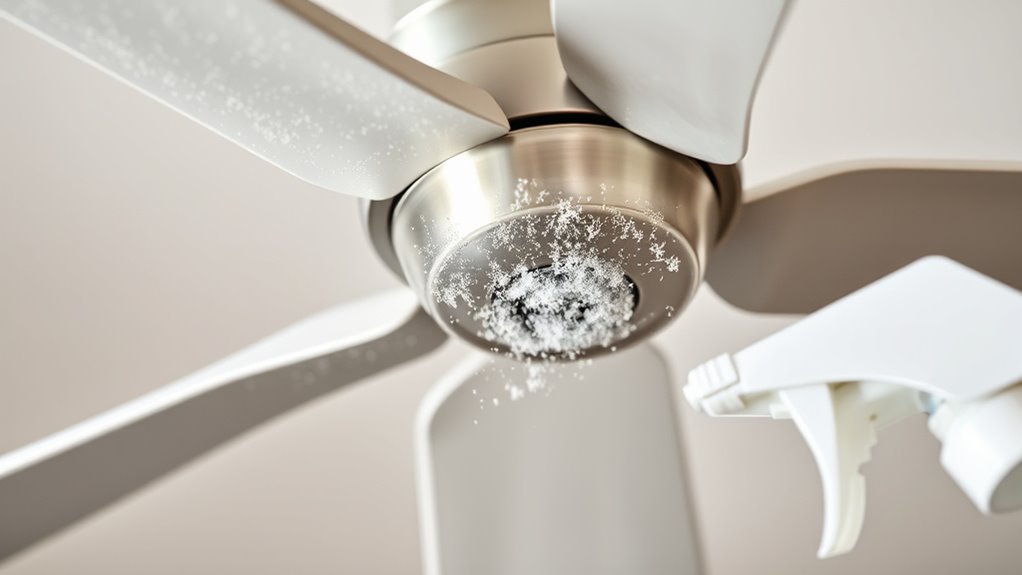
Keeping your ceiling fans clean is essential for maintaining good air quality and ensuring they operate efficiently. Over time, dust, dirt, and allergens accumulate on the blades, and when the fan turns on, these particles get thrown into the air, reducing indoor air quality. Regular cleaning not only keeps your home healthier but also prolongs the lifespan of your fan and improves its performance. Additionally, a clean fan can help prevent free floating dust from settling around your home. Start by turning off the fan and ensuring the blades have come to a complete stop. This prevents any accidents or unnecessary dust being thrown around during cleaning. Before you begin, gather your supplies: a sturdy step ladder, a microfiber or dusting cloth, a gentle cleaner or a mixture of water and mild dish soap, and a vacuum with a brush attachment if needed. If your fan has a lot of built-up grime, you might also want to keep some all-purpose cleaner handy. Carefully climb the ladder, ensuring it’s stable, and reach the blades comfortably. Use a microfiber cloth or a dusting tool to wipe each blade from the center to the edge. Be gentle, as blades can be delicate or slightly warped over time. For stubborn dirt or sticky spots, lightly dampen your cloth with a cleaning solution, but avoid soaking the blades to prevent water from seeping into the motor housing. Wipe both sides of each blade to remove dust and grime thoroughly. If your ceiling fan has a decorative or intricate design, use a vacuum with a brush attachment to remove loose dust before wiping. This step saves you from spreading dust around and makes cleaning more effective. Once you’ve wiped all blades, inspect the motor housing and other components for dust build-up. Use a dry cloth or a vacuum attachment to clear any debris, being careful not to disturb electrical parts. For fans with removable blades, you might find it easier to take them down and clean them separately. Submerge them in a sink filled with soapy water, scrub gently, rinse, and dry thoroughly before reattaching. This method ensures a deep clean, especially if your blades are especially dirty or greasy. Finally, after cleaning, double-check that all parts are dry before turning the fan back on. Regular maintenance, about once every few months, keeps dust at bay, improves air quality, and helps your ceiling fan run smoothly. By staying consistent with this routine, you’ll enjoy a cleaner, healthier home environment and extend the life of your ceiling fan for years to come.

LEVOIT Air Purifier for Home Allergies and Pets Hair Smokers in Bedroom, H13 True HEPA Filter, 24db Filtration System Cleaner Odor Eliminators, Remove 99.97% Dust Smoke Mold Pollen, Core 300, White
- AHAM Verified for Performance: Independently tested for air quality and efficiency
- Powerful Filtration System: 56W motor with 143 CFM CADR
- Effective for Large Rooms: Cleans 222 sq ft 4.8 times/hour
As an affiliate, we earn on qualifying purchases.
Frequently Asked Questions
How Often Should I Clean My Ceiling Fan?
You should clean your ceiling fan at least once every two to three months. If you notice more dust or allergies, consider cleaning it more often, like monthly. Regular cleaning prevents dust buildup, improves air quality, and keeps the fan running efficiently. Use a microfiber cloth or duster, and turn off the fan before cleaning. Staying consistent guarantees your fan stays clean and your space healthier.
Can I Use Water to Clean Ceiling Fan Blades?
Yes, you can use water to clean ceiling fan blades, but make sure to do it carefully. Dampen a microfiber cloth with water or a mild detergent solution, then gently wipe each blade to remove dust and grime. Avoid soaking the cloth too much to prevent water from dripping onto the motor. After cleaning, dry the blades with a clean, dry cloth to prevent streaks or water spots.
Are There Eco-Friendly Cleaning Options for Ceiling Fans?
Yes, there are eco-friendly cleaning options for your ceiling fan. You can use natural solutions like vinegar and water or a mix of baking soda and water to clean the blades effectively. Microfiber cloths are also eco-friendly and excellent for trapping dust without chemicals. These options are safe, sustainable, and help reduce your environmental impact while keeping your ceiling fan clean and dust-free.
How Do I Reach Hard-To-Access Ceiling Fan Blades?
To reach hard-to-access ceiling fan blades, grab a sturdy ladder or step stool for stability. Use a microfiber cloth or an extendable duster to clean the blades thoroughly. If needed, spray a gentle cleaning solution onto the cloth, not directly on the fan. Move steadily and carefully, ensuring you don’t lose your balance. With patience and the right tools, you’ll get those tricky blades spotless in no time.
What Tools Are Best for Cleaning Ceiling Fan Motor Parts?
You should use a soft, lint-free cloth or microfiber cloth to clean ceiling fan motor parts gently. A small, soft brush or paintbrush helps reach tight spots and remove dust from vents and crevices. For stubborn grime, lightly dampen the cloth with a mild cleaning solution. Avoid harsh chemicals or abrasive tools, as they could damage delicate motor components. Regular cleaning keeps your fan running smoothly and extends its lifespan.

MOOKA Air Purifier for Bedroom Home Dorm 430 Ft², Compact HEPA Air Cleaner
- True HEPA Filter with 360° Air Intake: Removes dust, smoke, pollen, pet dander
- Compact & Portable Design: Powered via USB for versatile use
- Universal Voltage Compatibility: Works with 110-240V power sources
As an affiliate, we earn on qualifying purchases.
Conclusion
Now that you know how to clean your ceiling fan properly, imagine the difference it’ll make—fewer allergens, a fresher room, and a fan that works more efficiently. But here’s the twist: the next time you turn it on, will you notice a difference in the air quality almost instantly? Don’t wait too long—your dusty fan might be hiding more than just dirt. Ready to give it a fresh start? The clean air is just a step away.

AromaRoom Air Purifiers, Quiet Air Cleaner For Pets, Baby Room,Home
- Effective Air Circulation: Circulates air twice per hour in 323 ft² room
- High-Efficiency HEPA Filter: Captures 99.97% of airborne particles
- Sleep Mode: Operates at 22 dB for quiet sleep
As an affiliate, we earn on qualifying purchases.

Air Purifiers for Bedroom, FULMINARE H13 True HEPA Filter(Black)
- HEPA Filtration: H13 True HEPA filter for efficient particle removal
- High Circulation: 360° air outlet with dual-channel technology
- Room Coverage: Covers up to 215 sq ft / 20 m²
As an affiliate, we earn on qualifying purchases.
Atlantic Hurricane Season Peak Picks
hurricane prep
As an affiliate, we earn on qualifying purchases.