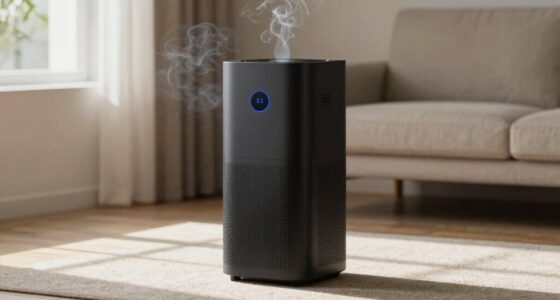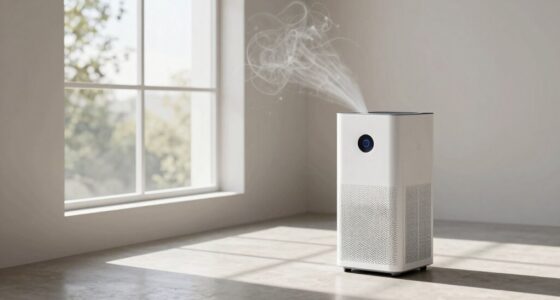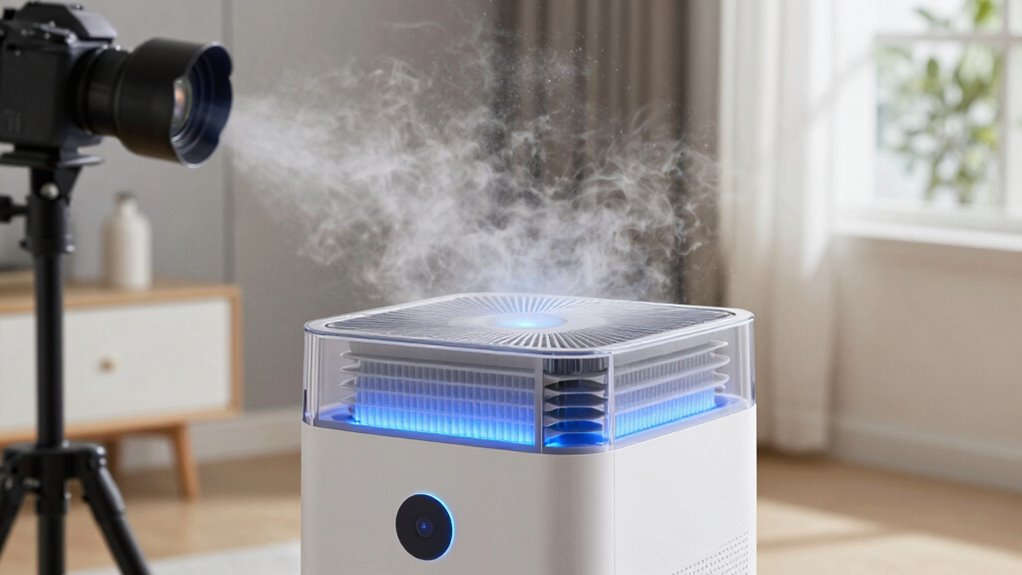

Basic HEPA filters alone can’t fully eliminate odors because they only trap airborne particles like dust and pollen, not gases or volatile smell compounds. Odors from cooking, smoke, or pets are caused by chemicals floating in the air, which HEPA filters can’t neutralize. To really improve your indoor air, you need to use additional solutions like activated carbon that absorb these gaseous odors. Keep going to discover how combining technologies can make a big difference.
Key Takeaways
- HEPA filters only capture particles, not the gaseous molecules responsible for odors.
- Odors are caused by volatile organic compounds (VOCs) that require chemical absorption for removal.
- Combining HEPA with activated carbon or similar materials effectively neutralizes both particles and gases.
- Relying solely on HEPA can cause odors to linger or recirculate in the environment.
- A comprehensive air purification system addresses both particulate and gaseous contaminants for better odor control.
Have you ever relied solely on HEPA filters to tackle stubborn odors? If so, you might have noticed that, while they’re excellent at capturing airborne particles like dust, pollen, and pet dander, they often fall short when it comes to eliminating strong or persistent smells. That’s because HEPA filters are primarily designed for air filtration, trapping particles but not necessarily neutralizing or absorbing odors caused by volatile compounds. To truly get rid of odors, you need to go beyond just filtering the air—you need a solution that addresses the chemical nature of smells.
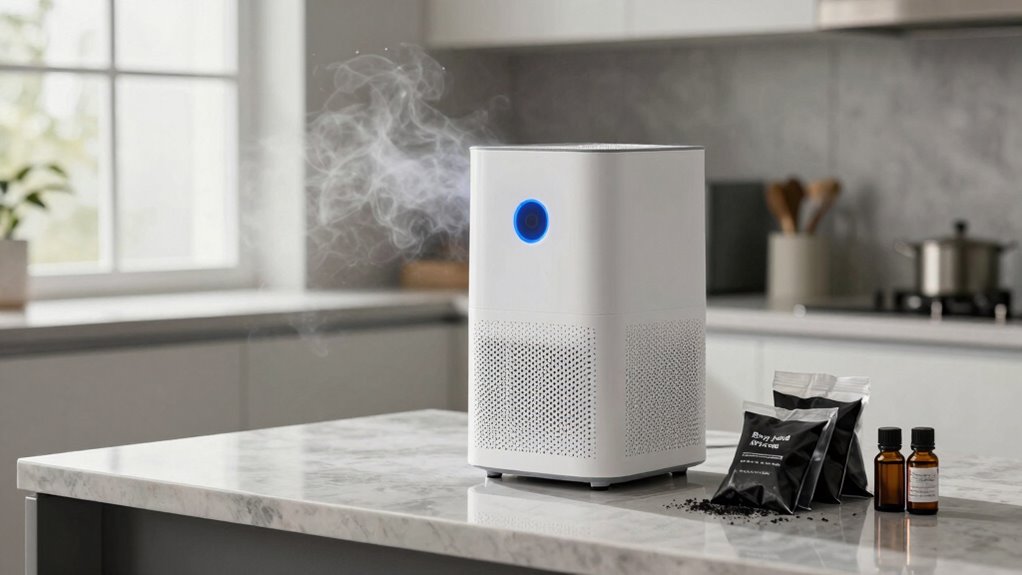
Odors often originate from gases or volatile organic compounds (VOCs) that float freely in the air. HEPA filters don’t absorb these chemicals; instead, they trap particles around them, which can sometimes lead to odors lingering even after filtration. That’s where chemical absorption comes into play. Air purification systems equipped with activated carbon or other chemical absorbers actively attract and neutralize odor-causing molecules. These materials work by adsorbing gases onto their surfaces, effectively removing the source of the smell rather than just capturing particles. Combining air filtration with chemical absorption creates a more all-encompassing approach, tackling both particulate matter and gaseous odors.
Relying solely on HEPA filters might give you a false sense of clean air, but it doesn’t guarantee the elimination of unpleasant smells. For example, cooking odors, cigarette smoke, or pet odors are often better addressed with systems that incorporate activated carbon filters or other chemical absorbers. These help to detoxify the air by chemically interacting with odor molecules, reducing their presence at the source. Without this chemical absorption, the odor molecules may simply recirculate or settle back into your environment, making your efforts seem ineffective. Understanding the science of odor elimination helps you choose the most effective methods for your environment. Additionally, recognizing the different methods of air purification allows you to tailor your approach based on the specific odors you encounter.
In the end, understanding the difference between air filtration and chemical absorption is key to effective odor control. HEPA filters are an essential part of the process, but they shouldn’t be the only tool in your arsenal. To truly keep your environment fresh and odor-free, you need a system that incorporates both these approaches—capturing particles and chemically neutralizing odors—to achieve clean, fresh air that you can rely on. Recognizing the importance of air purification technologies helps you make better choices for maintaining a healthy indoor environment. Furthermore, exploring additional odor control methods can provide more comprehensive solutions for persistent odors.

MOOKA Air Purifiers for Home Large Room up to 1076ft², H13 True HEPA Air Filter Cleaner, Odor Eliminator, Remove Smoke Dust Pollen Pet Dander, Night Light, B-D02L White
MOOKA B-D02L AIR PURIFIER FOR LARGE ROOM: With the high-efficiency filtration system, the air purifier covers an area…
As an affiliate, we earn on qualifying purchases.
As an affiliate, we earn on qualifying purchases.
Frequently Asked Questions
Can HEPA Filters Alone Eliminate All Odors Effectively?
Hepa filters alone can’t eliminate all odors effectively because they mainly target airborne particles, not smells. For thorough air purification and odor absorption, you need additional features like activated carbon filters, which soak up odors. Combining HEPA with odor-absorbing technologies ensures your space stays fresh and clean, especially when dealing with persistent or strong odors. So, for truly effective odor control, look beyond basic HEPA filters.
What Other Technologies Work Alongside HEPA for Odor Control?
You should combine HEPA filters with air purification technologies like activated carbon or chemical absorption filters. HEPA captures particles, but odors require additional methods. Chemical absorption filters effectively neutralize smells by trapping odor-causing molecules. This combination guarantees a more thorough odor control, especially in spaces with persistent or strong smells. So, for better air quality, use HEPA alongside these odor-specific technologies to achieve ideal results.
How Often Should Odor-Specific Filters Be Replaced?
You should replace odor-specific filters every 3 to 6 months to maintain ideal air quality. Regular filter maintenance is essential because odor filters can become saturated over time, reducing their effectiveness. If you notice lingering smells or decreased air quality, it’s a sign you need a new filter sooner. Consistent replacement guarantees your air remains fresh and free of unpleasant odors, supporting healthy indoor environments.
Are There Specific Odors That HEPA Filters Can’t Remove?
Some odors, especially strong chemical smells like paint fumes or cigarette smoke, can slip past HEPA filters. You might visualize a faint, lingering cloud evading capture, revealing that chemical absorption and odor neutralization are essential. HEPA filters excel at trapping particles but fall short on chemically active odors, so you’ll need specialized filters or treatments that target these stubborn smells for complete freshness.
What Role Do Activated Carbon Filters Play in Odor Control?
Activated carbon filters play a vital role in odor control by using chemical filtration to adsorb odors effectively. Their adsorption efficiency allows them to trap and neutralize volatile organic compounds and other odor-causing particles that basic HEPA filters can’t capture. When you incorporate activated carbon filters into your air purification system, you enhance odor removal, ensuring fresher, cleaner air, especially in spaces with persistent or strong smells.

Air Purifiers for Home with H13 Quiet HEPA Filter Up to 1076 Ft² for Pet Hair, Odors, Pollen, Smoke, Compact Air Cleaner with 3 Speeds, Timer, Aroma Quiet 360°Intake Filter, White
Effortless Operation: Simplified control panel with intuitive design makes it easy to operate. No complicated setup—just one tap,…
As an affiliate, we earn on qualifying purchases.
As an affiliate, we earn on qualifying purchases.
Conclusion
You might think a HEPA filter alone keeps odors at bay, but imagine trying to block a wildfire with just a bucket of water — it’s simply not enough. Odor molecules are sneaky, often requiring specialized filters or treatments to truly vanish. Think of odor control as a team effort, where HEPA is the sturdy shield, but activated charcoal or ozone tech acts like firefighters, snuffing out the lingering flames. Together, they keep your space fresh and inviting.
MOOKA Air Purifiers for Home Large Room up to 1076ft², H13 True HEPA Air Filter Cleaner, Odor Eliminator, Remove Smoke Dust Pollen Pet Dander, Night Light, B-D02L White
MOOKA B-D02L AIR PURIFIER FOR LARGE ROOM: With the high-efficiency filtration system, the air purifier covers an area…
As an affiliate, we earn on qualifying purchases.
As an affiliate, we earn on qualifying purchases.
Air Purifiers for Home with H13 Quiet HEPA Filter Up to 1076 Ft² for Pet Hair, Odors, Pollen, Smoke, Compact Air Cleaner with 3 Speeds, Timer, Aroma Quiet 360°Intake Filter, White
Effortless Operation: Simplified control panel with intuitive design makes it easy to operate. No complicated setup—just one tap,…
As an affiliate, we earn on qualifying purchases.
As an affiliate, we earn on qualifying purchases.