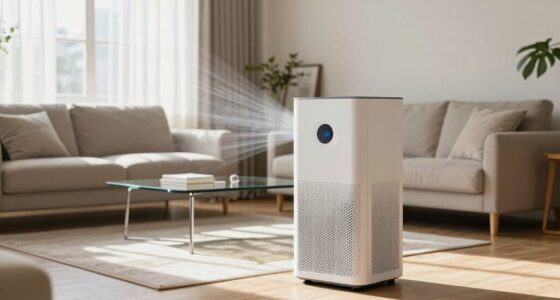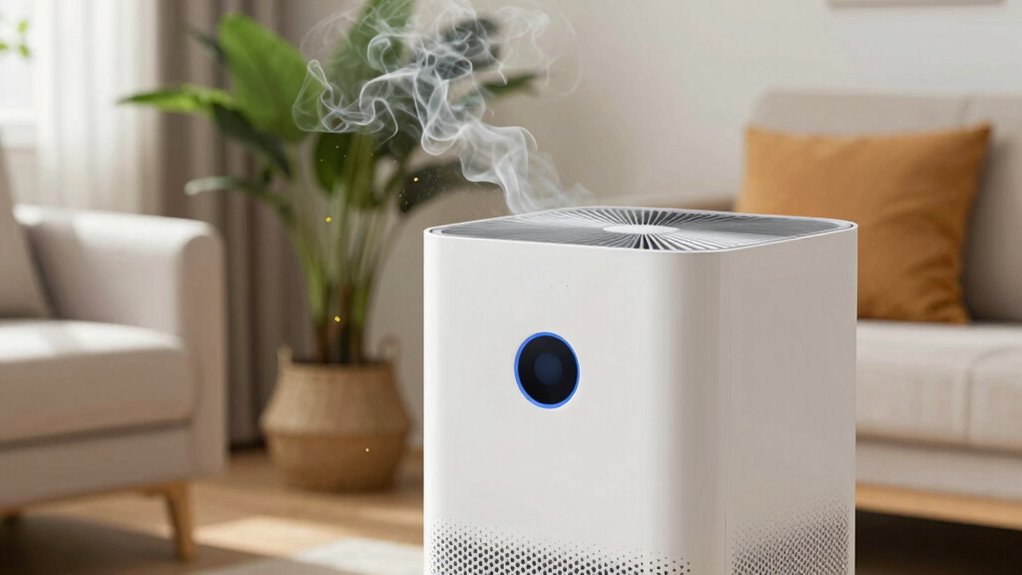
A purifier is better for smoke when it has high air exchange rates and dense activated charcoal filters that quickly remove gases, odors, and smoke particles. These features guarantee rapid air turnover and effective gas adsorption, preventing smoke from lingering or settling. While allergen purifiers focus on trapping small particles with HEPA filters, smoke purifiers prioritize fast, large-volume air processing. Keep exploring to discover how these differences can help improve your indoor air quality.
Listen free for 30 days with Audible
Thousands of audiobooks and originals — cancel anytime.
As an affiliate, we earn on qualifying purchases.
Key Takeaways
- High air exchange rates rapidly remove smoke particles and gases from the environment.
- Dense activated charcoal filters adsorb smoke odors and chemical compounds more effectively.
- Purifiers designed for smoke prioritize quick air turnover over small particle filtration.
- Regular filter replacement maintains gas and odor removal efficiency specific to smoke.
- Focus on gas/odor filtration capabilities enhances effectiveness against smoke compared to allergens.

Have you ever wondered why some air purifiers effectively tackle smoke but struggle with allergies? The difference largely comes down to how these devices handle air exchange and the types of filters they use. Smoke particles are usually larger and denser, so purifiers designed to remove them often prioritize rapid air exchange—meaning they pull in large volumes of air quickly to trap the particles before they settle or disperse. This high air exchange rate is essential because it guarantees that smoke doesn’t linger, providing immediate relief in spaces affected by cigarette smoke, wildfires, or cooking fumes. However, this same approach can sometimes fall short when it comes to allergens, which are often much smaller and require more specialized filtration.
The filter lifespan plays a significant role here, too. Air purifiers aimed at smoke removal tend to use filters with dense activated charcoal layers that adsorb gases and odors effectively. These filters need to be replaced regularly because their capacity to trap smoke particles and chemicals diminishes over time. If the filter isn’t maintained, the purifier’s ability to handle smoke diminishes, even if the air exchange remains high. In contrast, allergy-focused purifiers often use HEPA filters designed to trap tiny particles like pollen, dust mites, and pet dander. While HEPA filters are excellent at capturing allergens, they may not be as effective at removing smoke gases unless combined with activated carbon filters. Additionally, filter maintenance is crucial to ensure ongoing effectiveness and prevent the buildup of trapped pollutants that could reduce airflow.
The design priorities for smoke versus allergens also influence their effectiveness. Smoke purifiers often emphasize rapid air exchange and high-capacity filters to quickly clear out pollutants, which is why they excel in smoke-heavy environments. Allergy purifiers, on the other hand, may focus more on filter quality and filtration efficiency at capturing small particles, rather than sheer air turnover. Because of this, a purifier that’s optimized for smoke might not have the same level of detail in filtering tiny allergens, and vice versa. Additionally, air exchange rate is crucial in determining how quickly pollutants are removed from a space, especially in situations where immediate improvement is needed. Understanding these important concepts in filtration helps you choose the right device for your needs. If you’re dealing with smoke, look for an air purifier with a high air exchange rate and a filter designed to handle gases and odors. Keep in mind that filter lifespan is critical—regular maintenance ensures the purifier continues performing well. If allergies are your main concern, prioritize HEPA filters and consider models that combine HEPA and activated carbon filtering to cover both particles and gases. Knowing how air exchange and filter lifespan affect each type of pollutant helps you make smarter choices, ensuring your space stays healthier and more comfortable. Additionally, filter efficiency plays a key role in how well your purifier performs over time and in different environments.
air purifier with activated charcoal filter for smoke
As an affiliate, we earn on qualifying purchases.
As an affiliate, we earn on qualifying purchases.
Frequently Asked Questions
Can a Purifier Target Both Smoke and Allergens Simultaneously?
Yes, a purifier can target both smoke and allergens simultaneously. Look for multi-purpose purifiers equipped with allergy-specific filters, like HEPA filters, which trap tiny particles from pollen to pet dander. For smoke, activated carbon filters absorb odors and harmful chemicals. Combining these features guarantees your purifier effectively handles both issues at once, providing cleaner air and a healthier environment for you.
Do Purifier Filters Need Frequent Replacement for Smoke Removal?
Yes, purifier filters need frequent replacement for smoke removal to maintain ideal airflow and filtration efficiency. Smoke particles can clog filters quickly, reducing airflow and making the purifier work harder. By replacing filters regularly, you guarantee consistent airflow maintenance and extend the filter’s lifespan. Check the manufacturer’s guidelines for replacement frequency, typically every 3 to 6 months, especially if you’re dealing with heavy smoke or long-term use.
Are HEPA Filters Effective Against Smoke Particles?
Did you know HEPA filters can trap 99.97% of particles as small as 0.3 microns? They’re highly effective against smoke particles, improving air quality considerably. HEPA filters work by capturing airborne particles, including smoke, pollen, and pet dander. However, for peak performance, you need to monitor filter lifespan and replace them regularly. This guarantees your purifier continues to effectively remove smoke and maintain healthier indoor air.
How Does Room Size Affect Purifier Choice for Smoke?
Room size directly impacts your purifier choice for smoke. Larger rooms require a purifier with higher capacity, measured in CADR (Clean Air Delivery Rate), to effectively filter the smoke particles. If your room is small, a lower-capacity purifier works fine. Always match the purifier’s capacity to your room size for maximum smoke removal. Using the right size ensures cleaner air without overworking the device.
Can Purifier Noise Levels Impact Allergy Sufferers?
Yes, purifier noise levels can impact allergy sufferers. High noise levels might cause discomfort or stress, potentially aggravating allergy symptoms. If you’re sensitive, look for models with quiet operation modes or lower decibel ratings. Choosing a purifier with adjustable noise settings allows you to maintain a peaceful environment, reducing allergy impact while ensuring effective air purification. Always consider noise levels alongside filtration efficiency for the best experience.
high air exchange rate smoke purifier
As an affiliate, we earn on qualifying purchases.
As an affiliate, we earn on qualifying purchases.
Conclusion
So, next time you buy a purifier, remember: it might clear your allergies, but don’t expect it to tackle the smoky chaos outside. Ironically, the device designed to make your air better could be more of a hero for your allergies than for the smoke that’s really wreaking havoc. Sometimes, it’s the invisible menace that deserves the most attention—yet your fancy purifier might just be happily ignoring it while fussing over pollen.
HEPA and activated carbon air purifier for allergies and smoke
As an affiliate, we earn on qualifying purchases.
As an affiliate, we earn on qualifying purchases.
large capacity smoke removal air purifier
As an affiliate, we earn on qualifying purchases.
As an affiliate, we earn on qualifying purchases.
NFL season / tailgating Picks
team gear
As an affiliate, we earn on qualifying purchases.