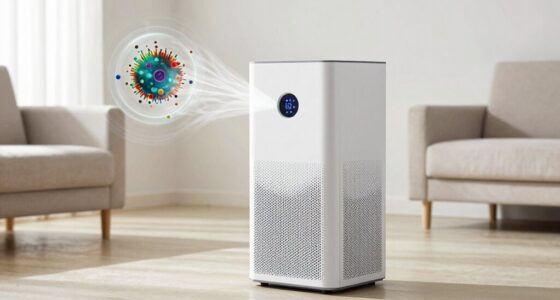
When you see “lbs of carbon” in a filter, it tells you how much activated carbon is packed inside, indicating its size and potential capacity to adsorb pollutants. However, it doesn’t directly measure how well the filter performs or how long it will last, since other factors like carbon quality, design, and airflow also matter. To truly understand a filter’s effectiveness, you’ll want to look beyond weight — there’s more to explore here.

Get health and wellness essentials delivered free — and shop member deals
- Fast, free delivery on millions of items
- Access to Prime Big Deal Days deals on October 6–7
- Prime Video, Amazon Music and more included
Key Takeaways
- “Lbs of Carbon” indicates the amount of activated carbon in the filter, reflecting its potential capacity for pollutant adsorption.
- A higher weight generally suggests a larger or more durable filter but doesn’t guarantee longer lifespan.
- The weight doesn’t account for carbon quality, type, or surface area, which also impact filtration effectiveness.
- Proper filter design and airflow are crucial; weight alone doesn’t ensure optimal performance.
- “Lbs of Carbon” is a useful indicator but should be considered alongside other factors like filter quality and environmental conditions.

Carbon filters are an effective way to improve indoor air quality by removing odors, chemicals, and pollutants. When you see a filter labeled with a certain “pounds of carbon,” it might seem straightforward, but that number actually holds more meaning than you might realize. It indicates how much activated carbon is packed into the filter, but it doesn’t directly tell you how well it will perform or how long it will last. The weight gives you a general idea of the filter’s capacity, but other factors, like the type of carbon used and the surface area, play vital roles in its effectiveness.
Understanding what “lbs of carbon” really tells you helps you make smarter choices. A higher weight usually means more carbon, which can adsorb more pollutants before needing replacement. For example, a 10-pound filter might last longer or handle larger spaces better than a 2-pound one. However, it’s not just about size; the quality and type of activated carbon matter. Some carbons are specially processed to target specific chemicals or odors, making them more efficient even if they’re smaller or lighter. So, a smaller, high-quality carbon filter can outperform a larger, generic one in certain situations.
Additionally, factors like filter design influence how effectively the carbon interacts with air passing through it, impacting overall performance. You should also consider the airflow rate and how much air passes through the filter. A heavier filter with more carbon typically has a higher capacity, but if the airflow is too fast or the filter isn’t designed properly, it may not adsorb pollutants effectively. Conversely, a filter with less carbon might still perform well if it’s designed for smaller spaces or lower contaminant levels. Keep in mind that the lifespan of the filter depends on how much pollution it encounters and how often you replace it. The “pounds of carbon” figure doesn’t tell you how long it’ll last in your specific environment; that depends on your air quality and usage.
Frequently Asked Questions
How Does the Shape of Carbon Affect Filtration Efficiency?
The shape of carbon notably impacts filtration efficiency. You’ll find that granular activated carbon offers a high surface area, capturing impurities effectively. Conversely, pellet or block shapes provide longer contact time and are better for steady filtration. When choosing a filter, consider how the shape influences flow rate and contact time, ensuring you get ideal removal of contaminants for your specific needs.
Can Carbon Filters Remove All Types of Odors?
No, carbon filters can’t remove all types of odors. They work best on common smells like smoke, pet odors, and cooking fumes, but won’t fully eliminate chemical or volatile organic compound (VOC) odors. To maximize effectiveness, choose a filter with the right type of activated carbon and proper size for your space. Regular maintenance also helps guarantee your filter continues to neutralize odors effectively.
How Often Should I Replace My Carbon Filter?
You should replace your carbon filter every 3 to 6 months, depending on usage and odor level. If you notice a decrease in air quality or persistent odors, it’s time for a change. Regularly check the filter for signs of saturation or clogging. Keep an eye on manufacturer recommendations, as some filters may need more frequent replacements, especially in high-odor environments or heavy-use settings.
Do Larger Pounds of Carbon Always Mean Better Filtration?
Larger pounds of carbon don’t always mean better filtration. While more carbon can increase capacity, other factors like porosity, particle size, and contact time matter just as much. If you choose a filter with more pounds but poor quality or inadequate design, your filtration might suffer. Focus on the filter’s specifications and your specific needs, rather than just the weight of the carbon, to guarantee peak performance.
Are There Environmental Concerns With Disposing of Used Carbon Filters?
You need to contemplate the environmental impact of disposing of used carbon filters. While they effectively purify air or water, their spent carbon can trap contaminants, making disposal tricky. If not handled properly, these filters can release pollutants into the environment. Recycling programs exist, but not everywhere. So, you should weigh the benefits against potential environmental harm and look for eco-friendly disposal options or reusable alternatives.
Conclusion
Remember, not all that glitters is gold, and the same goes for “lbs of carbon” in filters. While a higher weight might seem better, it doesn’t always guarantee cleaner air or water. Focus on the quality and type of carbon, not just the numbers on the label. By doing your research, you’ll make smarter choices and avoid falling for marketing tricks. After all, knowledge is power—so stay informed and choose wisely.
Fall Picks
fall essentials
As an affiliate, we earn on qualifying purchases.