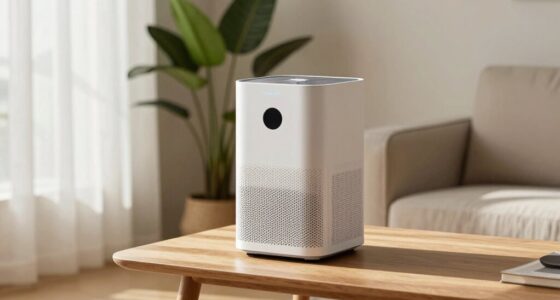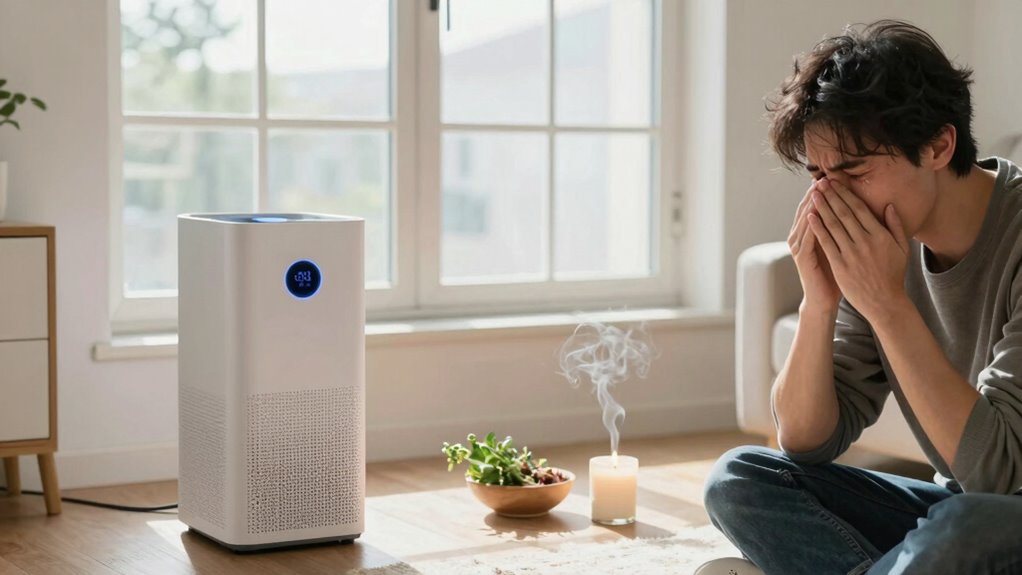
Understanding the differences between smoke, odor, and allergy purifier needs helps you pick the right system for your home. Smoke demands high-efficiency filters like HEPA to capture tiny particles from cigarettes or wildfires. Odor control mainly needs activated carbon filters to neutralize smells from cooking or pets. Allergies benefit from HEPA filters that trap common airborne allergens like pollen or dust mites. Knowing these distinctions ensures you choose the best purifier—continue to learn how to optimize your indoor air quality.

Get health and wellness essentials delivered free with Prime
- Fast, free delivery on millions of items
- Prime Video, Amazon Music and more included
- Member-only deals all year
Key Takeaways
- Smoke removal requires high-efficiency particulate filters like HEPA to trap tiny particles from cigarettes, wildfires, or cooking.
- Odor neutralization depends on activated carbon filters that absorb VOCs and airborne smell molecules.
- Allergies are best addressed with HEPA filters to capture pollen, dust mites, pet dander, and mold spores.
- Combining HEPA and carbon filters offers comprehensive protection against smoke, odors, and allergens.
- Proper maintenance and timely filter replacement are essential for sustained purifier effectiveness across all needs.

If you’re dealing with persistent smoke, unpleasant odors, or allergies, finding the right purifier is essential for creating a healthier indoor environment. Each of these issues requires a specific approach, and understanding the differences can help you choose the best device for your needs. When it comes to air quality improvement, you need to consider what pollutants are most problematic in your space. Smoke from cigarettes, cooking, or wildfires contains tiny particles that linger in the air and can be harmful when inhaled. To effectively remove these, look for purifiers with high-efficiency particulate air (HEPA) filters, which trap particles as small as 0.3 microns. These filters are key for improving air quality and reducing health risks associated with smoke inhalation.
Unpleasant odors, however, are often caused by volatile organic compounds (VOCs) or other airborne molecules that aren’t necessarily captured by standard HEPA filters. For odors, activated carbon filters are essential. They absorb and neutralize smells from pets, cooking, or smoke, making your indoor environment more pleasant. When selecting an air purifier for odors, ensure it has a sufficient carbon filter layer and replace it regularly to maintain optimal performance. Regular purifier maintenance is crucial here because clogged filters diminish efficiency, and neglecting filter changes allows odors and particles to recirculate, negating the purifier’s benefits. Incorporating air filtration technologies can enhance odor removal and overall air quality. Additionally, understanding the behavior of airborne pollutants can help you select a purifier that’s most effective for your specific needs.
Allergy sufferers face a different set of airborne allergens, such as pollen, dust mites, pet dander, and mold spores. An effective allergy purifier should combine HEPA filtration with proper airflow to capture these allergens before they trigger symptoms. Consistent purifier maintenance, including timely filter replacements, ensures that the air remains clean and allergen-free. You’ll also want a device that’s easy to service, so you stay on top of filter changes and keep the purifier functioning at peak performance. This ongoing maintenance not only prolongs the lifespan of your device but also guarantees continuous air quality improvement.
Ultimately, the key distinction between smoke, odor, and allergy purifier needs lies in the type of pollutants you aim to eliminate. While some purifiers are versatile enough to handle multiple concerns, specialized units often deliver better results for specific issues. Regular maintenance is essential regardless of the purifier type, as it ensures your device operates efficiently and provides consistent air quality improvement. Additionally, understanding air pollutants and how they behave can help you select a purifier that’s most effective for your specific needs. By understanding these differences and committing to proper upkeep, you’ll create a healthier, more comfortable indoor space tailored to your unique needs.
Products Worth Considering

Levoit Eleva 300X HEPA Air Purifier for Home and Bedroom

Levoit Vital 100S-P Air Purifier with Washable Pre-Filter

Coway Airmega 250 Air Purifier for Large Rooms
As an affiliate, we earn on qualifying purchases.
Frequently Asked Questions
Can One Purifier Effectively Address All Three Issues Simultaneously?
Yes, some multi-purpose purifiers can effectively address smoke, odor, and allergens simultaneously. Look for models with HEPA filters for allergen removal and activated carbon filters to tackle smoke and odors. These purifiers are designed to handle multiple issues in one device, making them convenient for thorough air cleaning. However, guarantee the purifier’s specifications match your specific needs for peak allergen removal and odor control.
How Often Should I Replace Filters for Optimal Performance?
You should replace your filters every 3 to 6 months for peak performance. Studies show that filter lifespan directly impacts air purifier efficiency, especially in removing smoke, odors, and allergens. Regular replacement guarantees your unit functions at its best, maintaining clean air in your space. Keep an eye on your filter’s condition and follow the manufacturer’s recommended replacement frequency to prevent buildup and maximize your purifier’s effectiveness.
Are There Specific Features to Look for in Allergy Purifiers?
When choosing allergy purifiers, look for HEPA filters and activated carbon features. HEPA filters trap tiny allergens like pollen, dust mites, and pet dander effectively, improving air quality. Activated carbon filters help remove odors and airborne irritants, making your environment more comfortable. Guarantee the purifier has a high-quality HEPA filter and sufficient activated carbon to target your specific allergy triggers, and check that filters are easy to replace for ongoing maintenance.
Do Smoke Purifiers Eliminate All Types of Airborne Toxins?
Think of smoke purifiers as gatekeepers, but even they can’t catch every villain in the air. While they excel at air filtration and toxin removal, they don’t eliminate all airborne toxins. Some particles, gases, and chemicals may slip through, especially if the purifier isn’t designed for full-spectrum toxin removal. For thorough clean air, look for models with activated carbon filters and advanced filtration stages.
Can Purifiers Improve Indoor Air Quality in Large Open Spaces?
Yes, purifiers can improve indoor air quality in large open spaces if you focus on airflow efficiency and strategic purifier placement. Position units where air circulates best, such as near high-traffic areas or air entry points. Guarantee the purifier has enough capacity for the space, and use multiple units if needed. Proper airflow and placement help maximize filtration, reducing airborne pollutants, odors, and allergens effectively across the entire area.
Conclusion
Understanding the differences between smoke, odor, and allergy purifiers helps you choose the right one for your needs. Did you know that indoor air pollution can be up to five times worse than outdoor air? By selecting the appropriate purifier, you can drastically improve your home’s air quality and reduce health risks. Don’t wait—invest in the right purifier today and breathe easier, knowing you’re protecting yourself and your loved ones from harmful airborne irritants.