
TL;DR
A pilot study using specially formulated chewing gum has successfully helped a man regain his sense of taste and smell after years of loss due to COVID-19. The trial involved 16 participants, with significant improvements reported.
A man who lost his sense of taste and smell after contracting COVID-19 has reportedly regained both senses through a specially-developed chewing gum as part of a clinical trial. The trial, conducted by researchers at the University of Nottingham, involved 16 participants and showed promising results, with one participant, Dr. Paul Wicks, experiencing full recovery after six weeks.
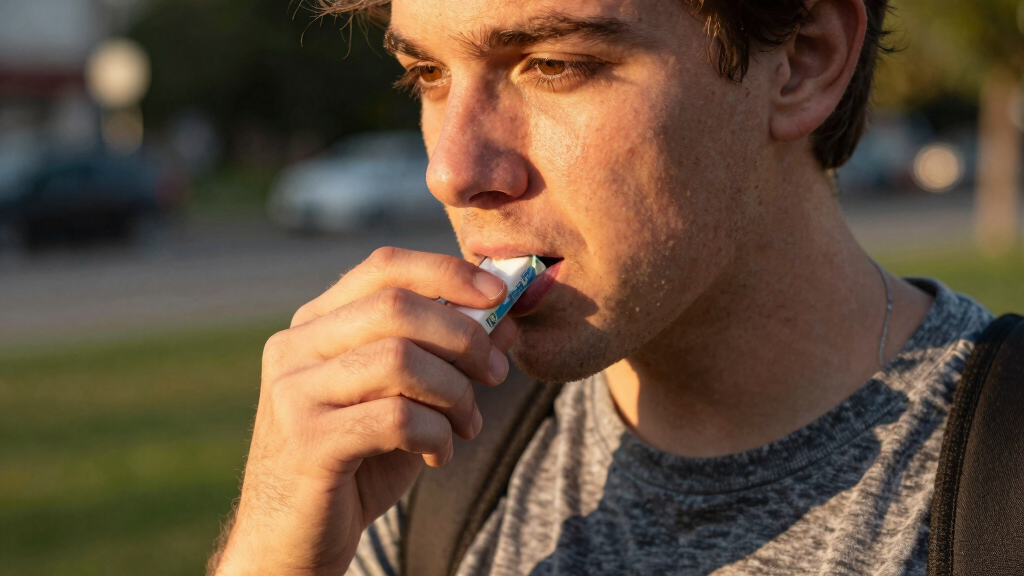
The trial was designed to stimulate brain connections associated with taste and smell by having participants chew flavoured gums with different intense flavours, including spicy, minty, sour, and sweet. Some researchers believe that sensory stimulation may also be linked to other natural remedies. Dr. Wicks, a 44-year-old medical researcher from Staffordshire, had lost his senses in August 2022 and had not recovered them prior to the trial.
According to Dr. Wicks, he first noticed signs of recovery after tasting a blueberry in his breakfast, which he described as a ‘sweet flavour explosion.’ Over the subsequent weeks, he regained the ability to smell and taste various substances, including his children’s hair and his deodorant. He noted that the experience has renewed his appreciation for sensory experiences and memories linked to smell.
The trial, led by Dr. Nicole Yang, was conducted remotely, with participants using specially formulated chewing gums at home. Results showed that 67% of participants experienced improved smell, and 83% reported enhanced taste. The researchers believe that the flavours in the gums, which change as they are chewed, may help retrain sensory pathways damaged by COVID-19.
Why It Matters
This development is significant because it offers a potential non-invasive treatment for long-term anosmia and ageusia caused by COVID-19, conditions that have affected millions worldwide. Historical cases show that sensory loss has been a challenge for centuries. Restoring senses can improve quality of life, emotional well-being, and memory formation, which are often impaired by sensory loss.
The success of this pilot study could lead to larger trials and eventual widespread use of similar therapies, providing hope for those with persistent sensory impairments after COVID-19 infection.
sensory retraining chewing gum for taste and smell recovery
As an affiliate, we earn on qualifying purchases.
As an affiliate, we earn on qualifying purchases.
Background
Since the onset of the COVID-19 pandemic, many survivors have experienced long-lasting loss of taste and smell, often referred to as ‘long COVID.’ While some recover these senses naturally, others remain affected for years. Previous research has explored various therapies, but none have shown consistent success. This trial at Nottingham is among the first to demonstrate that targeted sensory training via flavoured chewing gum might stimulate neural pathways involved in taste and smell recovery.
“When I tasted that blueberry, it was like a switch flipped. I felt like I was tasting my breakfast for the first time in years.”
— Dr. Paul Wicks
“The flavours in the chewing gum are designed to stimulate and retrain the brain’s sensory pathways, offering a new approach to treating long-term smell and taste loss.”
— Dr. Nicole Yang
COVID-19 taste and smell recovery gum
As an affiliate, we earn on qualifying purchases.
As an affiliate, we earn on qualifying purchases.
What Remains Unclear
It remains unclear whether the observed improvements will be sustained long-term and if the treatment will be effective for a broader population. Larger, controlled trials are needed to confirm efficacy and safety. Research into natural substances continues to explore potential therapies for sensory recovery.
flavored chewing gum for anosmia
As an affiliate, we earn on qualifying purchases.
As an affiliate, we earn on qualifying purchases.
What’s Next
The research team at Nottingham plans to secure funding for a larger-scale clinical trial to validate these findings. They aim to refine the formulation and assess long-term effects, with hopes of developing an accessible treatment for long COVID-related sensory loss. Understanding natural preservation can inspire innovative approaches to sensory health.
As an affiliate, we earn on qualifying purchases.
Key Questions
While initial results are promising, the current study involved only 16 participants. Larger trials are needed to determine if it is effective for everyone with similar symptoms.
How does the chewing gum work to restore senses?
The specially formulated flavours are designed to stimulate neural pathways involved in taste and smell, potentially retraining the brain to recognize these senses again.
Is this treatment available now?
No, the chewing gum is still in experimental stages. Further research and clinical trials are required before it can be widely recommended or marketed.
How long does it take to see results?
In the trial, some participants reported initial improvements after six weeks of regular use, but individual responses may vary.
Source: Hacker News