TL;DR

Get health and wellness essentials delivered free — and shop member deals
- Fast, free delivery on millions of items
- Access to Prime Big Deal Days deals on October 6–7
- Prime Video, Amazon Music and more included
A 2026 analysis in Public Policy & Aging Report says policies are not keeping pace with the barriers older adults face during extreme heat. The authors call for region-specific measures addressing cooling costs, housing conditions, renter protections and access to cooling centers.
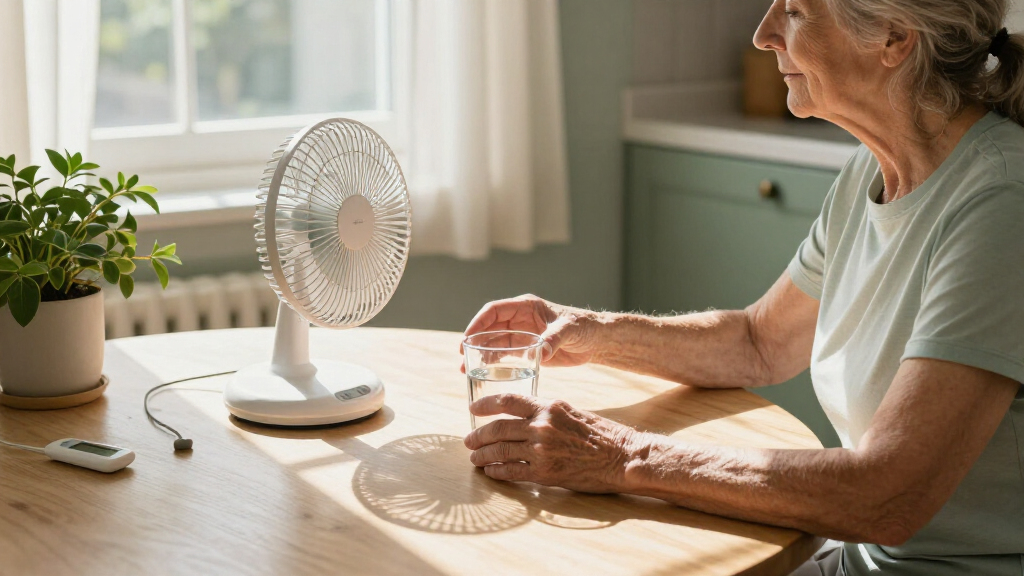
A new analysis published in Public Policy & Aging Report says U.S. policies have not kept pace with extreme heat risks for older adults, many of whom face barriers to staying cool beyond simply obtaining an air conditioner. The authors point to utility bills, equipment upkeep, mobility limitations and overheated housing as problems that can leave older people exposed during heat waves.
The article, “On the Regional Spectrum of Barriers and Obstacles for Older Adults Facing Extreme Heat: Air Conditioning and Beyond,” argues that access to cooling equipment does not guarantee a safe home. Older adults may be unable to afford electricity or repairs, or may have difficulty installing and maintaining window units. Cognitive decline can also make it harder to recognize dangerous indoor temperatures or respond to them, the authors say.
The researchers describe heat risks as varying by region. In the desert Southwest, cooling systems can be necessary for safety, but performance standards may not guarantee that homes stay below dangerous temperatures. The analysis cites Phoenix’s 70 days at or above 110°F (43°C) in 2024. It notes that some Arizona rental rules require working air conditioning capable of cooling a residence to 20°F below the outdoor temperature; on very hot days, that could still leave indoor temperatures above 90°F.
In the Northeast, older buildings designed to retain winter warmth may trap heat, while many lack central air conditioning. The authors say regulations and assistance programs have not kept up with summer cooling needs, even as public support for heating costs is available in winter. They also identify limits to cooling centers, including transportation, operating hours, mobility, safety concerns and lack of awareness.
Cooling Access Goes Beyond Equipment
The analysis matters because extreme heat can pose health risks that are not resolved by installing air conditioning alone. Aging can reduce the body’s ability to regulate temperature, and chronic conditions such as diabetes and neurodegenerative diseases, as well as some medications, may add to heat-related vulnerability, according to the report.
The authors link heat exposure with cardiovascular and respiratory problems, sleep disruption, cognitive impairment and mental health concerns. These are claims discussed in the analysis, not findings from a new clinical trial. Its policy focus is practical: residents need cooling they can afford to operate, maintain and use, and buildings must provide safer indoor conditions during sustained heat.
A regional approach could affect housing rules, utility support and emergency services. A policy suited to Phoenix may not address the risks in Boston, where building age and limited cooling infrastructure are central concerns. The researchers argue that heat protections should account for those differences while making safe indoor temperatures attainable for older residents.
energy-efficient window air conditioners for seniors
As an affiliate, we earn on qualifying purchases.
As an affiliate, we earn on qualifying purchases.
Different Risks Across U.S. Regions
The report frames extreme heat as a growing U.S. challenge and reviews barriers facing older adults across different housing and climate conditions. It does not present a new national estimate of heat-related illness or deaths; rather, it assesses how existing policies and services may fall short.
In parts of Arizona, rental requirements address whether air-conditioning systems work and how quickly repairs must be made. The analysis argues that a rule based on the outdoor temperature can still allow indoor conditions above 90°F when outside temperatures are exceptionally high. In Boston and other Northeastern communities, older housing may retain heat, while cooling standards and summer energy assistance are less developed than winter heating support, according to the authors.
The paper recommends stronger renter protections, indoor temperature standards, expanded utility assistance, cooling-system maintenance and replacement support, and more accessible cooling centers. It calls for those measures to reflect regional climate, housing and infrastructure rather than relying on a single national solution.
“Air conditioning only protects people if they can afford to run it, maintain it and use it safely.”
— Amir Baniassadi, assistant scientist II at the Hinda and Arthur Marcus Institute for Aging Research at Hebrew SeniorLife and a co-author
portable cooling fans with heat recovery
As an affiliate, we earn on qualifying purchases.
As an affiliate, we earn on qualifying purchases.
The Scale of Remaining Exposure
The source material does not provide a new estimate of how many older adults lack reliable cooling, how many experience unsafe indoor temperatures, or how many heat-related illnesses are attributable to the barriers described. The analysis is a policy assessment; the supplied report does not describe it as a national survey or clinical study.
It is also unclear from the available information how widely the cited Arizona rental rules apply, how often homes meet their cooling requirements in practice, or which proposed policies have been adopted. The article identifies cooling-center access problems but does not quantify how many older adults cannot use those services. Those details would be needed to measure the reach and effects of specific interventions.
As an affiliate, we earn on qualifying purchases.
Policy Measures to Watch
The authors call for policy responses that address both immediate cooling and the conditions that make it usable. Areas to watch include whether states and cities adopt clearer indoor temperature standards, strengthen renter protections, expand summer utility assistance, and fund air-conditioning repair or replacement.
Local governments and service providers may also consider how cooling centers can be made easier to reach, with hours and transport options that fit older adults’ needs. The report does not announce a particular policy timetable or identify a forthcoming government decision. Any assessment of progress will depend on whether proposed protections are adopted and whether they measurably improve indoor safety and access to cooling.
cooling centers transportation assistance
As an affiliate, we earn on qualifying purchases.
As an affiliate, we earn on qualifying purchases.
Key Questions
What is the new analysis about?
It examines barriers that can prevent older adults from staying safe during extreme heat, including cooling costs, equipment maintenance, housing conditions and access to cooling centers.
Why may older adults face greater heat risks?
The analysis says aging can reduce the body’s ability to regulate temperature. It also notes that chronic conditions and some commonly prescribed medications can increase heat-related risks.
Does having air conditioning guarantee protection?
No. The authors say protection also depends on whether people can afford to operate and maintain a system and whether it can keep indoor temperatures safe.
What policies do the researchers recommend?
They recommend region-specific measures, including stronger renter protections, indoor temperature standards, expanded utility assistance, cooling-system support and more accessible cooling centers.
What remains unknown?
The source does not quantify how many older adults face unsafe indoor temperatures or estimate the effects of the proposed policies. It also does not give a timetable for policy changes.
Source: rss
Cold & flu season Picks
humidifiers
As an affiliate, we earn on qualifying purchases.