
TL;DR

Get health and wellness essentials delivered free with Prime
- Fast, free delivery on millions of items
- Prime Video, Amazon Music and more included
- Member-only deals all year
Recent observations indicate that using HEPA air purifiers might lead to measurable improvements in brain function after just one month. While this trend is gaining attention, scientific confirmation remains limited. The development underscores potential health benefits of air purification, but further studies are needed to validate claims.
Emerging reports and increased public interest suggest that using HEPA air purifiers may lead to improved brain function within just one month of regular use, though scientific validation is still pending. You can explore our guide on 13 Best HEPA Air Purifiers for 1200 Sq Ft in 2026 to find options suitable for larger spaces.
Recent trend signals indicate a surge in searches and media coverage around the potential cognitive benefits of HEPA air purifiers. While no peer-reviewed studies have conclusively proven this link, some preliminary observations and anecdotal reports suggest that improved air quality may support better mental clarity and focus. For more targeted use, consider our 12 Best HEPA Air Purifiers for Classrooms in 2026.
Experts caution that current evidence is largely observational, and claims about rapid cognitive enhancement should be viewed with skepticism until rigorous scientific research confirms these effects. The interest appears to be driven by broader concerns about air pollution’s impact on health, combined with the increasing popularity of air purifiers in homes and workplaces.
Health authorities and researchers emphasize that while air purification can reduce airborne pollutants, attributing quick and significant improvements in brain function requires more comprehensive clinical trials. If you’re considering a large space, check out our 7 Best HEPA Air Purifiers for 2500 Sq Ft in 2026.
Potential Impact of Air Purifiers on Cognitive Health
If confirmed by scientific studies, the idea that HEPA air purifiers can enhance brain function within a month could have significant implications for public health. It might encourage wider adoption of air purification devices, especially among vulnerable populations such as the elderly or those with respiratory conditions.
Improved indoor air quality could become a non-invasive, accessible strategy to support mental health and cognitive performance, particularly in urban environments with high pollution levels. However, the current lack of definitive evidence means that consumers should remain cautious about claims of rapid benefits.
This trend also underscores the importance of further research into environmental factors affecting brain health, potentially opening new avenues for preventive strategies and therapeutic interventions.
As an affiliate, we earn on qualifying purchases.
Rising Interest in Indoor Air Quality and Cognitive Benefits
The topic of indoor air quality has gained momentum over recent years, driven by increased awareness of pollution’s health impacts and the proliferation of air purifiers in homes and offices. Search interest in HEPA filters and cognitive health has spiked recently, reflecting a broader public curiosity about environmental influences on mental performance.
While scientific studies have established that air pollution can negatively affect cognitive functions, the notion that air purifiers might produce quick improvements remains unconfirmed. The current trend appears to be fueled by anecdotal reports, social media discussions, and preliminary research, but no large-scale clinical trials have yet validated these claims.
Experts note that the scientific community continues to investigate the links between air quality and brain health, with a focus on long-term effects rather than short-term changes. The current spike in interest may accelerate research efforts and public discourse on this topic.
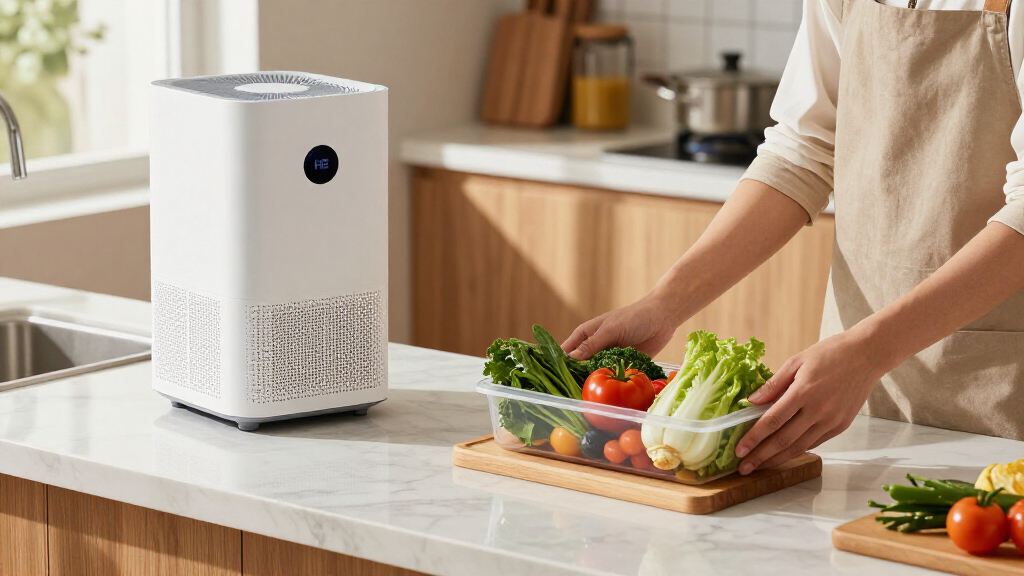
air purifier with HEPA filter for bedroom
As an affiliate, we earn on qualifying purchases.
As an affiliate, we earn on qualifying purchases.
Unverified Claims and Lack of Scientific Consensus
It is not yet confirmed whether HEPA air purifiers can produce measurable cognitive improvements within one month. The current evidence is primarily anecdotal and observational, with no large-scale, peer-reviewed studies to substantiate these claims. Researchers emphasize that more rigorous clinical trials are necessary to establish a causal link.
Additionally, it remains unclear what specific mechanisms might underlie such rapid improvements, and whether other factors contribute to the observed trends. The scientific community is actively investigating these questions, but definitive conclusions are still pending.
portable HEPA air purifier for office
As an affiliate, we earn on qualifying purchases.
As an affiliate, we earn on qualifying purchases.
Upcoming Research and Consumer Guidance
Researchers are expected to conduct controlled clinical trials to test the potential cognitive benefits of HEPA air purifiers over specified periods. These studies will aim to clarify whether the observed trends are scientifically valid or primarily anecdotal.
Meanwhile, health authorities and consumer organizations are advising caution, emphasizing that air purifiers can improve air quality but should not be relied upon as a quick fix for cognitive health. Consumers are encouraged to stay informed about ongoing research and to consider proven health strategies alongside technological solutions.
air purifier for improved cognitive function
As an affiliate, we earn on qualifying purchases.
As an affiliate, we earn on qualifying purchases.
Key Questions
Can HEPA air purifiers really improve brain function in just one month?
There is currently no conclusive scientific evidence confirming that HEPA air purifiers can produce such rapid cognitive improvements. Most claims are anecdotal or based on preliminary observations. More research is needed to verify these effects.
What is the current scientific consensus on air purifiers and mental health?
Scientific consensus acknowledges that air purifiers can reduce airborne pollutants and may support overall health, but there is no definitive proof linking them to quick or significant improvements in brain function.
Should I buy a HEPA air purifier to boost my cognition?
While air purifiers can improve indoor air quality, claims of rapid cognitive benefits should be approached with caution. They should be seen as part of a broader health strategy rather than a quick fix for mental performance.
What kind of research is needed to confirm these claims?
Large-scale, peer-reviewed clinical trials that measure cognitive performance before and after consistent use of HEPA air purifiers over a month or more are needed to establish causality and understand mechanisms.
Source: rss
Cold & flu season Picks
humidifiers
As an affiliate, we earn on qualifying purchases.