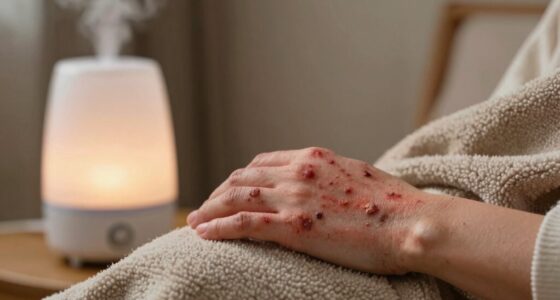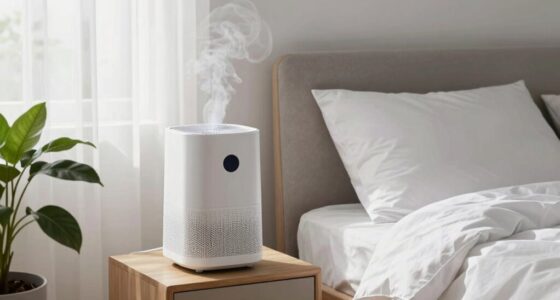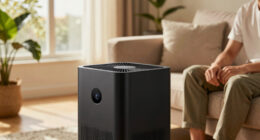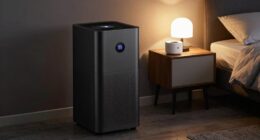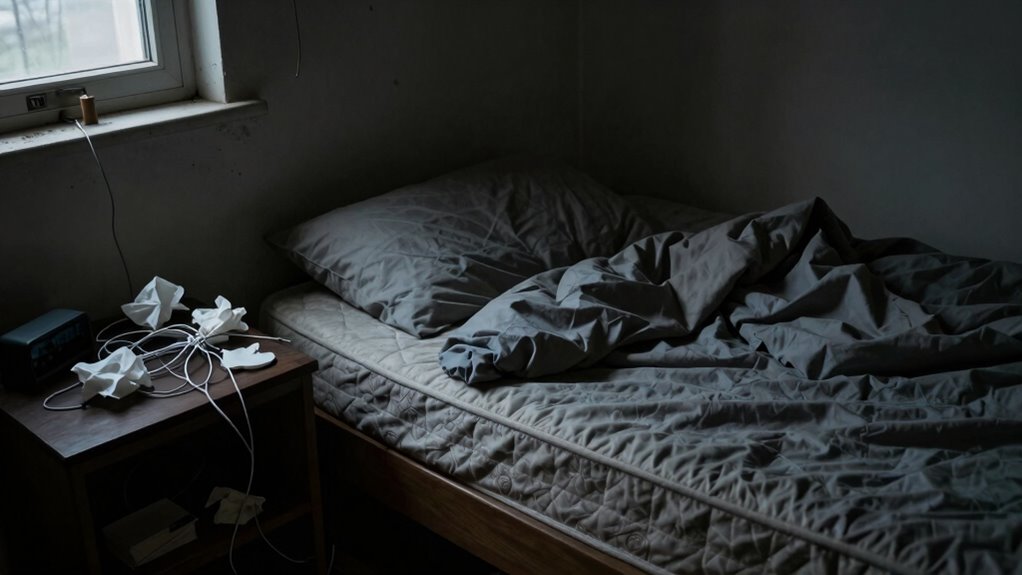
Hidden bedroom conditions like noise, excessive light, and poor air quality can quietly sabotage your sleep comfort. Traffic sounds, neighbor noise, or appliance hums can keep you alert, while bright streetlights or screens can interfere with melatonin production, making it hard to fall asleep. Even small issues like gaps around windows or cluttered air can cause tossing and turning. If you want to discover simple ways to improve your sleep environment, keep exploring these sneaky disruptors.
Key Takeaways
- Unnoticed noise pollution from traffic or appliances can prevent deep, restorative sleep.
- Excessive lighting from streetlamps or screens inhibits melatonin production, disrupting sleep cycles.
- Small environmental issues like gaps around windows or light leaks significantly disturb sleep quality.
- Electronic devices and blue light exposure before bed interfere with melatonin and sleep onset.
- Poor indoor air quality and inadequate ventilation can cause discomfort, affecting sleep comfort and duration.
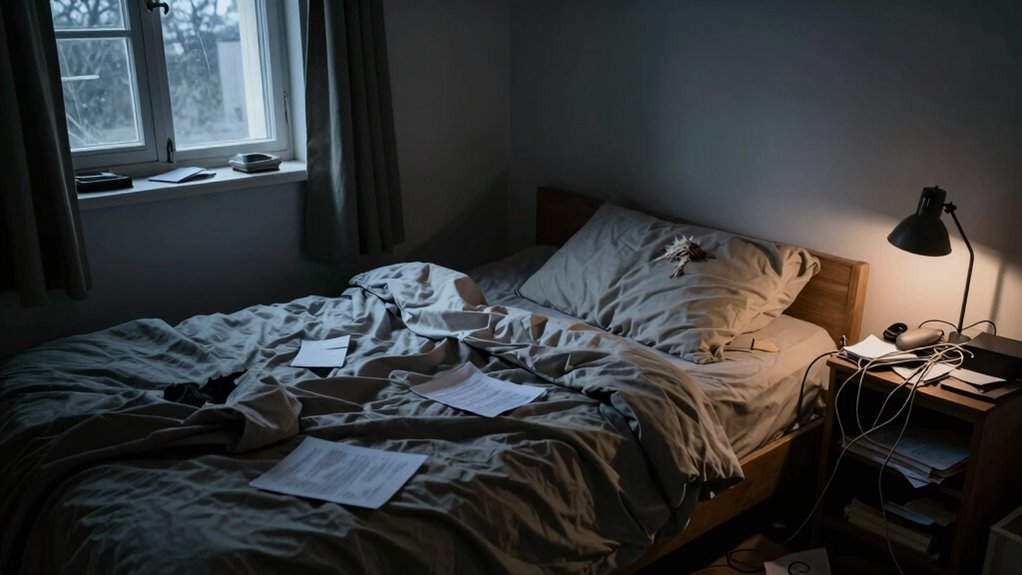
A poor bedroom environment can markedly interfere with your ability to get restful sleep. Two common culprits are noise pollution and excessive lighting. Even minor sounds, like traffic, neighbors, or household appliances, can disrupt your sleep cycles, making it hard to stay in deep rest. Noise triggers your brain to stay alert, preventing you from entering the restorative stages of sleep. Over time, this constant disturbance can leave you feeling tired, groggy, and less focused during the day. It’s easy to underestimate how much noise impacts your sleep quality, but addressing it can make a noticeable difference. Using earplugs, white noise machines, or soundproofing your room can help block out disruptive sounds. Similarly, excessive lighting is another sneaky disruptor. Bright lights, especially from streetlamps, electronic screens, or even hallway illumination, can interfere with your body’s natural production of melatonin—the hormone responsible for regulating sleep. When your room is too bright, your brain gets the signal that it’s daytime, making it difficult to fall asleep or stay asleep through the night. Even small amounts of light can reduce sleep quality, leading to lighter, less restorative sleep cycles. You might not realize how much lighting affects you until you try blackout curtains or sleep masks, which can create a darker, more conducive environment for rest. Both noise pollution and excessive lighting often go unnoticed because they seem minor or unavoidable, but they have a powerful impact on your sleep health. You may find yourself tossing and turning, waking up frequently, or experiencing shallow sleep, all of which diminish your overall restfulness. Addressing these issues isn’t complicated but requires awareness and some adjustments. Sealing gaps around windows, installing heavy curtains, or placing a fan or white noise machine can greatly cut down on external sounds. For lighting, switching to blackout curtains or using a sleep mask can block out intrusive light. Keep electronic devices out of the bedroom or switch them to night mode to reduce glare and blue light emissions. The importance of indoor air quality should not be overlooked when creating a healthy sleep environment, as poor ventilation can also contribute to discomfort and sleep disturbances. Improving ventilation systems can help maintain a fresh and healthy atmosphere in your bedroom, further supporting restful sleep. Additionally, ensuring proper air circulation helps prevent the buildup of pollutants and allergens that can cause breathing issues or discomfort during sleep. Recognizing the role of natural light exposure during the day can also help regulate your circadian rhythm, making it easier to fall asleep at night. The goal is to create a sleep environment that’s as quiet and dark as possible. When you take these steps, you’re setting the stage for uninterrupted, high-quality sleep. Over time, you’ll likely notice more energy, better mood, and improved focus. Small changes in your bedroom environment can have a big impact on your sleep health, so don’t overlook these sneaky disruptors—they might be the key to truly restful nights.
white noise machine for sleep
As an affiliate, we earn on qualifying purchases.
As an affiliate, we earn on qualifying purchases.
Frequently Asked Questions
Can Lighting Affect Sleep Quality Even if It’s Not Too Bright?
Yes, lighting can affect your sleep quality even if it’s not too bright. Dim or blue-toned lights can interfere with melatonin production, making it harder to fall asleep. Nighttime noise and poor air quality are also sneaky disruptors that worsen sleep. Together, these factors can cause restless nights, so it’s best to keep lighting subdued, minimize noise, and improve air quality for a more restful sleep experience.
Do Certain Mattress Materials Cause More Sleep Disruptions?
Ever wonder if your mattress material is quietly sabotaging your sleep? Memory foam can trap heat and cause discomfort, leading to restlessness. If you’re latex sensitive, it might trigger allergies or skin irritation, disrupting your night. These materials don’t just rest silently—they actively influence your sleep quality. Choosing the right mattress, considering your sensitivities, and opting for breathable options can transform your sleep experience from restless to restful.
How Does Room Humidity Influence Sleep Comfort?
Room humidity considerably influences your sleep comfort. Humidity fluctuations can make the air feel stuffy or dry, disrupting your sleep cycles. High humidity encourages mold growth, which can worsen allergies and respiratory issues, keeping you awake. Conversely, low humidity causes dry skin and throat irritation. Maintaining a steady humidity level, ideally between 40-60%, helps prevent mold growth and creates a more comfortable, restful sleep environment for you.
Can Allergens in Bedding Impact Sleep Without Causing Allergies?
Allergens like dust mites and chemical residues in bedding can subtly impact your sleep, even if you don’t experience allergic reactions. Dust mites thrive in bedding, causing discomfort and respiratory irritation that disturb your rest. Chemical residues from detergents or treatments can also emit fumes, disrupting sleep quality. You might not notice these effects directly, but they can lead to restless nights and poor sleep without obvious allergy symptoms.
Does the Presence of Electronic Devices in the Bedroom Affect Sleep?
You might not realize it, but electronic distractions in your bedroom can secretly sabotage your sleep. The placement of bedroom devices matters—keeping them close or within reach encourages late-night scrolling or notifications that interfere with your rest. These electronic devices emit blue light and create mental stimulation, making it harder to fall asleep. To protect your sleep, consider removing or repositioning devices away from your bed, reducing temptation and promoting restful nights.
blackout curtains for bedroom
As an affiliate, we earn on qualifying purchases.
As an affiliate, we earn on qualifying purchases.
Conclusion
Now that you know the sneaky bedroom conditions sabotaging your sleep, it’s easy to see how comfort can slip away unnoticed. Just like a whisper in the dark, small disruptions—be it noise, temperature, or clutter—can keep you restless. But with awareness, you have the power to transform your space into a peaceful sanctuary. Don’t let these hidden annoyances quietly steal your sleep—take control and reclaim your nights for truly restful, rejuvenating sleep.
earplugs for sleep
As an affiliate, we earn on qualifying purchases.
As an affiliate, we earn on qualifying purchases.
sleep mask for insomniacs
As an affiliate, we earn on qualifying purchases.
As an affiliate, we earn on qualifying purchases.