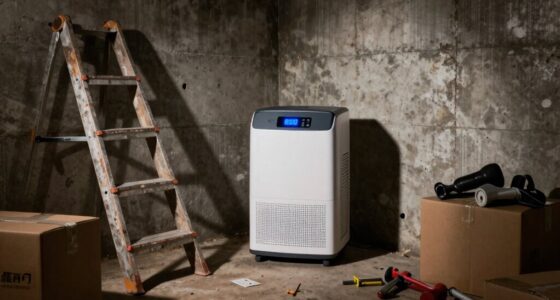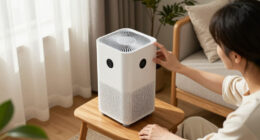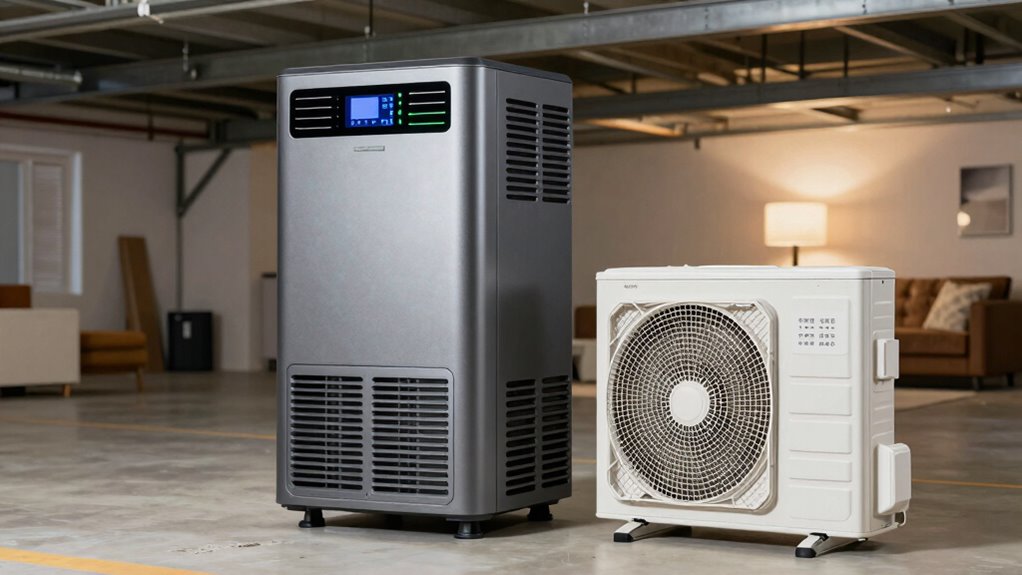
Commercial dehumidifiers are built for large spaces and heavy moisture loads, with powerful components that run continuously. They often have advanced controls, durability for harsh conditions, and higher noise levels. Residential units focus on quiet operation, energy efficiency, and ease of use in smaller areas like homes or basements. If you want to understand more about their key differences, there’s plenty more to explore below.
Listen free for 30 days with Audible
Thousands of audiobooks and originals — cancel anytime.
As an affiliate, we earn on qualifying purchases.
Key Takeaways
- Commercial dehumidifiers are built for larger spaces and higher moisture loads, often featuring heavy-duty materials and advanced controls.
- They operate continuously with more powerful components, while residential units focus on energy efficiency and quiet operation.
- Commercial models tend to be louder, designed for industrial use, whereas residential units prioritize quietness for living environments.
- Commercial units require more complex maintenance and may include integration with building systems, unlike the user-friendly residential models.
- Overall, commercial dehumidifiers are designed for durability and heavy-duty use, while residential units emphasize ease of use and energy savings.
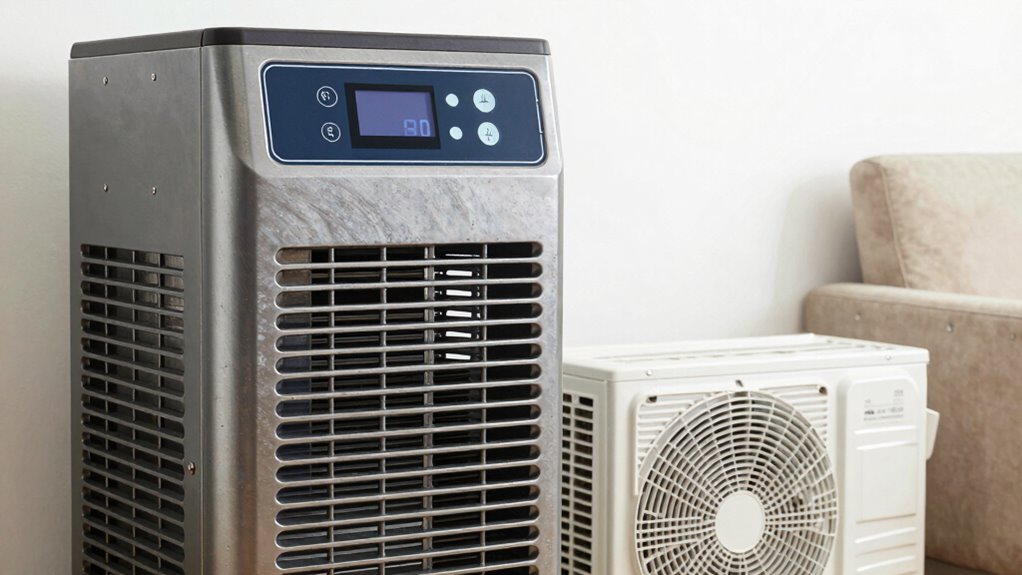
When choosing a dehumidifier, understanding the differences between commercial and residential units is vital because each type is designed for specific needs. Commercial dehumidifiers are built to handle larger spaces and higher moisture loads, making them ideal for industrial settings, warehouses, or large-scale construction sites. These units often feature more robust construction, higher capacity, and advanced controls to manage extensive moisture levels efficiently. In contrast, residential units are tailored for smaller spaces like homes, basements, or apartments, focusing on quiet operation and ease of use.
One of the key differences lies in energy efficiency. Commercial dehumidifiers are generally designed to operate continuously and are equipped with powerful components that maximize moisture removal for their size. While this can mean higher energy consumption per hour, many commercial models incorporate energy-saving features like variable speed fans or smart controls that optimize power use based on real-time conditions. Residential units, on the other hand, prioritize lower energy consumption because they’re intended for less demanding environments and longer operational periods. They often include energy-efficient compressors and user-friendly settings, allowing you to run them for extended periods without noticeably increasing your electricity bill.
Noise levels are another critical factor that sets these units apart. Commercial dehumidifiers tend to be louder because they use larger fans and more powerful motors to process higher moisture loads quickly. If you plan to use a commercial unit in a shared or noise-sensitive environment, you might need to contemplate soundproofing measures or look for models with noise-reduction features. Residential units are designed with quiet operation in mind, so they use smaller fans and quieter motors to ensure they don’t disturb your daily activities or sleep. This focus on noise reduction makes them more suitable for living spaces where comfort and tranquility are priorities. Additionally, some residential models include soundproofing features for added comfort in noise-sensitive settings.
Furthermore, commercial units often come with advanced controls that allow for more precise moisture management and integration with building systems, which is less common in residential models. You also need to take into account the durability and maintenance needs of each type. Commercial dehumidifiers are built with heavy-duty materials that withstand continuous operation and harsh conditions, but they may require more complex maintenance routines. Residential units are easier to maintain and often include user-friendly features like removable filters and straightforward controls. Proper maintenance of commercial dehumidifiers can extend their lifespan and ensure consistent performance, which is crucial for large-scale applications. Additionally, choosing the right type of dehumidifier can contribute to energy efficiency, ultimately reducing operational costs over time.
commercial dehumidifier for large spaces
As an affiliate, we earn on qualifying purchases.
As an affiliate, we earn on qualifying purchases.
Frequently Asked Questions
What Is the Typical Lifespan of a Commercial Dehumidifier?
A commercial dehumidifier typically lasts around 5 to 10 years, but durability factors like build quality and usage intensity influence its lifespan. Regular maintenance, such as cleaning filters and checking for wear, helps extend its life. Unlike residential models, commercial units are built for continuous operation and tougher environments, so staying on top of maintenance requirements guarantees you get the most out of your investment and maximize longevity.
How Energy-Efficient Are Commercial Dehumidifiers Compared to Residential Models?
Commercial dehumidifiers are generally more energy-efficient than residential units, thanks to higher efficiency ratings and advanced technology. They consume less energy per unit of moisture removed, making them cost-effective for large-scale applications. You’ll notice they often have adjustable settings and better airflow management, which optimize energy consumption. Overall, their design and efficiency ratings help reduce operational costs while maintaining powerful moisture control, especially in large or commercial spaces.
Can Commercial Dehumidifiers Operate Continuously Without Maintenance?
A commercial dehumidifier is like a tireless worker, able to run continuously with minimal downtime. You can operate it without frequent maintenance, but regular checks help prevent breakdowns. While operational costs are higher initially, their durability means less frequent repairs. This reliability guarantees your space stays dry efficiently, making them suitable for demanding environments where consistent moisture control is vital, and maintenance frequency remains manageable.
What Are the Noise Level Differences Between Commercial and Residential Units?
Commercial dehumidifiers tend to be louder than residential units due to their higher capacity and powerful motors. Their noise comparison shows they operate at higher decibels, which can be disruptive in quiet environments. However, many commercial models feature sound insulation to reduce noise levels. If noise is a concern, look for units with sound insulation or consider placement strategies to minimize disturbance, especially in sensitive areas.
Are Commercial Dehumidifiers Suitable for Small-Scale Home Use?
Commercial dehumidifiers can be suitable for small-scale home use if you have a large space needing intensive moisture control. However, home installation might be more complex, and the initial cost comparison is higher than residential units. If you need powerful dehumidification and are prepared for the setup, commercial models could work. Otherwise, residential units are typically easier to install, more affordable, and designed for smaller spaces.
As an affiliate, we earn on qualifying purchases.
Conclusion
In the end, choosing between a commercial dehumidifier and a residential unit is like picking the right tool for a job—each shines in its own arena. Commercial models are your heavy-duty champions, tackling larger spaces and tougher conditions with ease, while residential units are perfect for smaller, cozy spaces. Understanding your needs helps you find the perfect fit, ensuring your environment stays dry and comfortable—like a well-orchestrated symphony that keeps everything in perfect harmony.
energy-efficient dehumidifier for basement
As an affiliate, we earn on qualifying purchases.
As an affiliate, we earn on qualifying purchases.
industrial moisture control dehumidifier
As an affiliate, we earn on qualifying purchases.
As an affiliate, we earn on qualifying purchases.
Back to school Picks
back to school
As an affiliate, we earn on qualifying purchases.