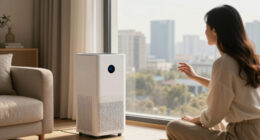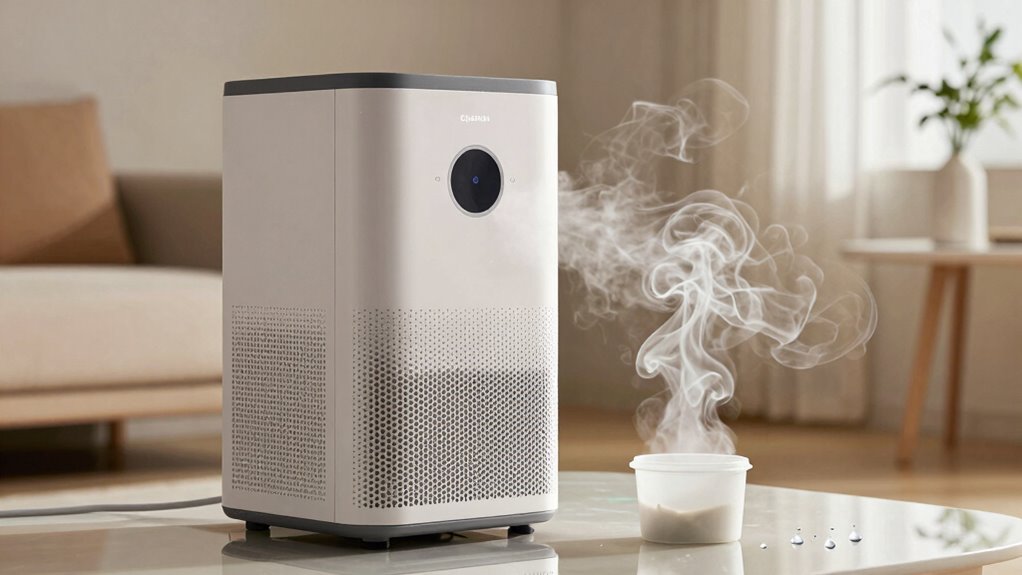

A dehumidifier pulls in humid air and removes excess moisture through a condensation process. It uses cold coils to cool the air, causing water vapor to condense into liquid droplets. These droplets are then collected in a reservoir or drained away, leaving the air drier and more comfortable. As the process continues, your indoor humidity is optimized, improving air quality. Want to know more about types, features, and benefits? Keep exploring!

Get health and wellness essentials delivered free — and shop member deals
- Fast, free delivery on millions of items
- Access to Prime Big Deal Days deals on October 6–7
- Prime Video, Amazon Music and more included
Key Takeaways
- Dehumidifiers manage humidity by extracting excess moisture from the air, creating a comfortable living environment.
- They work by pulling in humid air and condensing water vapor on cold coils, forming liquid water.
- The collected water is either stored in a reservoir or drained away, while drier air is released back into the room.
- Continuous operation helps maintain optimal indoor humidity levels, improving air quality and preventing mold growth.
- Energy-efficient models are available, minimizing environmental impact while effectively managing moisture levels.
What Is a Dehumidifier?
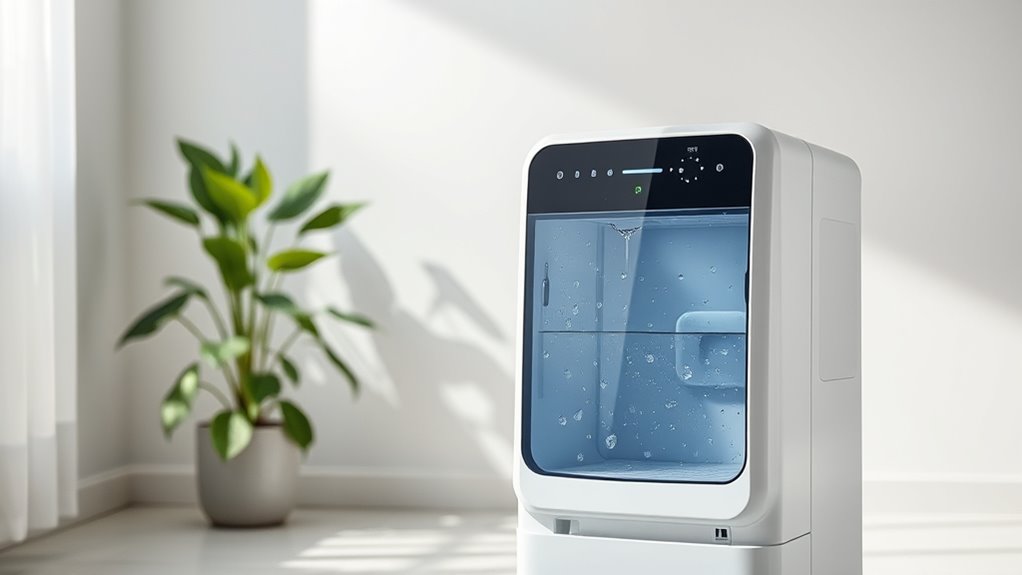
Have you ever wondered what a dehumidifier actually does? At its core, a dehumidifier is a device designed to manage humidity levels in your home. By extracting excess moisture from the air, it helps create a more comfortable living environment. High humidity can lead to mold growth, dust mites, and other issues, so controlling these levels is essential for your health. When you use a dehumidifier, you’re actively engaging in moisture removal, which prevents these problems from arising. You’ll notice that rooms feel less sticky and musty, making it easier to breathe. Additionally, compassionate caregiving is important as it ensures that older adults in your care are living in a healthier environment. Moreover, maintaining optimal humidity levels can significantly reduce mold growth, which can be detrimental to health. A dehumidifier can also enhance your home theatre experience by maintaining color accuracy and preventing the deterioration of projector equipment. Whether it’s a small unit for a bedroom or a larger one for a basement, a dehumidifier plays a key role in maintaining a healthy atmosphere. Regular maintenance of household appliances, including dehumidifiers, can enhance their efficiency and longevity. Additionally, air quality management is crucial as it complements the dehumidifier’s function by ensuring that the air remains pure and free from pollutants.
How Do Dehumidifiers Work?
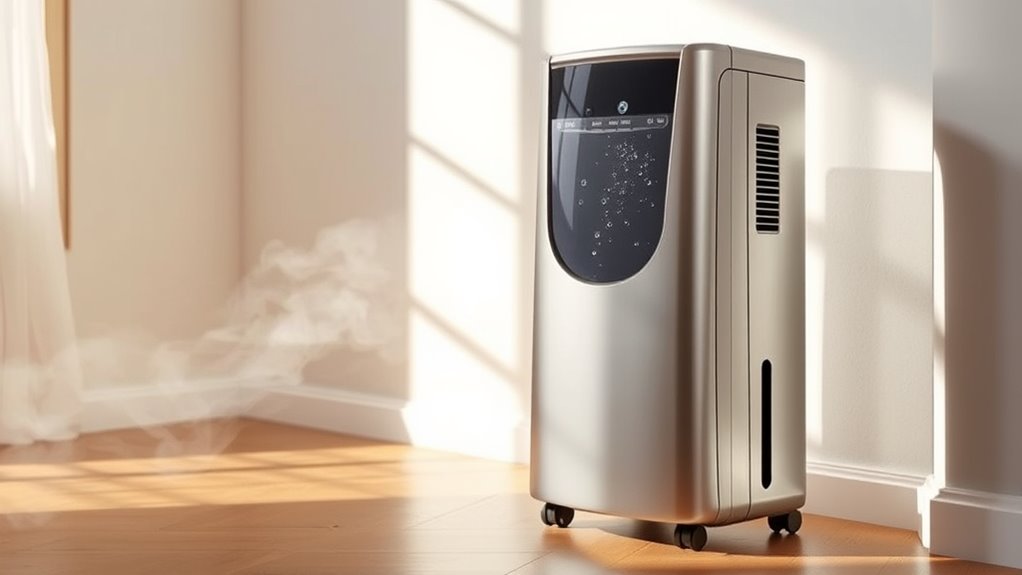
Dehumidifiers work by pulling in humid air and removing excess moisture through a condensation process. You’ll find different types of dehumidifiers, each designed to suit various needs and spaces. Understanding how they function can help you appreciate the benefits of effective moisture control in your home. Additionally, whole-home backup power can be crucial during times of high humidity when moisture levels may impact your dehumidifier’s efficiency. Implementing preventative care can also enhance the overall health of your living environment by reducing mold and allergens associated with excess moisture. Moreover, utilizing professional equipment can significantly improve the performance and effectiveness of dehumidifiers in maintaining optimal humidity levels. Furthermore, smart appliances can provide real-time monitoring of humidity levels, allowing for more precise control and improved comfort in your home. In addition, creative storytelling about the benefits of dehumidifiers can help consumers make informed choices about moisture control solutions.
Condensation Process Explained
When humidity levels rise, a dehumidifier steps in to restore balance by using the condensation process. It works by drawing in air filled with water vapor. As this air passes over cold coils, the temperature change causes the water vapor to condense into liquid water. You’ll notice that droplets form on the coils, collecting in a reservoir or draining away. This process effectively reduces the humidity in your space, making it more comfortable. The air is then released back into the room, now drier and fresher. By continuously cycling air and removing excess moisture, your dehumidifier helps maintain an ideal indoor environment, protecting against mold and improving air quality. Additionally, using energy-efficient technology in dehumidifiers contributes to sustainable cloud solutions, minimizing the environmental impact of moisture removal appliances. Furthermore, maintaining a comfortable humidity level can significantly enhance your overall sleep quality. This is crucial because proper humidity levels can prevent the growth of allergens and enhance respiratory health. Moreover, a well-regulated environment can also support better practices such as deep breathing techniques to help reduce tension and stress. A dehumidifier not only enhances comfort but also plays a key role in ensuring software quality assurance, which is essential for maintaining user satisfaction in smart home devices.
Types of Dehumidifiers
While you’re exploring ways to manage humidity in your home, understanding the different types of dehumidifiers can make a big difference. There are two main categories: refrigerant types and desiccant types. Refrigerant types, often used in larger spaces, cool the air to condense moisture, making them effective but typically less portable. On the other hand, portable units are ideal for smaller areas or specific rooms. They’re lightweight and easy to move around, perfect for tackling humidity as needed. When choosing between these options, consider your space and humidity levels. Each type has its strengths, so knowing the differences will help you select the best dehumidifier for your needs. Additionally, proper ventilation considerations can enhance the effectiveness of your dehumidifier by improving air circulation. Incorporating landscaping elements around your home can also help reduce humidity levels by promoting natural airflow. Maintaining hygiene practices in your living space can also prevent mold growth, which is a common issue in humid environments. Moreover, understanding your home’s specific water quality can aid in selecting the right dehumidifier, as some systems are designed to work better with whole-house filtration systems.
Benefits of Moisture Control
Managing humidity in your home isn’t just about comfort; it also protects your health and property. By controlling humidity levels, you can prevent mold growth, which thrives in damp environments. This not only keeps your air cleaner but also helps you avoid respiratory issues. Additionally, moisture prevention reduces the risk of structural damage caused by excess humidity, such as warped wood and peeling paint. When you maintain ideal humidity levels, you create a more pleasant living space that feels cooler in summer and warmer in winter. Furthermore, proper humidity control can extend the life of your appliances and furniture. Incorporating smart home technology can also automate humidity management, making it easier to monitor and adjust humidity levels effectively. Ultimately, investing in moisture control is a smart choice for your well-being and the longevity of your home. Moreover, incorporating smart-home integrations can enhance your moisture management efforts, making it easier to monitor and adjust humidity levels effectively. Homes without security systems are 300% more likely to be burglarized, emphasizing the importance of safeguarding your environment.
Types of Dehumidifiers
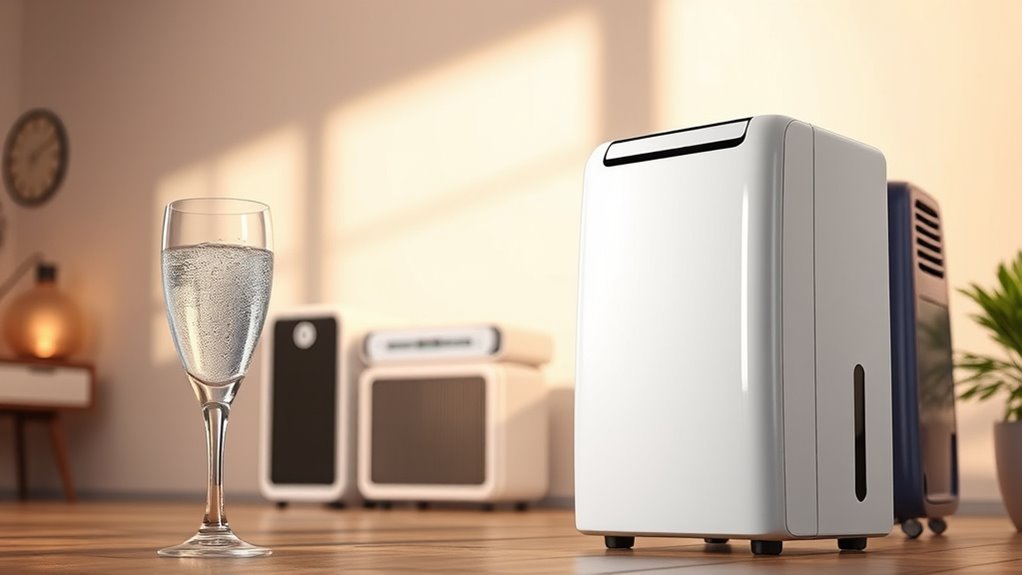
Understanding the different types of dehumidifiers can help you choose the right one for your needs. If you’re looking for flexibility, portable units are a great option. They’re easy to move from one room to another and can effectively target specific areas with high humidity. On the other hand, if you want a more all-encompassing solution, whole house systems might be the way to go. These units are designed to manage humidity levels throughout your entire home, providing consistent moisture control. Depending on your space and humidity levels, you can decide which type suits you best. Each has its benefits, so consider your living situation and personal preferences when making your choice.
Key Features to Consider
When you’re choosing a dehumidifier, several key features can considerably impact its performance and your overall satisfaction. Understanding these aspects will help you make a well-informed decision:
- Portable Design: Look for a model with wheels or a lightweight frame, making it easy to move between rooms.
- Noise Levels: Consider a unit with a low decibel rating if you plan to use it in bedrooms or quiet spaces.
- Capacity: Choose a size that matches your space to ensure efficient moisture removal.
- Energy Efficiency: Opt for an Energy Star rated model to save on electricity bills while still getting the job done.
Benefits of Using a Dehumidifier
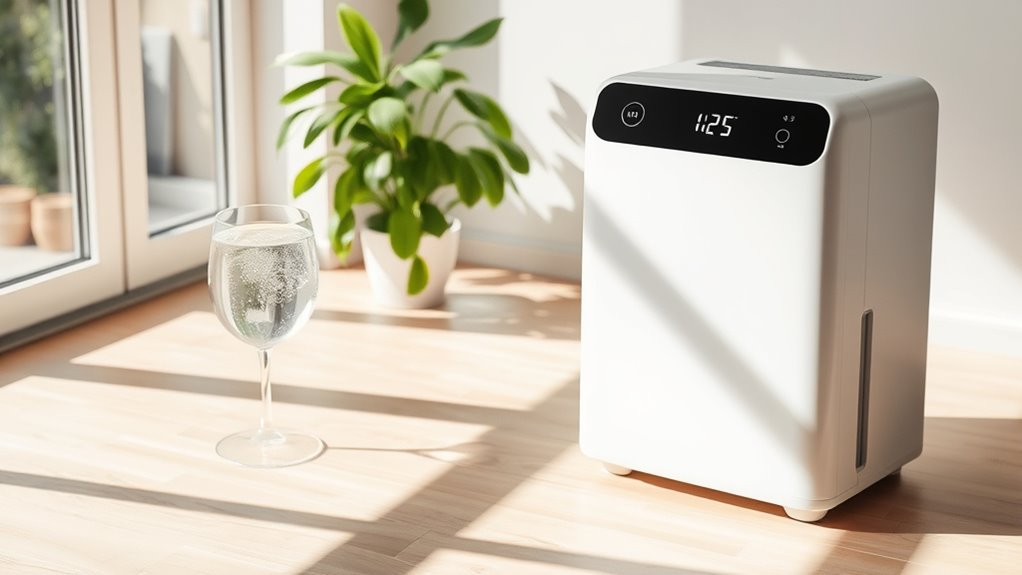
Using a dehumidifier can considerably improve your home’s air quality by reducing excess moisture. This not only makes the air feel fresher but also helps prevent mold growth, which can lead to health issues. With a dehumidifier, you’ll create a healthier living environment for you and your family.
Improved Air Quality
As humidity levels drop, you’ll notice a significant improvement in your indoor air quality. A dehumidifier not only reduces moisture but also enhances the overall environment. Here are some key benefits:
- Allergen Reduction: Lower humidity levels help minimize dust mites, mold spores, and pet dander, making breathing easier.
- Air Filtration: Improved air filtration systems work more effectively in drier conditions, trapping airborne particles.
- Comfort: You’ll feel more comfortable, as excessive humidity can make temperatures feel warmer than they are.
- Odor Control: Dehumidifiers help eliminate musty odors associated with dampness, leaving your space smelling fresh.
With these enhancements, you’ll enjoy a cleaner, healthier home environment.
Prevents Mold Growth
Maintaining lower humidity levels not only improves air quality but also plays a vital role in preventing mold growth. When you control humidity effectively, you create an environment that’s less hospitable to mold spores. By using a dehumidifier, you can considerably reduce moisture in your home, making mold prevention easier and more effective.
| Humidity Level | Mold Growth Potential |
|---|---|
| Below 30% | Low |
| 30% – 50% | Moderate |
| 50% – 70% | High |
| Above 70% | Very High |
Investing in humidity control is essential for a healthier living space. So, take action now, and enjoy the peace of mind that comes with a mold-free home.
Common Applications for Dehumidifiers
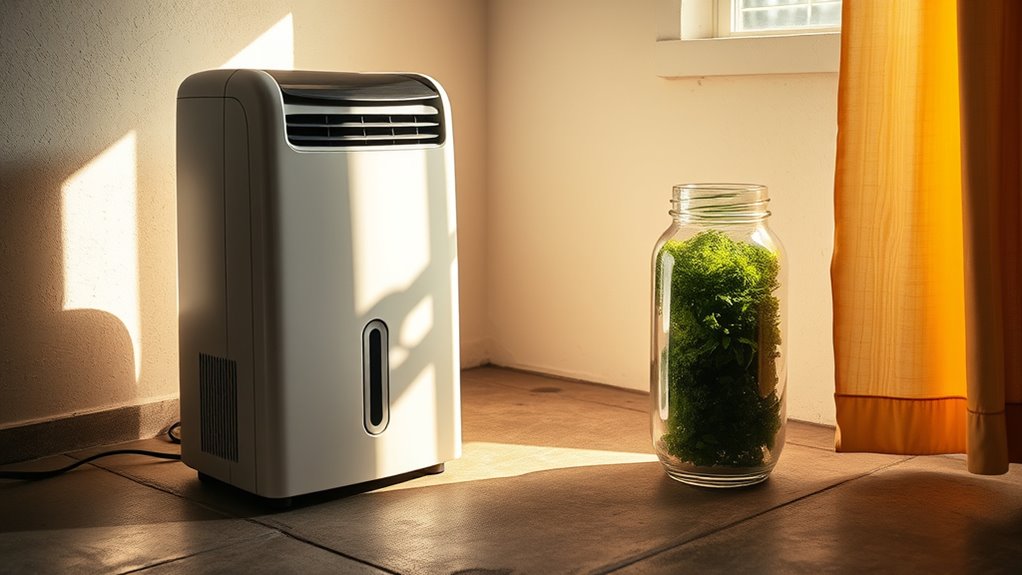
Dehumidifiers play a critical role in various settings, especially when humidity levels rise and create uncomfortable or unhealthy environments. You’ll find them beneficial in several common applications:
- Basements: They effectively tackle basement moisture, preventing mold and mildew growth in areas prone to dampness.
- Kitchens: In kitchens, they help control kitchen humidity, especially during cooking, keeping your space comfortable.
- Bathrooms: Dehumidifiers reduce moisture from showers and baths, lowering the risk of mold.
- Laundry Rooms: They efficiently handle moisture from drying clothes, keeping the air fresh and dry.
Using dehumidifiers in these areas not only enhances comfort but also protects your home from moisture-related issues.
Maintenance Tips for Dehumidifiers
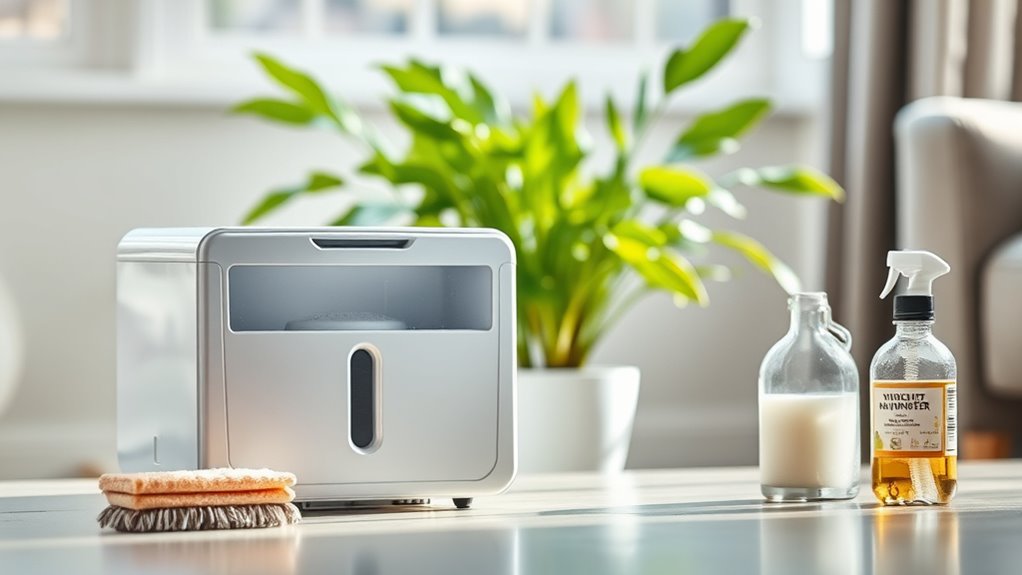
To keep your dehumidifier running efficiently, regular maintenance is essential. Start by checking the filter; you should replace it every few months to guarantee ideal airflow. A clogged filter can hinder performance and increase energy consumption. Next, pay attention to water tank maintenance. Empty the tank regularly to prevent overflow and mold growth. If your dehumidifier has a continuous drainage option, make sure the hose isn’t kinked or clogged. Additionally, clean the tank and any removable parts with mild soap and water to eliminate dirt and bacteria. By following these simple steps, you’ll extend your dehumidifier’s lifespan and maintain a comfortable humidity level in your home. Regular upkeep is key to efficient moisture removal.
Signs You Need a Dehumidifier
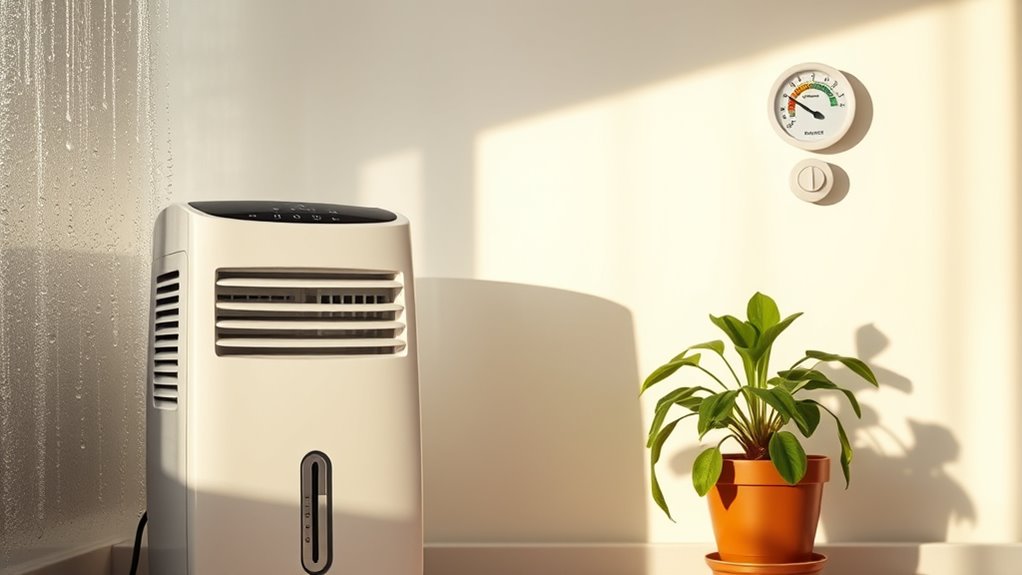
If you notice excess moisture in your home, it might be time to contemplate getting a dehumidifier. High humidity levels can lead to various problems, and recognizing moisture indicators is essential. Here are four signs you should look out for:
- Condensation: Water droplets forming on windows or walls indicate high humidity.
- Mold Growth: If you see mold spots, especially in damp areas, it’s a strong sign.
- Musty Odor: A persistent, musty smell often accompanies excess moisture.
- Allergy Symptoms: Increased allergy symptoms can arise from mold and dust mites thriving in humid environments.
Energy Efficiency and Cost Considerations
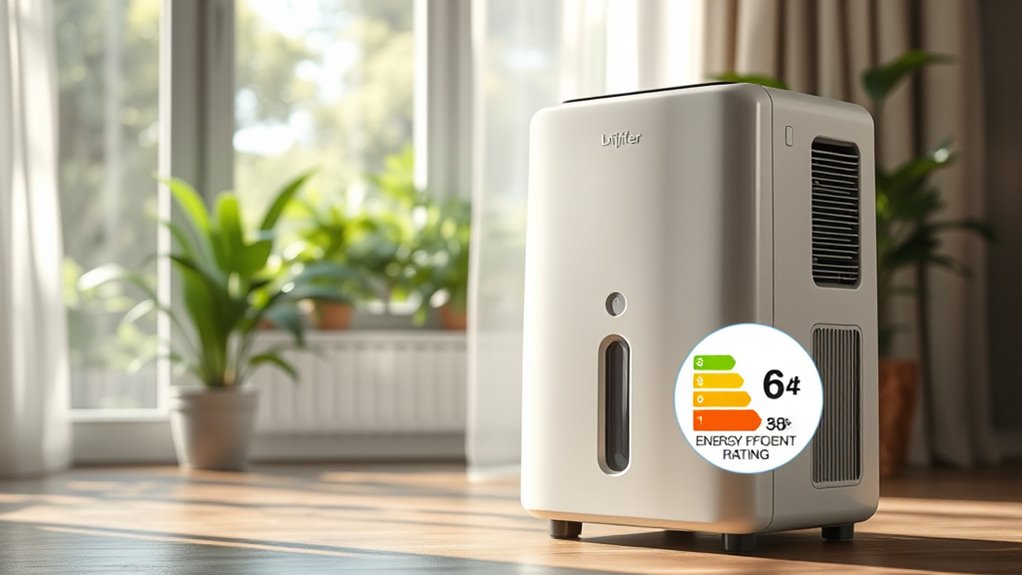
When considering a dehumidifier, it’s important to evaluate its energy efficiency and overall cost. Look for models with the Energy Star label, as they typically offer better energy savings compared to standard units. This can considerably reduce your operational costs over time. You’ll want to calculate both the initial purchase price and the estimated electricity usage to determine the long-term impact on your wallet. Keep in mind that a more efficient dehumidifier might have a higher upfront cost, but the savings on your energy bill could make it worth the investment. Ultimately, balancing energy efficiency with your budget will help you choose the right dehumidifier for your needs without breaking the bank.
Frequently Asked Questions
Can Dehumidifiers Help With Allergies or Asthma Symptoms?
Yes, dehumidifiers can help with allergies or asthma symptoms. By reducing humidity levels, you decrease the presence of airborne allergens like mold and dust mites, which thrive in damp environments. This can lead to significant respiratory relief, making it easier for you to breathe. If you struggle with allergies or asthma, using a dehumidifier in your home can create a healthier living space, allowing you to enjoy more comfort and well-being.
How Long Does a Dehumidifier Typically Last?
Think of a dehumidifier like a loyal pet; with the right care, it can be your companion for years. A dehumidifier typically lasts around 5 to 10 years, depending on usage and maintenance. To extend its lifespan, keep it clean and replace filters regularly. Just like feeding your pet, proper maintenance guarantees your dehumidifier runs efficiently, helping you enjoy a comfortable, moisture-free space for longer.
Do Dehumidifiers Require Special Filters?
No, dehumidifiers don’t require special filters, but using the right filter types can enhance their efficiency. Most models come with a standard washable filter, while some may use HEPA or activated carbon filters for better air quality. Regular maintenance is key; clean or replace your filters every few months to guarantee peak performance. This simple step can help extend your dehumidifier’s lifespan and maintain a healthy indoor environment.
Can I Use a Dehumidifier in Winter?
Absolutely, you can use a dehumidifier in winter! Think of it as a cozy blanket for your home, keeping humidity at bay. However, consider energy consumption during winter operation; it might work harder in colder temperatures. If your space feels damp despite the chill, running a dehumidifier can help maintain comfort. Just keep an eye on energy costs, as efficiency can vary based on the model you have.
What Noise Level Should I Expect From a Dehumidifier?
You can expect noise levels from a dehumidifier to range between 30 to 60 decibels, depending on the model. For perspective, 30 decibels is similar to a quiet room, while 60 decibels matches normal conversation. When you measure sound, check the specifications for the unit you’re considering, as quieter models often come with additional features like variable speed fans or noise-reducing technology, making them more suitable for bedrooms or living spaces.
Conclusion
In summary, dehumidifiers deliver delightful dryness, dramatically diminishing dampness in your space. Understanding their workings and various types helps you choose the perfect model for your needs. By considering key features and maintaining your unit, you’ll maximize its moisture-munching magic. Don’t underestimate the benefits; a dehumidifier can enhance air quality and comfort while saving you costs in the long run. So, make moisture management a priority, and enjoy a fresher, finer living environment.
Fall Picks
fall essentials
As an affiliate, we earn on qualifying purchases.