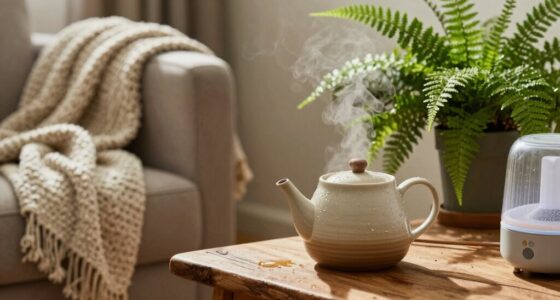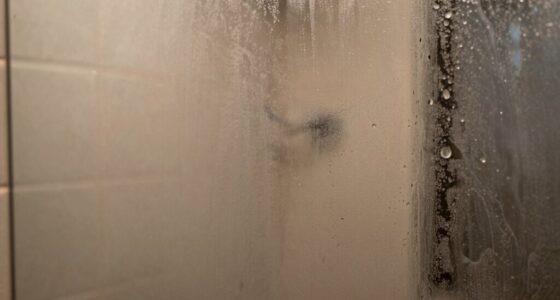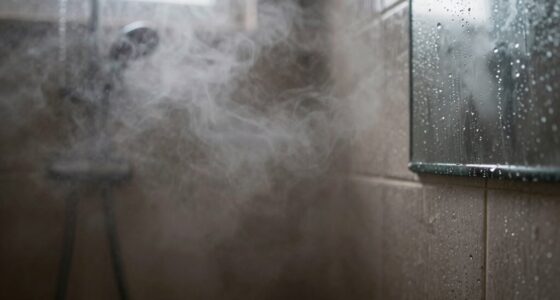
You might notice indoor humidity feels worse before any visible signs appear because high moisture levels create an uncomfortable, sticky feeling and can cause sluggishness or respiratory issues. These sensations are early warnings that humidity is rising, even if you can’t see mold or dampness yet. Elevated humidity can trap pollutants and foster mold growth over time, making your space unhealthy. If you keep exploring, you’ll discover how to spot these signs early and take action before the problems become hidden and severe.
Key Takeaways
- Elevated humidity causes discomfort and subtle symptoms before visible mold or moisture issues appear.
- Poor air quality from trapped pollutants worsens feelings of heaviness and respiratory discomfort early on.
- Mold spores begin settling and colonizing surfaces without visible signs, increasing health risks silently.
- Humidity affects indoor air quality first, making the environment feel worse before physical mold growth is visible.
- Early symptoms like allergies or fatigue signal rising moisture levels, prompting action before damage becomes visible.
You might notice that your indoor environment feels uncomfortably humid before any visible signs of moisture or mold appear. That heavy, sticky sensation in the air can make you feel restless or sluggish, even if everything looks normal. This discomfort is often a sign that your indoor humidity levels are too high, and it can impact your air quality in ways that aren’t immediately obvious. When humidity climbs, it creates an environment where mold growth can thrive, even if you don’t see mold yet. Mold spores are microscopic, so they can develop quietly in hidden corners or behind walls, making the air quality worse before you notice any visible damage.
Uncomfortable humidity signals hidden mold risk and declining air quality before visible signs appear.
The feeling of stuffiness and dampness is your body’s way of alerting you that the air isn’t healthy. As humidity increases, the air holds more moisture, which can trap pollutants, allergens, and dust particles, making the air feel heavier and more oppressive. This poor air quality can trigger allergies, respiratory issues, or asthma symptoms, especially if you’re sensitive or prone to respiratory problems. Since the symptoms often start subtly, you might not immediately connect them to humidity or suspect mold growth is beginning to form. It’s a gradual process, where the air feels worse first, and then the damage becomes visible later. Recognizing indoor air quality as an important factor can help you understand the full impact of high humidity on your health.
High humidity also makes it easier for mold spores to settle and grow on surfaces. Even if you don’t see mold right away, the moisture in the air creates a perfect environment for mold colonies to develop. This means that your home’s surfaces—walls, ceilings, furniture—can become moldy over time without any initial signs. The longer high humidity persists, the more likely mold growth will accelerate, further degrading air quality and increasing health risks. The unseen mold can release spores into the air, making breathing more difficult and worsening allergy symptoms, all while your indoor environment looks normal. Additionally, maintaining proper humidity levels can help inhibit microbial growth and improve overall indoor air quality.
Being aware of the indoor environment and managing humidity can be crucial in preventing unseen health hazards. Recognizing the importance of humidity control can significantly reduce the risk of mold development and improve your overall well-being. The key is to pay attention to how your space feels. If the air feels heavy, clammy, or overly warm, it’s a cue that your indoor humidity is out of balance. Addressing this early can prevent the unseen buildup of mold and improve your air quality before it gets worse. Using a dehumidifier, ventilating rooms properly, or fixing leaks can help restore healthier humidity levels. Recognizing that the discomfort comes before any visible signs allows you to act quickly, protecting your home and your health from the silent threat lurking behind the scenes.

TempPro TP50 Digital Hygrometer Indoor Thermometer Room Thermometer and Humidity Gauge with Temperature Humidity Monitor(Previously ThermoPro)
Wellness Indicator: This humidity meter with humidity level icon indicates air conditions – DRY/COMFORT/WET, allowing this humidity sensor…
As an affiliate, we earn on qualifying purchases.
As an affiliate, we earn on qualifying purchases.
Frequently Asked Questions
How Does Humidity Affect Indoor Air Quality?
Humidity affects your indoor air quality by making the air feel stuffy and uncomfortable, especially when humidity sensors indicate high levels. When humidity rises, mold, dust mites, and bacteria thrive, impacting your health. Proper air circulation helps reduce humidity and improve air quality. By monitoring humidity levels and ensuring good ventilation, you can maintain a healthier, more comfortable indoor environment, preventing the discomfort that high humidity can cause.
Can High Humidity Cause Health Problems?
High humidity can definitely cause health problems. When indoor moisture levels rise, mold growth becomes more likely, which can trigger allergies and respiratory issues. You might notice increased coughing, sneezing, or asthma symptoms. Excess humidity also creates a damp environment that promotes bacteria and dust mites, further aggravating respiratory problems. To protect your health, keep indoor humidity levels balanced, ideally around 30-50%, and make certain proper ventilation.
What Are Early Signs of Humidity Issues?
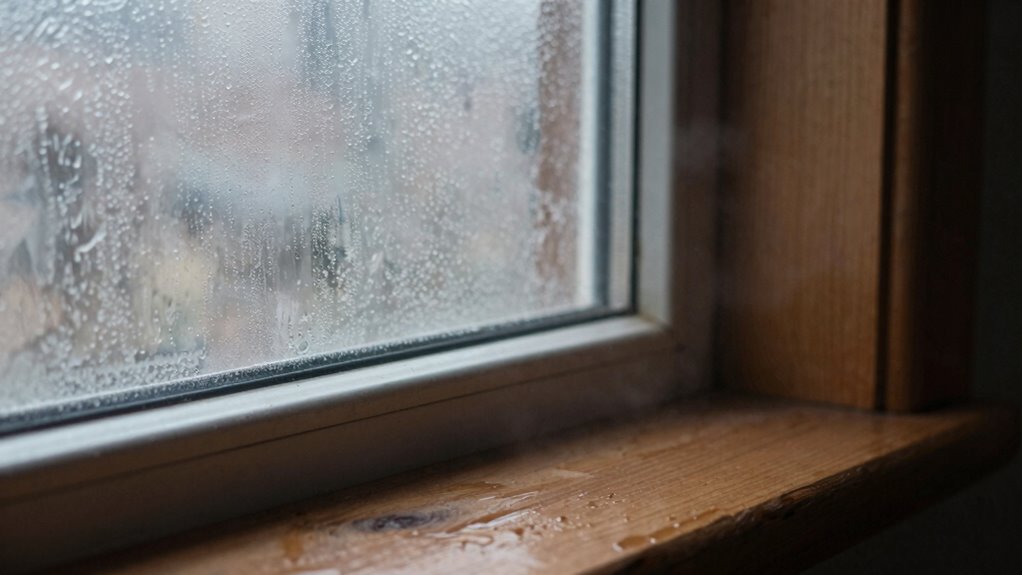
Imagine you’re in a vintage film scene—your space feels damp and sticky. That’s an early sign of humidity issues. You might notice a musty smell, condensation on windows, or persistent condensation on walls. Check your dehumidifier for proper maintenance and use mold prevention techniques like increasing ventilation. These signs indicate humidity is rising, and catching them early helps prevent mold growth and guarantees a healthier indoor environment.
How Quickly Can Indoor Humidity Levels Change?
Indoor humidity levels can change rapidly, often within hours, especially during weather shifts or after activities like cooking and showering. Humidity fluctuations happen quickly, leading to sudden moisture buildup in your space. You might notice the air feels damp or sticky unexpectedly, even if the room looks fine. Monitoring with a hygrometer helps you track these changes, so you can adjust your humidifier or dehumidifier promptly to maintain comfortable, balanced moisture levels.
Are Certain Rooms More Prone to Humidity Problems?
Ever wonder why some rooms feel damper than others? Certain rooms are more prone to humidity issues due to ventilation patterns and furniture materials. Bathrooms and kitchens trap moisture from showers and cooking, while poorly ventilated areas retain humidity longer. Wooden furniture or textiles also absorb moisture, heightening discomfort. You can reduce these problems by improving airflow and choosing moisture-resistant materials, making your space more comfortable and healthier.

Mold Test Kit for Home – 12 Simple Detection Tests,Test HVAC System,Home Surfaces,& Indoor Air Quality Testing Kits,DIY Mold Detector at Home,Includes Detailed Mold Identification Guide,air Tester
The Kayenqo Mold Test Kit contains 12 test plates, detailed mold guide and mold removal instructions, 12 swabs,…
As an affiliate, we earn on qualifying purchases.
As an affiliate, we earn on qualifying purchases.
Conclusion
So, next time your indoor air feels stuffy and uncomfortable before you see any visible damage, remember that your senses often notice humidity issues first. For example, imagine you start coughing and your skin feels dry, but the walls still look fine. It’s a sign to check your humidity levels early. Addressing it promptly keeps your home comfortable and prevents hidden problems from turning into costly repairs later. Stay proactive, and breathe easier.

LEVOIT Air Purifier for Home Allergens Pet Hair in Bedroom, Covers Up to 1073 ft² by 56W High Torque Motor, AHAM VERIFIDE, 3-in-1 Filter with HEPA Sleep Mode, Remove Dust Smoke Odor, Core300-P, White
WHY CHOOSE AHAM VERIFIDE AIR PURIFIERS: AHAM (Association of Home Appliance Manufacturers) is an ANSI-accredited organization that sets…
As an affiliate, we earn on qualifying purchases.
As an affiliate, we earn on qualifying purchases.

DREO Humidifiers for Bedroom, 3L Top Fill 30H & 26dB Quiet Runtime for Large Room, Cool Mist Ultrasonic Humidifier with Humidity Sensor, Night Light for Home, Baby, Nursery, Plants, New Edition
𝐅𝐨𝐫𝐠𝐞𝐭 𝐚𝐛𝐨𝐮𝐭 𝐜𝐨𝐧𝐬𝐭𝐚𝐧𝐭 𝐫𝐞𝐟𝐢𝐥𝐥𝐬: With a 3L tank and convenient top-fill design, this humidifier large room for baby…
As an affiliate, we earn on qualifying purchases.
As an affiliate, we earn on qualifying purchases.