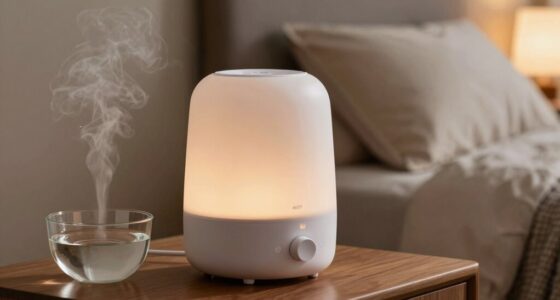
Choosing between warm mist and cool mist humidifiers depends on your needs. Warm mist models quickly humidify rooms and help with congestion, but they pose a burn risk and use more energy. Cool mist units cover larger areas safely and are easier to maintain. If you want comfort, safety, and efficiency, cool mist may suit you better. However, each type has its benefits; exploring further can help you make the best choice for your home.

Get health and wellness essentials delivered free — and shop member deals
- Fast, free delivery on millions of items
- Access to Prime Big Deal Days deals on October 6–7
- Prime Video, Amazon Music and more included
Key Takeaways
- Warm mist humidifiers heat water to produce steam, quickly increasing humidity and soothing congestion, ideal for cold weather.
- Cool mist humidifiers use fans or ultrasonic vibration to disperse moisture across larger areas safely and efficiently.
- Warm mist models kill germs during boiling but pose burn risks; cool mist units are safer and easier to maintain.
- Warm mist humidifiers tend to be quieter but consume more energy, while cool mist models are energy-efficient and suitable for bedrooms.
- Choose based on safety, coverage needs, maintenance preferences, and health concerns like congestion relief.

When choosing a humidifier, understanding the differences between warm mist and cool mist options can help you make the right decision for your needs. Warm mist humidifiers heat water to create steam, which is then released into the air. This process can help humidify a room quickly and may feel more soothing during cold weather. On the other hand, cool mist humidifiers use a fan to blow air through a moistened wick or ultrasonic vibrations to produce a fine mist without heating the water. This type often covers larger areas and is generally safer, especially in homes with children or pets.
Warm mist humidifiers heat water to quickly soothe and humidify rooms. Cool mist models are safer and ideal for larger areas.
Warm mist models tend to be more effective at reducing bacteria and mold because the boiling process kills germs as the water heats up. If you’re dealing with respiratory issues or want to add a little extra warmth during winter, a warm mist humidifier can provide comfort while helping to clear congestion. They also tend to be quieter since they don’t rely on a fan, making them a good choice for bedrooms and quiet spaces. However, they do require more maintenance because the heating element can build mineral deposits and needs regular cleaning to prevent scale buildup.
Cool mist humidifiers are typically safer because they don’t use heat, so there’s no risk of burns from hot water or steam. They’re often more energy-efficient since they don’t need to heat water, which can help lower your utility bills. They also tend to be more durable and easier to clean, especially ultrasonic models that don’t have a heating component. These humidifiers excel in larger spaces and are quicker at dispersing moisture across a broad area, making them ideal for whole-room or even whole-house humidification.
Your choice comes down to your priorities. If you want quick relief for congestion, prefer a quieter device, and don’t mind regular cleaning, a warm mist humidifier could be the right fit. If safety, energy efficiency, and larger coverage are more important, then a cool mist model is likely better for you. Both types can improve indoor air quality and comfort, but understanding their differences helps you select the best option without guesswork. Ultimately, consider your environment, any health concerns, and maintenance preferences to choose the humidifier that aligns with your lifestyle. Additionally, understanding humidifier safety and proper maintenance can help prevent issues like mold growth and mineral buildup, ensuring your humidifier operates effectively and safely.
warm mist humidifier for cold weather
As an affiliate, we earn on qualifying purchases.
As an affiliate, we earn on qualifying purchases.
Frequently Asked Questions
Which Mist Type Is Better for Allergy Sufferers?
Warm mist humidifiers are generally better for allergy sufferers because they help reduce airborne allergens and bacteria through boiling water, creating a cleaner mist. Cool mist models are also effective and may be safer around children, but they don’t eliminate germs as efficiently. If you want to minimize allergy triggers, a warm mist humidifier is often the better choice, especially if you’re concerned about bacteria or mold.
Are Warm Mist Humidifiers Safer Around Children?
Warm mist humidifiers can be less safe around children because they produce hot steam that might cause burns if spilled or knocked over. You should always supervise children around warm mist units and guarantee they’re placed out of reach. Cool mist humidifiers are generally safer since they don’t emit hot water or steam, reducing burn risk. Choose the right option based on your child’s safety needs and environment.
Do Warm or Cool Mist Units Consume More Energy?
You’ll find warm mist units sip energy like a cautious mouse, while cool mist ones gulp it like a ravenous lion. In general, warm mist humidifiers tend to use more electricity because they heat the water before releasing steam. If you’re aiming to save on energy bills, cool mist models are the way to go. They’re more efficient, making them perfect for keeping your space comfortable without draining your wallet.
Can Mist Type Affect Indoor Air Quality?
Yes, mist type can affect indoor air quality. Warm mist humidifiers often produce steam that can help kill bacteria and mold, improving air cleanliness. Cool mist units, especially if not cleaned regularly, might harbor mold or bacteria, which can circulate in your indoor air. Regular maintenance and choosing the right mist type based on your needs help guarantee better air quality and a healthier living environment.
Which Mist Option Is More Effective for Cold Relief?
Are you seeking quick cold relief? Warm mist humidifiers are generally more effective because they soothe congestion faster and help break down mucus. The warmth helps to open nasal passages and ease coughing, providing immediate comfort. Cool mist humidifiers are better for ongoing humidity control without the risk of burns. So, if immediate relief is your goal, warm mist is the way to go—just be cautious around children.
cool mist ultrasonic humidifier large room
As an affiliate, we earn on qualifying purchases.
As an affiliate, we earn on qualifying purchases.
Conclusion
Choosing between warm mist and cool mist humidifiers is like picking the right key for your comfort. Both options have their perks, but it ultimately depends on your needs and preferences. Warm mist feels like a cozy blanket, perfect for chilly nights, while cool mist is like a revitalizing breeze, ideal for hot days. Whichever you choose, you’ll be adding moisture to your space, turning dry air into a gentle hug for your home.
humidifier with germ-killing feature
As an affiliate, we earn on qualifying purchases.
As an affiliate, we earn on qualifying purchases.
As an affiliate, we earn on qualifying purchases.
Fall Picks
fall essentials
As an affiliate, we earn on qualifying purchases.